get these nets
Veteran
The Daily Heller: From Parody to Pride

March 19, 2026
Currently on view at Poster House New York is Act Black: Posters From Black American Stage and Screen—a collection of promotions from performances featuring casts that were made up of actual Black performers, rather than white people in blackface, which sought to build stories around the perception of Black experiences. Es-pranza Humphrey, Assistant Curator of Collections, has assembled holdings from the Poster House archives and privately held materials that trace a visual timeline from minstrel shows with roots in slavery and plantation life to Western, crime and love stories peopled by Black actors and musicians.
For this conversation, Humphrey describes her research into the complex dynamics of skirting around Northern segregation and Southern Jim Crow prohibitions, leading to the precipice of a full-fledged presence and industry of Black-produced entertainment, from Hollywood to Harlem.
Act Black is on view until Sept. 6.
Act Black: Posters From Black American Stage and Screen is a startling exhibition and experience for what it says and what it implies. What was your inspiration and rationale for researching, writing and curating this show?
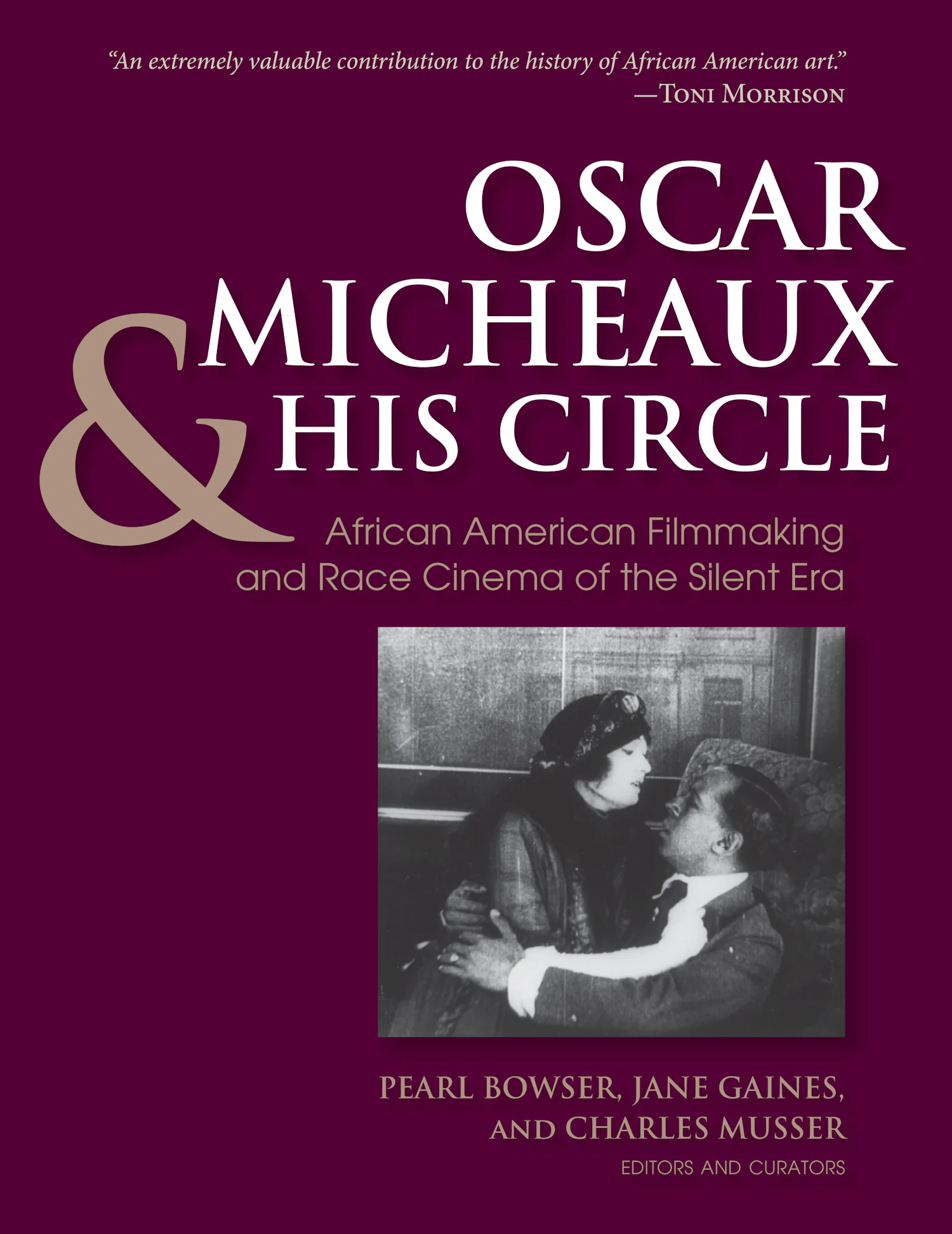
The focus of my research for about a decade is exploring the fashion of Black chorus girls during the interwar period and how they represented a version of the “New Negro Woman,” the companion of Alain Locke’s 1925 anthology, The New Negro: An Interpretation. When I started to search for posters related to Black theatrical productions (specifically those featuring Josephine Baker), I came across posters, window cards and ephemera for some of the most notable all-Black plays, revues and musicals. It didn’t take long for me to realize that many of the performers on stage later transferred their talent to the screen, and the people behind the camera used the pillars of all-Black theater to set up all-Black movies (known as “race films”). Early films often mimicked theater because the technology was still fairly novel.
Posters help tell this long history in a great way because a lot of the recorded media has been lost (or was never even recorded), so the poster serves as documentation that these popular productions existed in the first place!
I think some artifacts are from the Schomburg Center collection. What makes this exhibition different from other histories of the Black stage, film and media experience?
We don’t have anything in the exhibition from the Schomburg Center but I did go there to do research!
I think what makes this show unique is that posters are the dominant medium on display and it’s the graphic history of all-Black theater and film. I was also able to source some incredibly rare posters like Williams and Walker (1903) and The Original Georgia Minstrels (c. 1872) that help visualize the depth of blackface minstrelsy. It’s difficult to imagine a time where these would be public-facing as American entertainment fixtures, so by including them in the exhibition, I hope to expand viewers’ understanding of a dark-sided but important part of American history and poster history.
Act Black begins with Black entertainment after the Civil War. Can you explain the genre(s) and why it became popular for white audiences?
Well, white working-class audiences typically consumed this type of entertainment because it was inexpensive, catchy and reinforced a familiar racial hierarchy. Though Thomas “Daddy” Rice was not the first actor to perform in blackface, he was one of the most successful due to his character called Jim Crow that was an impersonation of an enslaved Black man. He toured all throughout the United States and the song “Jump Jim Crow” became a hit. I start the show by establishing that the image of Black Americans (especially those who were formerly enslaved) is co-opted and b*stardized by these white performers in blackface, because the rest of the show stresses the importance of the “All-Colored Revue” and/or “All-Colored Cast.” I then decided to highlight Black vaudeville—performances that featured music, dancing and comedy—because this is where we see the creation of all-Black networks and circuits that protect the performers and the businesses of Black people. It’s also important to note that Black audiences watched these performances as well, but they would soon have the option to see all-Black actors on stage rather than just white people in blackface.
Was minstrelsy the earliest white co-opting of Black culture in the U.S.?
No, the ring shout, cakewalk, etc., were co-opted by white enslavers. Also, I wouldn’t consider minstrelsy “Black culture” at all. It was more of a white interpretation and mockery of Black (and enslaved) people’s speech, movements, expressions, etc.
I’ve read that white entrepreneurs were the driving forces behind “All Colored” stage and screen entertainment, as producers, theater owners, etc. Who were these people, and what were their motivations and goals? How were these works preserved (or not)? Did they have value after the ephemerality wore off?
That’s the challenging part of posters, especially those featured in this show. Some were preserved in a number of ways that varied from person to person, studio to studio, printer to printer, and some were not preserved. Through the work of individual collectors or institutions, they survive because these people or collections decided long ago that there was value to these all-Black productions and movies. The documentary In the Shadow of Hollywood: Race Movies & The Birth of Black Cinema explores the race film genre, and there is a moment where viewers learn how some of these films were accidentally uncovered. This speaks to a larger conversation about value, discovery and preservation.