“It’s sort of ironic that these groups are throwing social emotional learning under the bus when these are the very things that our kids need now, and they need them now more than ever before,” said Donna Lord Black, who leads the Social Emotional Learning Alliance for Texas, a nonpartisan group that advocates for these programs in schools.
The result of this sudden partisan reversal: Education experts say one of the few bipartisan solutions to school violence has been reduced to another culture war talking point — one with the emotional power to potentially turn out voters while driving a deeper wedge between them.
In Mansfield — a quickly diversifying suburban school district that encompasses some areas that are majority Black, and some areas that are majority white — the political mailers blaming the Timberview shooting on “woke” school policies stirred intense feelings among residents.
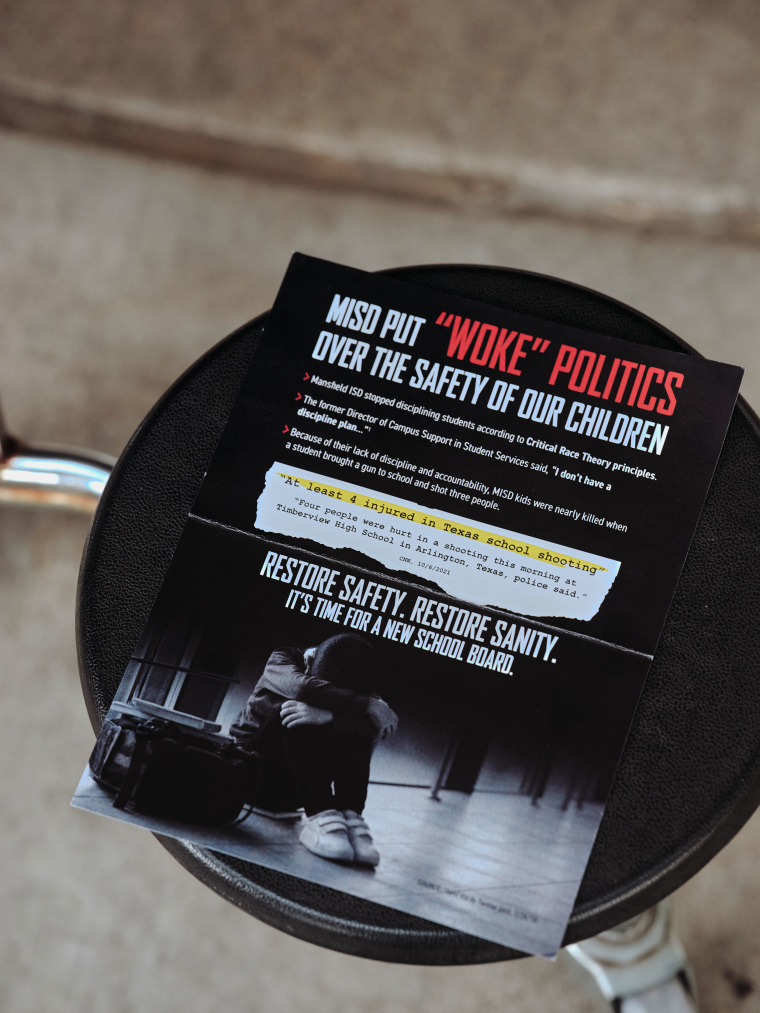
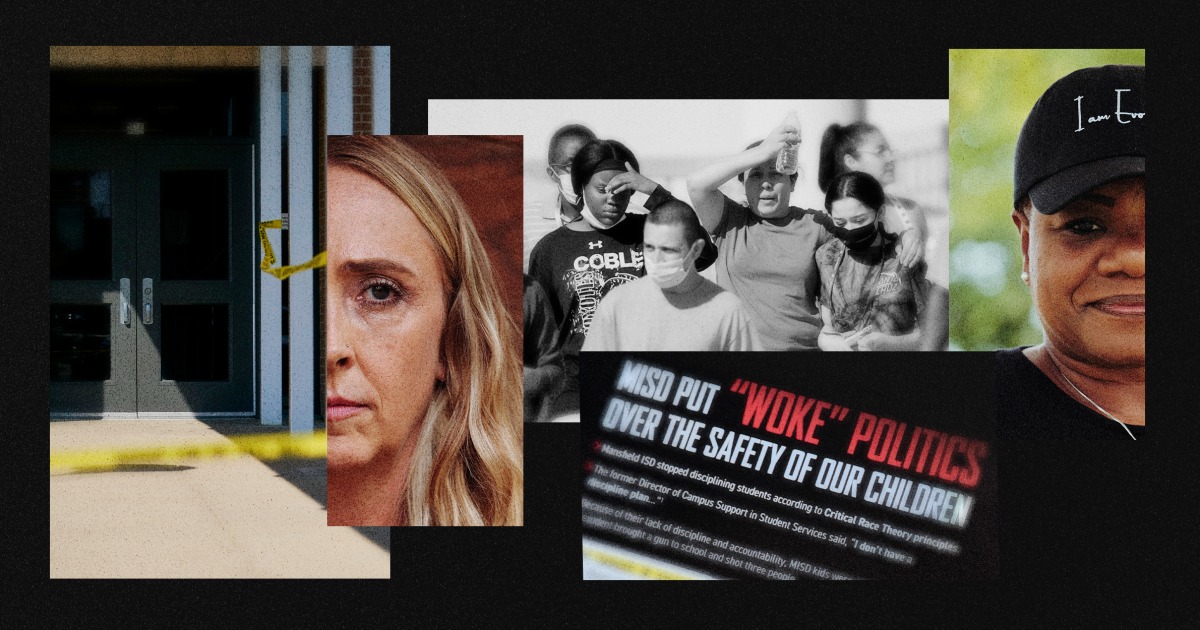
The flyers included an image of a white child cowering in a school hallway under the words, “Restore safety. Restore sanity. It’s time for a new school board.”
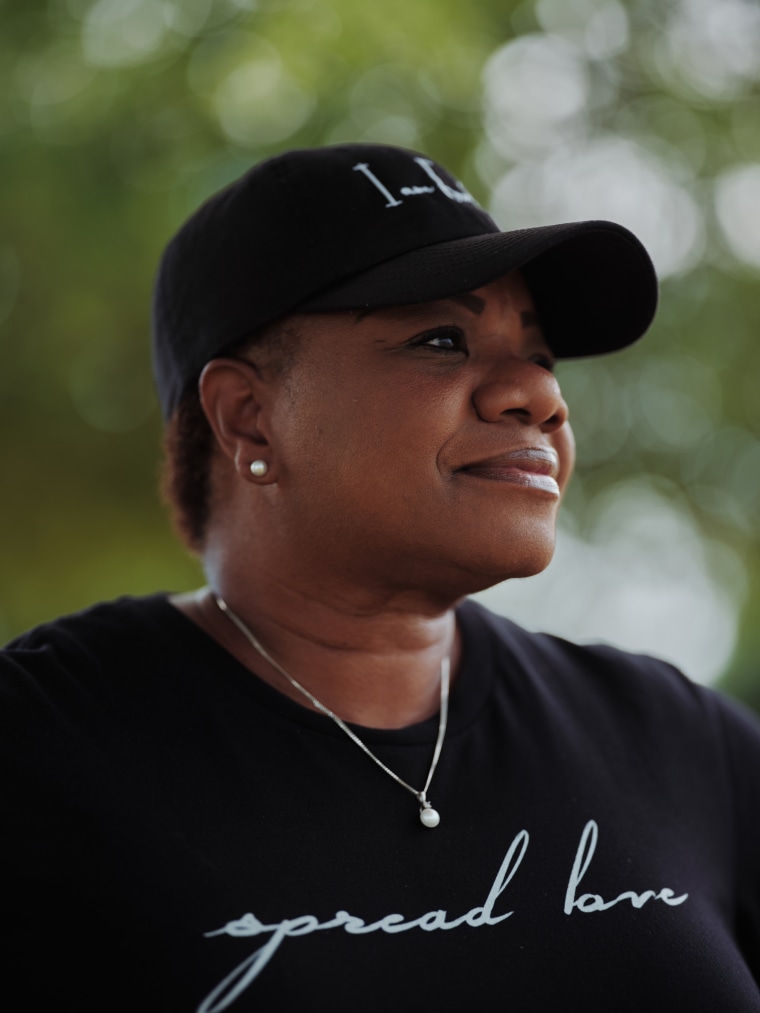
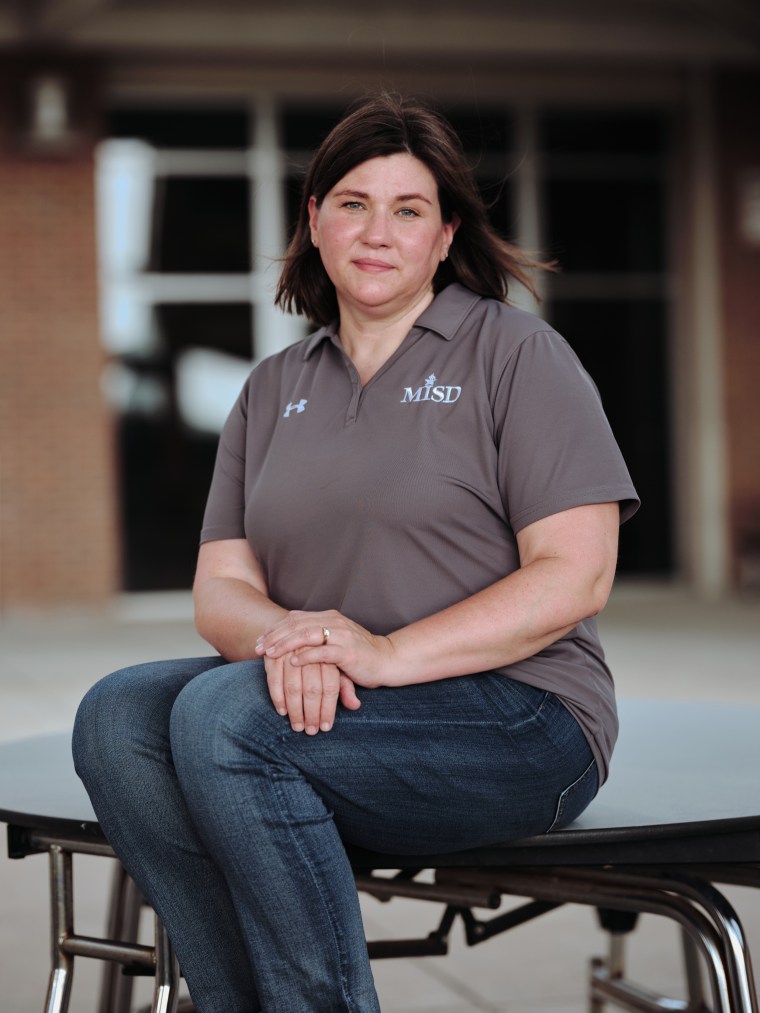
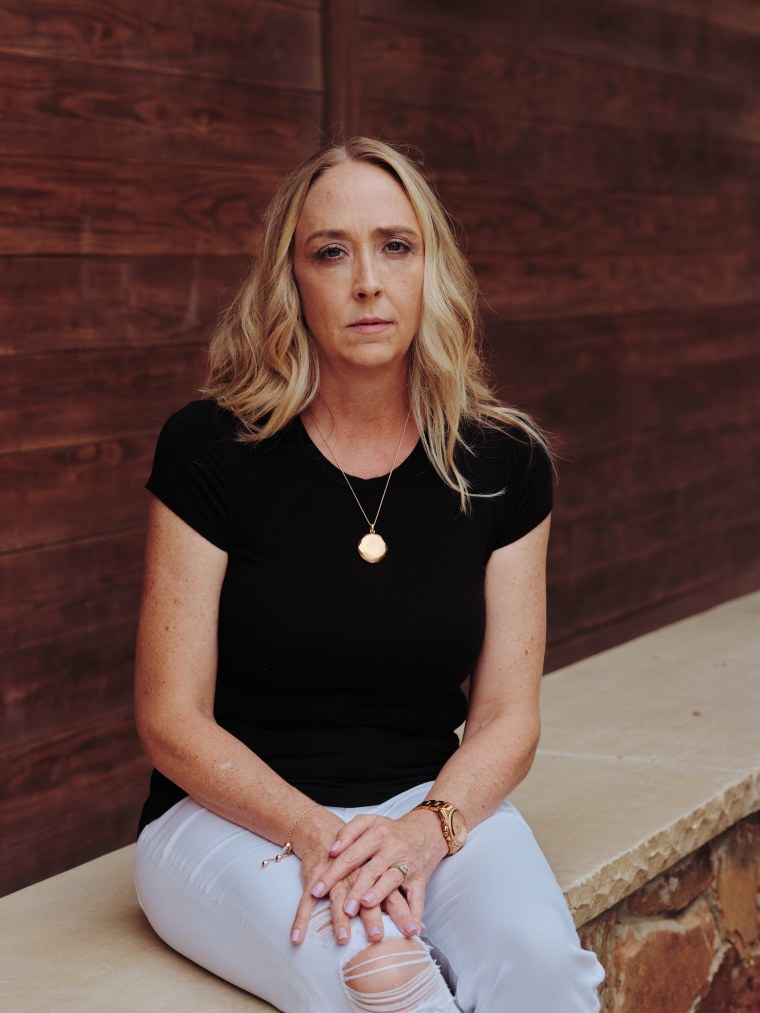
VanDella Menifee believes the flyers were meant to divide the community. Zerb Mellish for NBC News
VanDella Menifee, the mother of a Black student who was at Timberview on the day of the shooting, said the mailers incorrectly implied the district had stopped disciplining non-white children at a high school where three-quarters of the students are Black or Latino.
“I believe those flyers were designed to play to parents’ fears and to divide this community,” Menifee said.
Mindy Stonecipher, a white mom who has criticized Mansfield’s social emotional learning and disciplinary policies, said she shared Menifee’s concerns about the political mailer, which she called “extreme.”
But Stonecipher, who leads a group of concerned parents called Voices for Mansfield, said she agrees with the flyer’s underlying point. She argues that Mansfield’s embrace of social emotional learning has tied up educators with new responsibilities and left some feeling powerless to discipline unruly students — ultimately, making classrooms less safe.
“This is a giant social experiment,” Stonecipher said. “And the public school system is the lab.”
‘A pathway to hope’
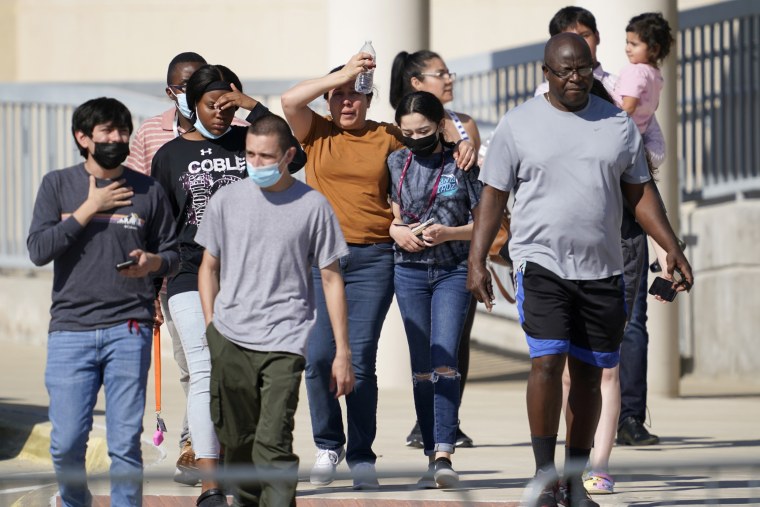
The shooting at Timberview High School on Oct. 6 started with a fight between two students, according to police and video of the classroom brawl later posted on social media. After a teacher broke up the altercation, witnesses told police that one of the students, an 18-year-old senior, walked over to a backpack, pulled out a handgun and opened fire.
A teacher and two students were wounded; no one was killed. One of the teens spent
two weeks in the hospital recovering. The accused shooter was arrested and charged with three counts of aggravated assault with a deadly weapon.
At a town hall meeting two weeks later, Bruno Dias, the school district’s director of safety, security and threat management, gave a presentation outlining Mansfield’s efforts to prevent classroom violence. That included a threat assessment and social emotional learning program implemented under
a 2019 Texas law that was passed with broad bipartisan support and signed by Abbott following a mass shooting at Santa Fe High School near Houston.
“It is a requirement, it is a mandate, and we are excelling at it,” Dias said of the program. “It is important to note that we’ve been able, in multiple cases, to turn what could have become a pathway to violence as it relates to students into a pathway to hope because of this threat assessment process.”
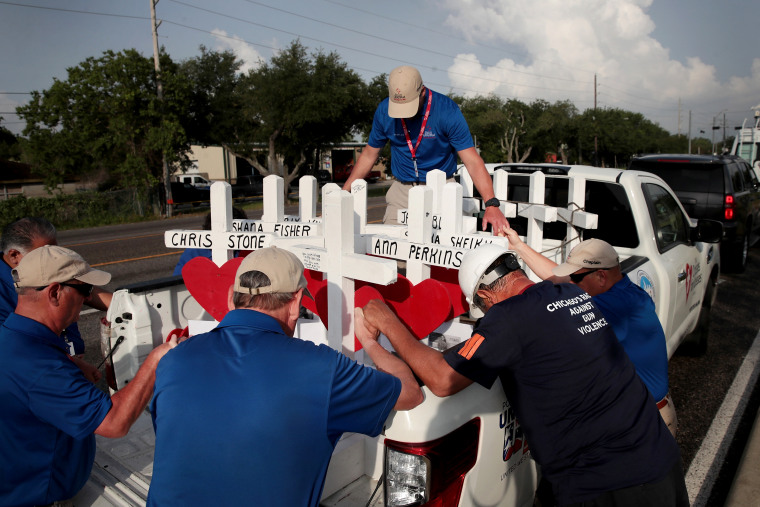
Volunteers pray with crosses to memorialize the victims of a mass shooting at Santa Fe High School in Texas on May 21, 2018.Scott Olson / Getty Images file
Under the program, a team of educators, administrators and counselors are tasked with assessing threatening or self-destructive student behavior and, when appropriate, providing resources to help them cope with underlying issues — such as mental health struggles, instability at home or food insecurity — instead of simply doling out punishment.
Conservative opponents of social emotional learning say those ideas sound good on paper, but they worry that applying these approaches to discipline means that schools will stop holding students accountable when they misbehave. Adding fuel to those fears: School districts often struggle to articulate exactly how these academic philosophies work in practice.
NBC News asked to speak with Mansfield administrators to learn how the school system’s social emotional learning efforts work, both in terms of education and discipline, but the district declined. In a written response to questions, district spokesperson Donald Williams denied that Mansfield had stopped disciplining students under the programs.
“Students who violate the student code of conduct face disciplinary consequences,” Williams wrote. “Restorative practices (i.e. writing a letter of apology, community service, etc.) may be implemented as part of that process.”
Little is known publicly about the events that led up to the Timberview shooting, including whether any of the students involved in the fight had previously been disciplined or counseled as part of the district’s social emotional learning programs.
But that didn’t stop a conservative political action committee from tying those issues together ahead of school board elections this spring.
Patriot Mobile Action, a PAC run by a Texas-based cellphone company that markets its products to Christian conservatives, spent more than $400,000 backing 11 school board candidates in the suburbs surrounding Fort Worth who the group said would “protect our children” and “keep critical race theory out of our classrooms.” That included four candidates running for the Mansfield school board: Craig Tipping, Keziah Valdes Farrar, Bianca Benavides Anderson and Courtney Lackey Wilson.
All four candidates were pictured and named on the back of the Patriot Mobile flyer that blamed the Timberview shooting on district disciplinary policies, along with the words: “Give our kids a safe education, not a ‘woke’ education.”
Patriot Mobile Action and the four board candidates did not respond to interview requests.
All four went on to win seats on the seven-member Mansfield school board this spring, giving them a majority.
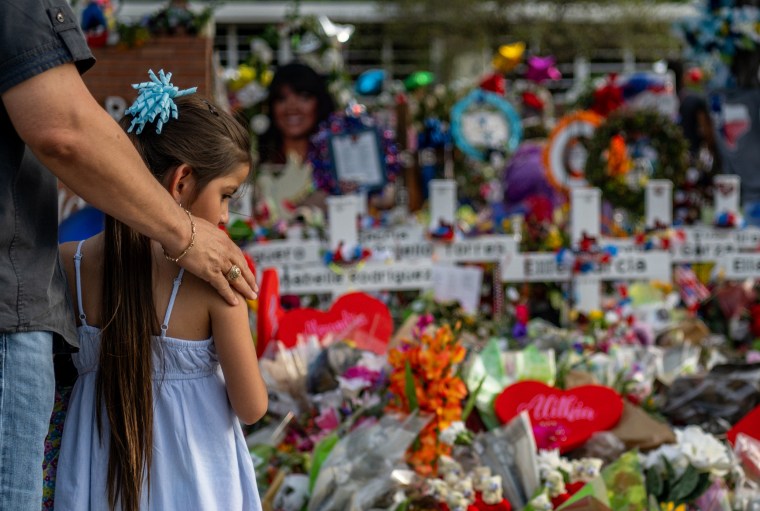
Seth Garza and his daughter, Lilly, pause at a memorial dedicated to the 19 children and two adults killed during a mass shooting at Robb Elementary School in Uvalde, Texas.Brandon Bell / Getty Images file
‘Our kids will pay the price’
The tactic of tying anti-racism and emotional education programs to school violence was echoed in the reactions of some national conservative figures to the May 24 shooting in Uvalde, which killed 19 students and two teachers.
U.S. Sen. Ron Johnson, a Republican from Wisconsin, blamed the shooting on critical race theory, “wokeness” and a failure to teach values in schools. That same week, Donald Trump Jr. tweeted that schools should get rid of “gender studies or critical race theory ‘teachers’” and replace them with armed guards.
The political shift can also be seen in school safety proposals from some Texas Republicans since Uvalde. Rather than prioritizing school-based programs to support the emotional needs of troubled students, as was the case in 2018,
some Republican lawmakers in Texas have argued that the state should focus on implementing harsher disciplinary policies.
“I’m going to make a statement that’s gonna get me hate mail,” state Sen. Charles Perry, a Republican from Lubbock, said during a recent legislative hearing focused on the Uvalde shooting. “Not all kids belong in the classroom anymore.”
And
at a news conference at the Texas GOP Convention last month, state Rep. Steve Toth, a Republican from the Houston region, suggested that what happened in Uvalde might have been prevented if not for school disciplinary policies that he said have been pushed by the “
woke left” — including a
Texas law passed with bipartisan support in 2013 and signed by former Gov. Rick Perry that limits the ability of school police officers to issue criminal citations to students.
Flanked by teachers and parents who say restorative disciplinary initiatives have made their schools less safe, Toth said he plans to introduce a bill that would appoint a committee composed of educators, prosecutors and local law enforcement officials to review reports of student misconduct. That way, he said, authorities will have an opportunity to identify patterns of dangerous behavior before it’s too late.
“Look, I don’t want to see a kid go to jail for being caught with some pot,” Toth said in an interview. “I don’t want to see a kid go to jail because he gets into a fight with another kid. That’s clearly not the intent here. But if you’ve got a kid that is violent and is consistently violent, and they’ve been violent towards other children and teachers, then we either have to reach that kid or we have to remove that kid. They shouldn’t be in the classroom. Period.”
It’s not clear whether school disciplinary practices were a factor in the shooting in Uvalde. The Texas Education Agency announced in June that it is reviewing “every aspect” of the 18-year-old gunman’s educational history, looking for signs of misconduct and missed opportunities to intervene.
Last month, Abbott and other state leaders announced that they had
reallocated about $100 million to improve school safety in response to the shooting. About half of the money was set aside to equip school police officers with bullet-resistant shields. The second-largest expenditure, about $17 million, is for school districts to buy silent panic alert technology to notify law enforcement during emergencies.
Another $10 million was set aside to increase teen access to mental health services in schools and expand a rehabilitation program for juvenile offenders.
“The State of Texas is acting swiftly to ensure our schools are secure and that children, teachers, and families across Texas have the support and resources they need to be safe as we work to prevent future tragedies like the heinous crime committed in Uvalde,” Abbott said in a statement.
His office did not respond to questions about whether the governor continues to support social emotional learning as part of the solution to school violence.
Judge Angela Downes, chair of the American Bar Association’s Standing Committee on Gun Violence, said she’s disturbed that one of the few bipartisan approaches to addressing school safety in recent years has become so politicized.
Downes has been an outspoken advocate for social emotional learning and restorative disciplinary practices, both in her work with the bar association and while dealing with juvenile defendants as a municipal judge in a North Texas town.
“What I found is that kids really did not have coping mechanisms or tools in order to navigate some of the things that were happening in their lives,” Downes said. “And so I really saw as a judge that social emotional learning, whether it’s in an educational setting or in the community, could provide some tools to help them deal with challenges and adversity in a healthy way.”
Her support isn’t based only on firsthand observations. Downes noted that
dozens of academic studies have found that social emotional learning programs have resulted in better academic outcomes and lower rates of student misconduct.
Despite the evidence, she worries that state officials in Texas and elsewhere might roll back social emotional learning requirements, or that local school districts will eliminate or water down their programs.
“Our kids will pay the price,” she said.
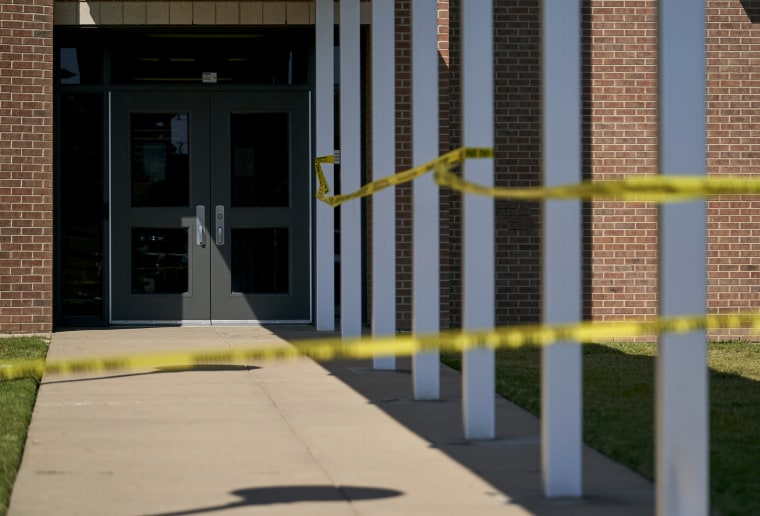
Police tape blocks the entrance to Timberview High School after a student shot two classmates and a teacher on Oct. 6, 2021.Cooper Neill / NYT via Redux file
‘Fearmongering at its worst’

 www.nbcnews.com