Blacks in Europe

Mr. Somebody

Friend Of A Friend
Joined
May 10, 2012
Messages
28,262
Reputation
2,017
Daps
43,621
Reppin
Los Angeles
So ungrateful. Why give him that look when he Tryna look out for you??
Because i wasnt afraid of them, and my girlfriend and i were armed.

He was trying to tell me that friends of african descent were not allowed on the street after dark and to be honest with you friend, im bout that action when confronted by demons.

THIS IS IN HOLLAND.

Its so demonic, friends. :sitdown:
 
Last edited:

Ziploc

Celestial
Joined
May 15, 2014
Messages
4,266
Reputation
1,409
Daps
11,666
Not so sure about that, since the US was basically built on slavery. Not saying that Europe did not benefit from it though, just not sure it benefited more than the US.

And in France/Belgium, black populations don't necessarily stick within their own peer group, Malians hang out with Senegalese, with Congolese, etc. Obviously sharing french as a common language plays a big role. What you may be saying is that on one side Africans stay together, while on the other Blacks from the Caribean (in France's case, the French Antilles) tend to stick together. Actually even people from Martinique won't necessarily hang out with people from Guadeloupe, even if they're all black.


I get the point,not shure how it translates to dollars and cents if we had to tally but i would guess,based on how well the Old World fared on income derived from slavery and most of today's major european corperations have either a tie to bloodmoney or where mechants of death during WWI and WWII,Europe made more money of slavery and war than the US but i could be wrong
 

Ziploc

Celestial
Joined
May 15, 2014
Messages
4,266
Reputation
1,409
Daps
11,666
I get the point,not shure how it translates to dollars and cents if we had to tally but i would guess,based on how well the Old World fared on income derived from slavery and most of today's major european corperations have either a tie to bloodmoney(slavery,piracy weapon sales) or where merchants of death during WWI and WWII,Europe made more money of slavery and war than the US but i could be wrong
 

Fat Kevin

Pro
Joined
Jul 14, 2014
Messages
1,364
Reputation
135
Daps
1,344
Reppin
Buffalo
I'm not sure how racist they are but there seems to be less police brutality (at least outside of Eastern Europe). I've been to France and Spain and people seemed to get along pretty well but I wasn't there long enough to come to conclusions.
 

mbewane

Knicks: 93 til infinity
Joined
May 3, 2012
Messages
19,400
Reputation
4,276
Daps
56,166
Reppin
Brussels, Belgium
I get the point,not shure how it translates to dollars and cents if we had to tally but i would guess,based on how well the Old World fared on income derived from slavery and most of today's major european corperations have either a tie to bloodmoney or where mechants of death during WWI and WWII,Europe made more money of slavery and war than the US but i could be wrong

Good point, I guess it's too hard to reach a figure since some companies were based in Europe but with profits in the US, etc...sure thing is that they both benefited far more than I fear we will ever know
 

Krispy

#FreeBigLurch
Joined
May 26, 2013
Messages
1,720
Reputation
1,380
Daps
3,447
Reppin
UK
I live in the North of England, obviously I have had racial abuse but only twice in my whole life so far and they were both in another city which were known as racist areas. I don't think England is that bad :yeshrug:
 

NoirDynosaur

Yurrrrrrrrrr
Joined
Jun 15, 2018
Messages
5,989
Reputation
2,257
Daps
20,311
Reppin
Planet Earth
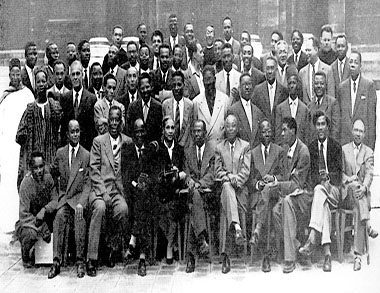
The Negritude movement in Paris, France
delegateslg.jpg


Aimé Césaire introduced the term Négritude in the Paris-based magazine L’Etudiant Noir in 1935; thus before World War II and decades before the decolonization of Africa. Born in Martinique in 1913, his excellent performance in school won him a scholarship at an elite high school in Paris where he met Léopold Senghor from Senegal, seven years his senior and a student of classical philology.

In the 1920s and 1930s, Paris was a hub for intellectuals from francophone Africa, the Caribbean and the USA. Paulette Nardal, writer and journalist from Martinique, the first black student at the Sorbonne, and, together with her sister, a host of a literary salon, also translated many works into French. In this way, the sisters brought together writers of the Harlem Renaissance and students from the French colonial empire, creating a “transnational black public sphere in imperial Paris.”


wilder_freedomtime.jpg


Wilder’s book starts with this period, but mainly focuses on the period after World War II “when these student-poets became poet-politicians participating directly in reshaping the contours of the Fourth and Fifth Republic of France.” Senghor had been a soldier in the French army and was taken prisoner by the Germans in 1940. During his two years as a prisoner of war he wrote “Hosties noires” (Black Hosts) and spent a lot of time reading Goethe. After his release, he worked as a teacher and in 1945 was elected deputy to the French National Assembly for the constituency of Sénégal-Mauritanie. Césaire, too, worked as a teacher upon his return to Martinique in 1938 and was elected mayor of Fort-de-France in 1945. As of 1946 he was deputy to the French National Assembly for the French Communist Party until 1993. Césaire and Senghor were convinced that the future of the colonial territories would not lie in national sovereignty, in the building of new nation states, but in surmounting nationalism through a newly-defined territorial framework. Their starting point was not the French nation state, but the French empire. “Senghor called neither for France to decolonize Africa nor for Africa to liberate itself, but for Africans to decolonize France.”

Wilder’s book can be approached in two ways. At one level, it could be read as an intellectual history of Senghor and Césaire’s political and literary work between 1945 and 1960. 1960 was the so-called Year of Africa, the year 18 colonies became independent and Senghor was elected president of the Republic of Senegal after a union between Mali, as well as the utopian dream of a post-national union with France, had both failed. Wilder reconstructs their concepts of federalism, departmentalism, and self-determination on the eve of independence, as well as their ideas of a non-Stalinist socialism and their notion of a fundamental solidarity needed to achieve a post-national and post-racial society. At another level, Wilder understands his re-reading as providing a perspective still valid in our time as we, again, face the challenge of conceptualising democracy and solidarity in a world that needs to be reordered after the end of the East–West conflict, and that is entangled in nation states, empires, and globalization.


senghor_cesaire.png


Throughout their lives, Senghor and Césaire remained authors of literary texts and this is why Wilder highlights the connections between political thinking and aesthetic practice in the works of his protagonists, who he consider pragmatic utopians and cosmopolitan humanists. Through his elegant and enjoyable style and engaging text Wilder successfully demonstrates that it is possible to decolonize intellectual history by including African philosophy, and also to globalize critical theory by expanding it with the colonial dimension. All this without agreeing with all of Senghor and Césaire’s ideas and without justifying their later politics.

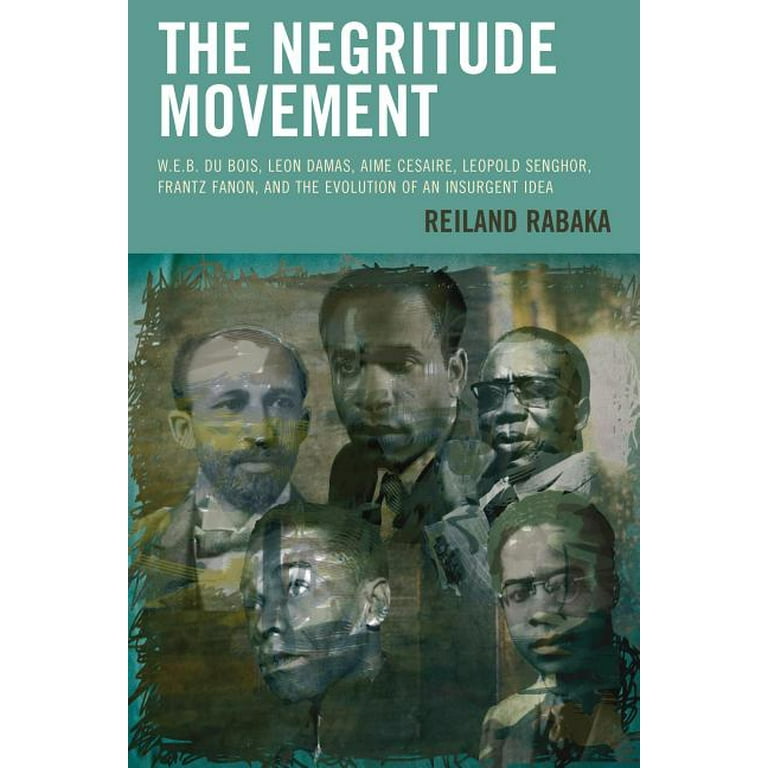
Critical-Africana-Studies-The-Negritude-Movement-W-E-B-Du-Bois-Leon-Damas-Aime-Cesaire-Leopold-Senghor-Frantz-Fanon-Evolution-Insurgent-Idea-Hardcove_0f58bd91-d935-494f-b7b3-8f16fd3b2e44_1.7af6c997ca39ba319a883354d38766d4.jpeg
 

Ziploc

Celestial
Joined
May 15, 2014
Messages
4,266
Reputation
1,409
Daps
11,666
I sometimes wonder how less of an effort it must take to speak of ourselves in binary terms when it comes to our lives,our experiences and lives in general. The assumptions on culture, lifestyle, conditions due to residence are almost childlike in their observation. Life happens wherever you are,trails and tribulation are a fact of life itself. Racism is a construct you will have to deal with in any place on this planet, directly or indirectly. I've been to almost every country in Europe I deem worth visiting and I have stories that either confirm or dismiss every broad stroke take on each of them. If you want know something on a personal level you have to experience it,no amount of anecdotal travel takes will replace that,the world is yours to explore,the places won't always be welcoming or living up to your ideal picture perfect fantasy but if that is going to stop you they've achieved what they set out to do already.
 
Last edited:

null

...
Joined
Nov 12, 2014
Messages
33,862
Reputation
6,542
Daps
52,267
Reppin
UK, DE, GY, DMV
I've been to almost every country in Europe I deem worth visiting and I have stories that either confirm or dismiss every broad stroke take on each of them. If you want know something on a personal level you have to experience it,

yeah studies are useless. statistics are useless. and especially books are useless.

i'm going to the moon next year.

up everest the year after that.

:hubie:
 

NoirDynosaur

Yurrrrrrrrrr
Joined
Jun 15, 2018
Messages
5,989
Reputation
2,257
Daps
20,311
Reppin
Planet Earth
The Moors of Al Andalus (Al-Andalus[a] (Arabic: الأَنْدَلُس) was the Muslim-ruled area of the Iberian Peninsula. The term is used by modern historians for the former Islamic states in modern Spain, Portugal, and France. The name describes the different Muslim states that controlled these territories at various times between 711 and 1492)

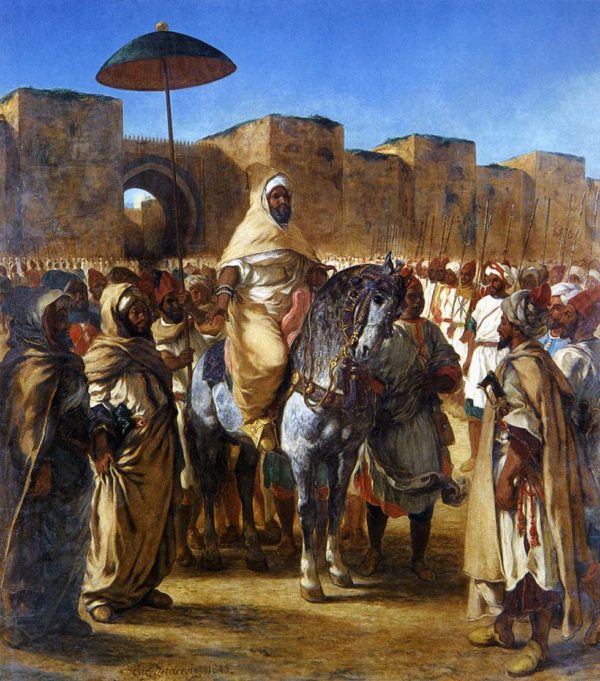
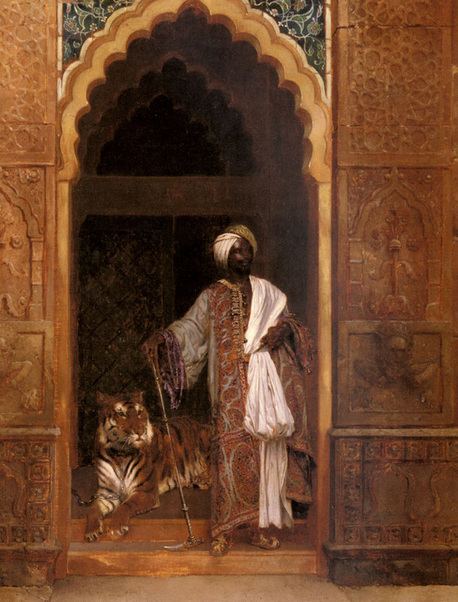
The Moors were the medieval rulers of what is now modern-day Spain, Sicily, Southern France, and Portugal, or as they called it Al-Andalus. They created a highly sophisticated civilization famous for its art, science, architecture, and centers of learning. They would rule in Spain for over 700 years, their civilization would eventually enlighten Europe, ending the Dark Ages and bringing about the Renaissance. Europe at that time was a squalid lot that ran under a corrupt feudal system and an even corrupt church system.

While the most wonderful city in the world of that age was the Moorish capital of Spain, Cordova: the streets were well-paved, with raised sidewalks for pedestrians. During the night, ten miles of streets were well illuminated by lamps. (This was hundreds of years before there was a paved street in Paris or a street lamp in London.) Cordova had a population of at least one million, and it was served by four thousand public markets and five thousand mills. Public baths numbered in the hundreds.

The amenity was present at a time when cleanliness in Christian Europe was regarded as a sin. Education was universal in Moorish Spain, available to the most humble, while in Christian Europe ninety-nine percent of the population was illiterate, and even kings could neither read nor write. The Moorish rulers lived in sumptuous palaces, while the monarchs of Germany, France, and England dwelt in big barns, with no windows and no chimneys, and with only a hole in the roof for the exit of smoke.

The event that would've done most for the intellectual and scientific revival of Europe was the fall of Toledo in Spain to the Christians, in 1105." In Toledo, they had huge libraries containing the lost! (to Christian Europe) works of the Greeks and Romans along with original philosophy and mathematics. "The Spanish libraries were opened, revealing a store of classics and original works that staggered Christian Europeans.

"The subjects covered by the texts included medicine, astrology, astronomy pharmacology, psychology, physiology, zoology, biology, botany, mineralogy, optics, chemistry, physics, mathematics, algebra, geometry, trigonometry, music, meteorology, geography, mechanics, hydrostatics, navigation and history." (Burke, 1985, p. 42. Eventually, the Christian Europeans after centuries of trying to retake these territories, would lead several attempts known as the Reconquista and would bring an end to 700 years of Moorish rule in Spain.

Moors-in-Spain-600x681.jpg

4390382.jpg

247411782_4394438137299374_995279759720201030_n.jpg

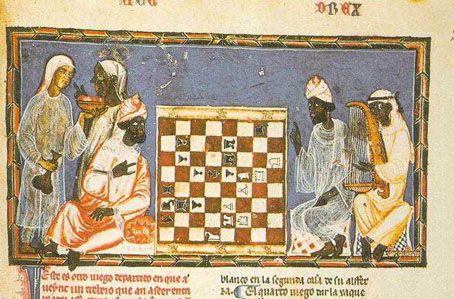
Moorish-Chess-A-depiction-of-Moorish-noblemen-playing-the-board-game-Book-of-Games-1283-AD.jpeg

5166458_orig.jpg

3537197.jpg


1614958_orig.jpg

3142494_orig.jpg

6151607_orig.jpg

5390852_orig.jpg

8707178_orig.jpg
 
Top