Chinese Premier Li strongly calls for global AI cooperation, says that China is willing to share its AI developments with others, promote rapid open-source rollouts, and open up further. He emphasized the need for joint efforts to advance AI for the benefit of all humanity

You are using an out of date browser. It may not display this or other websites correctly.
You should upgrade or use an alternative browser.
You should upgrade or use an alternative browser.
China has become a scientific superpower
- Thread starter bnew
- Start date
More options
Who Replied?


the cac mamba
Veteran
beautiful, clean coal

lol  merica looking funny rn
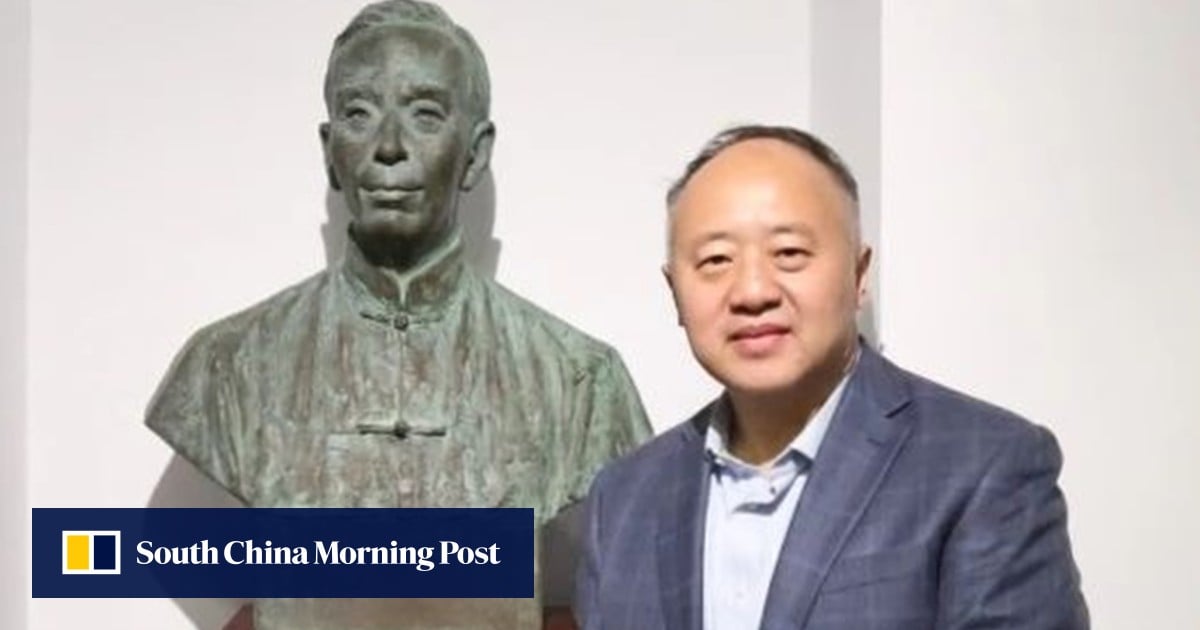
merica looking funny rnTop Harvard mathematician Liu Jun leaves US for China
Posted on Sun Sep 7 23:27:34 2025 UTC
 www.scmp.com
Harvard’s top mathematician Liu Jun leaves US for China
Patriotism, plus ‘a love for education and science’, amid Trump research cuts, sees leading US statistician Liu Jun return to China.
www.scmp.com
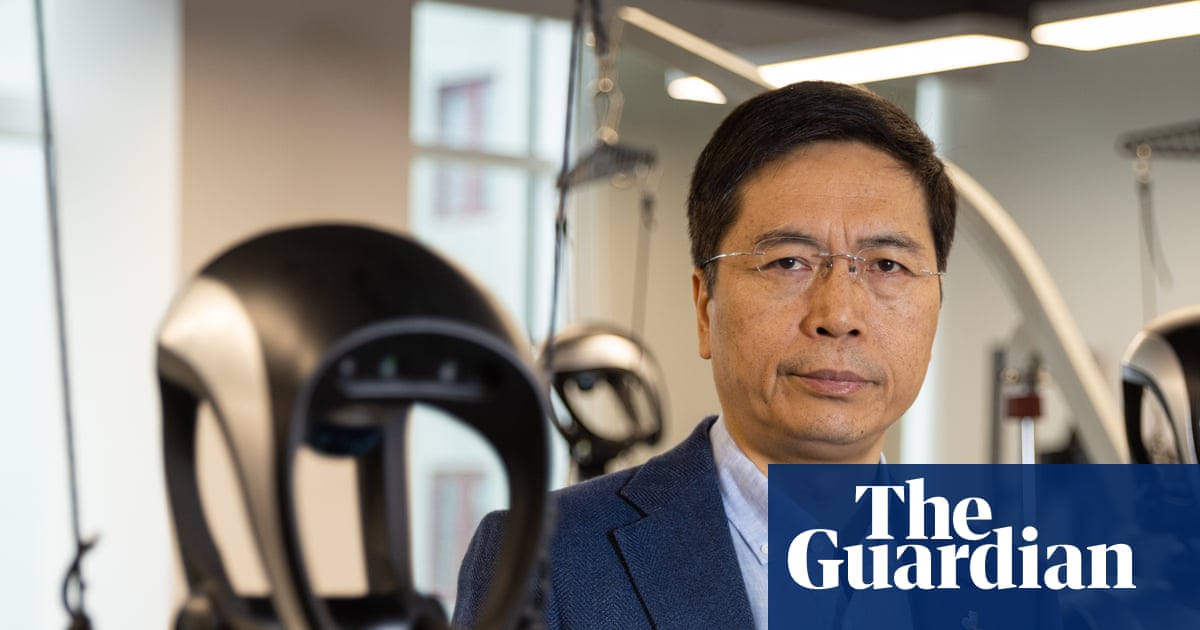
‘I have to do it’: Why one of the world’s most brilliant AI scientists left the US for China
In 2020, after spending half his life in the US, Song-Chun Zhu took a one-way ticket to China. Now he might hold the key to who wins the global AI race
 www.theguardian.com
‘I have to do it’: Why one of the world’s most brilliant AI scientists left the US for China
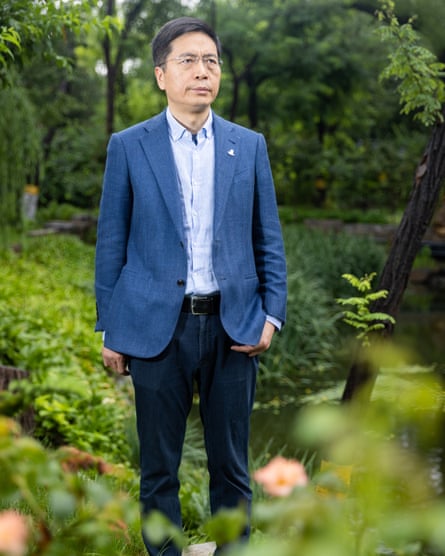
Song-chun Zhu at Peking University, July 2025. Photograph: Sean Gallagher/The Guardian
In 2020, after spending half his life in the US, Song-Chun Zhu took a one-way ticket to China. Now he might hold the key to who wins the global AI race
Chang Che
Tue 16 Sep 2025 00.00 EDT
By the time Song-Chun Zhu was six years old, he had encountered death more times than he could count. Or so it felt. This was the early 1970s, the waning years of the Cultural Revolution, and his father ran a village supply store in rural China. There was little to do beyond till the fields and study Mao Zedong at home, and so the shop became a refuge where people could rest, recharge and share tales. Zhu grew up in that shop, absorbing a lifetime’s worth of tragedies: a family friend lost in a car crash, a relative from an untreated illness, stories of suicide or starvation. “That was really tough,” Zhu recalled recently. “People were so poor.”
The young Zhu became obsessed with what people left behind after they died. One day, he came across a book that contained his family genealogy. When he asked the bookkeeper why it included his ancestors’ dates of birth and death but nothing about their lives, the man told him matter of factly that they were peasants, so there was nothing worth recording. The answer terrified Zhu. He resolved that his fate would be different.
Today, at 56, Zhu is one of the world’s leading authorities in artificial intelligence. In 1992, he left China for the US to pursue a PhD in computer science at Harvard. Later, at University of California, Los Angeles (UCLA), he led one of the most prolific AI research centres in the world, won numerous major awards, and attracted prestigious research grants from the Pentagon and the National Science Foundation. He was celebrated for his pioneering research into how machines can spot patterns in data, which helped lay the groundwork for modern AI systems such as ChatGPT and DeepSeek. He and his wife, and their two US-born daughters, lived in a hilltop home on Los Angeles’s Mulholland Drive. He thought he would never leave.
But in August 2020, after 28 years in the US, Zhu astonished his colleagues and friends by suddenly moving back to China, where he took up professorships at two top Beijing universities and a directorship in a state-sponsored AI institute. The Chinese media feted him as a patriot assisting the motherland in its race toward artificial intelligence. US lawmakers would later demand to know how funders such as UCLA and the Pentagon had ignored “concerning signs” of Zhu’s ties to a geopolitical rival. In 2023, Zhu became a member of China’s top political advisory body, where he proposed that China should treat AI with the same strategic urgency as a nuclear weapons programme.
Zhu’s journey from rural China to the helm of one of the US’s leading AI labs was both improbable and part of a much bigger story. For almost a century, the world’s brightest scientific minds were drawn to the US as the place where they could best advance their research. The work of these new arrivals had helped secure US dominance in technologies such as nuclear weapons, semiconductors and AI. Today, that era seems to be coming to a close. Donald Trump is dismantling the very aspects of US society that once made it so appealing for international talents. He has shut off research funding and attempted to bully top universities, which his administration views as hostile institutions. As US-China tensions have grown, Chinese-born students and professors in the US have faced additional pressures. In a callback to the “red scare” of the 1950s, Chinese students and professors have been detained and deported, and had their visas revoked.
Even as the Trump administration lays siege to the foundations of US science, it has been trumpeting its plans to beat its Chinese rival in the field of AI. In July, Trump announced the creation of a $90bn “AI hub” in Pennsylvania, as well as a national blueprint – created in close coordination with Silicon Valley tech leaders – to dominate every aspect of AI globally, from infrastructure to governance. “America is the country that started the AI race,” Trump said. “I’m here today to declare that America is going to win it.” A month later, China unveiled its own blueprint, vowing to fuse AI with the marrow of its economy, from factory automation to elder care.
At his lavishly funded Beijing Institute for General Artificial Intelligence, Zhu is one of a handful of individuals who the Chinese government has entrusted to push the AI frontier. His ideas are now shaping undergraduate curriculums and informing policymakers. But his philosophy is strikingly different from the prevailing paradigm in the US. American companies such as OpenAI, Meta and Anthropic have collectively invested billions of dollars on the premise that, equipped with enough data and computing power, models built from neural networks – mathematical systems loosely based on neurons in the brain – could lead humanity to the holy grail of artificial general intelligence (AGI). Broadly speaking, AGI refers to a system that can perform not just narrow tasks, but any task, at a level comparable or superior to the smartest humans. Some people in tech also see AGI as a turning point, when machines become capable of runaway self-improvement. They believe large language models, powered by neural networks, may be five to 10 years away from “takeoff”.
Zhu insists that these ideas are built on sand. A sign of true intelligence, he argues, is the ability to reason towards a goal with minimal inputs – what he calls a “small data, big task” approach, compared with the “big data, small task” approach employed by large language models like ChatGPT. AGI, Zhu’s team has recently said, is characterised by qualities such as resourcefulness in novel situations, social and physical intuition, and an understanding of cause and effect. Large language models, Zhu believes, will never achieve this. Some AI experts in the US have similarly questioned the prevailing orthodoxy in Silicon Valley, and their views have grown louder this year as AI progress has slowed and new releases, like GPT-5, have disappointed. A different path is needed, and that is what Zhu is working on in Beijing.
It is hard, in the current AI race, to separate out purely intellectual inquiry from questions of geopolitics. Where researchers choose to carry out their work has become a high-stakes matter. Yet for some scientists, the thrill of intellectual inquiry – as well as the prospect of personal glory – may remain more compelling than the pursuit of national advantage. Mark Nitzberg, Zhu’s friend of 20 years and a fellow classmate back in their Harvard days, was surprised by Zhu’s abrupt return to China. “I asked him: ‘Are you sure you want to do this?’” Nitzberg told me. Returning, he told Zhu, could make him a “vector” to help China dominate AI. In Nitzberg’s recollection, Zhu replied: “They are giving me resources that I could never get in the United States. If I want to make this system that I have in my mind, then this is a once in a lifetime opportunity. I have to do it.”
Nearly everyone who knows Zhu in the west asked me the same question: have you been to his office? Tucked behind Weiming Lake on the north side of Peking University campus, it almost seems built to dazzle visitors. A latticed wooden gate marks the entrance, after which you are led into a courtyard residence that Zhu uses for lectures and seminars. There, his assistants gesture you to the end of the hall, where a back door opens on to a breathtaking landscape of rocks, streams and pomegranate trees. Another courtyard residence can be spotted across the stream, on its own island, accessible via a stone footbridge. That is Zhu’s “office”.
One spring morning when I visited, Zhu was admiring his flora, while grumbling that his stream had been muddied by a rain shower the day before. I asked him who was maintaining the grounds. “We’ve got an entire team,” he said, gesturing to a group of men who had just entered the courtyard. Across from Zhu’s office, on the other side of the stream, is a glass-encased meeting room where he holds court with visitors. We sat there as Zhu began recounting a life spent straddling two superpowers.
Born in 1969, near Ezhou, an ancient river port along the Yangtze, Zhu was the youngest of five children. When he was very young, a wave of intellectuals arrived in his village to be “reeducated”, as part of Mao’s nationwide campaign to remould “bourgeois thought” through hard labour. At night, under candlelight and paraffin lamps, teachers, priests and college graduates held salons near the supply store where Zhu’s father worked. Zhu listened as they debated everything from the Soviet Union’s growing involvement in Afghanistan to the US elections. “By the time I entered elementary school, I felt like I had a good grasp of what was happening in China and the world,” Zhu told me. He knew he did not want to stay in his home town and work in his father’s shop.
After Mao died in 1976, reformers took over the Communist party and soon scientific education replaced Marx as the new religion. Zhu was the top student at his local high school, and won a place at one of the nation’s best universities, the University of Science and Technology of China (USTC) in the city of Hefei, where he majored in computer science. By 1986, when Zhu began his degree, relations between the US and China had normalised and some of his professors were among the first batch of Chinese scholars sent on state-sponsored visits to the US. They brought back hauls of books to be translated. “At the time, we saw America as a beacon, a cathedral of science,” Zhu said.
Among the imported books was Vision by David Marr, a British neuroscientist who had famously broken down human vision – a biological process – into a mathematical framework. Marr’s work suggested that machines might one day be able to “see” the world as humans do. Zhu was hooked. Ever since then, he has dreamed of mapping intelligence – how we think, reason and exercise moral judgment – with the mathematical precision of a physicist charting the cosmos. Building an AGI was, for him, not an end goal, but a part of his deeper pursuit: to discover a “theory of everything” for the mind.
Zhu is known to have cried twice in public over recent years. The first was when recounting to his students the story of his acceptance to Harvard. In 1991, when Zhu graduated from USTC, he was so poor he couldn’t afford the application fees required by American universities. He applied anyway, without paying the fees, though not to the country’s most elite schools – he didn’t dare. In any case, he was summarily rejected. The following year, one of his professors suggested that Zhu apply again, and that Ivy League schools, which had more money, might not care about the missing application fee. A few months later, he was astonished to receive a thick yellow envelope from Harvard, offering him a full fellowship in the university’s doctoral programme in computer science. “It changed my life,” Zhu said.
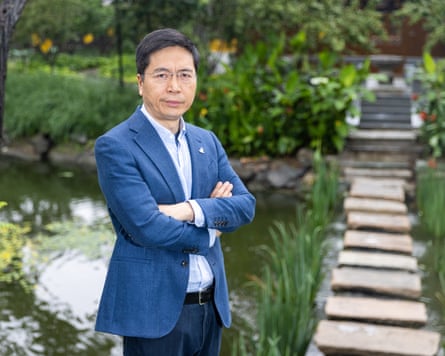
Song-Chun Zhu in the gardens outside his office at Peking University, 10 July 2025. Photograph: Sean Gallagher/The Guardian
The man responsible was David Mumford, a decorated mathematician and Fields medalist who, a few years prior, had begun working on computer vision, a field of AI focused on enabling machines to recognise and process visual information. When Mumford came across an applicant from central China who espoused a “theory of everything” for intelligence, and cited Marr as his muse, he was captivated. “I was just flabbergasted at his vision and how he was going about approaching AI in this comprehensive way,” Mumford told me. In a 2020 interview, Mumford, who became Zhu’s adviser, mentioned the moment he realised he “was dealing with something special”. Zhu had taken an hour-long exam, but left one question blank. Not because it was hard, but because it was too easy. “He said, ‘This is ridiculous,’” recalled Mumford, “but he answered everything else perfectly.”
During our conversations over the course of this spring, Zhu seemed to associate Harvard with the US he had dreamed of in his youth: an open laboratory where a country bumpkin from rural China could, with enough gumption, make technological miracles into reality. This was the US of Edison and Einstein, the land that welcomed Jewish physicists fleeing Hitler’s Germany and gave them refuge, dignity and labs at Los Alamos. In Zhu’s eyes, it was a country that rewarded intellect and ambition over race, ideology and nationality. At Harvard, he never felt out of place, though occasionally he was puzzled by his new home. On one occasion he asked his classmate Nitzberg why no one picked the apples from the trees around Harvard campus. He thought it was a waste of food.
It wasn’t until 1997 that Zhu experienced a real culture shock in the US. After completing his doctorate at Harvard and a brief stint at Brown University, he arrived at Stanford to work as a lecturer. He was accompanied by his wife, Jenny, a former classmate at USTC, whom he had married in 1994. At the time, the Bay was bursting with dot-com excitement. Yahoo had recently gone public on Wall Street and venture capitalists were hovering around campus. Two PhD students in Zhu’s department, Larry Page and Sergey Brin, had just created a search engine called google.com. As students flocked to courses on web development, Zhu’s more theoretical classes on pattern recognition struggled to attract much interest. It was a disheartening moment for him. “At Harvard, it was all about understanding. Their logo was three books,” he told me. But Stanford’s logo – an “S” behind a tree – looked “like a dollar sign”.
Zhu spent a year at Stanford before moving on to Ohio State University, whose culture he found unambitious and parochial, and then in 2002 to UCLA, where he obtained tenure at the age of 33. That same year, Jenny gave birth to their second daughter, Zhu Yi, and a year later he received the Marr Prize, the top award in computer vision. Colleagues likened him to Steve Jobs for his intensity and intolerance of mediocrity. When I asked one of his collaborators at UCLA about what it was like to work with Zhu, he said: “It’s as if I’m on the frontlines of a battlefield. We don’t sit down with a cup of coffee and talk about life or our families. That never happens. It’s always just about work and research.”
During Zhu’s 18 years at UCLA, his field went through almost unimaginable changes. For roughly the first half of this period, he was a leading figure in the AI mainstream. Yet in the second half, he became increasingly disillusioned. Speak to different people and they will propose different theories as to why Zhu ultimately decided to leave the US, but there is little doubt that he was influenced, at least in part, by his intellectual estrangement from the field he had once helped shape.
Zhu’s relationship to the so-called “godfathers of AI” – figures such as Geoffrey Hinton, Yoshua Bengio and Yann LeCun – is, to put it mildly, complicated. There was a time, however, when they were all roughly on the same page. Drawn to the common goal of making intelligent machines, they saw visual perception as a key problem to crack. Until the late 1980s and 90s, the most popular way to make computers “see” was through hand-coded instructions. To identify a handwritten digit, for example, a researcher wrote detailed instructions to a computer, accounting for each scenario where the lines and strokes matched that digit. This rule-based approach was brittle – slight variations in handwriting could break the logic.
Then came a series of breakthroughs. In the late 1980s, LeCun, then a researcher at AT&T Bell Labs, developed a powerful neural network that learned to recognise handwritten zip codes by training on thousands of examples. A parallel development soon unfolded at Harvard and Brown. In 1995, Zhu and a team of researchers there started developing probability-based methods that could learn to recognise patterns and textures – cheetah spots, grass etc – and even generate new examples of that pattern. These were not neural networks: members of the “Harvard-Brown school”, as Zhu called his team, cast vision as a problem of statistics and relied on methods such as “Bayesian inference” and “Markov random fields”. The two schools spoke different mathematical languages and had philosophical disagreements. But they shared an underlying logic – that data, rather than hand-coded instructions, could supply the infrastructure for machines to grasp the world and reproduce its patterns – that exists in today’s AI systems such as ChatGPT.
Throughout the late 1990s and early 2000s, Zhu and the Harvard-Brown school were some of the most influential voices in the computer vision field. Their statistical models helped convince many researchers that lack of data was a key impediment to AI progress. To address this problem, in 2004, two years into his time at UCLA, Zhu and a Microsoft executive set up the Lotus Hill Institute in Zhu’s home town of Ezhou, China. Researchers annotated images of everyday objects such as tables and cups in their physical contexts, and fed them into a big dataset that could be used to train a powerful statistical model. Lotus Hill was one of the earliest attempts to construct the large-scale datasets needed to improve and test AI systems.
By 2009, however, Zhu was losing faith in the data-driven approach. His Lotus Hill team had annotated more than half a million images, but Zhu was troubled by a simple problem: what part of an image one annotated depended, somewhat arbitrarily, on what task one wanted the machines to achieve. If the task was to identify a cup for a robot to grasp, the handle’s position might be critical. If the task was to estimate the cup’s market value, details like the brand and material mattered more. Zhu believed that a truly generalisable intelligence must be able to “think” beyond the data. “If you train on a book, for example, your machine might learn how people talk, but why did we say those words? How did we come to utter them?” Zhu explained to me. A deeper layer of cognition was missing. In 2010, Zhu shut down the institute. He set out instead to build agents with a “cognitive architecture” capable of reasoning, planning and evolving in their physical and social contexts with only small amounts of data.
His timing could not have been worse. Around the same time, an assistant professor at Princeton named Fei-Fei Li released ImageNet, a larger dataset containing more than 3 million labelled images of common objects such as dogs, chairs and bicycles. (Li had attended a workshop at the Lotus Hill Institute and would later cite Zhu as one of her influences.) ImageNet was publicly accessible, and its size and relative simplicity enabled AI researchers to test and hone their image-recognition algorithms. In autumn 2012, a neural network developed by Hinton and his team smashed the ImageNet competition, cementing the dominance of neural networks and kickstarting the global wave of AI adoption that continues to this day.
“Just as I turned my back to big data, it exploded,” wrote Zhu some years later, in a message to his mentor, Mumford. The most explicit clash between Zhu and the neural network school occurred in 2012, just months before the latter’s ImageNet triumph. At the time, Zhu was a general chair of CVPR, the foremost computer vision conference in the US, and that year a paper involving neural networks co-authored by LeCun was rejected. LeCun wrote a furious letter to the committee calling the peer reviews “so ridiculous” that he didn’t know how to “begin writing a rebuttal without insulting the reviewers”. Even today, Zhu maintains that the reviewers were right to have rejected LeCun’s paper. “The theoretical work was not clean,” he told me. “Tell me exactly what you are doing. Why is it so good?” Zhu’s question gets to the heart of his problem with neural networks: though they perform extraordinarily well on numerous tasks, it is not easy to discern why. In Zhu’s view, that has fostered a culture of complacency, a performance-at-all-cost mentality. A better system, he believes, should be more structured and responsible. Either it or its creator should be able to explain its responses.
Whatever Zhu’s reservations, the ImageNet victory triggered an AI gold rush, and many of the pioneers of neural networks were celebrated for their work. Hinton would go on to join Google. LeCun moved to Meta, and Ilya Sutskever, a co-author of the neural network that won ImageNet, helped found OpenAI. In 2018, Hinton and LeCun, along with Bengio, shared the Turing award – computer science’s most prestigious prize – for their work on neural networks. In 2024, Hinton was one of the joint winners of the Nobel prize in physics for his “foundational discoveries and inventions that enable machine learning with artificial neural networks”.
Writing to Mumford, Zhu maintained he had “no regret” about the path he had chosen. But he did feel bitter that Hinton’s team had, to his mind, reaped the rewards of his earlier research. The statistical models and algorithms developed by the Harvard-Brown school in the 1980s and 1990s, Zhu told me, “laid the foundation for later deep learning and large language models”. Hinton and his team “didn’t acknowledge that”, he claimed. A longtime US-based collaborator of Zhu’s, who requested anonymity for fear of US government retaliation, contested Zhu’s interpretation. Zhu deserves more credit, he said, for being one of the earliest advocates of the data-driven paradigm in computer vision, but Hinton’s team devised the algorithms that perfected that approach and enabled it to scale. (Hinton and Bengio declined to comment. LeCun did not respond to requests for comment.)
In the mid-to-late 2010s, as neural networks were making startling progress on problems from facial recognition to disease diagnosis, Zhu was reading philosophy – the Confucians “understand the world much better than AI researchers”, he told me – and working quietly on his cognitive architecture. He was walking a lonely path. In 2019, Zhu served again as a general chair of the CVPR conference. As he read the submitted papers, his heart sank. Nearly all of them focused on squeezing incremental gains from neural networks on narrow tasks. By this time, Zhu’s opposition to neural networks had become visceral. A former doctoral student at UCLA recalled being berated by Zhu several times for sneaking neural networks into his papers. His inner circle learned to avoid forbidden phrases – “neural nets”, “deep learning”, “transformer” (the “T” in GPT). On one occasion, during an all-hands meeting at a LA-based startup Zhu had founded, a new recruit unwittingly added a slide on deep learning to his presentation. According to someone who was present, Zhu blasted him in front of the whole company. (Zhu told me this was “exaggerated”.)
“When he has a vision,” Zhu’s longtime collaborator told me, with some understatement, “he has a very strong belief that he’s right.”
As Zhu’s ideas were being consigned to the margins of the AI community, the broader climate for Chinese scientists in the US was also growing less hospitable. Tensions between the two nations were rising. In China, Xi Jinping muscled his military into a dominant position in the South China Sea and issued internal party edicts warning against adopting “western values”. During Trump’s first presidency, the US designated China as its chief strategic competitor, launched a trade war and blacklisted Chinese tech companies. Under Joe Biden, the US maintained a similarly tough approach to China.
Though world powers routinely spy on each other, in recent years US officials have been alarmed by the scale of China’s espionage campaigns. In 2018, the justice department launched the “China Initiative”, a programme to counter the theft of trade secrets and alleged espionage on US campuses. Critics of the programme claimed that it relied on racial profiling. More than 100 professors of Chinese descent were investigated for allegedly stealing sensitive technologies. Most who were formally charged had their charges dismissed or dropped, and few were found to have been involved in direct intellectual property theft. The Trump-era effort altered the relationship between Chinese scientists and the US. According to a well-known academic study, return migration nearly doubled for experienced Chinese scholars living in the US after 2018.
At the end of 2018, Zhu began receiving calls from a reporter at the Silicon Valley news site The Information, asking about a $150,000 grant he had recently accepted from Huawei, the Chinese telecoms giant. That same month, the US labelled Huawei a national security threat. Zhu told me that the Huawei money came with no strings attached and that he had used it to fund research by his PhD students. Eager to put the matter to rest, he told the reporter that he would not accept any future donations from the company. “Right now, China-US relations are toxic,” he said at the time. “We are caught in the middle of this.”
As US-China relations soured, Zhu found it increasingly difficult to secure funding for AI research, much of which had previously flowed from the US military. He says he has never been questioned by federal agents, nor has he been stopped and questioned by US border officers about his research and connections to China, though his former PhD students have. After the China Initiative began, according to Nitzberg, some of Zhu’s students became so accustomed to being held up at immigration that they would budget the extra hours at the airport when arranging travel to conferences.
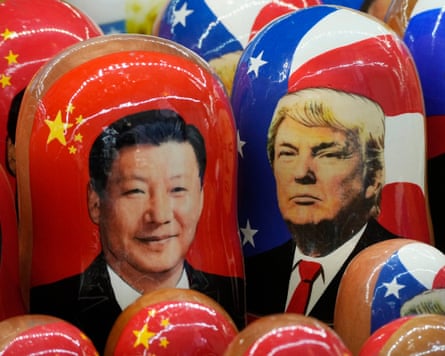
The ‘China Initiative’ in Donald Trump’s first term as president altered the relationship between Chinese scientists and the US. Photograph: Dmitri Lovetsky/AP
In this atmosphere, where China had come to be seen as a direct competitor – or even threat – to the US, scientific links to China that had long been seen as normal now came under a cloud of suspicion. Much of this was based on misapprehensions on how academic research actually works, but it is also true that for decades, the Chinese government had encouraged its US-based scientists to return to China, rolling out recruitment initiatives. The most famous of these, the Thousand Talents Plan, became widely associated with spying and intellectual property theft. In 2024, Mike Gallagher, the chair of the House select committee on China requested documents from UCLA and federal agencies, questioning why Zhu had received millions of dollars of federal funding, despite having allegedly also received funding through the Thousand Talents Plan and having had a “role as a doctoral adviser and researcher at the Beijing Institute of Technology, a prominent Chinese university that has ‘the stated mission of supporting China’s military research and defense industries’”.
On my second visit to Zhu’s office, in May, we discussed these allegations. A secretary poured us tea, refilling our cups the moment they were empty. Zhu denied having any affiliation with the Beijing Institute of Technology, but acknowledged he had co-supervised a PhD student from there who worked at Lotus Hill. He also told me that in 2009, while he was at UCLA, his Lotus Hill team had applied for a local talent programme grant from the Ezhou government, which he used to subsidise researcher salaries. (This was not, he said, part of the Thousand Talents Plan. The national programme spawned many local variants that borrowed the label to attract top scholars to their regions.) He added that there was nothing “sensitive” about the image annotation work conducted there. The funding, he said, lapsed once he shut down the institute in 2010. As for why he had chosen to locate the institute in China, Zhu cited the same reason as thousands of other American enterprises that had set up in China during these years: labour was cheap.
It was in summer 2020, in the early months of Covid, Zhu says, that he made the decision to leave the US. He cited his disaffection with the direction of the AI community and the hothouse of American politics – both its leftwing brand of campus progressivism and the Trump-era national security crusades. There was also a personal factor. His younger daughter, Zhu Yi, is a figure skater who was recruited in 2018 to compete for China in the 2022 Beijing Winter Olympics. By 2019, she had become a Chinese citizen and was competing and training with the Chinese team in Beijing.
At the time he decided to leave, Zhu told me, he did not have any job offers from Chinese institutions. By the autumn, he had been offered full professorships at Peking University and Tsinghua University. Then the city of Beijing agreed to sponsor an AI institute run by Zhu, which would be called the Beijing Institute for General Artificial Intelligence (BigAI).
However, two sources familiar with the matter contested Zhu’s timeline. They say conversations between Zhu and members of the Beijing municipal government began earlier – in early 2018 – and that these concerned not just his potential move to China but that of his younger daughter. In January 2018, Zhu Yi won the novice title at the US figure skating championship. Not long after, the Chinese Olympic Committee recruited her in the same cohort as Eileen Gu, the freestyle skier. After a few stumbles in her Olympic debut, some online commenters questioned whether Zhu Yi had been a bargaining chip for her father. When I put this to Zhu, he called the online speculation “totally wrong” and “not how things work in China”. He acknowledged that he had discussed his daughter’s recruitment with Chinese officials in early 2018, but denied that his return was ever discussed in those conversations. (In February, the Beijing city sports bureau released its 2025 budget, revealing that it had set aside $6.6m solely to support Eileen Gu and Zhu Yi’s training for the 2026 Winter Olympics.)
In August 2020, Zhu flew to China on a one-way ticket. Many of his colleagues and graduate students at UCLA did not know he was planning to leave until he was already gone. He had even kept his decision from his older daughter, who was living in the Bay Area. Zhu attributed his secrecy to the politically volatile climate. Trump was referring to Covid as the “kung flu” and hate crimes against Chinese people had soared. I took Zhu to mean that he did not want to be publicly scapegoated for his decision to move. He knew his personal choice carried larger geopolitical weight.
On the morning that he left the US, Zhu stood outside his house with his suitcase, looking across the sun-bathed hills of Los Angeles. At the edge of the driveway, he turned back and paused to admire his rose garden. It was everything he could have dreamed of as a child, listening to stories of a world beyond his village. Now he was saying goodbye.
The second time Zhu is known to have cried – he prefers to say “moved emotionally” – was when watching a documentary with his students on the life of Qian Xuesen. The Chinese-born, MIT-educated rocket scientist served on the Manhattan Project and helped develop the US’s first guided ballistic missiles. During the McCarthy era, US authorities revoked Qian’s security clearance and kept him under house arrest on suspicion of espionage. No evidence emerged to support such allegations, and in 1955 he was sent back to China in exchange for US prisoners of war. Back in China, Qian led a series of military and technological breakthroughs that helped turn the country into the superpower it is today. Under the “Two Bombs, One Satellite” programme that he led, China developed the capability to launch ballistic missiles that could strike the US.
In the US, Qian’s story has been cited as a cautionary tale of American self-sabotage, a reminder of how anti-communist paranoia drove away a brilliant mind. In the official Chinese version, Qian was a selfless patriot who willingly gave up a comfortable life in the US to serve his backward country. In the 1980s, Qian was a household name among aspiring scientists like Zhu, and since Zhu’s own return to China, the parallels have been clear. In 2023, Zhu suggested to the Communist party’s top political advisory body that it should treat AI in the manner of the Two Bombs, One Satellite programme – that is, a top-down, centrally coordinated plan to race ahead in AI research. When I asked him about that proposal, his response was understated. “In the US, we academics always agreed that we wanted to start a Manhattan Project for AI,” he said. “China should also have a centralised plan for AI. This is natural, there’s no secret about it.”
“When he has a vision,” Zhu’s longtime collaborator told me, with some understatement, “he has a very strong belief that he’s right.”
As Zhu’s ideas were being consigned to the margins of the AI community, the broader climate for Chinese scientists in the US was also growing less hospitable. Tensions between the two nations were rising. In China, Xi Jinping muscled his military into a dominant position in the South China Sea and issued internal party edicts warning against adopting “western values”. During Trump’s first presidency, the US designated China as its chief strategic competitor, launched a trade war and blacklisted Chinese tech companies. Under Joe Biden, the US maintained a similarly tough approach to China.
Though world powers routinely spy on each other, in recent years US officials have been alarmed by the scale of China’s espionage campaigns. In 2018, the justice department launched the “China Initiative”, a programme to counter the theft of trade secrets and alleged espionage on US campuses. Critics of the programme claimed that it relied on racial profiling. More than 100 professors of Chinese descent were investigated for allegedly stealing sensitive technologies. Most who were formally charged had their charges dismissed or dropped, and few were found to have been involved in direct intellectual property theft. The Trump-era effort altered the relationship between Chinese scientists and the US. According to a well-known academic study, return migration nearly doubled for experienced Chinese scholars living in the US after 2018.
At the end of 2018, Zhu began receiving calls from a reporter at the Silicon Valley news site The Information, asking about a $150,000 grant he had recently accepted from Huawei, the Chinese telecoms giant. That same month, the US labelled Huawei a national security threat. Zhu told me that the Huawei money came with no strings attached and that he had used it to fund research by his PhD students. Eager to put the matter to rest, he told the reporter that he would not accept any future donations from the company. “Right now, China-US relations are toxic,” he said at the time. “We are caught in the middle of this.”
As US-China relations soured, Zhu found it increasingly difficult to secure funding for AI research, much of which had previously flowed from the US military. He says he has never been questioned by federal agents, nor has he been stopped and questioned by US border officers about his research and connections to China, though his former PhD students have. After the China Initiative began, according to Nitzberg, some of Zhu’s students became so accustomed to being held up at immigration that they would budget the extra hours at the airport when arranging travel to conferences.
The ‘China Initiative’ in Donald Trump’s first term as president altered the relationship between Chinese scientists and the US. Photograph: Dmitri Lovetsky/AP
In this atmosphere, where China had come to be seen as a direct competitor – or even threat – to the US, scientific links to China that had long been seen as normal now came under a cloud of suspicion. Much of this was based on misapprehensions on how academic research actually works, but it is also true that for decades, the Chinese government had encouraged its US-based scientists to return to China, rolling out recruitment initiatives. The most famous of these, the Thousand Talents Plan, became widely associated with spying and intellectual property theft. In 2024, Mike Gallagher, the chair of the House select committee on China requested documents from UCLA and federal agencies, questioning why Zhu had received millions of dollars of federal funding, despite having allegedly also received funding through the Thousand Talents Plan and having had a “role as a doctoral adviser and researcher at the Beijing Institute of Technology, a prominent Chinese university that has ‘the stated mission of supporting China’s military research and defense industries’”.
On my second visit to Zhu’s office, in May, we discussed these allegations. A secretary poured us tea, refilling our cups the moment they were empty. Zhu denied having any affiliation with the Beijing Institute of Technology, but acknowledged he had co-supervised a PhD student from there who worked at Lotus Hill. He also told me that in 2009, while he was at UCLA, his Lotus Hill team had applied for a local talent programme grant from the Ezhou government, which he used to subsidise researcher salaries. (This was not, he said, part of the Thousand Talents Plan. The national programme spawned many local variants that borrowed the label to attract top scholars to their regions.) He added that there was nothing “sensitive” about the image annotation work conducted there. The funding, he said, lapsed once he shut down the institute in 2010. As for why he had chosen to locate the institute in China, Zhu cited the same reason as thousands of other American enterprises that had set up in China during these years: labour was cheap.
It was in summer 2020, in the early months of Covid, Zhu says, that he made the decision to leave the US. He cited his disaffection with the direction of the AI community and the hothouse of American politics – both its leftwing brand of campus progressivism and the Trump-era national security crusades. There was also a personal factor. His younger daughter, Zhu Yi, is a figure skater who was recruited in 2018 to compete for China in the 2022 Beijing Winter Olympics. By 2019, she had become a Chinese citizen and was competing and training with the Chinese team in Beijing.
At the time he decided to leave, Zhu told me, he did not have any job offers from Chinese institutions. By the autumn, he had been offered full professorships at Peking University and Tsinghua University. Then the city of Beijing agreed to sponsor an AI institute run by Zhu, which would be called the Beijing Institute for General Artificial Intelligence (BigAI).
However, two sources familiar with the matter contested Zhu’s timeline. They say conversations between Zhu and members of the Beijing municipal government began earlier – in early 2018 – and that these concerned not just his potential move to China but that of his younger daughter. In January 2018, Zhu Yi won the novice title at the US figure skating championship. Not long after, the Chinese Olympic Committee recruited her in the same cohort as Eileen Gu, the freestyle skier. After a few stumbles in her Olympic debut, some online commenters questioned whether Zhu Yi had been a bargaining chip for her father. When I put this to Zhu, he called the online speculation “totally wrong” and “not how things work in China”. He acknowledged that he had discussed his daughter’s recruitment with Chinese officials in early 2018, but denied that his return was ever discussed in those conversations. (In February, the Beijing city sports bureau released its 2025 budget, revealing that it had set aside $6.6m solely to support Eileen Gu and Zhu Yi’s training for the 2026 Winter Olympics.)
In August 2020, Zhu flew to China on a one-way ticket. Many of his colleagues and graduate students at UCLA did not know he was planning to leave until he was already gone. He had even kept his decision from his older daughter, who was living in the Bay Area. Zhu attributed his secrecy to the politically volatile climate. Trump was referring to Covid as the “kung flu” and hate crimes against Chinese people had soared. I took Zhu to mean that he did not want to be publicly scapegoated for his decision to move. He knew his personal choice carried larger geopolitical weight.
On the morning that he left the US, Zhu stood outside his house with his suitcase, looking across the sun-bathed hills of Los Angeles. At the edge of the driveway, he turned back and paused to admire his rose garden. It was everything he could have dreamed of as a child, listening to stories of a world beyond his village. Now he was saying goodbye.
The second time Zhu is known to have cried – he prefers to say “moved emotionally” – was when watching a documentary with his students on the life of Qian Xuesen. The Chinese-born, MIT-educated rocket scientist served on the Manhattan Project and helped develop the US’s first guided ballistic missiles. During the McCarthy era, US authorities revoked Qian’s security clearance and kept him under house arrest on suspicion of espionage. No evidence emerged to support such allegations, and in 1955 he was sent back to China in exchange for US prisoners of war. Back in China, Qian led a series of military and technological breakthroughs that helped turn the country into the superpower it is today. Under the “Two Bombs, One Satellite” programme that he led, China developed the capability to launch ballistic missiles that could strike the US.
In the US, Qian’s story has been cited as a cautionary tale of American self-sabotage, a reminder of how anti-communist paranoia drove away a brilliant mind. In the official Chinese version, Qian was a selfless patriot who willingly gave up a comfortable life in the US to serve his backward country. In the 1980s, Qian was a household name among aspiring scientists like Zhu, and since Zhu’s own return to China, the parallels have been clear. In 2023, Zhu suggested to the Communist party’s top political advisory body that it should treat AI in the manner of the Two Bombs, One Satellite programme – that is, a top-down, centrally coordinated plan to race ahead in AI research. When I asked him about that proposal, his response was understated. “In the US, we academics always agreed that we wanted to start a Manhattan Project for AI,” he said. “China should also have a centralised plan for AI. This is natural, there’s no secret about it.”
Zhu has started telling Qian’s story to his undergraduates in Beijing, though which version he emphasises – the scientist betrayed by his adopted homeland or the Chinese patriot – is unclear. When I asked him whether it mattered who won the AI race – the US or China – he paused. “Do I want the Silicon Valley people to win? Probably not.” He wants, he said, the most ethical version of AI to win.
As we talked, Zhu noted how prescient his departure now looks, given the scorched-earth politics of the second Trump administration. In one recent poll, three in four scientists in the US said they were considering leaving. Many AI leaders, including LeCun, have spoken out about how Trump’s budget cuts to scientific research will harm their work. Chinese universities have capitalised on the exodus, courting students from Harvard and researchers who have lost their jobs following recent federal budget cuts. (The EU is doing the same.) In May, Marco Rubio, the US secretary of state, threatened to “aggressively revoke” Chinese student visas. And in a revival of China Initiative rhetoric, Republicans have introduced legislation that they say would “counter China’s malign ambitions to steal American research”.
It is a common refrain, on the American right, that the US has lost its ambition, the kind once embodied by the Manhattan Project or Apollo missions, and that it is falling behind. Chinese EVs zip through Europe’s countryside and American pharmacies depend heavily on Chinese-made ingredients. China has surpassed the US in the number of authored papers in science and technology journals, and that gap is likely to grow. There are four times as many Stem students graduating from Chinese universities each year than in the US. The danger is that in chasing away international talent, the US risks undoing one of the advantages it once had over its competitors. (“My PhD students at Peking University are at least on a par with those at MIT and Stanford,” Zhu told me proudly.) Openness to the world’s smartest minds is what helped the US establish its lead in the AI race, as well as countless other fields.
When Zhu left the US, his collaborators feared that his research in China would lose its independence. Zhu, by contrast, has suggested that he feels more liberated to focus on his research in Beijing. Formally, his US-based collaborators were right: there is no separation between the state and research institutions in China. Yet in practice, China’s scientists tend to enjoy considerable autonomy, and if they are working in an area of strategic importance, immense resources can be channelled their way. In the five years since his move to Beijing, Zhu has been offered several hundred million dollars of research funding from Chinese sources, according to two people close to him. The deal with the state is like a long and loose leash – most of the time it is slack, but it can be pulled, tightened at the party’s whim.
In the US, academics who, in principle, are never leashed, are now feeling a sudden yank from the Trump administration. Billions of dollars in research funding have been paused until universities acquiesce to what the Harvard University president described as “direct governmental regulation” of the university’s “intellectual conditions”. In March, Columbia University agreed to new oversight of its Middle Eastern, South Asian and African Studies departments. Tony Chan, the former president of Hong Kong University of Science and Technology and a former faculty dean at UCLA, has experience in both university systems. He told me what he is seeing now in the US is worse than anything he ever saw in China. “We used to be able to clearly say that US universities were independent of the politicians. That was the advantage of the American academic system,” Chan told me. “I cannot say that any more.”
In both China and the US, Zhu has a reputation as a tough academic adviser, with strict intellectual orthodoxies. According to his current students in Beijing, he has a go-to refrain, now immortalised as a gif that circulates in their group chats: “If you do that again, you will be dismissed!” Zhu is not, in other words, easily swayed. So when OpenAI unveiled ChatGPT in 2022, and much of the Chinese tech sector was stunned – one Chinese AI founder admitted he felt “lost” and “couldn’t sleep”, demoralised by the feeling of being bested again by the west – Zhu was untroubled. At an AI panel in early 2023, he avoided any praise for ChatGPT as a technical feat. Large language models, he said, “still fall short” of AGI because they do not “have the ability to understand or align with human values”.
Later that year, Mumford, the professor who Zhu credits with changing his life by admitting him to Harvard, travelled to Beijing to receive a maths prize. He was in his 80s and had been retired for nearly a decade. Were it not for the chance to “find out what Song-Chun was doing”, Mumford told me, he likely wouldn’t have made the trip. The two share a close bond, and used to meet regularly at Zhu’s lab in UCLA. In Zhu’s office at Peking University, there is a framed letter from Mumford to Zhu in which he wrote: “I feel that you are truly my intellectual heir.”
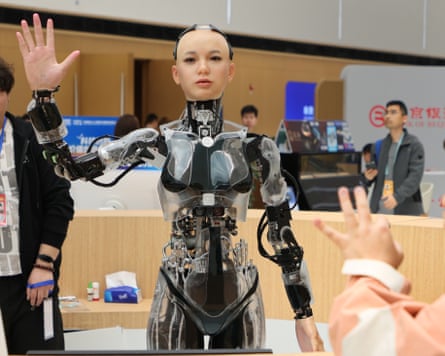
A humanoid robot shakes hands with a journalist at the Zhongguancun Forum in Beijing, March 2025. Photograph: VCG/Getty Images
They do not agree on everything, however. While Zhu had largely dismissed neural networks, Mumford came to see something profound in their mathematical structure, and he wanted to nudge his old student to reassess his views. “More than anything else,” Mumford told me, “what I was trying to convey was that I felt BigAI had to have a big team working on deep learning techniques in order to be successful.”
In Beijing, Mumford strolled with Zhu through the creeks, willows and paved roads of the Peking University campus, and dined with Zhu’s family. Then Mumford pressed his case. Zhu’s friends and students told me that it appears to have worked – somewhat. He has allowed his students to experiment with transformers – the most advanced neural network architecture – on some tasks. Researchers who once sneaked neural networks into their projects like contraband say they can use them more openly. Zhu is “by far the most brilliant student in computer vision I ever had”, Mumford later told me. And yet “it took him a long time to see that deep learning was doing tremendous things. I feel that was a major mistake of his.”
Nevertheless, neural networks will always play a circumscribed role in Zhu’s vision of AGI. “It’s not that we reject these methods,” Zhu told me. “What we say is they have their place.”
One Saturday morning in March, Zhu invited me to an annual tech forum in Beijing where BigAI was showcasing its latest technology. A robot dog pranced around the conference building as onlookers shouted commands (“Sit. Sit! I said SIT DOWN!”). Nearby, children clustered around a spindly mechanical arm playing the strategy game Go. Outside the main hall, a humanoid female head with almond-coloured eyes stared blankly into the crowd. When visitors approached, it scanned their faces. Soon, its silicone skin began to twitch, contorting into facial expressions that mimicked theirs.
At the previous year’s tech forum, BigAI had unveiled a virtual humanoid child named TongTong, who, they hoped, would have capabilities that most AIs lack. Researchers widely agree that commonsense intuitions about how the physical and social world work are among the hardest things for neural networks to grasp. As LeCun recently put it: “We have LLMs that can pass the bar exam, so they must be smart. But then they can’t learn to drive in 20 hours like any 17-year-old, they can’t learn to clear up the dinner table, or fill in the dishwasher like any 10-year-old can in one shot. Why is that? What are we missing?” TongTong wasn’t ready to practise law, but it seemed to be able to load a dishwasher. It was designed to mimic the cognitive and emotional capacities of a three- to four-year-old child.
This year, the BigAI team was debuting TongTong 2.0, which they claim has the capabilities of a five- or six-year-old. On a large video screen, TongTong 2.0 took the form of an animated girl playing in a virtual living room. At the front of the conference room, a BigAI engineer was going through a live demonstration of TongTong’s abilities. When the engineer asked TongTong to work with her friend LeLe, another AI agent, to find a toy, TongTong appeared to avoid areas her friend had already searched. Later, when TongTong was asked to retrieve a TV remote from a bookshelf that was out of reach, she used a cushion to give herself an extra boost. (When prompting ChatGPT to do similar tasks, researchers have found it to be an “inexperienced commonsense problem solver”. Zhu believes that this weakness is not one that deep learning systems such as ChatGPT will be able to overcome.)
For now, TongTong exists only as a software operating within a simulated environment, rather than a 3D robot in the physical world. After the presentation, BigAI announced several partnerships with robotics companies. A crucial test of Zhu’s technology will be whether it can exist as an embodied system and still perform the reasoning and planning he ascribes so much weight to.
Weizenbaum’s nightmares: how the inventor of the first chatbot turned against AI
Read more
Before the presentation, Zhu had arrived at the podium in a blue blazer to deliver a keynote. He began by contrasting his own AI philosophy with what he called the “Silicon Valley narrative”, that AGI could be attained through more data and computing power. The Chinese media, the public and government agencies had been sold a false narrative, one that had spawned a profusion of vacuous Chinese “AI institutes” and inflated startup valuations, as he put it in a written version of the speech published later. One consequence of this misdirection was that it had convinced the Chinese that they were victims of the west’s “stranglehold”, or kabozi, a term that has come to refer to the US’s export controls to China on high-end computer chips. To Zhu, the key factor holding back AI progress is not insufficient computing power, but a misguided approach to the whole subject. What had started as an academic feud conducted in conferences and peer review journals now seemed to be entangled in an epoch-defining contest for technological supremacy.
As we talked, Zhu noted how prescient his departure now looks, given the scorched-earth politics of the second Trump administration. In one recent poll, three in four scientists in the US said they were considering leaving. Many AI leaders, including LeCun, have spoken out about how Trump’s budget cuts to scientific research will harm their work. Chinese universities have capitalised on the exodus, courting students from Harvard and researchers who have lost their jobs following recent federal budget cuts. (The EU is doing the same.) In May, Marco Rubio, the US secretary of state, threatened to “aggressively revoke” Chinese student visas. And in a revival of China Initiative rhetoric, Republicans have introduced legislation that they say would “counter China’s malign ambitions to steal American research”.
It is a common refrain, on the American right, that the US has lost its ambition, the kind once embodied by the Manhattan Project or Apollo missions, and that it is falling behind. Chinese EVs zip through Europe’s countryside and American pharmacies depend heavily on Chinese-made ingredients. China has surpassed the US in the number of authored papers in science and technology journals, and that gap is likely to grow. There are four times as many Stem students graduating from Chinese universities each year than in the US. The danger is that in chasing away international talent, the US risks undoing one of the advantages it once had over its competitors. (“My PhD students at Peking University are at least on a par with those at MIT and Stanford,” Zhu told me proudly.) Openness to the world’s smartest minds is what helped the US establish its lead in the AI race, as well as countless other fields.
When Zhu left the US, his collaborators feared that his research in China would lose its independence. Zhu, by contrast, has suggested that he feels more liberated to focus on his research in Beijing. Formally, his US-based collaborators were right: there is no separation between the state and research institutions in China. Yet in practice, China’s scientists tend to enjoy considerable autonomy, and if they are working in an area of strategic importance, immense resources can be channelled their way. In the five years since his move to Beijing, Zhu has been offered several hundred million dollars of research funding from Chinese sources, according to two people close to him. The deal with the state is like a long and loose leash – most of the time it is slack, but it can be pulled, tightened at the party’s whim.
In the US, academics who, in principle, are never leashed, are now feeling a sudden yank from the Trump administration. Billions of dollars in research funding have been paused until universities acquiesce to what the Harvard University president described as “direct governmental regulation” of the university’s “intellectual conditions”. In March, Columbia University agreed to new oversight of its Middle Eastern, South Asian and African Studies departments. Tony Chan, the former president of Hong Kong University of Science and Technology and a former faculty dean at UCLA, has experience in both university systems. He told me what he is seeing now in the US is worse than anything he ever saw in China. “We used to be able to clearly say that US universities were independent of the politicians. That was the advantage of the American academic system,” Chan told me. “I cannot say that any more.”
In both China and the US, Zhu has a reputation as a tough academic adviser, with strict intellectual orthodoxies. According to his current students in Beijing, he has a go-to refrain, now immortalised as a gif that circulates in their group chats: “If you do that again, you will be dismissed!” Zhu is not, in other words, easily swayed. So when OpenAI unveiled ChatGPT in 2022, and much of the Chinese tech sector was stunned – one Chinese AI founder admitted he felt “lost” and “couldn’t sleep”, demoralised by the feeling of being bested again by the west – Zhu was untroubled. At an AI panel in early 2023, he avoided any praise for ChatGPT as a technical feat. Large language models, he said, “still fall short” of AGI because they do not “have the ability to understand or align with human values”.
Later that year, Mumford, the professor who Zhu credits with changing his life by admitting him to Harvard, travelled to Beijing to receive a maths prize. He was in his 80s and had been retired for nearly a decade. Were it not for the chance to “find out what Song-Chun was doing”, Mumford told me, he likely wouldn’t have made the trip. The two share a close bond, and used to meet regularly at Zhu’s lab in UCLA. In Zhu’s office at Peking University, there is a framed letter from Mumford to Zhu in which he wrote: “I feel that you are truly my intellectual heir.”
A humanoid robot shakes hands with a journalist at the Zhongguancun Forum in Beijing, March 2025. Photograph: VCG/Getty Images
They do not agree on everything, however. While Zhu had largely dismissed neural networks, Mumford came to see something profound in their mathematical structure, and he wanted to nudge his old student to reassess his views. “More than anything else,” Mumford told me, “what I was trying to convey was that I felt BigAI had to have a big team working on deep learning techniques in order to be successful.”
In Beijing, Mumford strolled with Zhu through the creeks, willows and paved roads of the Peking University campus, and dined with Zhu’s family. Then Mumford pressed his case. Zhu’s friends and students told me that it appears to have worked – somewhat. He has allowed his students to experiment with transformers – the most advanced neural network architecture – on some tasks. Researchers who once sneaked neural networks into their projects like contraband say they can use them more openly. Zhu is “by far the most brilliant student in computer vision I ever had”, Mumford later told me. And yet “it took him a long time to see that deep learning was doing tremendous things. I feel that was a major mistake of his.”
Nevertheless, neural networks will always play a circumscribed role in Zhu’s vision of AGI. “It’s not that we reject these methods,” Zhu told me. “What we say is they have their place.”
One Saturday morning in March, Zhu invited me to an annual tech forum in Beijing where BigAI was showcasing its latest technology. A robot dog pranced around the conference building as onlookers shouted commands (“Sit. Sit! I said SIT DOWN!”). Nearby, children clustered around a spindly mechanical arm playing the strategy game Go. Outside the main hall, a humanoid female head with almond-coloured eyes stared blankly into the crowd. When visitors approached, it scanned their faces. Soon, its silicone skin began to twitch, contorting into facial expressions that mimicked theirs.
At the previous year’s tech forum, BigAI had unveiled a virtual humanoid child named TongTong, who, they hoped, would have capabilities that most AIs lack. Researchers widely agree that commonsense intuitions about how the physical and social world work are among the hardest things for neural networks to grasp. As LeCun recently put it: “We have LLMs that can pass the bar exam, so they must be smart. But then they can’t learn to drive in 20 hours like any 17-year-old, they can’t learn to clear up the dinner table, or fill in the dishwasher like any 10-year-old can in one shot. Why is that? What are we missing?” TongTong wasn’t ready to practise law, but it seemed to be able to load a dishwasher. It was designed to mimic the cognitive and emotional capacities of a three- to four-year-old child.
This year, the BigAI team was debuting TongTong 2.0, which they claim has the capabilities of a five- or six-year-old. On a large video screen, TongTong 2.0 took the form of an animated girl playing in a virtual living room. At the front of the conference room, a BigAI engineer was going through a live demonstration of TongTong’s abilities. When the engineer asked TongTong to work with her friend LeLe, another AI agent, to find a toy, TongTong appeared to avoid areas her friend had already searched. Later, when TongTong was asked to retrieve a TV remote from a bookshelf that was out of reach, she used a cushion to give herself an extra boost. (When prompting ChatGPT to do similar tasks, researchers have found it to be an “inexperienced commonsense problem solver”. Zhu believes that this weakness is not one that deep learning systems such as ChatGPT will be able to overcome.)
For now, TongTong exists only as a software operating within a simulated environment, rather than a 3D robot in the physical world. After the presentation, BigAI announced several partnerships with robotics companies. A crucial test of Zhu’s technology will be whether it can exist as an embodied system and still perform the reasoning and planning he ascribes so much weight to.
Weizenbaum’s nightmares: how the inventor of the first chatbot turned against AI
Read more
Before the presentation, Zhu had arrived at the podium in a blue blazer to deliver a keynote. He began by contrasting his own AI philosophy with what he called the “Silicon Valley narrative”, that AGI could be attained through more data and computing power. The Chinese media, the public and government agencies had been sold a false narrative, one that had spawned a profusion of vacuous Chinese “AI institutes” and inflated startup valuations, as he put it in a written version of the speech published later. One consequence of this misdirection was that it had convinced the Chinese that they were victims of the west’s “stranglehold”, or kabozi, a term that has come to refer to the US’s export controls to China on high-end computer chips. To Zhu, the key factor holding back AI progress is not insufficient computing power, but a misguided approach to the whole subject. What had started as an academic feud conducted in conferences and peer review journals now seemed to be entangled in an epoch-defining contest for technological supremacy.
Zhu is remarkably consistent in his views, but the way he frames his message has shifted over the years. In his speech, his rhetoric occasionally echoed that of party officials, who issue warnings not to follow the west on issues such as free trade and human rights. China, Zhu said, needed to “resist blindly following” the Silicon Valley narrative and develop its own “self-sufficient” approach to AI. (“The officials really like how he frames things,” one of his former students told me.) And yet in my four meetings with Zhu, he struck me as more intensely animated by the stakes of his intellectual quarrels than by international competition between the two countries where he had each spent exactly half his life. In service of his ambitions, he had learned to speak the Communist party’s vernacular.
By the time I left Zhu’s courtyard residence, it was the late afternoon. The sun had slanted below the rooftops, setting the magnolia blossoms aglow in a wash of pink. Zhu accompanied me back to the lattice fence that marked the entrance to his office. He wanted to reiterate that politics was not what was motivating him. “Over the last 30 years, I’ve been focused on one thing. It’s the unified theory of AI. To build understanding. That’s my only drive,” he told me. He brought up his research with Mumford again. “The Harvard and Brown school” of computer science, Zhu said, proudly. “That’s what we’re carrying on here.”
This article was supported by a grant from the Tarbell Center
Listen to our podcasts here and sign up to the long read weekly email here.
By the time I left Zhu’s courtyard residence, it was the late afternoon. The sun had slanted below the rooftops, setting the magnolia blossoms aglow in a wash of pink. Zhu accompanied me back to the lattice fence that marked the entrance to his office. He wanted to reiterate that politics was not what was motivating him. “Over the last 30 years, I’ve been focused on one thing. It’s the unified theory of AI. To build understanding. That’s my only drive,” he told me. He brought up his research with Mumford again. “The Harvard and Brown school” of computer science, Zhu said, proudly. “That’s what we’re carrying on here.”
This article was supported by a grant from the Tarbell Center
Listen to our podcasts here and sign up to the long read weekly email here.
Source : https://www.ndtv.com/science/chines...t-repairs-fractures-in-just-3-minutes-9269462
Read Time: 2 mins
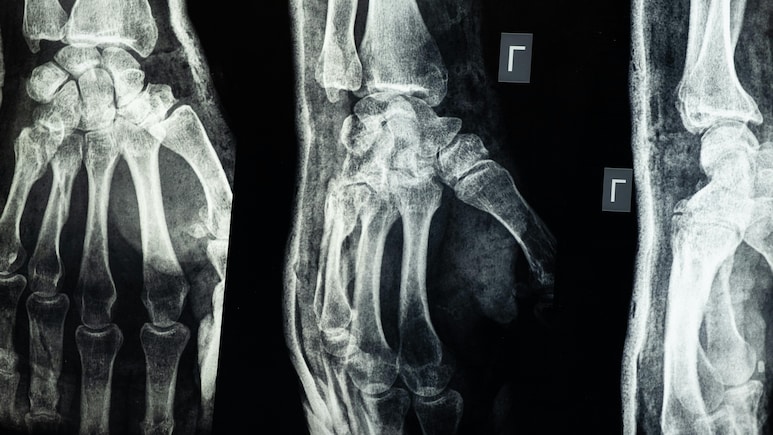
Chinese scientists have claimed to achieve a breakthrough in bone adhesives.
Did our AI summary help?
Let us know.
Chinese researchers claimed to have developed a medical bone glue that can be used to treat fractures and shattered bone fragments in just three minutes. The need for a bone adhesive to repair fractures, as well as to glue orthopaedic devices in place, has long been considered a holy grail, but Chinese scientists appeared to have cracked the code.
The product dubbed "Bone 02" bone glue was unveiled by a research team in East China's Zhejiang Province on Wednesday (Sep 10), according to Global Times. Lin Xianfeng, the leader and associate chief orthopaedic surgeon at Sir Run Run Shaw Hospital, stated that he found inspiration to develop bone glue after observing oysters clinging firmly to a bridge underwater.
As per Mr Lin, the adhesive can achieve precise fixation within two to three minutes, even in a blood-rich environment. The glue can also be naturally absorbed by the body as the bone heals, eliminating the need for another surgery to remove implants.
Lab tests confirmed that "Bone-02" managed to perform on both safety and effectiveness metrics. In one of the trials, the procedure was completed in less than 180 seconds or three minutes, while conventional treatment methods would have required a large incision to implant steel plates and screws. As per CCTV, the bone glue has been successfully tested in over 150 patients.
The glued bones showed a maximum bonding force of over 400 pounds, a shear strength of about 0.5 MPa, and a compressive strength of around 10 MPa, which highlights that the product may have the potential to replace traditional metal implants. It could also reduce the risks of reaction and infection, the scientists stated.
Currently, there are a number of bone cements and bone void fillers in the market to fix fractures, but none claim to have any adhesive properties. The first bone adhesives were developed in the 1940s and were based on gelatine, epoxy resins, and acrylates. However, they were not appropriate and were discarded because of biocompatability issues.
Chinese Scientists Create 'Bone Glue' That Repairs Fractures In Just 3 Minutes
The glue can also be naturally absorbed by the body as the bone heals, eliminating the need for another surgery to remove implants.
Read Time: 2 mins
Chinese scientists have claimed to achieve a breakthrough in bone adhesives.
- Chinese researchers developed Bone 02 glue to treat fractures in three minutes or less
- The glue achieves precise fixation even in blood-rich environments and is bioabsorbable
- Bone 02 has been tested successfully in over 150 patients with strong bonding strength
Did our AI summary help?
Let us know.
Chinese researchers claimed to have developed a medical bone glue that can be used to treat fractures and shattered bone fragments in just three minutes. The need for a bone adhesive to repair fractures, as well as to glue orthopaedic devices in place, has long been considered a holy grail, but Chinese scientists appeared to have cracked the code.
The product dubbed "Bone 02" bone glue was unveiled by a research team in East China's Zhejiang Province on Wednesday (Sep 10), according to Global Times. Lin Xianfeng, the leader and associate chief orthopaedic surgeon at Sir Run Run Shaw Hospital, stated that he found inspiration to develop bone glue after observing oysters clinging firmly to a bridge underwater.
As per Mr Lin, the adhesive can achieve precise fixation within two to three minutes, even in a blood-rich environment. The glue can also be naturally absorbed by the body as the bone heals, eliminating the need for another surgery to remove implants.
Potential to replace metal implants?
Lab tests confirmed that "Bone-02" managed to perform on both safety and effectiveness metrics. In one of the trials, the procedure was completed in less than 180 seconds or three minutes, while conventional treatment methods would have required a large incision to implant steel plates and screws. As per CCTV, the bone glue has been successfully tested in over 150 patients.
The glued bones showed a maximum bonding force of over 400 pounds, a shear strength of about 0.5 MPa, and a compressive strength of around 10 MPa, which highlights that the product may have the potential to replace traditional metal implants. It could also reduce the risks of reaction and infection, the scientists stated.
Currently, there are a number of bone cements and bone void fillers in the market to fix fractures, but none claim to have any adhesive properties. The first bone adhesives were developed in the 1940s and were based on gelatine, epoxy resins, and acrylates. However, they were not appropriate and were discarded because of biocompatability issues.

Wow
1/37
@FrankLuntz
Chinese solar is now expanding so fast that by the early 2030s, the country will generate more power from the sun than the amount of electricity the U.S. will consume altogether. https://www.cnn.com/2024/11/18/climate/climate-china-solar-wind-dg
2/37
@JumboElliott76
Now checkout there Nuclear power development. That's the danger to America. It'll give them Superiority in energy/tech if we dont get moving.
Solar isn't built for that.
3/37
@jeffreybvaughn
This seems like it should be a priority
4/37
@EdClintonJr1
This is one of those @FrankLuntz gentle reminders to /search?q=#MAGA that hating on solar power or saying loudly that global warming is a myth isn't a long-term winning strategy. It is a polite way of saying that /search?q=#MAGA is a backwards philosophy.
5/37
@gregmcantwell
Green energy is smart. It’s sustainable and clean.
6/37
@LarryBoorstein
We can't have solar in the United States because, like other vampires, Donald Trump is afraid of sunlight. He's afraid of his own shadow. He's also afraid of wind. But not "big, beautiful clean coal," because he loves black lung disease, cancer and cardiovascular damage.
7/37
@elander777
... and China is also ramping up its use of wind turbines, aka windmills, to generate power.
8/37
@SanjayNarayan
Who cares? More importantly, they’re also building 350+ coal fire power plants in next decade, orders of magnitude more than we are, and hundreds of Gen 4 nuclear reactors. That’s what we should be doing in US - to produce more reliable energy, and drive down cost.
9/37
@SocomRaiders
Meanwhile we have a moron for president who thinks when the sun does not shine there is no electricity.
10/37
@Seamus44946806
Good for them, I’ll take natural gas any day of the week
11/37
@agentic_orange
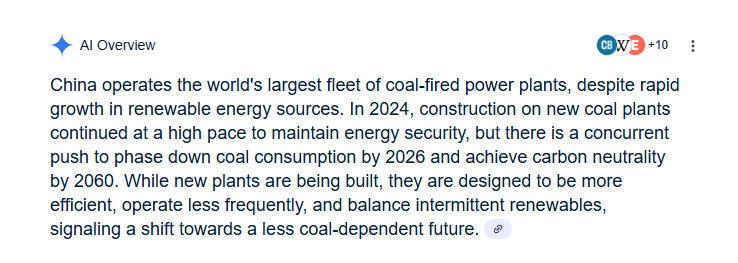
This is a claim being made by people trying to sell solar cells made in China to americans. They're still starting new Coal Power plants. If they thought solar was going to be the way of the future, they would not be starting new coal power plants.
12/37
@JulesMoffit
I love how the right claims that everything they’ve done is to bring back respect and power to America but when you begin to stack up the progress made by the two superpowers of the world, it’s not even fukking close.
13/37
@douglasritz
“the country will generate more power from the sun than the amount of electricity the U.S. will consume altogether.”
They are also permitting two coal-fired power plants PER WEEK to supplement the shyt tech that is solar.
14/37
@CAlowdown
Like the centrally planned, unused ghost cities? How many hillsides covered with solar panels in China will be unused, and not connected to a reliable grid? Also, coal plants continue to be built. China wishes they had natgas reserves like America .
.
[Quoted tweet]
Joerg Wuttke, who has lived in China for over 30 years, estimates there are 80 to 90 million empty and unfinished apartments in China. That’s enough apartments to house everyone in Germany. cbsn.ws/3STKE0t
https://video.twimg.com/amplify_video/1761915482641215488/vid/avc1/1920x1080/0WiDNbGPkjSvpLmL.mp4
15/37
@CraigABrill
And yet they will still produce more electricity from coal!
16/37
@BatemanUnhinged
Frank is gay
17/37
@AnneDestiny1
Sadly, /search?q=#China uses /search?q=#Uyghur /search?q=#forcedlabor to make solar panels!
China uses Uyghur forced labour to make solar panels, says report
18/37
@waterfrontray
Yea but: @CNN why no one believes you
19/37
@smcdermont
Then why are they ramping up coal and nuclear?
20/37
@MichaelJames357

“By the early 2030s”
Really. The early 2030s? Not 2031 or 2034? Just a vague, hand waving of a general time period far away enough to be possibly plausible but too far away that anyone will remember to do a follow up?
Nah. Not buying it.
21/37
@RobertCFP
And destroying their landscape for a completely unreliable power source. Yeah, that's not a flex, Frank.
22/37
@Elder_Barry_
BS they are building over 100 coal fired power plants
23/37
@JBlankensh43541
And it will look like hell
24/37
@USMarineVet1969
And by the 2040s they will be a wasteland of discarded trash. Who cares?
25/37
@WayneWike
China increases their harvest of free energy while America digs for more coal.
26/37
@parrishdb71
How much power do they generate from coal?
27/37
@northstar_wind
Good for them. Very exciting to get away from fossil fuels. Let's hope they continue to perfect energy sources for the good of our planet.
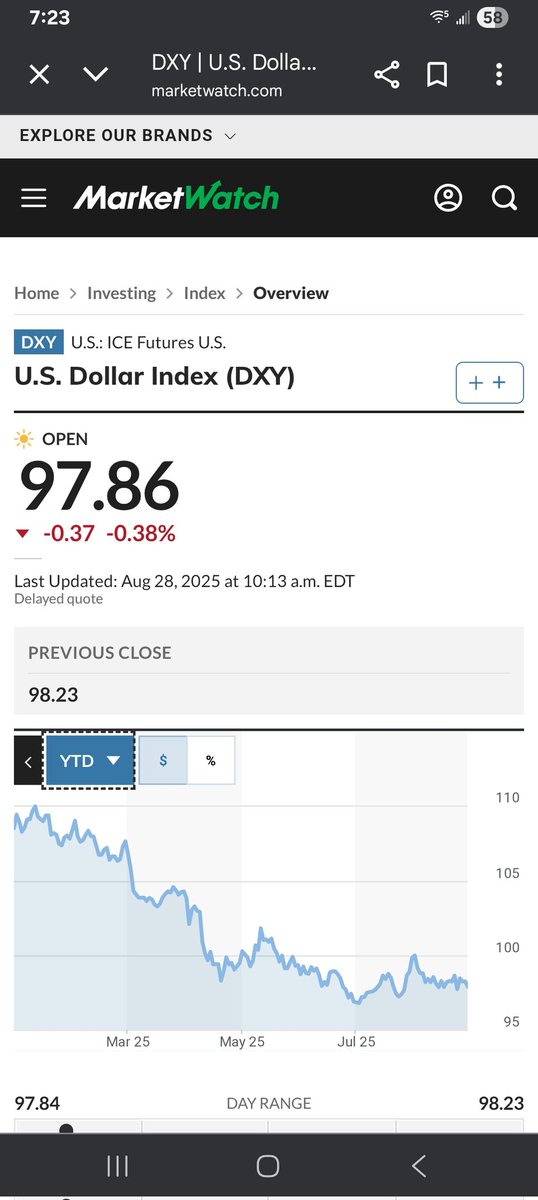
Trump gave us coal and this that dikk tator.
28/37
@jcmaggi
Dems wanted clean energy. But now we'll be stuck in the 70s because of shyt bag conservatives
29/37
@kturet
THERE WON'T BE ANY SOLAR RAYS LEFT FOR THE REST OF US!!!
30/37
@KevinSLeahy
What most will overlook is that this move to solar, combined with the country’s move to EVs, will dramatically shrink their need to import oil. This will de-risk their exposure to global oil price swings, and make their economy more resilient.
31/37
@JasonWZRD
Good thing the Big Beautiful Bill increased funding for Solar by 10X.
32/37
@DontCutKids
So fukking what?
33/37
@Ionoclast50
But China will then cease to have birds.
34/37
@bioguy85
Are we great, yet? In 5 years we could be energy independent, but no… republicans can’t have that.
35/37
@WVPatriot80
It gets dark
36/37
@freshniq
Meanwhile Trump has imaginary beef with the sun and wind
37/37
@NKorkorski
Those solar panels will certainly be the backbone of the power needed to run their AI data centers.
Not.
To post tweets in this format, more info here: https://www.thecoli.com/threads/tips-and-tricks-for-posting-the-coli-megathread.984734/post-52211196
@FrankLuntz
Chinese solar is now expanding so fast that by the early 2030s, the country will generate more power from the sun than the amount of electricity the U.S. will consume altogether. https://www.cnn.com/2024/11/18/climate/climate-china-solar-wind-dg
2/37
@JumboElliott76
Now checkout there Nuclear power development. That's the danger to America. It'll give them Superiority in energy/tech if we dont get moving.
Solar isn't built for that.
3/37
@jeffreybvaughn
This seems like it should be a priority
4/37
@EdClintonJr1
This is one of those @FrankLuntz gentle reminders to /search?q=#MAGA that hating on solar power or saying loudly that global warming is a myth isn't a long-term winning strategy. It is a polite way of saying that /search?q=#MAGA is a backwards philosophy.
5/37
@gregmcantwell
Green energy is smart. It’s sustainable and clean.
6/37
@LarryBoorstein
We can't have solar in the United States because, like other vampires, Donald Trump is afraid of sunlight. He's afraid of his own shadow. He's also afraid of wind. But not "big, beautiful clean coal," because he loves black lung disease, cancer and cardiovascular damage.
7/37
@elander777
... and China is also ramping up its use of wind turbines, aka windmills, to generate power.
8/37
@SanjayNarayan
Who cares? More importantly, they’re also building 350+ coal fire power plants in next decade, orders of magnitude more than we are, and hundreds of Gen 4 nuclear reactors. That’s what we should be doing in US - to produce more reliable energy, and drive down cost.
9/37
@SocomRaiders
Meanwhile we have a moron for president who thinks when the sun does not shine there is no electricity.
10/37
@Seamus44946806
Good for them, I’ll take natural gas any day of the week
11/37
@agentic_orange
This is a claim being made by people trying to sell solar cells made in China to americans. They're still starting new Coal Power plants. If they thought solar was going to be the way of the future, they would not be starting new coal power plants.
12/37
@JulesMoffit
I love how the right claims that everything they’ve done is to bring back respect and power to America but when you begin to stack up the progress made by the two superpowers of the world, it’s not even fukking close.
13/37
@douglasritz
“the country will generate more power from the sun than the amount of electricity the U.S. will consume altogether.”
They are also permitting two coal-fired power plants PER WEEK to supplement the shyt tech that is solar.
14/37
@CAlowdown
Like the centrally planned, unused ghost cities? How many hillsides covered with solar panels in China will be unused, and not connected to a reliable grid? Also, coal plants continue to be built. China wishes they had natgas reserves like America
.[Quoted tweet]
Joerg Wuttke, who has lived in China for over 30 years, estimates there are 80 to 90 million empty and unfinished apartments in China. That’s enough apartments to house everyone in Germany. cbsn.ws/3STKE0t
https://video.twimg.com/amplify_video/1761915482641215488/vid/avc1/1920x1080/0WiDNbGPkjSvpLmL.mp4
15/37
@CraigABrill
And yet they will still produce more electricity from coal!
16/37
@BatemanUnhinged
Frank is gay
17/37
@AnneDestiny1
Sadly, /search?q=#China uses /search?q=#Uyghur /search?q=#forcedlabor to make solar panels!
China uses Uyghur forced labour to make solar panels, says report
18/37
@waterfrontray
Yea but: @CNN why no one believes you
19/37
@smcdermont
Then why are they ramping up coal and nuclear?
20/37
@MichaelJames357
“By the early 2030s”
Really. The early 2030s? Not 2031 or 2034? Just a vague, hand waving of a general time period far away enough to be possibly plausible but too far away that anyone will remember to do a follow up?
Nah. Not buying it.
21/37
@RobertCFP
And destroying their landscape for a completely unreliable power source. Yeah, that's not a flex, Frank.
22/37
@Elder_Barry_
BS they are building over 100 coal fired power plants
23/37
@JBlankensh43541
And it will look like hell
24/37
@USMarineVet1969
And by the 2040s they will be a wasteland of discarded trash. Who cares?
25/37
@WayneWike
China increases their harvest of free energy while America digs for more coal.
26/37
@parrishdb71
How much power do they generate from coal?
27/37
@northstar_wind
Good for them. Very exciting to get away from fossil fuels. Let's hope they continue to perfect energy sources for the good of our planet.
Trump gave us coal and this
that dikk tator.
28/37
@jcmaggi
Dems wanted clean energy. But now we'll be stuck in the 70s because of shyt bag conservatives
29/37
@kturet
THERE WON'T BE ANY SOLAR RAYS LEFT FOR THE REST OF US!!!
30/37
@KevinSLeahy
What most will overlook is that this move to solar, combined with the country’s move to EVs, will dramatically shrink their need to import oil. This will de-risk their exposure to global oil price swings, and make their economy more resilient.
31/37
@JasonWZRD
Good thing the Big Beautiful Bill increased funding for Solar by 10X.
32/37
@DontCutKids
So fukking what?
33/37
@Ionoclast50
But China will then cease to have birds.
34/37
@bioguy85
Are we great, yet? In 5 years we could be energy independent, but no… republicans can’t have that.
35/37
@WVPatriot80
It gets dark
36/37
@freshniq
Meanwhile Trump has imaginary beef with the sun and wind
37/37
@NKorkorski
Those solar panels will certainly be the backbone of the power needed to run their AI data centers.
Not.
To post tweets in this format, more info here: https://www.thecoli.com/threads/tips-and-tricks-for-posting-the-coli-megathread.984734/post-52211196