Confessions of an Instagram Influencer
November 30, 2016
I’ve always been well-liked. At least, I think that’s the case. I have friends, a spouse, a job, a college degree. I exercise. I get haircuts regularly.
And yet lately I’ve felt unrealized—incomplete, almost. Everywhere I look on social media, I’m surrounded by extremely attractive, superbly groomed men and women who eat meals that are not only healthy but impeccably plated. My clothes seem tired, wrinkled, bereft of accessories. And my vacation photos—Christ, my vacation photos.
I should mention I’ve been spending a lot of time on Instagram, the app for sharing photos that is also, according to sociologists and my own experience, a perfectly designed self-esteem subversion service. Whereas Snapchat encourages users to create rainbow-vomit selfies that disappear after 24 hours, Instagram’s sleek design and flattering filters encourage its more than 500 million users to sexify their landscapes and soften their harshest features. It helps them turn snapshots into something out of the glossy pages of a lifestyle magazine.
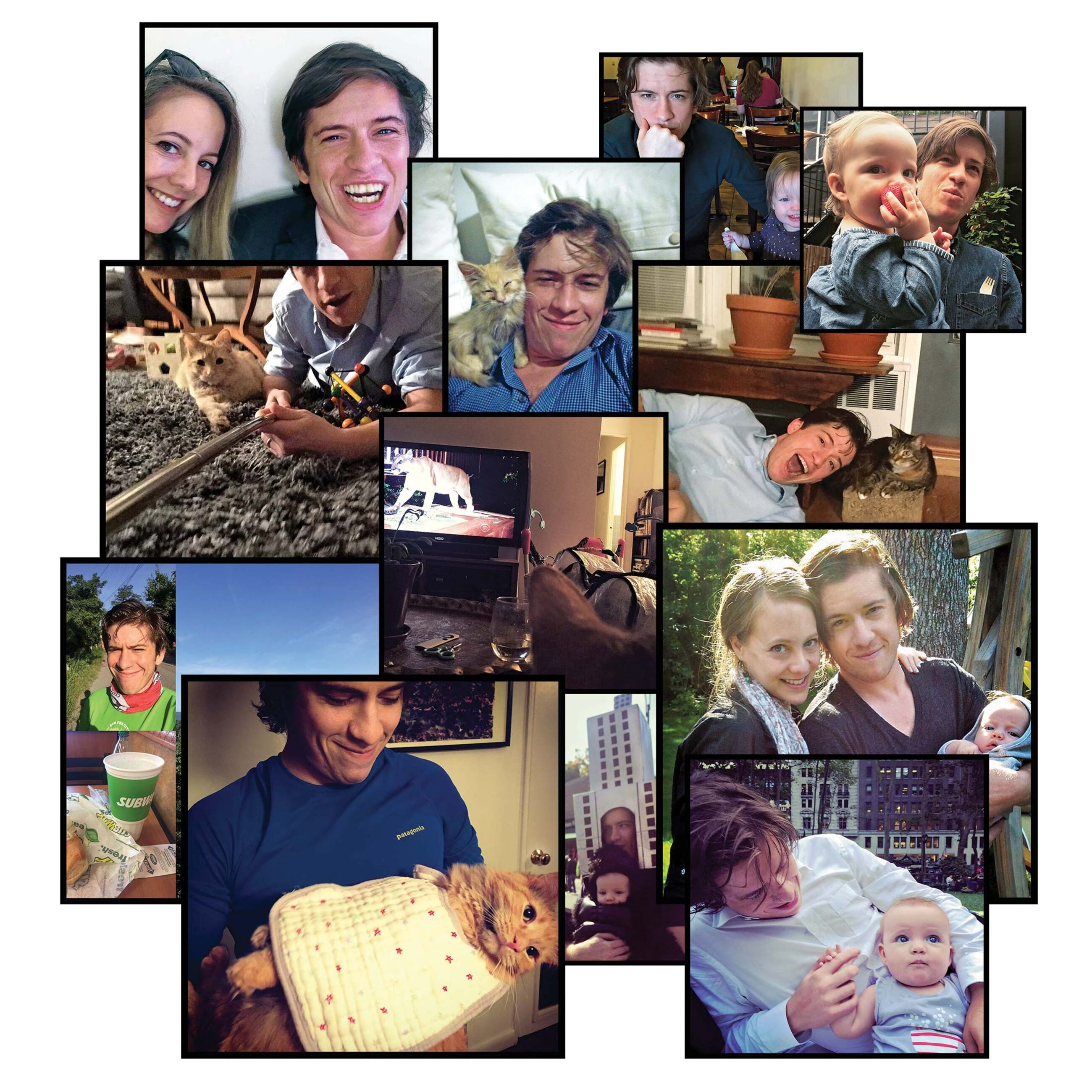
Before, Chafkin’s account featured normal, everyday photographs.
Source: Instagram
Because of this—and because advertising budgets will inevitably flow to any medium where large numbers of people are spending large amounts of time—Instagram has attracted a sort of professional class. These “influencers,” as they’re known, are media properties unto themselves, turning good looks and taste into an income stream: Brands pay them to feature their wares. Look a little more closely at your Instagram feed, and you’ll probably notice that attached to the post of the gleaming hotel lobby, the strappy heels, the exquisitely berried breakfast is a sea of hashtags—among them, #ad or #sp, which discreetly disclose that these are in fact sponsored posts.
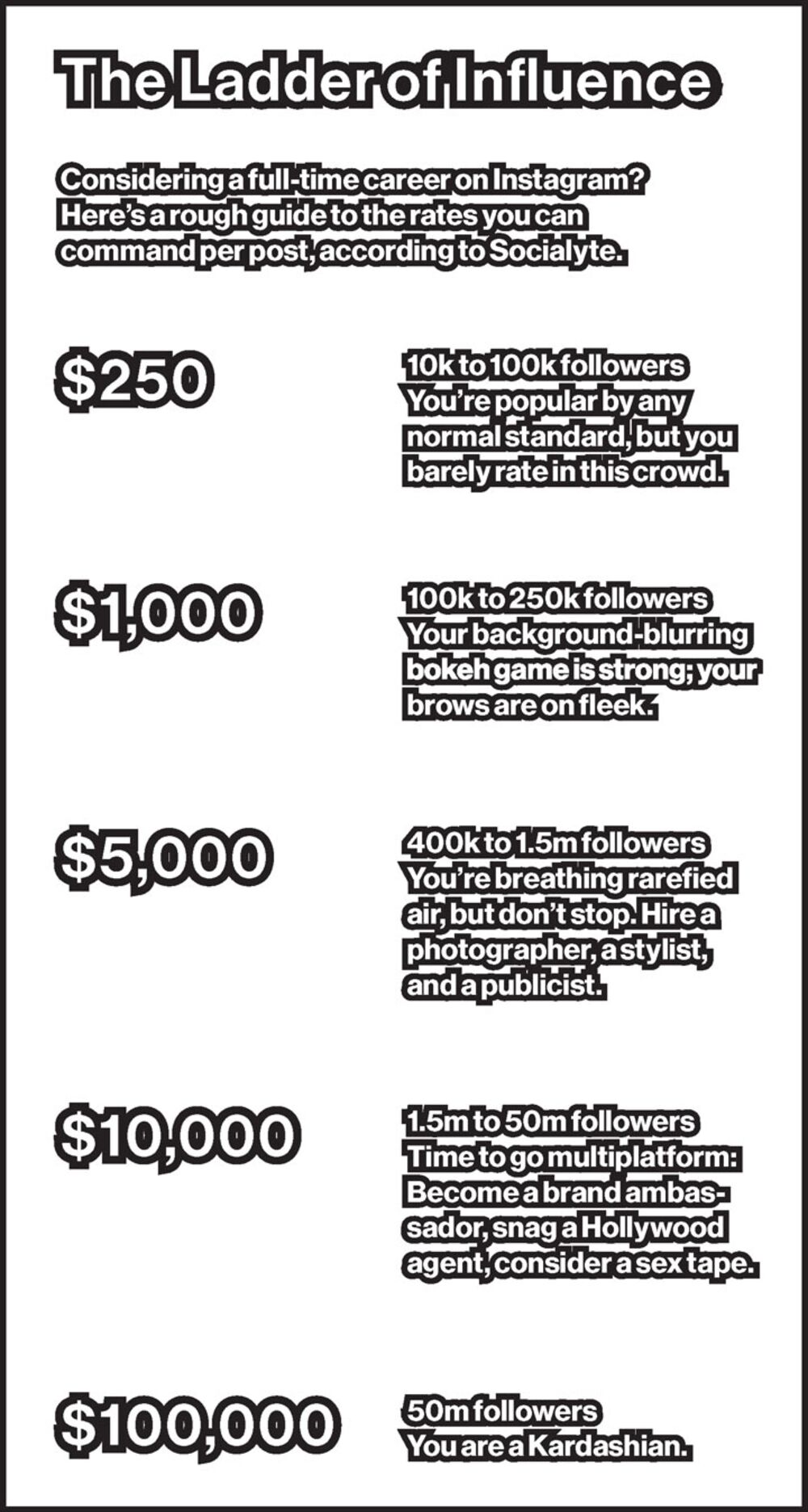
There are thousands, perhaps tens of thousands, of influencers making a living this way. Some make a lot more than a living. The most successful demand $10,000 and up for a single Instagram shot. Long-term endorsement deals with well-known Instagrammers, such as Kristina Bazan, who signed with L’Oréal last year, can be worth $1 million or more. Big retailers use influencers, as do fashion brands, food and beverage companies, and media conglomerates. Condé Nast, publisher of the New Yorker and Vogue, recently announced that it would ask IBM’s artificial intelligence service, Watson, to take a break from finding cancer treatments to identify potential influencers.
schlubby @mchafkin profile into that of a full-fledged influencer. I would do everything possible within legal bounds to amass as many followers as I could. My niche would be men’s fashion, a fast-growing category in which I clearly had no experience. The ultimate goal: to persuade someone, somewhere, to pay me cash money for my influence.
In late September, two weeks before the experiment was slated to begin, I reported to Socialyte’s headquarters in New York’s SoHo neighborhood. The agency manages 100 or so Instagram personalities, taking 30 percent of their bookings in exchange for setting them up with gigs. Many of these clients have millions of followers, and Saynt won’t talk to you unless you have about 100,000, but he agreed to make an exception for me and my 212. Saynt, a big man with a soft voice who wears an expression of perpetual amusement, greeted me with a hug and apologized for being a little lethargic. “I’m on a detox,” he said, adding that the previous week—Fashion Week in New York—he’d been on a seven-drink, pack-a-day bender. He mostly stayed quiet as Beca Alexander, his ex-wife and Socialyte’s president, and Misty Gant, the vice president for talent, peppered me with advice.
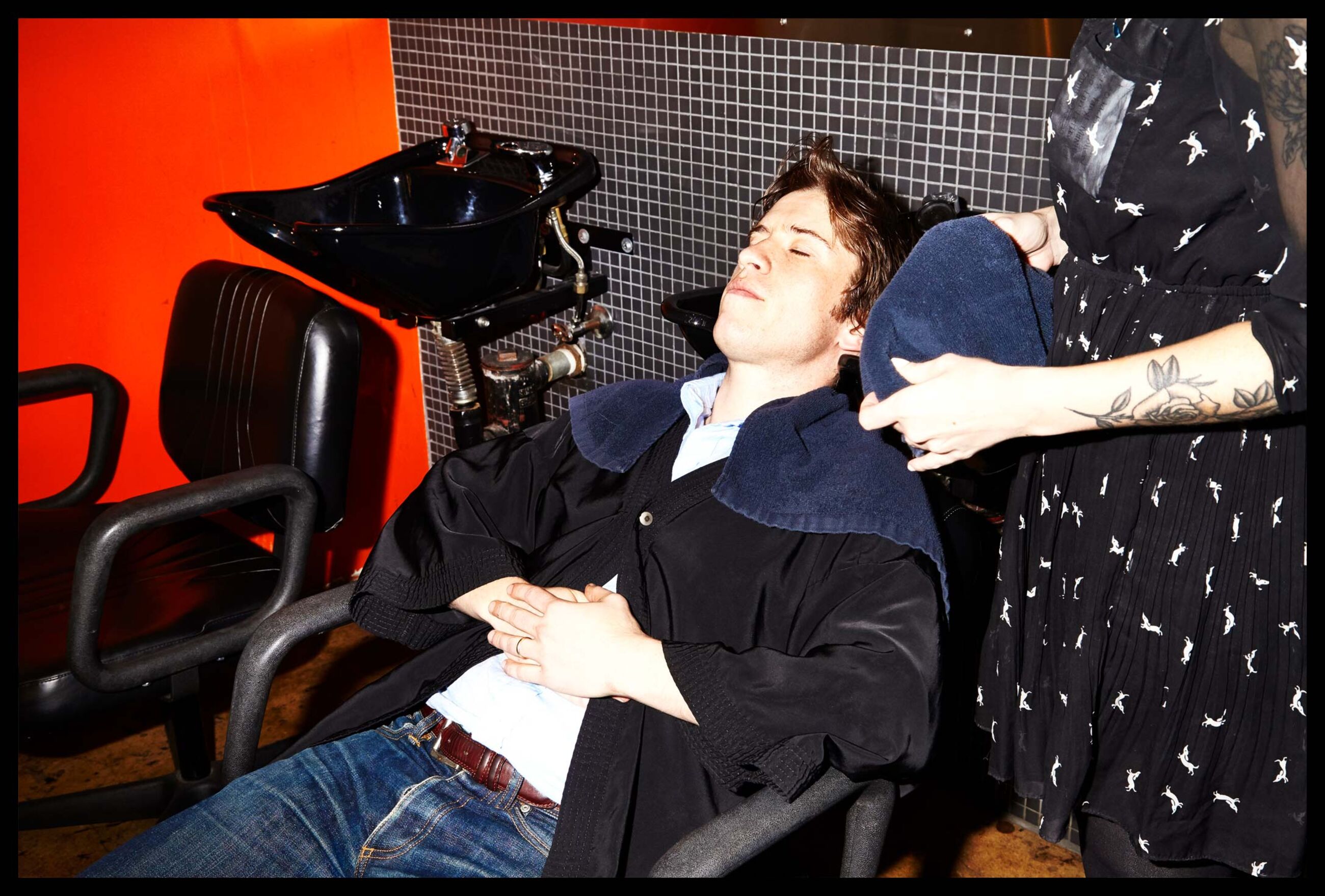
Instagram-ready grooming.
Photographer: Amy Lombard for Bloomberg Businessweek
I needed a haircut, for sure, and would have to keep my fingernails clean. Socialyte would suggest a photographer for me to hire, and I was told to bring 20 or so mix-and-match outfits to a shoot, to generate a huge volume of “looks” to post each day.
“So,” Gant asked me, “what brands do you wear?”
After an awkward exchange during which I half-muttered the words “J” and “Crew,” it was decided that I couldn’t be trusted to dress myself. Saynt and his team would find brands willing to lend me clothes and would enlist a couple of influencers to help me put ensembles together. I would bring essentially nothing to the table. “You don’t have a cute dog, do you?” Alexander asked.
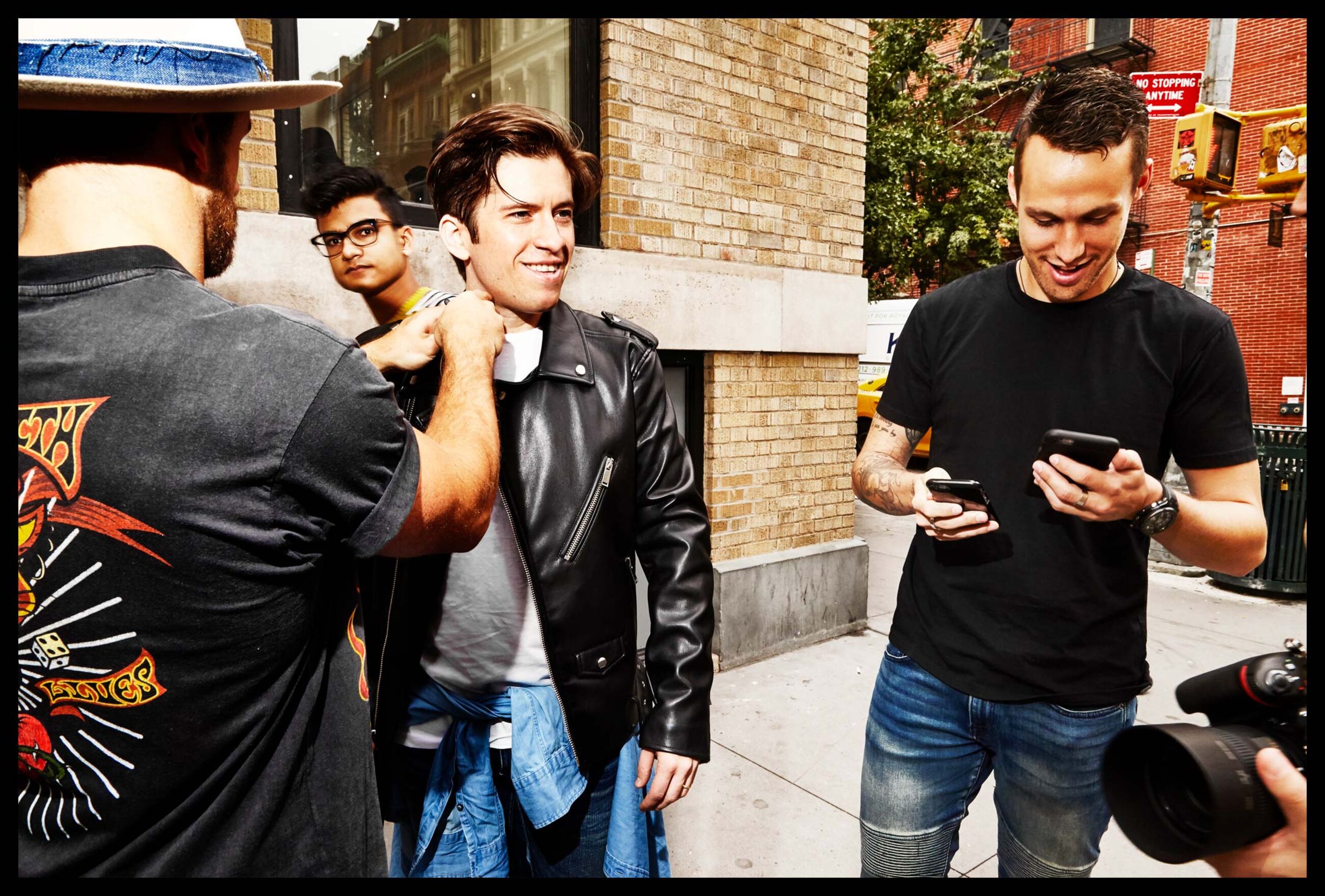
A week later, after a haircut the price and duration of which I refuse to share, I met Marcel Floruss and Nathan McCallum, two of Socialyte’s professional clients, at Lord & Taylor to borrow some outfits. The two men are opposites in almost every way. McCallum is compact and favors ripped jeans and piercings, and Floruss is lanky and clean-cut. Both are cartoonishly handsome, and both (I noticed this later when I checked out their Instagram work) have amazing abdominal muscles. “Constantly,” Floruss said, when I asked him how often he takes pictures of himself. “You sell part of your soul. Because no matter what beautiful moment you enjoy in your life, you’re going to want to take a photo and share it. Distinguishing between when is it my life and when am I creating content is a really big burden.”
I’d assumed two things about the beautiful people of Instagram. First, I figured they used the service the way Instagram suggests—that is, snapping pics and immediately sharing them with friends. Second, I assumed they took the photos themselves. Neither was true, as I learned when, on an unseasonably warm morning in early October, I brought 18 outfits to the Socialyte office. I met James Creel, my photographer for the day, as well as McCallum, who’d agreed to offer me styling tips, and his own regular photographer, Walt Loveridge, who’d joined in case McCallum felt inspired to do some modeling himself. The plan, as we trooped out the door into SoHo, was to shoot all the looks in a single day. “Let’s go find some walls,” Creel said.
The basic formula for most influencer portraits involves standing in front of a textured backdrop—usually a wall that’s brick or painted in some stylish way—and looking off, unsmiling, into the middle distance. Creel, who works as a personal trainer when he’s not shooting Instagram models, asked me to step out from doorways, so he could capture me paparazzi-style. He constantly asked me to run my fingers through my hair, and I was forced, for several hours I think, to rock onto and off of curbs, as if I were charismatically jaywalking. We ended up needing a second day. At one point during our 12 or so hours together, after I’d successfully walked in between taxis (primo color pop) and pursed my lips, Creel lowered his camera and offered a sincere compliment: “That was a great moment.”
I posted my first picture around noon on a Sunday morning—a relatively conservative three-quarter-length shot, in which I perform a sultry lean against a chain-link fence in a plaid Perry Ellis bomber jacket. Appearing incongruously atop my previous photos—the utterly ordinary postings of a new dad—it didn’t get a digital “like” for 15 minutes. That pace didn’t bode well. Moderately successful influencers might get 100 likes or more in that period, and as I tried to focus on supervising my year-old daughter’s play date, I was getting worried.
I probably should have anticipated this. Part of what makes Instagram valuable to advertisers is that there aren’t many shortcuts to accruing an audience. Unlike Twitter, for instance, where a clever quip can be quickly retweeted, bringing a deluge of followers, Instagram is relatively resistant to viral growth. Pretty much the only way you can add to your flock is if someone happens on your profile, likes what he sees, and decides to follow you.
How do you get people to discover you? Your best hope is to use hashtags—that is, sticking a pound sign in front of a keyword to make it easier for users searching for a specific type of photo to find you. There’s something tacky about using #liveauthentic, which has been deployed more than 14 million times, to get strangers to look at pictures that essentially amount to advertisements, but every influencer I spoke with assured me that hashtags worked, so hashtags it would be. Saynt recommended that I include at least 20 with every post.