ogc163
Superstar
When the COVID-19 pandemic prompted a historic shutdown of US schools in the spring, state and district leaders speculated that the disruption could last anywhere from a few weeks to a few months. With a surge in new infections, the pandemic is now likely to keep many students out of the classroom until well into 2021.
Educators, parents, and students know firsthand the high cost of this prolonged period of remote learning, from rising rates of depression and anxiety to the loss of student learning. The COVID-19 pandemic has taken an especially heavy toll on Black, Hispanic, and Indigenous communities. Along with robbing them of lives and livelihoods, school shutdowns could deny students from these communities the opportunity to get the education they need to build a brighter future.
In the spring, we examined how school shutdowns were likely to compound racial disparities in learning and achievement, analyzing the toll on learning, dropout rates, and the overall economy. We now share assessment data from this fall, which show that students, on average, started school about three months behind where we would expect them to be in mathematics. Students of color were about three to five months behind in learning; white students were about one to three months behind. The picture for reading is more positive, with students starting school just a month and a half behind historical averages.
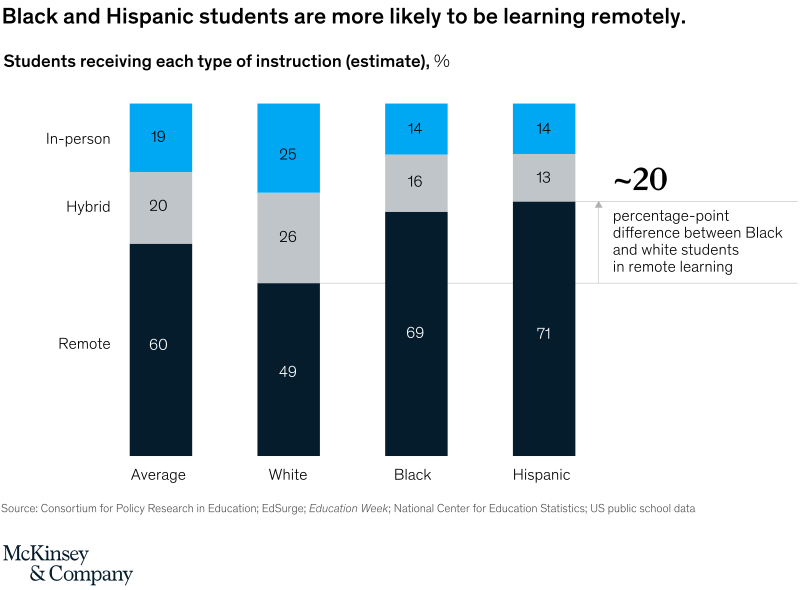
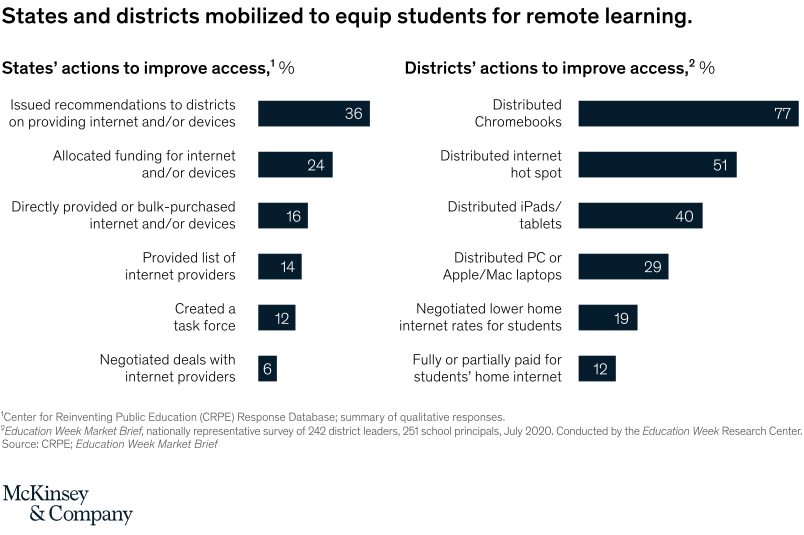
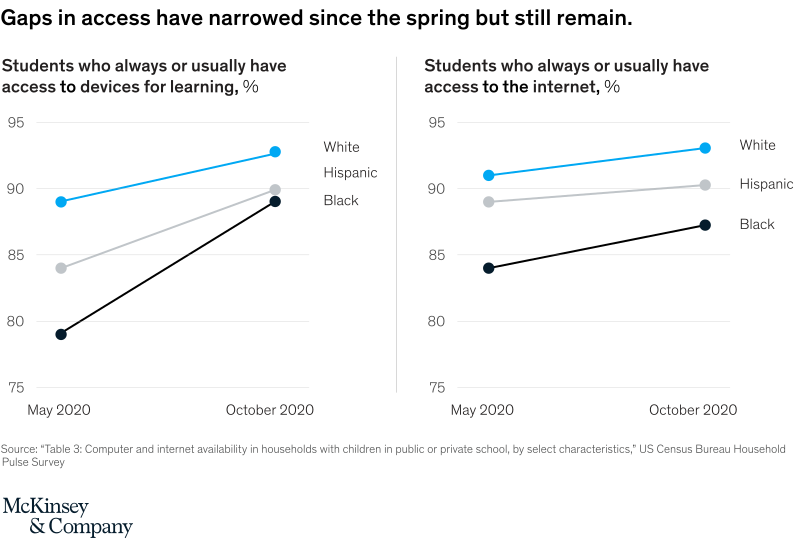
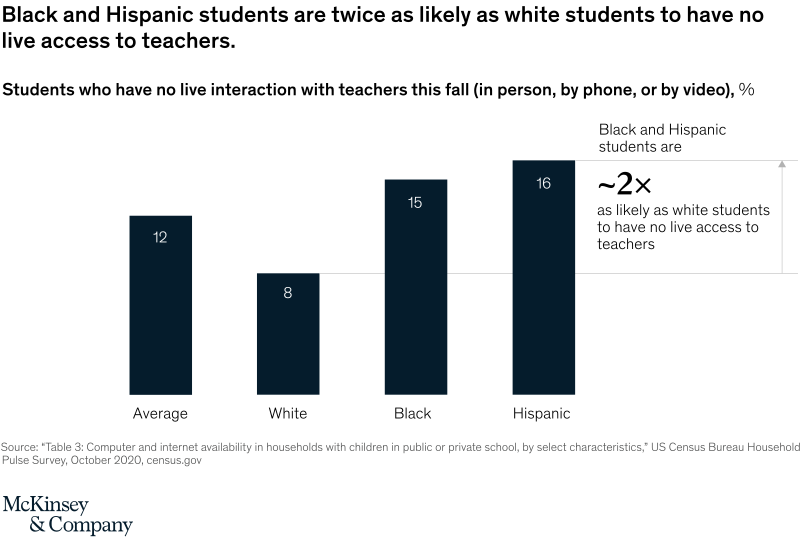
Much has improved since the spring. States and school districts have made significant efforts to close the digital divide and improve remote learning, and the implementation of school-based health and safety precautions enabled some students to return to classrooms in the fall (although some of these gains are now at risk as COVID-19 cases spike across the country). However, Black and Hispanic students continue to be more likely to remain remote and are less likely to have access to the prerequisites of learning—devices, internet access, and live contact with teachers. Left unaddressed, these opportunity gaps will translate into wider achievement gaps. Looking forward, we consider several different scenarios to estimate the total potential learning loss to the end of this academic year in June 2021. While the worst-case scenarios from the spring may have been averted, the cumulative learning loss could be substantial, especially in mathematics—with students on average likely to lose five to nine months of learning by the end of this school year. Students of color could be six to 12 months behind, compared with four to eight months for white students. While all students are suffering, those who came into the pandemic with the fewest academic opportunities are on track to exit with the greatest learning loss.
It doesn’t have to be this way. While we may not be able to control the virus without an effective vaccine, we are more prepared to deal with its consequences. The immediate priority is to prevent further learning loss through a combination of bringing students back to school where it is safe to do so and improving remote learning across the board. However, that is not enough. Much damage has already been done, and even the best-case scenarios have students half a grade-level behind in June. To catch up, many students will need step-up opportunities to accelerate their learning. Now is the time for school systems to prepare postpandemic strategies that help students to meet their full potential.
Autumn report card: The high cost of COVID-19
School systems were understandably overwhelmed and unequipped to respond when COVID-19 began rapidly spreading in the spring. The US education ecosystem is built around an in-class experience, from technology investments in school-level broadband internet and devices to curriculum design and how teachers are trained. In many communities, schools are also the hub for supports such as school meals, mental-health counseling, and childcare. In many homes, especially for low-income families, students lack access to the internet, devices, and a dedicated, quiet place to study.
The disparities in basic conditions for learning are reflected in the results of formative assessments taken this fall. We analyzed assessment data from the Curriculum Associates i-Ready platform 1 and found that students in their sample learned only 67 percent of the math and 87 percent of the reading that grade-level peers would typically have learned by the fall. 2 On average, that means students lost the equivalent of three months of learning in mathematics and one-and-a-half months of learning in reading. 3 The learning loss was especially acute in schools that predominantly serve students of color, 4 where scores were 59 percent of the historical average in math and 77 percent in reading (Exhibit 1).
Exhibit 1

These results are only a snapshot of a small cross section of students, but, if anything, these students may outperform national averages. These assessments were taken in school by students who had already made it back into the classroom. In addition, because the survey compares results at the school level, it doesn’t capture the full scope of student-level opportunity and achievement gaps. The OECD suggests that more than three-quarters of the variance in US student scores typically occurs within schools, not between them. 5 Extrapolating to a student level, these scores suggest that students of color may have lost three to five months of learning in mathematics, while white students lost just one to three months. 6 Four months roughly tracks with the number of months of disrupted learning after schools began closing in March 2020—suggesting that some students didn’t learn any new material once the pandemic hit and may have even slipped backward.
Educators, parents, and students know firsthand the high cost of this prolonged period of remote learning, from rising rates of depression and anxiety to the loss of student learning. The COVID-19 pandemic has taken an especially heavy toll on Black, Hispanic, and Indigenous communities. Along with robbing them of lives and livelihoods, school shutdowns could deny students from these communities the opportunity to get the education they need to build a brighter future.
In the spring, we examined how school shutdowns were likely to compound racial disparities in learning and achievement, analyzing the toll on learning, dropout rates, and the overall economy. We now share assessment data from this fall, which show that students, on average, started school about three months behind where we would expect them to be in mathematics. Students of color were about three to five months behind in learning; white students were about one to three months behind. The picture for reading is more positive, with students starting school just a month and a half behind historical averages.
Much has improved since the spring. States and school districts have made significant efforts to close the digital divide and improve remote learning, and the implementation of school-based health and safety precautions enabled some students to return to classrooms in the fall (although some of these gains are now at risk as COVID-19 cases spike across the country). However, Black and Hispanic students continue to be more likely to remain remote and are less likely to have access to the prerequisites of learning—devices, internet access, and live contact with teachers. Left unaddressed, these opportunity gaps will translate into wider achievement gaps. Looking forward, we consider several different scenarios to estimate the total potential learning loss to the end of this academic year in June 2021. While the worst-case scenarios from the spring may have been averted, the cumulative learning loss could be substantial, especially in mathematics—with students on average likely to lose five to nine months of learning by the end of this school year. Students of color could be six to 12 months behind, compared with four to eight months for white students. While all students are suffering, those who came into the pandemic with the fewest academic opportunities are on track to exit with the greatest learning loss.
It doesn’t have to be this way. While we may not be able to control the virus without an effective vaccine, we are more prepared to deal with its consequences. The immediate priority is to prevent further learning loss through a combination of bringing students back to school where it is safe to do so and improving remote learning across the board. However, that is not enough. Much damage has already been done, and even the best-case scenarios have students half a grade-level behind in June. To catch up, many students will need step-up opportunities to accelerate their learning. Now is the time for school systems to prepare postpandemic strategies that help students to meet their full potential.
Autumn report card: The high cost of COVID-19
School systems were understandably overwhelmed and unequipped to respond when COVID-19 began rapidly spreading in the spring. The US education ecosystem is built around an in-class experience, from technology investments in school-level broadband internet and devices to curriculum design and how teachers are trained. In many communities, schools are also the hub for supports such as school meals, mental-health counseling, and childcare. In many homes, especially for low-income families, students lack access to the internet, devices, and a dedicated, quiet place to study.
The disparities in basic conditions for learning are reflected in the results of formative assessments taken this fall. We analyzed assessment data from the Curriculum Associates i-Ready platform 1 and found that students in their sample learned only 67 percent of the math and 87 percent of the reading that grade-level peers would typically have learned by the fall. 2 On average, that means students lost the equivalent of three months of learning in mathematics and one-and-a-half months of learning in reading. 3 The learning loss was especially acute in schools that predominantly serve students of color, 4 where scores were 59 percent of the historical average in math and 77 percent in reading (Exhibit 1).
Exhibit 1
These results are only a snapshot of a small cross section of students, but, if anything, these students may outperform national averages. These assessments were taken in school by students who had already made it back into the classroom. In addition, because the survey compares results at the school level, it doesn’t capture the full scope of student-level opportunity and achievement gaps. The OECD suggests that more than three-quarters of the variance in US student scores typically occurs within schools, not between them. 5 Extrapolating to a student level, these scores suggest that students of color may have lost three to five months of learning in mathematics, while white students lost just one to three months. 6 Four months roughly tracks with the number of months of disrupted learning after schools began closing in March 2020—suggesting that some students didn’t learn any new material once the pandemic hit and may have even slipped backward.