

newworldafro
DeeperThanRapBiggerThanHH
http://www.theguardian.com/society/2015/apr/11/dogs-trained-detect-prostate-cancer-accuracy
Dogs trained to detect prostate cancer with more than 90% accuracy
Dogs trained to detect prostate cancer with more than 90% accuracy
The ability of two German shepherds to identify the most common form of cancer in British men has sparked hopes of finding a practical application
Surviving prostate cancer: a prostate surgeon’s story
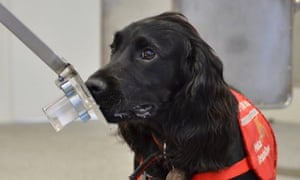
Claire Guest, co-founder of UK charity Medical Detection Dogs, said its own research had found a 93% reliability rate when detecting bladder and prostate cancer. Photograph: Emma Jeffery/Medical Detection Dogs/PA
James Meikle
Friday 10 April 2015 19.00 EDTLast modified on Saturday 11 April 201509.39 EDT
Hopes that man’s best friend can help medics detect prostate cancer have been boosted by research suggesting that trained German shepherd dogs can sniff out the chemicals linked to the disease from urine samples with remarkable accuracy.
The reliability rate reported by an Italy-based team in the Journal of Urology comes from the latest of several studies stretching back decades and raises the prospect of canines’ sense of smell helping doctors identify a number of human cancers and infectious diseases.
The two female dogs sniffed urine samples from 900 men, 360 with prostate cancer and 540 without. Both animals were right in well over 90% of cases.
The paper’s authors, from the Humanitas Clinical and Research Centre in Milan and other institutes, admitted further work is needed to determine just how valuable the dogs’ skill might be in identifying, in daily practice, the signs of prostate cancer.
Cancer of the prostate is the most common type of the disease in British men, with 40,000 new cases reported every year.
Unanswered questions included what it was the dogs actually smelled and whether this was a single odour or those from a mixture of chemicals.
At present, prostate cancer is detected by a blood test known as the PSA test, by physical examination and by biopsy. The PSA test is not routinely offered because it is not considered reliable enough for screening.
The Italian results were welcomed by the Buckinghamshire-based charity Medical Detection Dogs, whose co-founder Claire Guest said its research indicated a 93% reliability rate for dogs. She said the results from the new study were “spectacular”.
Dogs trained to detect prostate cancer with more than 90% accuracy
Dogs trained to detect prostate cancer with more than 90% accuracy
The ability of two German shepherds to identify the most common form of cancer in British men has sparked hopes of finding a practical application
Surviving prostate cancer: a prostate surgeon’s story
Claire Guest, co-founder of UK charity Medical Detection Dogs, said its own research had found a 93% reliability rate when detecting bladder and prostate cancer. Photograph: Emma Jeffery/Medical Detection Dogs/PA
James Meikle
Friday 10 April 2015 19.00 EDTLast modified on Saturday 11 April 201509.39 EDT
Hopes that man’s best friend can help medics detect prostate cancer have been boosted by research suggesting that trained German shepherd dogs can sniff out the chemicals linked to the disease from urine samples with remarkable accuracy.
The reliability rate reported by an Italy-based team in the Journal of Urology comes from the latest of several studies stretching back decades and raises the prospect of canines’ sense of smell helping doctors identify a number of human cancers and infectious diseases.
The two female dogs sniffed urine samples from 900 men, 360 with prostate cancer and 540 without. Both animals were right in well over 90% of cases.
The paper’s authors, from the Humanitas Clinical and Research Centre in Milan and other institutes, admitted further work is needed to determine just how valuable the dogs’ skill might be in identifying, in daily practice, the signs of prostate cancer.
Cancer of the prostate is the most common type of the disease in British men, with 40,000 new cases reported every year.
Unanswered questions included what it was the dogs actually smelled and whether this was a single odour or those from a mixture of chemicals.
At present, prostate cancer is detected by a blood test known as the PSA test, by physical examination and by biopsy. The PSA test is not routinely offered because it is not considered reliable enough for screening.
The Italian results were welcomed by the Buckinghamshire-based charity Medical Detection Dogs, whose co-founder Claire Guest said its research indicated a 93% reliability rate for dogs. She said the results from the new study were “spectacular”.
 man's best friend


