original is behind a paywall:
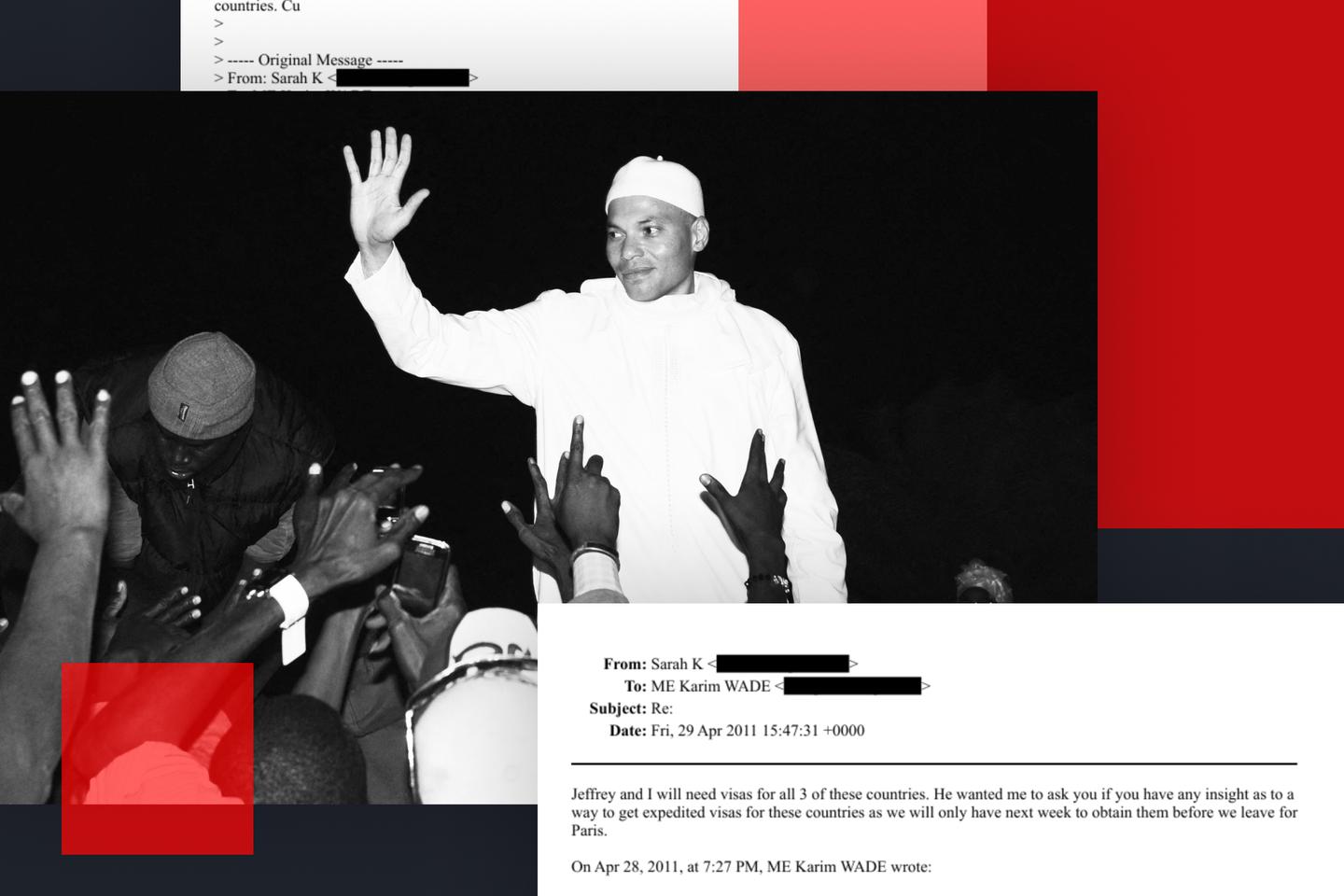
Epstein's African connections included presidents, heirs and recruiters
The revelations from the Epstein files show that the American businessman's network reached into Africa, where he forged ties with influential figures to advance his business dealings and consolidate his power.
 www.lemonde.fr
interesting tidbit
Keitan, a model, former ministerial adviser and niece of Ivorian President Alassane Ouattara, also moved in the African circles frequented by the sexual predator. Hundreds of messages exchanged between her and Epstein from 2011 to 2018 showed that this prominent member of the ruling clan in Côte d'Ivoire introduced a number of young women to him on multiple occasions, as revealed by Le Monde. "I prefer under 25," the criminal wrote in one of their email exchanges.
Fuill article
From Senegal to Côte d'Ivoire, via Morocco and Rwanda, Jeffrey Epstein's shadow stretched long across Africa. The three million documents released by the US Department of Justice on January 30 revealed that the American sexual predator and businessman, who died in 2019, used the same practices on the continent as he did elsewhere in the world to satisfy his thirst for power. He built an ecosystem in which relationships with the powerful, sometimes murky business dealings and sexual predation were all intertwined.
In West Africa in the 2010s, Karim Wade, son of Senegalese President Abdoulaye Wade and a major political figure, drew the attention of Epstein. Nicknamed "the minister of earth and sky" because of his super-ministerial portfolio – which included international cooperation, land use planning, air transport, infrastructure and energy – his name appears 504 times in the published Epstein files.
After their meeting in 2010, Epstein described Wade as "one of the most important players in Africa" in an email to Jes Staley, the former head of Barclays Bank. He repeatedly expressed his delight at being able to "have fun" with him. However, the documents released by the US authorities did not clarify whether Wade was involved in the sexual abuse orchestrated by the financier. His lawyer did not respond to Le Monde's requests for comment.
A major figure in West Africa, Wade acted as an intermediary to facilitate Epstein's business dealings. In May 2011, he organized a tour for Epstein around Senegal, Mali and Gabon, as shown by the detailed itinerary Wade sent in advance to people close to the American financier, who was especially interested in infrastructure projects. Beyond handling logistics (such as obtaining visas and securing landing clearance for Epstein's private jet), the "super-minister" opened doors to presidential palaces for the businessman, arranging meetings with the heads of state of all three countries.
As he usually did, Epstein put his fortune and his address book at the service of his African network. With transportation and luxury hotels taken care of and suggestions for people to meet, bin Sulayem and Wade were pampered.
The Senegalese politician took advantage of the situation. In September 2015, the former minister, who had been imprisoned in Dakar for illicit enrichment and embezzlement of funds after his father's electoral defeat three and a half years earlier, called on the financier for help. By email, Wade's assistant asked him to "bear the cost of a US legal/lobby firm based in DC" for an amount of $100,000, in order to put pressure on the new Senegalese government. Epstein put them in contact with the Nelson Mullins law firm.
Keitan, a model, former ministerial adviser and niece of Ivorian President Alassane Ouattara, also moved in the African circles frequented by the sexual predator. Hundreds of messages exchanged between her and Epstein from 2011 to 2018 showed that this prominent member of the ruling clan in Côte d'Ivoire introduced a number of young women to him on multiple occasions, as revealed by Le Monde. "I prefer under 25," the criminal wrote in one of their email exchanges.
Read more Subscribers only How the Ivorian president's niece acted as Epstein's go-between
Keita, who is now the second in command at the state-run oil fund management company of Côte d'Ivoire (Gestoci), also used her political connections. In 2011, she introduced Epstein to her uncle, Ouattara, who had just been elected president. Three years later, Keita acted as an intermediary between the president and the financier for the purchase of a surveillance system from Israel and an aircraft for the presidency. Neither Keita nor the Ivorian presidency responded to Le Monde's requests for comment.
Described as "partygoers," the two men traveled together to Brazil in the late 2000s for the Rio Carnival and ran into each other in Paris, where they were neighbors. Concerned about the future heir's reputation ever since Epstein was first convicted of soliciting minors in 2008, the Obiang family concealed their relationship. Obiang and Epstein tried to do business in the oil sector and launch leisure projects in Equatorial Guinea. All attempts were unsuccessful, according to Africa Intelligence, to whom the vice president responded at the time that he "did not know Jeffrey Epstein and had never met him."
Everywhere he went, the multimillionaire tried to do business. For example, in June 2015 in Zimbabwe, he tried, without success, to take advantage of the country's financial collapse – Zimbabwe had been forced to abandon its national currency six years earlier – in order to "craft a new financial system," as he wrote. In Libya, on the eve of the fall of Muammar Gaddafi, the businessman eyed the roughly $80 billion in regime funds frozen internationally. His goal: to return these frozen assets to the new Libyan authorities in exchange for a commission. He failed.
Known for his skill in managing opaque funds through offshore structures, the sexual predator made sure, in Africa as elsewhere, to present himself as a philanthropist in order to burnish his reputation. In Rwanda, Epstein "approached the president," Paul Kagame, during a trip dedicated to commemorating the Tutsi genocide, so that Kagame could help him "identify and then fund two worthy Rwandan students to earn undergraduate degrees in the United States," his advisers noted in a letter written in July 2007. Five years earlier, Epstein had also made his private jet available and accompanied former president Bill Clinton and his team on their African tour for AIDS research, traveling between Ghana, Mozambique, Nigeria and Rwanda.
Although Clinton was not implicated in Epstein's predatory activities, questions remain about what Epstein did on board his jet during that trip. According to a July 2019 FBI report included in the Epstein files, one of the passengers stated that "four young women aged 20 to 22 years old," who described themselves as a masseuse, models and a ballerina, were on board. This passenger "witnessed Epstein grab and rub buttocks" of one of the young women and then lock himself in the jet's cabin with her, the federal agency noted.
Epstein also spent years trying to acquire property in Morocco, as shown by numerous email exchanges on the subject starting in 2015. At that time, he knew he was being investigated by the US justice system. Morocco, which does not have an extradition agreement with the US, was the ideal destination for him. "My islands are destroyed. need an alternative," he wrote in September 2017.
Two years earlier, he had already tried to purchase a riad in Marrakech with help from Jack Lang. The former French minister and president of the Arab World Institute knew that one of his friends was selling his own riad, for "5,400,000 euros, offshore," he specified in an email sent to Epstein in March 2015. The transaction did not go through. As for Lang, he has fully acknowledged his past relationship with the American while insisting he was unaware of the crimes committed by Epstein.
In West Africa in the 2010s, Karim Wade, son of Senegalese President Abdoulaye Wade and a major political figure, drew the attention of Epstein. Nicknamed "the minister of earth and sky" because of his super-ministerial portfolio – which included international cooperation, land use planning, air transport, infrastructure and energy – his name appears 504 times in the published Epstein files.
After their meeting in 2010, Epstein described Wade as "one of the most important players in Africa" in an email to Jes Staley, the former head of Barclays Bank. He repeatedly expressed his delight at being able to "have fun" with him. However, the documents released by the US authorities did not clarify whether Wade was involved in the sexual abuse orchestrated by the financier. His lawyer did not respond to Le Monde's requests for comment.
A major figure in West Africa, Wade acted as an intermediary to facilitate Epstein's business dealings. In May 2011, he organized a tour for Epstein around Senegal, Mali and Gabon, as shown by the detailed itinerary Wade sent in advance to people close to the American financier, who was especially interested in infrastructure projects. Beyond handling logistics (such as obtaining visas and securing landing clearance for Epstein's private jet), the "super-minister" opened doors to presidential palaces for the businessman, arranging meetings with the heads of state of all three countries.
Influence and quid pro quo
Another key player in organizing the trip was Emirati national Sultan Ahmed bin Sulayem. As head of the port giant DP World, a company with significant influence in Africa, he arranged for Epstein to stay on the continent on several occasions. In July 2013, he specifically offered to set up meetings for Epstein with the presidents of Gabon, Kenya, the Democratic Republic of the Congo (DRC), Rwanda and Senegal.As he usually did, Epstein put his fortune and his address book at the service of his African network. With transportation and luxury hotels taken care of and suggestions for people to meet, bin Sulayem and Wade were pampered.
The Senegalese politician took advantage of the situation. In September 2015, the former minister, who had been imprisoned in Dakar for illicit enrichment and embezzlement of funds after his father's electoral defeat three and a half years earlier, called on the financier for help. By email, Wade's assistant asked him to "bear the cost of a US legal/lobby firm based in DC" for an amount of $100,000, in order to put pressure on the new Senegalese government. Epstein put them in contact with the Nelson Mullins law firm.
'I prefer under 25'
In January 2016, Wade called on the predator once again. In an email exchange with a contact anonymized by the Department of Justice, he himself noted that he had "paid the balane [sic] owed directly" as part of a vague lobbying operation aimed at pressuring President Macky Sall to pardon Wade. "I want my friend back," he wrote. Five months later, Wade, having received a pardon, regained his freedom. "Thank you for everything you did!!!" exclaimed a certain Nina Keita in an email sent to Epstein in June 2016.Keitan, a model, former ministerial adviser and niece of Ivorian President Alassane Ouattara, also moved in the African circles frequented by the sexual predator. Hundreds of messages exchanged between her and Epstein from 2011 to 2018 showed that this prominent member of the ruling clan in Côte d'Ivoire introduced a number of young women to him on multiple occasions, as revealed by Le Monde. "I prefer under 25," the criminal wrote in one of their email exchanges.
Read more Subscribers only How the Ivorian president's niece acted as Epstein's go-between
Keita, who is now the second in command at the state-run oil fund management company of Côte d'Ivoire (Gestoci), also used her political connections. In 2011, she introduced Epstein to her uncle, Ouattara, who had just been elected president. Three years later, Keita acted as an intermediary between the president and the financier for the purchase of a surveillance system from Israel and an aircraft for the presidency. Neither Keita nor the Ivorian presidency responded to Le Monde's requests for comment.
Sprawling African network
Other Africans managed to maintain more discreet relationships with the financier. There is no mention of Teodoro Nguema Obiang, known as "Teodorin," the eldest son of the president of Equatorial Guinea who became the country's vice president, in the Epstein files. Yet, an investigation by the specialized media outlet Africa Intelligence, published in November 2020, revealed a friendship spanning more than 20 years between the American and Obiang, who has been targeted by legal proceedings abroad in connection with "ill-gotten gains" cases.Described as "partygoers," the two men traveled together to Brazil in the late 2000s for the Rio Carnival and ran into each other in Paris, where they were neighbors. Concerned about the future heir's reputation ever since Epstein was first convicted of soliciting minors in 2008, the Obiang family concealed their relationship. Obiang and Epstein tried to do business in the oil sector and launch leisure projects in Equatorial Guinea. All attempts were unsuccessful, according to Africa Intelligence, to whom the vice president responded at the time that he "did not know Jeffrey Epstein and had never met him."
Everywhere he went, the multimillionaire tried to do business. For example, in June 2015 in Zimbabwe, he tried, without success, to take advantage of the country's financial collapse – Zimbabwe had been forced to abandon its national currency six years earlier – in order to "craft a new financial system," as he wrote. In Libya, on the eve of the fall of Muammar Gaddafi, the businessman eyed the roughly $80 billion in regime funds frozen internationally. His goal: to return these frozen assets to the new Libyan authorities in exchange for a commission. He failed.
Known for his skill in managing opaque funds through offshore structures, the sexual predator made sure, in Africa as elsewhere, to present himself as a philanthropist in order to burnish his reputation. In Rwanda, Epstein "approached the president," Paul Kagame, during a trip dedicated to commemorating the Tutsi genocide, so that Kagame could help him "identify and then fund two worthy Rwandan students to earn undergraduate degrees in the United States," his advisers noted in a letter written in July 2007. Five years earlier, Epstein had also made his private jet available and accompanied former president Bill Clinton and his team on their African tour for AIDS research, traveling between Ghana, Mozambique, Nigeria and Rwanda.
Although Clinton was not implicated in Epstein's predatory activities, questions remain about what Epstein did on board his jet during that trip. According to a July 2019 FBI report included in the Epstein files, one of the passengers stated that "four young women aged 20 to 22 years old," who described themselves as a masseuse, models and a ballerina, were on board. This passenger "witnessed Epstein grab and rub buttocks" of one of the young women and then lock himself in the jet's cabin with her, the federal agency noted.
Moroccan extension of the network
Epstein's international network of sexual exploitation also extended to Morocco. In July 2002, Daniel Siad, a Swedish national of Algerian origin who was described by witnesses in a France Télévisions investigation published on February 9 as a recruiter working for Epstein, sent him the photo of a young woman along with several messages: "cute French girl in Marrakech," "22 yr." "Cute," replied the American. Contacted by France Télévisions, Siad insisted that he was only a "model scout."Epstein also spent years trying to acquire property in Morocco, as shown by numerous email exchanges on the subject starting in 2015. At that time, he knew he was being investigated by the US justice system. Morocco, which does not have an extradition agreement with the US, was the ideal destination for him. "My islands are destroyed. need an alternative," he wrote in September 2017.
Two years earlier, he had already tried to purchase a riad in Marrakech with help from Jack Lang. The former French minister and president of the Arab World Institute knew that one of his friends was selling his own riad, for "5,400,000 euros, offshore," he specified in an email sent to Epstein in March 2015. The transaction did not go through. As for Lang, he has fully acknowledged his past relationship with the American while insisting he was unaware of the crimes committed by Epstein.
He facilitated a lot of corruption, several african powerbrokers he was connected with were imprisoned for corruption in seperate cases.