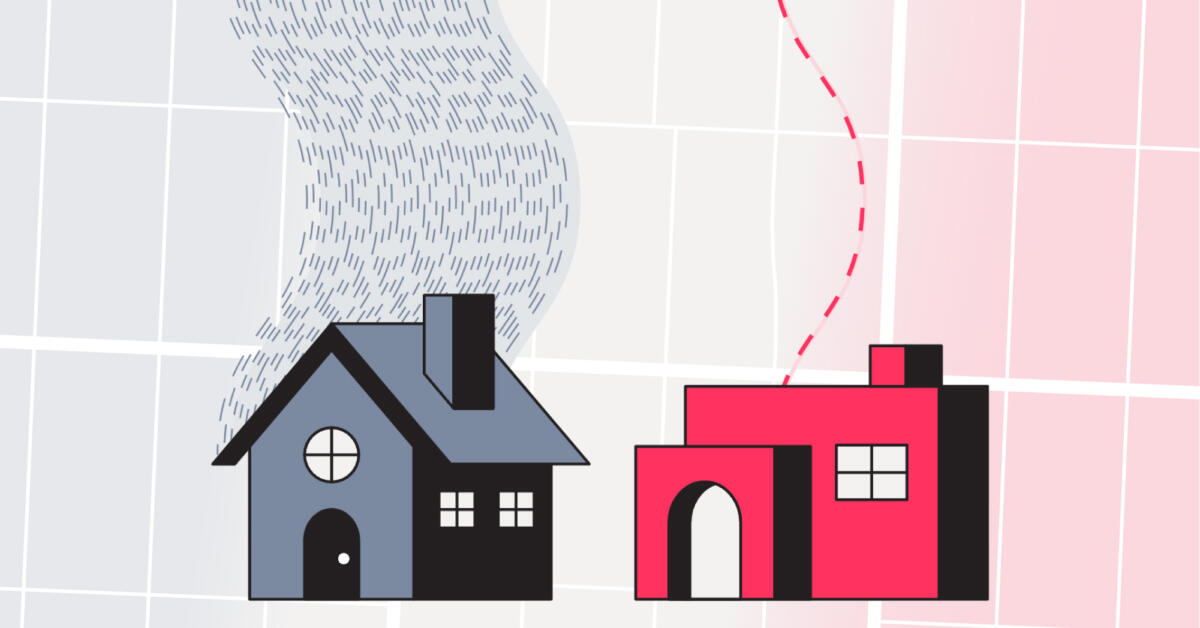
Even internet speeds are Redlined :dead:

OfTheCross

Veteran
Joined
Mar 17, 2013
Messages
43,557
Reputation
5,029
Daps
99,045
Reppin
Keeping my overhead low, and my understand high
:wow:

Structural Racism knows no bounds.


In her area, AT&T only offers download speeds of 1 megabit per second or less, trapping her in a digital Stone Age. Her internet is so slow that it doesn’t meet Zoom’s recommended minimum for group video calls, doesn’t come close to the FCC’s definition of broadband, currently 25 Mbps, and is worlds below median home internet speeds in the U.S., which average 167 Mbps.

↩︎ link

“In my neighborhood, it’s terrible,” Neville said.

But that’s not the case in other parts of New Orleans. AT&T offers residents of the mostly White, upper-income neighborhood of Lakeview internet speeds almost 400 times faster than Neville’s—for the same price: $55 a month.

The vast gulf between the quality of service AT&T offered these neighborhoods for the same cost is not a fluke.

The Markup gathered and analyzed more than 800,000 internet service offers from AT&T, Verizon, Earthlink, and CenturyLink in 38 cities across America and found that all four routinely offered fast base speeds at or above 200 Mbps in some neighborhoods for the same price as connections below 25 Mbps in others.

The neighborhoods offered the worst deals had lower median incomes in nine out of 10 cities in the analysis. In two-thirds of the cities where The Markup had enough data to compare, the providers gave the worst offers to the least-White neighborhoods.

These providers also disproportionately gave the worst offers to formerly redlined areas in every one of the 22 cities examined where digitized historical maps were available. These are areas a since-disbanded agency created by the federal government in the 1930s had deemed “hazardous” for financial institutions to invest in, often because the residents were Black or poor. Redlining was outlawed in 1968.

By failing to price according to service speed, these companies are demanding some customers pay dramatically higher unit prices for advertised download speed than others. CenturyLink, which showed the most extreme disparities, offered some customers service of 200 Mbps, amounting to as little as $0.25 per Mbps, but offered others living in the same city only 0.5 Mbps for 400 times as much—$100 per Mbps.
 

Black Hans

Follow Jesus. Be Beautiful
Supporter
Joined
May 8, 2012
Messages
8,367
Reputation
-1,201
Daps
20,399
Reppin
John 14:6
Simple solution: Black people shouldn't rock with AT&T. Go to Spectrum or Verizon as an ISP. :scust: at being :mjpls: with broadband speeds.
 

DEAD7

Veteran
Supporter
Joined
Oct 5, 2012
Messages
51,391
Reputation
4,570
Daps
89,660
Reppin
Fresno, CA.
The Hand of the Free Market strikes again. :wow:
The industry group USTelecom, speaking on behalf of Verizon, said the cost of maintaining the antiquated equipment used for slow speed service plays a role in its price.

“Fiber can be hundreds of times faster than legacy broadband—but that doesn’t mean that legacy networks cost hundreds of times less,” USTelecom senior vice president Marie Johnson said in an email. “Operating and maintaining legacy technologies can be more expensive, especially as legacy network components are discontinued by equipment manufacturers.”

:manny:Its gross, but doesnt seem like bullshyt to me. Older(and cheaper) areas typically have significantly worse infrastructure across the board.

Framing it as though ISP's are specifically targeting black and brown homes is race hustling to me. Older white neighborhoods had the same issues.
 

Rice N Beans

Junior Hayley Stan
Supporter
Joined
May 5, 2012
Messages
11,932
Reputation
1,964
Daps
25,042
Reppin
Chicago, IL
Not surprised it's ATT. Putting a CO Box in the worse neighborhoods was apparently a bridge too far, and the area I am in suffered with 384kbps until I think local govt intervention.
 

Hood Critic

The Power Circle
Joined
May 2, 2012
Messages
25,665
Reputation
4,195
Daps
115,884
Reppin
דעת
The industry group USTelecom, speaking on behalf of Verizon, said the cost of maintaining the antiquated equipment used for slow speed service plays a role in its price.

“Fiber can be hundreds of times faster than legacy broadband—but that doesn’t mean that legacy networks cost hundreds of times less,” USTelecom senior vice president Marie Johnson said in an email. “Operating and maintaining legacy technologies can be more expensive, especially as legacy network components are discontinued by equipment manufacturers.”

:manny:Its gross, but doesnt seem like bullshyt to me. Older(and cheaper) areas typically have significantly worse infrastructure across the board.

Framing it as though ISP's are specifically targeting black and brown homes is race hustling to me. Older white neighborhoods had the same issues.

The whole point of the telecom industry getting subsidies was to upgrade the infrastructure. Even by this admission, they're prioritizing other areas to allocate those funds to and falling back on the tried and true excuse of "legacy components" are expensive to upkeep and replace.
 

Secure Da Bag

Veteran
Joined
Dec 20, 2017
Messages
43,656
Reputation
22,239
Daps
135,208
The industry group USTelecom, speaking on behalf of Verizon, said the cost of maintaining the antiquated equipment used for slow speed service plays a role in its price.

“Fiber can be hundreds of times faster than legacy broadband—but that doesn’t mean that legacy networks cost hundreds of times less,” USTelecom senior vice president Marie Johnson said in an email. “Operating and maintaining legacy technologies can be more expensive, especially as legacy network components are discontinued by equipment manufacturers.”

:manny:Its gross, but doesnt seem like bullshyt to me. Older(and cheaper) areas typically have significantly worse infrastructure across the board.

Framing it as though ISP's are specifically targeting black and brown homes is race hustling to me. Older white neighborhoods had the same issues.

I'm happy to accept it as classism instead of racism. But it doesn't change the fact that those poorer neighborhoods are being overcharged for shyt speeds. On purpose.

The whole point of the telecom industry getting subsidies was to upgrade the infrastructure. Even by this admission, they're prioritizing other areas to allocate those funds to and falling back on the tried and true excuse of "legacy components" are expensive to upkeep and replace.

So they got those subsidies and still chose not to upgrade the Black and brown neighborhoods? Sounds like racism to me.
 

Rice N Beans

Junior Hayley Stan
Supporter
Joined
May 5, 2012
Messages
11,932
Reputation
1,964
Daps
25,042
Reppin
Chicago, IL
3 words


Class
Action
Lawsuit

Not sure how well that would work. The way they do this is they just don't drop the necessary equipment in those areas to allow for better and faster connectivity. Whatever would be framed as "we didn't have enough $$$ for the rollout of equipment there. :mjpls: "
 

DaddyFresh

Superstar
Joined
Jul 17, 2013
Messages
10,383
Reputation
-536
Daps
45,343
Reppin
NULL
This isn’t really racism. They all charge you based off your area and not across the board. It makes financial sense to invest your fiber infrastructure first in wealthy neighborhoods that have their internet bills on auto pay. The hood will have a huge amount of outstanding accounts.
 
Top