

newworldafro
DeeperThanRapBiggerThanHH
Shiit is just cray. You can now know if somebody is talking shiit about you in another language.......... ..............and then say something smart ass and or derogatory back to them instaneously.....
So many interesting things can come out of this. Don't be evil though Goog
Google Translate adds 20 new languages to video text translation
Google Translate adds 20 new languages to video text translation
Can you say 'Where can I buy weed?' in Thai? Now you can.
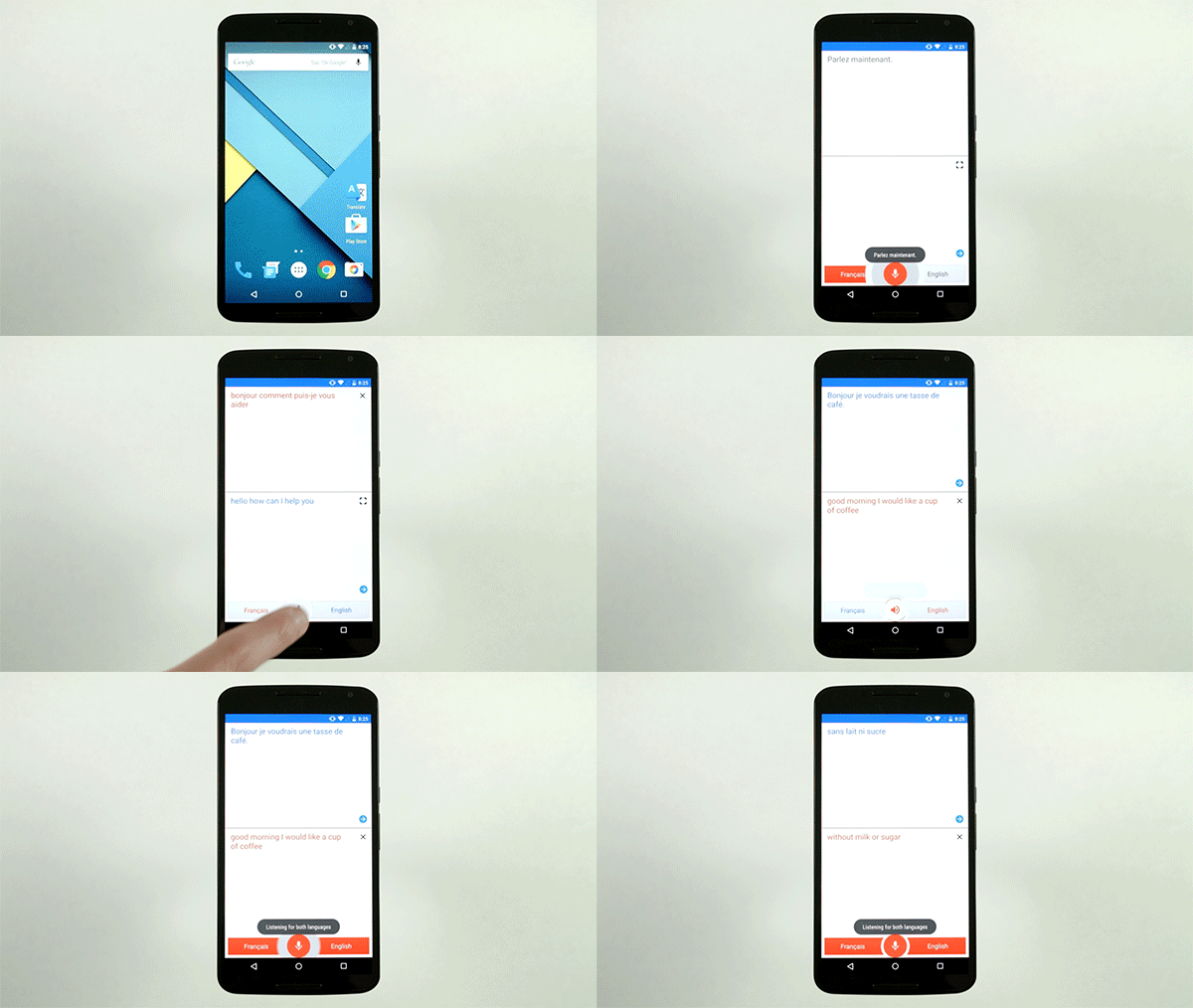
Today's changes are updates to two features added to translate back in January: a real-time video translation feature called Word Lens and a conversation feature that translates bilingual speech in real-time. The Word Lens feature lets you point your phone's camera at a sign or any other text and have it translated into another language, with the translation appearing immediately on your screen. It's designed to work entirely offline, without making any queries to Google's servers — convenient for those backpacking trips around Europe or Asia.
/cdn0.vox-cdn.com/uploads/chorus_asset/file/3915786/translate-hindi.0.gif)
Word Lens supported seven languages when it launched, but after today's update, Word Lens will be able to translate back and forth in 25 separate languages, including Czech, Turkish, and Ukranian. The app can also translate text into Hindi and Thai but cannot translate back, since the script makes it difficult for the program to resolve individual letters. The new languages aren't built directly into the app, but they're available as 2-megabyte modules, which can be downloaded by accessing the languages within the app.
The update will also make speech-to-speech translation easier to use on a slow connection, after Googlers noticed more and more users relying on the feature in areas with bad connections. By making more of the translation processes local, the new Translate can run more smoothly in the face of an intermittent connection. Every day, Translate processes 100 billion words across the globe, and 95 percent of those translations take place outside the US, so the recalibration toward slower connections could have real implications in countries with less developed cell infrastructure.
..............and then say something smart ass and or derogatory back to them instaneously..... So many interesting things can come out of this. Don't be evil though Goog
Google Translate adds 20 new languages to video text translation
Google Translate adds 20 new languages to video text translation
Can you say 'Where can I buy weed?' in Thai? Now you can.
- By Ariha Setalvad
- on July 29, 2015 09:00 am
Today's changes are updates to two features added to translate back in January: a real-time video translation feature called Word Lens and a conversation feature that translates bilingual speech in real-time. The Word Lens feature lets you point your phone's camera at a sign or any other text and have it translated into another language, with the translation appearing immediately on your screen. It's designed to work entirely offline, without making any queries to Google's servers — convenient for those backpacking trips around Europe or Asia.
Word Lens supported seven languages when it launched, but after today's update, Word Lens will be able to translate back and forth in 25 separate languages, including Czech, Turkish, and Ukranian. The app can also translate text into Hindi and Thai but cannot translate back, since the script makes it difficult for the program to resolve individual letters. The new languages aren't built directly into the app, but they're available as 2-megabyte modules, which can be downloaded by accessing the languages within the app.
The update will also make speech-to-speech translation easier to use on a slow connection, after Googlers noticed more and more users relying on the feature in areas with bad connections. By making more of the translation processes local, the new Translate can run more smoothly in the face of an intermittent connection. Every day, Translate processes 100 billion words across the globe, and 95 percent of those translations take place outside the US, so the recalibration toward slower connections could have real implications in countries with less developed cell infrastructure.