
You are using an out of date browser. It may not display this or other websites correctly.
You should upgrade or use an alternative browser.
You should upgrade or use an alternative browser.
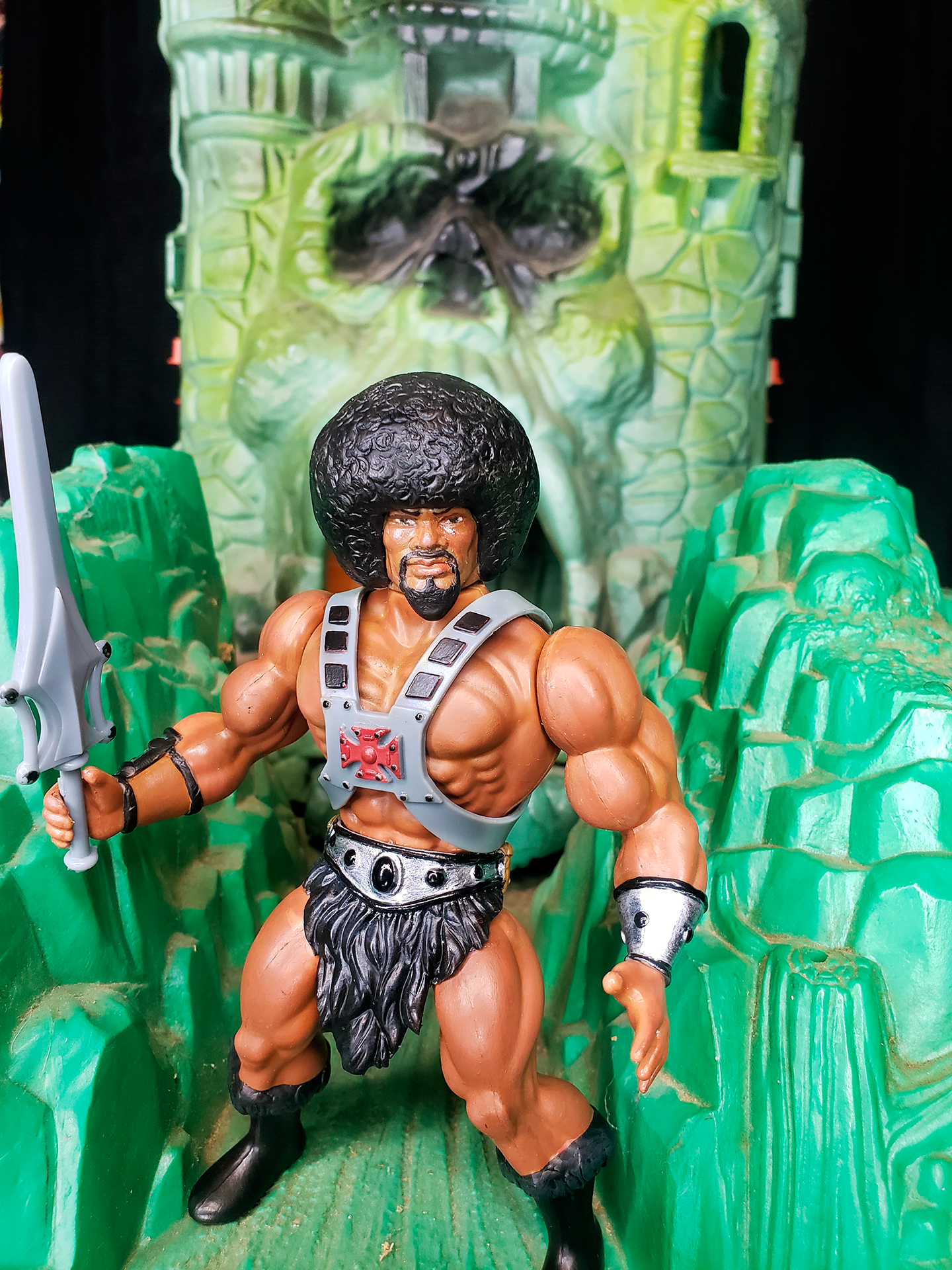
He-Man's ancestor is black now .
- Thread starter Neuromancer
- Start date
More options
Who Replied?
from 2022

 toyhabits.com
King Grayskull Deluxe Masters of the Universe Revelation Review
Check out this majestic King Grayskull Revelation Review! This is a must have for your Masters of the Universe collection!
toyhabits.com
ReturnOfJudah
Veteran
The put bits and pieces of the truth in everything

I have that set, castle greyskull, don't recognize the bridge he-breh is standing on business guarding and his sword is not original. Sword came in two parts, one grey and other purple that @Prince.Skeletor had, when combined, u could get into the castle.
Used to put our cat in that castle


DamienWayne
Superstar
The show made sure to say 'he ain't blood related to Adam, he's just a spiritual ancestor'

Prince.Skeletor
Don’t Be Like He-Man
Everybody’s ancestors are actually monkey men from Africa that evolved into the lighter civilized races right @Luke Cage?
I don’t think this is true
Originally when you go back to the ancestral Africa you speak of they were not black.
They were all light skin, but hairy.
Once the hair came off people started to get darker because to handle the sun after the hair shed off.
But before that under that hair they were light skin.
Im
Pretty sure that’s how it went

Non of that mess is trueI don’t think this is true
Originally when you go back to the ancestral Africa you speak of they were not black.
They were all light skin, but hairy.
Once the hair came off people started to get darker because to handle the sun after the hair shed off.
But before that under that hair they were light skin.
Im
Pretty sure that’s how it went
Prince.Skeletor
Don’t Be Like He-Man
Non of that mess is true
Skin Color has everything to do with hair apparently.
People were light skin under that hair.
Our earliest human ancestors in Africa probably had light skin (just as chimpanzees do underneath their fur). As these ancestors moved from forests to the open savannah and evolved reduced hair covering, natural selection favored gene variants for darker skin and protection from sun damage — but this was not a uniform process purging all “light” gene versions out of existence. This ancestral population still had a lot of genetic variation for a range of skin tones, even if the ones producing darker skin were more common. Then, as modern human populations split off from one another and fanned out over the globe, different gene versions rose to high frequency in different populations according to the balance between selection favoring UV protection and selection favoring vitamin D production. Several different groups evolved lighter skin as ancient gene versions for this trait were favored (e.g., in Europeans) — and as we’ve seen, at least one of these gene versions made it back to Africa where it became common among the KhoeSan. The twists and turns of this story illustrate, not a grand plan towards a specified goal, but a dynamic process, responding to the vagaries of history and migration, enabling so many diverse human populations to thrive in their unique environments.
One route to lighter skin, two different continents
 evolution.berkeley.edu
Also
Recent genomic studies show that the ancestral alleles of many predicted functional pigmentation variants in Africa are associated with lighter skin, suggesting our human ancestors may have had light or moderately pigmented skin… Combined with the fact that our closest evolutionary relatives, chimpanzees, have light skin, these results suggest that dark skin may be a derived trait in the Homo genus.
Evolutionary genetics of skin pigmentation in African populations - PMC
Skin color is a highly heritable human trait, and global variation in skin pigmentation has been shaped by natural selection, migration and admixture. Ethnically diverse African populations harbor extremely high levels of genetic and phenotypic ...
 pmc.ncbi.nlm.nih.gov

I don’t think this is true
Originally when you go back to the ancestral Africa you speak of they were not black.
They were all light skin, but hairy.
Once the hair came off people started to get darker because to handle the sun after the hair shed off.
But before that under that hair they were light skin.
Im
Pretty sure that’s how it went
CAC


O.T.I.S.
Veteran
You still got that setI have that set, castle greyskull, don't recognize the bridge he-breh is standing on business guarding and his sword is not original. Sword came in two parts, one grey and other purple that @Prince.Skeletor had, when combined, u could get into the castle.
Used to put our cat in that castle


richaveli83
Veteran
Same with Jesus
Yes and a lot more, I even have Skeletors castleYou still got that set

Got to break them all out again when my boy was at that age, Ram Man, Beast Man, Mer Man, the whole crew
