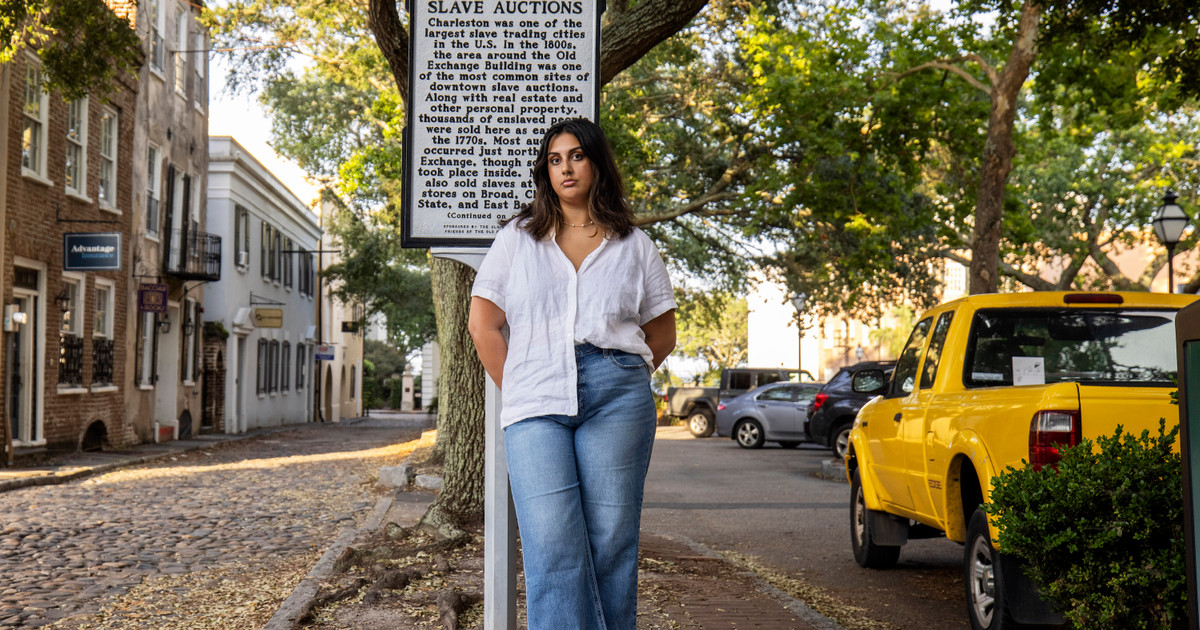
How a Grad Student Uncovered the Largest Known Slave Auction in the U.S.
Lauren Davila made a stunning discovery as a graduate student at the College of Charleston: an ad for a slave auction larger than any historian had yet identified. The find yields a new understanding of the enormous harm of such a transaction.
 www.propublica.org
She clicked on Feb. 24, 1835, another in a litany of days on which slave trading fueled her home city of Charleston, South Carolina. But on this day, buried in a sea of classified ads for sales of everything from fruit knives and candlesticks to enslaved human beings, Davila made a shocking discovery.
On page 3, fifth column over, 10th advertisement down, she read:
“This day, the 24th instant, and the day following, at the North Side of the Custom-House, at 11 o’clock, will be sold, a very valuable GANG OF NEGROES, accustomed to the culture of rice; consisting of SIX HUNDRED.”
She stared at the number: 600.
A sale of 600 people would mark a grim new record — by far.
Until Davila’s discovery, the largest known slave auction in the U.S. was one that was held over two days in 1859 just outside Savannah, Georgia, roughly 100 miles down the Atlantic coast from Davila’s home. At a racetrack just outside the city, an indebted plantation heir sold hundreds of enslaved people. The horrors of that auction have been chronicled in books and articles, including The New York Times’ 1619 Project and “The Weeping Time: Memory and the Largest Slave Auction in American History.” Davila grabbed her copy of the latter to double-check the number of people auctioned then