Ghana put on a great performance against Germany today though. If an African team could get to the Semi-Finals that would be a great achievement. Ghana need to depend on other results to qualify now and I don't see any other African team being strong enough to go that far. This World Cup has already had quite a few surprises though so anything can happen.
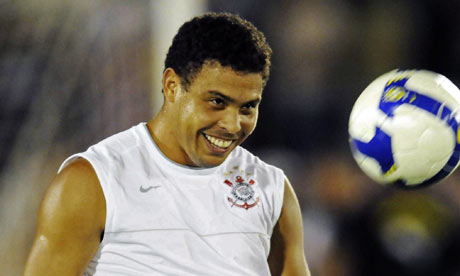
Most rich athletes these days are on that #newblack tip but a lot of Brazilians have African heritage and these are their 2 most celebrated players of all time
Nigeria are winning. If Iran don't win against Bosnia they are guaranteed to go through if they keep this up
Most rich athletes these days are on that #newblack tip but a lot of Brazilians have African heritage and these are their 2 most celebrated players of all time
Nigeria are winning. If Iran don't win against Bosnia they are guaranteed to go through if they keep this up
By the time you read this, it’s possible that every single person on the planet will know who Neymar da Silva Santos Júnior is. The image above is of Neymar from five days ago. This is Neymar from one year ago: neymar cabelo This is Neymar from three years ago: unnamed-2 This is Neymar from five years ago: unnamed-3 This is little Neymar with his family: unnamed-4 You could come to any number of conclusions from Neymar’s remarkable transformation. For instance, you could conclude that race doesn’t exist in Brazil, which is the favourite line of a specific tribe of Brazilians – impeccable liberals all, who just happen to be upper-class, white and at the top of the heap. Or you could conclude that everyone in Brazil is indeed mixed – which is, incidentally, the second-favourite line of the selfsame tribe. Or you could wonder what happened to this boy. *** It’s too easy to condemn Neymar for pretending to be white: judging by the images, he is partly white. It’s silly to accuse him of denying his mixed-race ancestry, because the simplest search throws up hundreds of images of him as a child, none of which he seems to be ashamed of. There is this: when asked if he had ever been a victim of racism, he said, “Never. Neither inside nor outside the field. Because I’m not black right?”
Actually, the word he used was preto, which is significant, since, in Brazil, when used as a colour ascribed to people – rather than things, like rice or beans – it is the equivalent of the n-word; negro and negra being the acceptable ways of describing someone who is truly black. (And moreno or morena being standard descriptors for someone dark-skinned, as well as, occasionally, euphemisms for blackness). Technically speaking, however, his logic was faultless – and even kind of interestingly honest: the Neymar who made that statement was an unworldly eighteen-year-old who had never lived outside Brazil. And in Brazil, Neymar is not black. *** In 1976, the Brazilian Institute of Geography and Statistics ran a household survey that marked a crucial departure from other census exercises. The Pesquisa Nacional por Amostra de Domicílios (PNAD) did not ask Brazilians to choose a race category among pre-determined choices; instead, researchers went out and asked people to describe the colour they thought they were. This is what was returned:
Acastanhada Somewhat chestnut-coloured Agalegada Somewhat like a Galician Alva Snowy white Alva escura Dark snowy white Alvarenta (not in dictionary; poss. dialect) Snowy white Alvarinta Snowy white Alva rosada Pinkish white Alvinha Snowy white Amarela Yellow Amarelada Yellowish Amarela-queimada Burnt yellow Amarelosa Yellowy Amorenada Somewhat dark-skinned Avermelhada Reddish Azul Blue Azul-marinho Sea blue Baiano From Bahia Bem branca Very white Bem clara Very pale Bem morena Very dark-skinned Branca White Branca-avermelhada White going on for red Branca-melada Honey-coloured white Branca-morena White but dark-skinned Branca-pálida Pale white Branca-queimada Burnt white Branca-sardenta Freckled white Branca-suja Off-white Branquiça Whitish Branquinha Very white Bronze Bronze-coloured Bronzeada Sun-tanned Bugrezinha-escura Dark-skinned India Burro-quando-foge Disappearing donkey (i.e. nondescript) humorous Cabocla Copper-coloured ( refers to civilized Indians) Cabo-verde From Cabo Verde (Cape Verde) Café Coffee-coloured Café-com-leite Café au lait Canela Cinnamon Canelada Somewhat like cinnamon Cardão Colour of the cardoon, or thistle (blue-violet) Castanha Chestnut Castanha-clara Light chestnut Castanha-escura Dark chestnut Chocolate Chocolate-coloured Clara Light-coloured, pale Clarinha Light-coloured, pale Cobre Copper-coloured Corada With a high colour Cor-de-café Coffee-coloured Cor-de-canela Cinnamon-coloured Cor-de-cuia Gourd-coloured Cor-de-leite Milk-coloured (i.e. milk-white) Cor-de-ouro Gold-coloured (i.e. golden) Cor-de-rosa Pink Cor-firme Steady-coloured Crioula Creole Encerada Polished Enxofrada Pallid Esbranquecimento Whitening Escura Dark Escurinha Very dark Fogoió Having fiery-coloured hair Galega Galician or Portuguese Galegada Somewhat like a Galician or Portuguese Jambo Light-skinned (the colour of a type of apple) Laranja Orange Lilás Lilac Loira Blonde Loira-clara Light blonde Loura Blonde Lourinha Petite blonde Malaia Malaysian woman Marinheira Sailor-woman Marrom Brown Meio-amarela Half-yellow Meio-branca Half-white Meio-morena Half dark-skinned Meio-preta Half-black Melada Honey-coloured Mestiça Half-caste/mestiza Miscigenação Miscegenation Mista Mixed Morena Dark-skinned, brunette Morena-bem-chegada Very nearly morena Morena-bronzeada Sunburnt morena Morena-canelada Somewhat cinnamon-coloured morena Morena-castanha Chestnut-coloured morena Morena-clara Light-skinned morena Morena-cor-de-canela Cinnamon-coloured morena Morena-jambo Light-skinned morena Morenada Somewhat morena Morena-escura Dark morena Morena-fechada Dark morena Morenão Dark-complexioned man Morena-parda Dark morena Morena-roxa Purplish morena Morena-ruiva Red-headed morena Morena-trigueira Swarthy, dusky morena Moreninha Petite morena Mulata Mulatto girl Mulatinha Little mulatto girl Negra Negress Negrota Young negress Pálida Pale Paraíba From Paraíba Parda Brown Parda-clara Light brown Parda-morena Brown morena Parda-preta Black-brown Polaca Polish woman Pouco-clara Not very light Pouco-morena Not very dark-complexioned Pretinha Black – either young, or small Puxa-para-branco Somewhat towards white Quase-negra Almost negro Queimada Sunburnt Queimada-de-praia Beach sunburnt Queimada-de-sol Sunburnt Regular Regular, normal Retinta Deep-dyed, very dark Rosa Rose-coloured (or the rose itself) Rosada Rosy Rosa-queimada Sunburnt-rosy Roxa Purple Ruiva Redhead Russo Russian Sapecada Singed Sarará Yellow-haired negro Saraúba (poss. dialect) Untranslatable Tostada Toasted Trigo Wheat Trigueira Brunette Turva Murky Verde Green Vermelha Red Lilia Moritz
Schwarcz, an anthropologist at the University of São Paulo, has a range of astonishing insights around this historic survey; her paper, Not black, not white: just the opposite. Culture, race and national identity in Brazil, from which the table is reproduced, is a gem. (She also has a book that examines the early history of the subject: The Spectacle of the Races: Scientists, Institutions, and the Race Question in Brazil, 1870-1930). Schwarcz’s work is filled with thoughtful, original analysis, and is characterised by an unusual fearlessness. (Unusual, that is, for a subject so complicated). Reading her is a revelation; it turns out there is a real place hiding under that avalanche of clichés. If you’ve ever wondered how crushing racism can flourish in a country where, apparently, race itself has been crushed, consider that everything Brazil is defined by – from its “we-are-all-mixed” anthem, to feijoada, capoeira and candomblé, right down to samba and soccer – is the result of an insidious, revisionist, far-sighted political manoeuvre of the 1930s, courtesy the combined skills of popular intellectual Gilberto Freyre and populist dictator Getúlio Vargas. The battered body of slave culture was abducted by national culture in order to renew white culture. Among the many eye-popping results reported in the PNAD survey, the one I am most drawn to is burro quando foge. You’ll find it up there in the table at No. 34. Google inexplicably translates the phrase as “saddle”, which is awesome, since it means that Lusofonia still keeps some secrets beyond the reach of the behemoth. Burro quando foge is translated by Schwarcz, within the constraints of a column slot, as “the disappearing donkey” and explained as a humorous phrase that denotes a nondescript colour. Which it is – and then some. The metaphor is unique to Brazil, and signifies a colour. That colour could be nondescript, ill-defined, elusive, or ugly – and, just to make things really clear, also fawn, beige, or a tricky shade of brown. The sentiment conveyed in the phrase is just as interesting. Used between friends, it could pass for a joke. Otherwise, it almost always denotes something unpleasant. It’s usually used an insult, although – oddly enough, given the colours and sentiments – it’s not specifically a racial insult. Of all the one hundred and thirty six colours of race in Brazil, this is my favourite. It’s flippant and factual and fictional all at once, and as such, suits me perfectly. Race is not a term that has much currency in India, where I live. It is, however, a central feature of Johannesburg and São Paulo, the two cities I occasionally work in, and as much as I’m aware of how privileged I am not to be wholly subject to it, I feel curiously bereft of race in both places. Certainly, I grew up with colour: being a dark-skinned child in a uniformly light-skinned family meant that I had to regularly contend with well-meaning relatives who’d pinch my cheeks and chide me for “losing my colour” – as though my skin tone was something I had brought upon myself in a fit of absent-mindedness. To choose a race then: Indian might work for some people, but it is both my passport and my residence, and that’s quite enough. Brown is too generic, and black, a bit too unbelievable, all things considered. Given that I spent my childhood reading Gerald Durrell and dreaming of donkeys, adopting their colour seems right in so many ways. *** And where does that leave our boy wonder? We might start with the Estado Novo, Vargas’ authoritarian reign between 1937 and 1945. Only a few years earlier, Freyre had published the crowning achievement of his career, Casa-Grande e Senzala, (“The Big House and the Slave Quarters”, released in English as The Masters and the Slaves), and the book was catching fire. Freyre’s central theory was something he called Lusotropicalism. It told a soothing story of the past (by casting the Portuguese as a kinder, gentler breed of imperial slaver), offered a handy solution for the present (by turning the mixing of races into a virtue) and held out an appealing conclusion, namely, the idea that Brazil was a racial democracy. Upon publication, Freyre’s work immediately attracted the ire of the Portuguese nation for suggesting her citizens were prone to miscegenation. At home, however, it became Vargas’ blueprint for the country he had seized – and his strategy for political survival. Three quarters of a century later, Freyre’s big think remains the enduring idea of Brazil, an idea whose appeal grows in leaps and bounds across the globe and, to be sure, often escapes the clutches of its creators to dazzling effect. Still, consider the irony: the country’s sense of itself as a racial democracy was smuggled in to its soul by an autocracy. The term Estado Novo refers to a few different periods of dictatorship, and it literally translates as “new state”, which is prophetic, since the words also describe a peculiar duty that is incumbent upon at least half the Brazilian population. That duty, of course, is the business of branqueamento – of whitening – of transforming, quite literally, into a new physical state. (For all his pro-miscegenation advocacy, Schwarcz notes in The Spectacle of the Races, Freyre was as keen as his critics on keeping the structure of Brazil intact: as a hierarchy with whiteness on top). In that sense, Neymar is only the latest in a long line of celebrities and Brazilians of lesser value who get it. Who get the fine print on the contract; who understand that national identity rests on racial harmony, which, in turn, rests on a kind of potential access to opportunity. Not the opportunity to be equal, mind you, but the opportunity to be white. We may gawk at him all we like, but in straightening his hair, extending it out and dyeing it blonde, Neymar was fulfilling his patriotic destiny in exactly as much as confounding the Croats and leading his team to victory last week. *** I’ll venture that the disappearing donkey colour fits Neymar to a T. After all, he is both undoubtedly and elusively brown. Yes, there is the matter of his blonde ambition. O burro fugiu, we might well ask: has the donkey left the room? I’d really like to think not. For one thing, the boy’s only twenty two. He’s got a whole lifetime to change his mind – and his hair. For another, I’ve got a whole World Cup to watch. Have a heart. I spend hours every week learning Brazilian Portuguese, I’m devoted to the country, and I come from Bangalore, a city in which Pelé is god. I do not mean this metaphorically. In a neighbourhood called Gowthampura, around the corner from where I live, residents have erected a lovely shrine to four local icons – the Buddha, Dr. Ambedkar, Mother Teresa, and the striker from Santos. unnamed-6 So there you have it: my hands are tied. I’ve got my own patriotic destiny to fulfil, and it involves rooting for Brazil, which means I’m going to need to love Neymar a lot. I can do it. Anyway, donkeys are famously stubborn animals. They’re good at waiting.
This articles actually shorter and and a bit more informative.
Before teams representing their countries from around the world arrived in Brazil, the country’s president, Dilma Rousseff, took the opportunity to label 2014 the “anti-racism World Cup.” The declaration came after a wave of racist incidents in soccer around the world targeting Black players, many of whom are Brazilian. While it’s a well-intentioned gesture and a particularly important one for a World Cup being hosted in the country that’s home to the largest population of people of African descent outside of Africa, Brazil has a complex past and present when it comes to race. That complexity can perhaps best be illustrated by the fact that many Black Brazilians don’t think of themselves as Black. Brazilian soccer star Neymar is a great example. Asked during an interview in 2010 if he had ever experienced racism, his response was, “Never.” He added, “Not inside nor outside of the soccer field. Even more because I’m not Black, right?” This denial of Blackness may seem confusing to many Americans, because despite his long, straightened and occasionally blond hair, Neymar is clearly Black. But for Brazilians, being Black is very different from what it is in the United States.
Dion Rabouin “The darker a person is in Brazil, the more racism she or he is going to suffer. Light-skinned Black people don’t identify as Black most of the time,” says Daniela Gomes, a Black Brazilian activist who is currently pursuing a doctorate in African Diaspora studies at the University of Texas. “A lot of people choose to deny their Blackness. They don’t believe they are Black, but they suffer racism without knowing why.” Gomes calls it a “brainwash” that Brazilians go through in a country that likes to hold itself up as a model for racial harmony. But she also points to differences in the histories of the United States and Brazil. “We never had segregation, we never had the one-drop rule, we never had those kinds of things that are so normal for an African American,” she said. “What happened in Brazil was the opposite.” Integration and miscegenation were actually government policy in Brazil. Around the time that slaves were freed, in 1888, the government sought to whiten its population through the importation of European immigrants. This idea was made law by Decree 528 in 1890 and opened the country’s borders to foreign immigrants, except for those from Africa and Asia. The goal of this immigration effort was depicted in an 1895 painting by Brazilian artist Modesto Brocos known as “The Redemption of Ham,” which features a Black grandmother, mixed-race mother, White father and White baby. The grandmother stands to the left with her hands raised in prayer, praising God that her grandson is White. This, says Brazilian entrepreneur and activist Carlos Alberto David, is the “final point” of racism in Brazil.
“Racism in Brazil is very sophisticated and structured,” says David. “The racism here is not physical. It works on people psychologically.” Neymar, whose son looks very similar to the grandson in “The Redemption of Ham,” seems to have had quite a different experience in the four years since saying that he wasn’t Black. The star forward has been subjected to monkey noises made by his own teammates, had multiple bananas thrown at him during international matches and even confronted an opposing coach he thought called him a monkey during a game. That harassment may have been at the heart of a campaign he started after fellow Brazilian team member Dani Alves had a banana thrown at him by fans during a match in Spain. Rather than protest, Alves picked up the banana, peeled it and ate it, then continued playing. Later, Neymar posted a photo to Instagram of himself and his son holding bananas with the slogan, “Somos todos macacos” (“We are all monkeys”). The campaign took off in Brazil, with many of the country’s notable artists and personalities also tweeting photos of themselves with bananas. But many in the country protested the movement, citing it as a trivialization of a very serious problem in soccer and in society. “The comparison between Blacks and monkeys is racist in its essence,” wrote Brazilian activist and history professor Douglas Belchior on his NegroBelchior blog. “However, many people don’t understand the seriousness of using the monkey as an offense, as an insult to black people.” This can be a particularly complex issue in a country full of people whom outsiders see as Black but who don’t think of themselves as such. That divide is evidenced by growing monkey taunts of Black players and officials in Brazil. As the World Cup moves forward and more fans see their teams bounced from the tournament by teams led by star Black players like Italy’s Mario Balotelli, Cameroon’s Samuel Eto’o, Belgium’s Vincent Kompany, France’s Paul Pogba and others, Brazil’s hopes for a global marker against racism may be tested."]
This site uses cookies to help personalise content, tailor your experience and to keep you logged in if you register.
By continuing to use this site, you are consenting to our use of cookies.