

ogc163
Superstar
In recent weeks, the growing mass movement for racial justice has shined a light on harsh disparities affecting nearly every facet of American life—from criminal justice and policing to the health and economic effects of the pandemic. This new analysis examines disparities in employment and wages experienced by Black residents of New York City, finding widespread underrepresentation across dozens of industries and alarming wage gaps.
This analysis shows that Black New Yorkers hold a shockingly small share of the jobs in a wide array of well-paying industries—not just in finance and technology, but also in creative fields, construction, manufacturing, and business services.
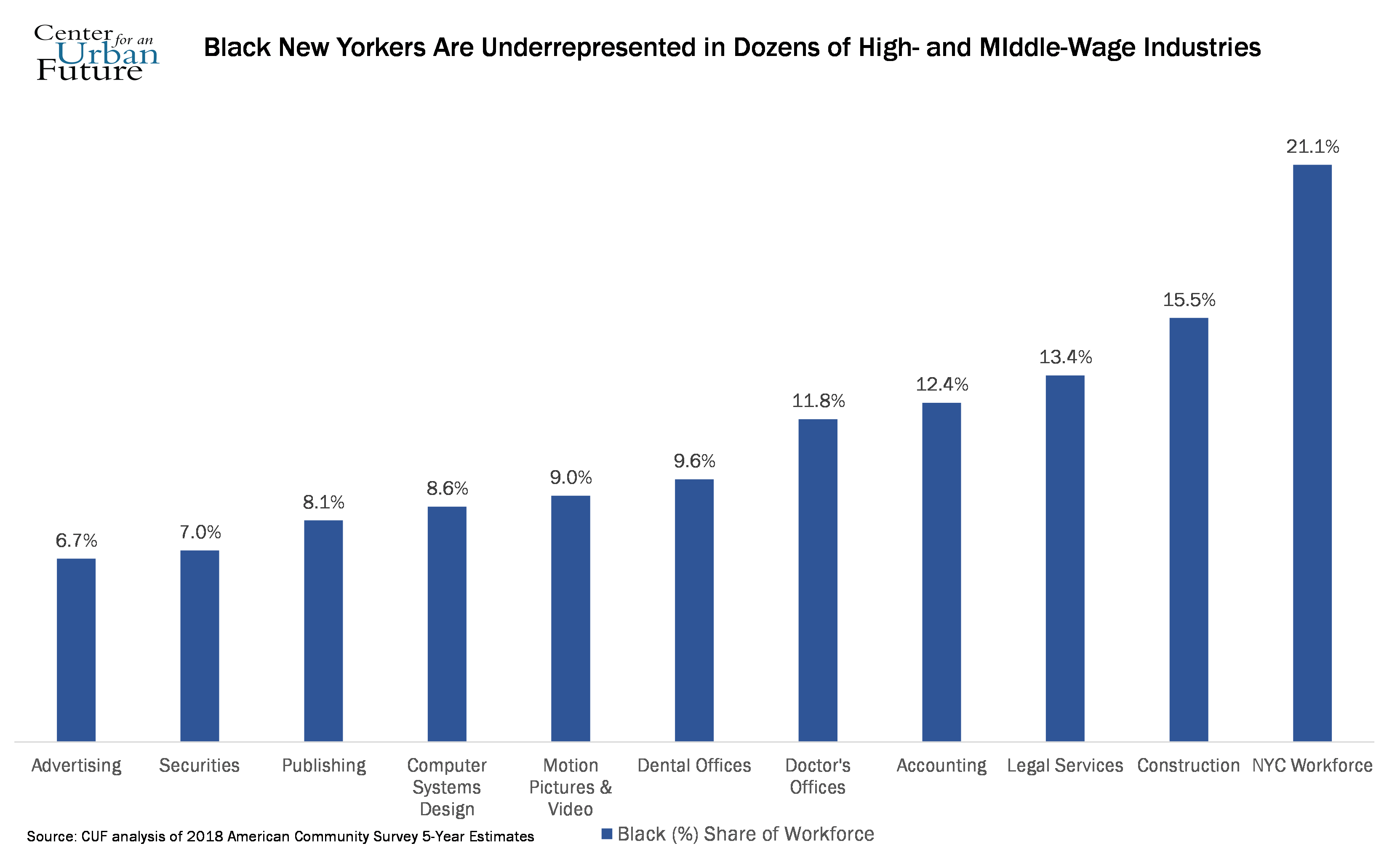
Black New Yorkers account for just 7 percent of the workforce in advertising, 7 percent in the securities industry, 8 percent in publishing, 9 percent in computer systems design (the largest field within the tech sector), 9 percent in motion pictures and video, 13 percent in legal services, and 16 percent in construction, even though Black New Yorkers make up 21 percent of the overall workforce and 22 percent of the city’s population.
Black New Yorkers are also underrepresented in many industries with a significant number of accessible, middle-wage jobs, comprising just 10 percent of all workers in dental offices, 12 percent in doctor’s offices, and 14 percent in food manufacturing, among others.
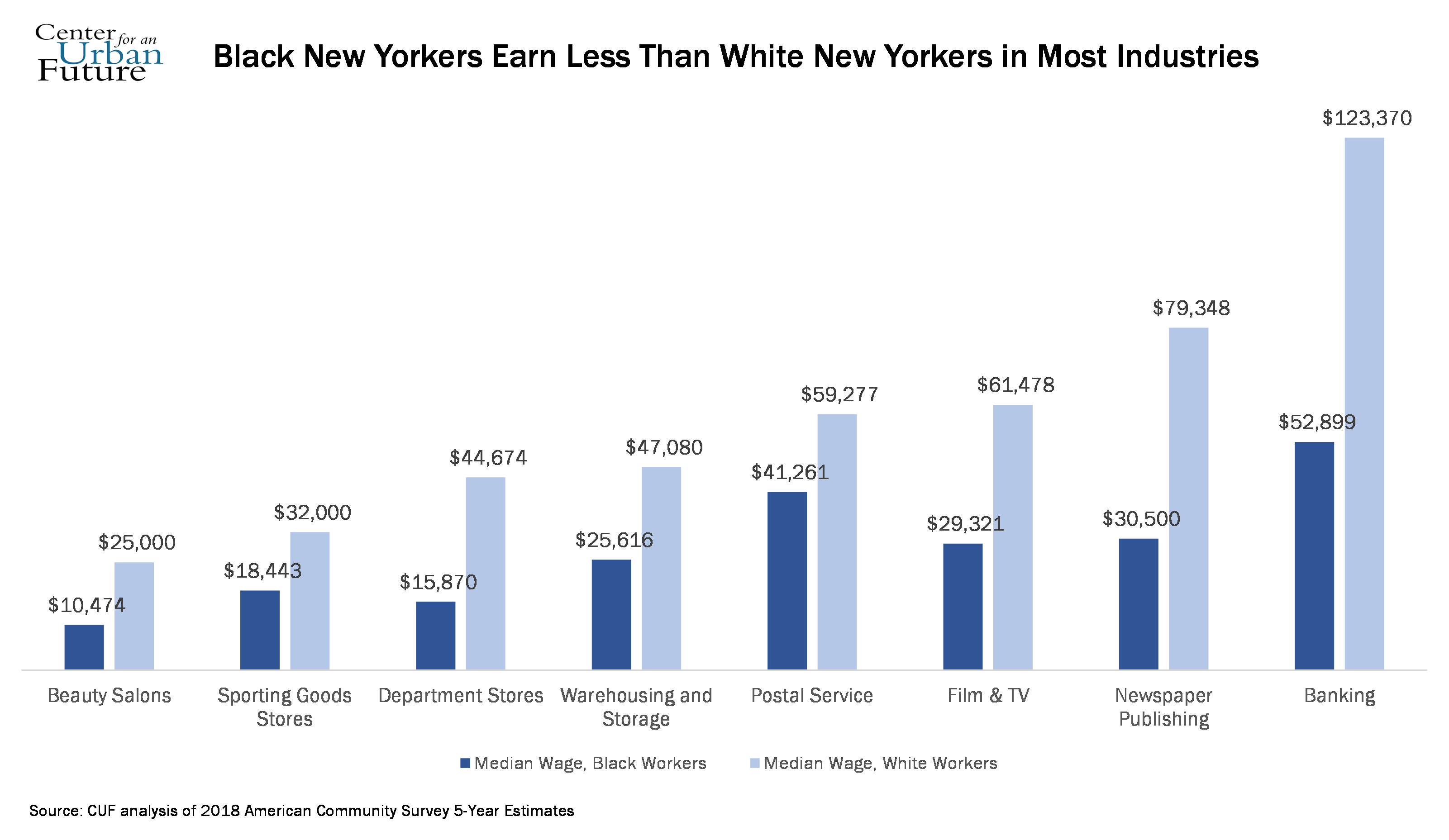
In addition to these workforce disparities, this analysis finds significant income disparities between Black and white workers in nearly every industry—not just high-paying fields. For example, the median annual income for Black New Yorkers employed in the city’s department stores is barely one-third of that of their white counterparts ($15,870 vs $44,674). Black postal workers earn $41,261, compared to $59,277 earned by white colleagues. There are similarly large pay disparities between Black and white New Yorkers in the warehousing and storage industry ($25,616 vs $47,080), sporting goods stores ($18,443 vs $32,000), beauty salons ($10,474 vs $25,000), newspaper publishing ($30,500 vs $79,348), the film & tv sector ($29,321 vs $61,478), banking ($52,899 vs $123,370) and dozens of other industries.1
Indeed, Black workers earned more than their white counterparts in just 12 of the nearly 140 industries we analyzed for this report—and all but four pay less than $39,000 annually. In 33 other industries, the gap in median incomes for Black and white workers was less than $10,000. In the remaining 92 industries, the income gap was greater than $10,000. Often, industries that typically produce middle-wage jobs for white New Yorkers pay near-poverty wages to Black New Yorkers.
The factors that produce these disparities are complex and pervasive, likely including persistent gaps in educational attainment by race and income—magnified by the effect of systemic racism. No matter the scale of the challenge, closing these gaps should be among the city’s highest policy priorities and will require a dedicated and long-term response. For the city’s economy not only to recover from the current crisis, but to reemerge more equitable and inclusive, policymakers will need to take strong steps to help more Black New Yorkers gain footholds—and advance—in a diverse range of well-paying and accessible fields. This should include major new efforts to help more Black New Yorkers earn a postsecondary credential, access high-quality job training, or start and grow a business. At the same time, industry leaders will need to develop and expand evidence-based strategies and partnerships to ensure that Black New Yorkers can participate and thrive in the city’s eventual economic rebound.
Black New Yorkers are significantly underrepresented in many of the city’s high- and middle-wage industries
Our analysis shows that Black New Yorkers make up a strikingly small share of the workforce in many of the city’s high- and middle-wage industries. This includes the finance and tech sectors, but also many of the city’s creative industries, offices of physicians and dentists, and even the more accessible manufacturing sector.
The following data shows the Black share of the workforce in a number of higher-wage and middle-wage sectors, broken down by industry category:
Creative Industries
Our analysis reveals a significant disparity in the median salary for Black and white workers in most industries. This includes high-wage fields like finance and tech. But more surprisingly, it includes other sectors like retail, warehousing, personal services, and even the postal service.
The following is a small sampling of the industries where median annual income is significantly lower for Black workers compared to white workers:
Retail
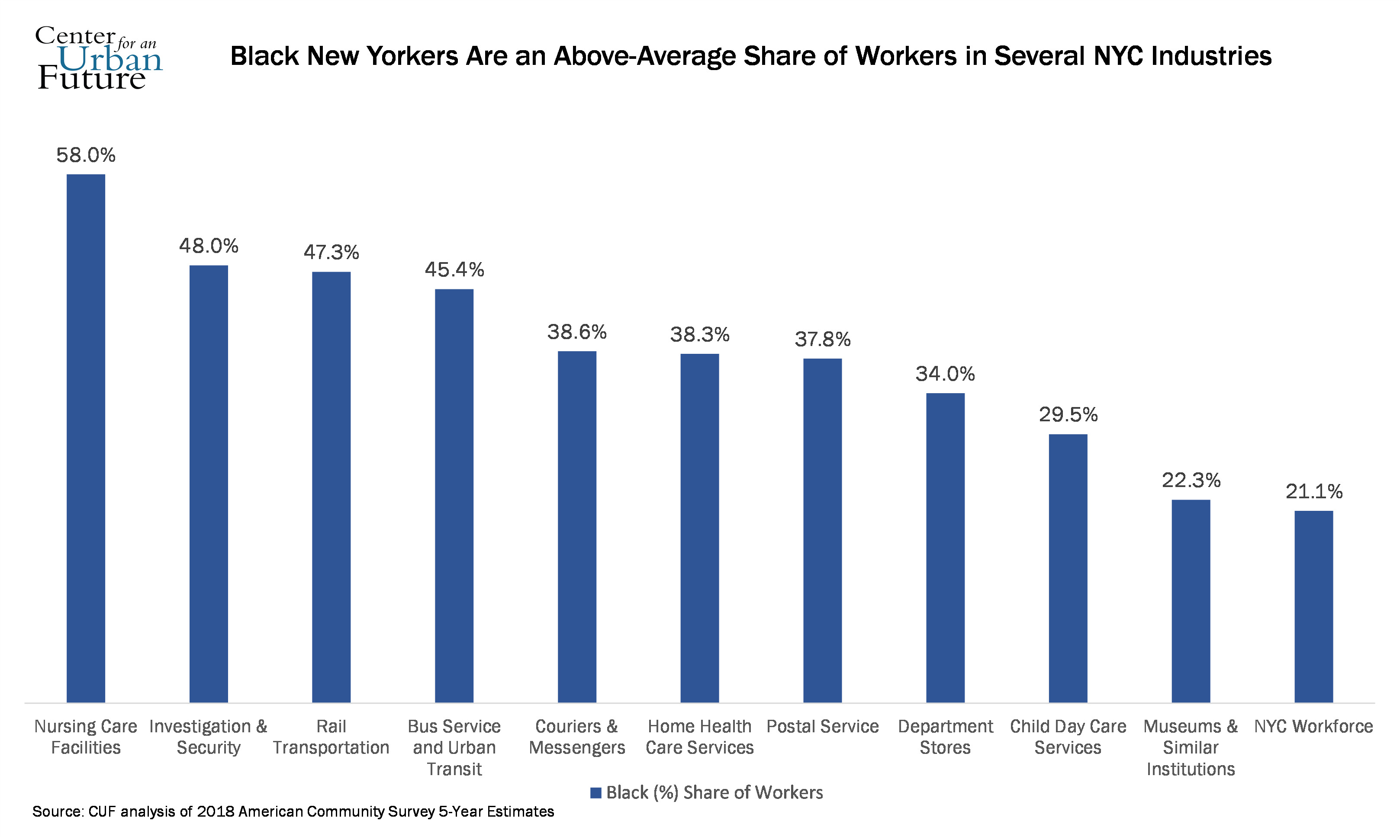
There are a number of industries where Black workers make up a disproportionately large share of the workforce or generally reflect their overall share (21 percent). For instance, the following data shows the Black share of the workforce in industries including:
This analysis shows that Black New Yorkers hold a shockingly small share of the jobs in a wide array of well-paying industries—not just in finance and technology, but also in creative fields, construction, manufacturing, and business services.
Black New Yorkers account for just 7 percent of the workforce in advertising, 7 percent in the securities industry, 8 percent in publishing, 9 percent in computer systems design (the largest field within the tech sector), 9 percent in motion pictures and video, 13 percent in legal services, and 16 percent in construction, even though Black New Yorkers make up 21 percent of the overall workforce and 22 percent of the city’s population.
Black New Yorkers are also underrepresented in many industries with a significant number of accessible, middle-wage jobs, comprising just 10 percent of all workers in dental offices, 12 percent in doctor’s offices, and 14 percent in food manufacturing, among others.
In addition to these workforce disparities, this analysis finds significant income disparities between Black and white workers in nearly every industry—not just high-paying fields. For example, the median annual income for Black New Yorkers employed in the city’s department stores is barely one-third of that of their white counterparts ($15,870 vs $44,674). Black postal workers earn $41,261, compared to $59,277 earned by white colleagues. There are similarly large pay disparities between Black and white New Yorkers in the warehousing and storage industry ($25,616 vs $47,080), sporting goods stores ($18,443 vs $32,000), beauty salons ($10,474 vs $25,000), newspaper publishing ($30,500 vs $79,348), the film & tv sector ($29,321 vs $61,478), banking ($52,899 vs $123,370) and dozens of other industries.1
Indeed, Black workers earned more than their white counterparts in just 12 of the nearly 140 industries we analyzed for this report—and all but four pay less than $39,000 annually. In 33 other industries, the gap in median incomes for Black and white workers was less than $10,000. In the remaining 92 industries, the income gap was greater than $10,000. Often, industries that typically produce middle-wage jobs for white New Yorkers pay near-poverty wages to Black New Yorkers.
The factors that produce these disparities are complex and pervasive, likely including persistent gaps in educational attainment by race and income—magnified by the effect of systemic racism. No matter the scale of the challenge, closing these gaps should be among the city’s highest policy priorities and will require a dedicated and long-term response. For the city’s economy not only to recover from the current crisis, but to reemerge more equitable and inclusive, policymakers will need to take strong steps to help more Black New Yorkers gain footholds—and advance—in a diverse range of well-paying and accessible fields. This should include major new efforts to help more Black New Yorkers earn a postsecondary credential, access high-quality job training, or start and grow a business. At the same time, industry leaders will need to develop and expand evidence-based strategies and partnerships to ensure that Black New Yorkers can participate and thrive in the city’s eventual economic rebound.
Black New Yorkers are significantly underrepresented in many of the city’s high- and middle-wage industries
Our analysis shows that Black New Yorkers make up a strikingly small share of the workforce in many of the city’s high- and middle-wage industries. This includes the finance and tech sectors, but also many of the city’s creative industries, offices of physicians and dentists, and even the more accessible manufacturing sector.
The following data shows the Black share of the workforce in a number of higher-wage and middle-wage sectors, broken down by industry category:
Creative Industries
- 7% in advertising, public relations, and related services
- 8% in the periodical, book, and directory publishers sector
- 8% in architectural, engineering, and related services
- 9% in motion pictures and video industries
- 6% in scientific research and development services
- 7% at software publishers2
- 9% in computer systems design (which makes up the largest share of workers in the city’s tech sector)
- 9% of Internet publishing and broadcasting and web search portals
- 11% in data processing, hosting, and related services.
- 12% of electronic shopping and mail order houses (which includes most e-commerce companies)
- 7% in securities, commodities, funds, trusts, and other financial investments, the highest-earning financial sector
- 9% percent in the nondepository credit and related activities sector
- 13% in banking and related activities
- 10% in offices of dentists
- 12% at offices of physicians
- 6% at offices of other health practitioners
- 8% in management, scientific, and technical consulting services
- 12% in accounting, tax preparation, bookkeeping, and payroll services
- 13% in legal services
- 7% in apparel manufacturing
- 14% in food manufacturing
- 15% in the printing sector
- 15% in pharmaceutical and medicine manufacturing
Our analysis reveals a significant disparity in the median salary for Black and white workers in most industries. This includes high-wage fields like finance and tech. But more surprisingly, it includes other sectors like retail, warehousing, personal services, and even the postal service.
The following is a small sampling of the industries where median annual income is significantly lower for Black workers compared to white workers:
Retail
- Department stores – $15,870 for Black workers vs $44,674 for white workers
- Sporting goods stores – $18,443 vs $32,000
- Furniture and home furnishings stores – $20,000 vs $52,000
- Automotive parts, accessories, and tire stores – $12,568 vs $31,755
- Clothing stores – $20,000 vs $52,899
- Electronics stores – $25,137 vs $52,926
- Pharmacies and drug stores – $20,102 vs $40,000
- Beauty salons – $10,474 vs $25,000
- Warehousing and storage – $25,616 vs $47,080
- Water transportation – $24,000 vs $36,658
- Bus service and urban transit – $52,369 vs $68,769
- Air transportation – $31,421 vs $65,628
- Postal Service – $41,261 vs $59,277
- Legal services – $53,984 vs $101,000
- Banking and related activities – $52,899 vs $123,370
- Securities, commodities, funds, trusts, and other financial investments – $70,885 vs $137,606
- Motion pictures & video industries – $29,321 vs $61,478
- Advertising, public relations, and related services – $63,479 vs $81,971
- Newspaper publishers – $30,500 vs $79,348
- Accounting, tax preparation, bookkeeping, and payroll services – $47,633 vs $69,675
- Electronic shopping and mail-order houses – $35,000 vs $68,769
- Real estate property managers, offices of real estate appraisers, and other activities related to real estate – $40,985 vs $58,000
There are a number of industries where Black workers make up a disproportionately large share of the workforce or generally reflect their overall share (21 percent). For instance, the following data shows the Black share of the workforce in industries including:
- Nursing care facilities – 58% of the workforce
- Community food and housing, and emergency services – 49%
- Investigation and security services – 48%
- Rail transportation – 47%
- Bus service and urban transit – 45%
- Administration of human resource programs – 44%
- Couriers and messengers – 39%
- Home health care services – 38%
- Postal services – 38%
- Psychiatric and substance abuse hospitals – 37%
- Public finance activities – 36%
- Justice, public order, and safety activities – 35%
- Department stores – 34%
- General medical and surgical hospitals, and specialty (except psychiatric and substance abuse) hospitals – 33%
- Individual and family services – 32%
- Air Transportation – 32%
- Savings institutions, including credit unions – 31%
- Child day care services – 30%
- Truck transportation – 27%
- Museums, art galleries, historical sites, and similar institutions – 22%
- Insurance carriers – 21%
- Elementary and secondary schools – 21%
- Automobile dealers – 20%
- Traveler accommodation – 19%
- Book stores & news dealers – 18%




 Beat me to it.
