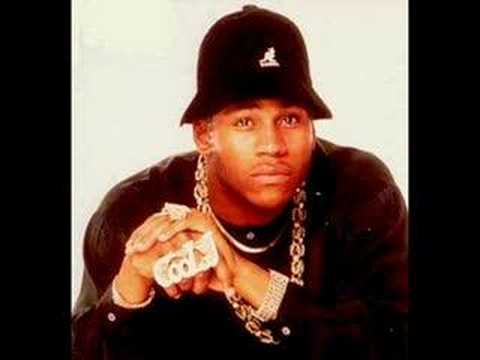
LL Cool J - Radio 30th Anniversary Thread

mson

Veteran
Supporter
Joined
Sep 10, 2012
Messages
58,930
Reputation
7,829
Daps
111,544
Reppin
NULL
radio.jpg

Today In Hip Hop History: LL Cool J’s Debut LP ‘Radio’ Drops 30 Years Ago

pologod
November 18, 2015
On this date in 1985, James Todd Smith better known as LL Cool J, dropped his first full length LP on Def Jam Records. Primarily produced by Rick Rubin besides “I Need A Beat”, which was produced by DJ Jazzy Jay, Radio was a pivotal LP for not only LL and Def Jam, but for an evolving Hip Hop landscape that had just seen the rapid decline of b-boying and jams in the park. This was also the era in which the crack epidemic hit the streets and all of the major players used LL Cool J as the prototype image of how a hustler is supposed to look.

Songs like “I Can’t Live Without My Radio” and “Rock The Bells” dominated airwaves as well as influenced other artists of that time period with his braggadocios content and virtually forceful delivery. The song that actually got Cool J the deal with Def Jam, “I Need A Beat”, was written and recorded when LL was only 15 years old, making him not only Def Jam’s first solo artist, but also their youngest.

Salute to Cool J, Rick Rubin, Russell Simmons, Jazzy Jay and everyone at Def Jam from that era that help put together this timeless classic!
Today In Hip Hop History: LL Cool J’s Debut LP ‘Radio’ Drops 30 Years Ago
 
Last edited:

mson

Veteran
Supporter
Joined
Sep 10, 2012
Messages
58,930
Reputation
7,829
Daps
111,544
Reppin
NULL
LL Cool J’s Radio and the genesis of Def Jam

LL Cool J’s inaugural album Radio didn’t just launch the career of a rapper who became one of the most visible media personalities on the planet—it changed the sound and course of rap music. The album legitimized the efforts of producer Rick Rubin and his partner Russell Simmons at the inception of Def Jam Recordings, a label that started in an NYU dorm room and would come to dominate the rap game for years. It would be hard to imagine any of that happening if not for the success, both critical and commercial, of Radio.

In 1984, James Todd Smith, a.k.a. LL Cool J—Ladies Love Cool James—was just another 16-year-old from Long Island with dreams of rap superstardom. At Christmas five years earlier, instead of the dirt bike he wanted, he received two turntables, a mixer, speakers, and a microphone. He had been making beats and writing rhymes ever since. He’d sent countless demo tapes to independent labels and underground producers around New York City to no response. One day he picked up a 12-inch copy of the T La Rock and Jazzy J song “It’s Yours” and took down the information of a guy named Rick Rubin who was listed on the back cover.

hqdefault.jpg

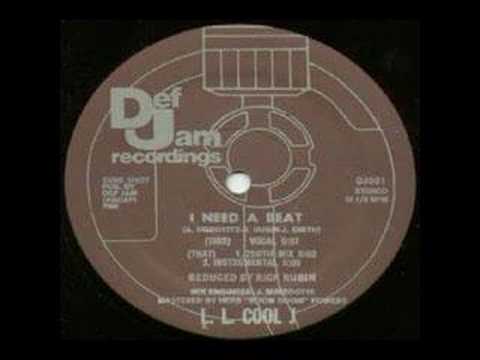
Luckily for LL, and perhaps regrettably for Rubin at the time, the producer had included his personal phone number on the single, and the aspiring young MC dialed it nearly every day to ask whether Rubin had heard his tape. Finally, at the urging of the Beastie Boys’ Ad-Rock, Rubin threw the tape on and was impressed enough to invite the rapper down to NYU where the two men cooked up a song called “Catch This Break.” As soon as the tape finished rolling, they took it over to Rubin’s partner, Simmons, who found it run-of-the-mill. Simmons said, “That’s just like the Treacherous Three and everybody else!” as LL recalls in his 1997 autobiography, I Make My Own Rules. Yet Rubin wasn’t deterred. He booked time in a professional studio and invited LL, along with a DJ, to flesh out the rapper’s song “I Need A Beat.” This time around, Simmons was impressed and signed LL as one of the first artists on the fledgling Def Jam label.

“I Need A Beat” was the first official single released by Def Jam (single #DJ001m) and proved to be a slow-rolling success for the label, eventually shifting more than 100,000 units. The song is about the art of rapping itself, delivered over a sparsely layered, repetitive drum machine beat and a series of live scratches. More than the instrumentation around him, the dynamism of LL Cool J’s fiery rapping style propels the track. The impact lay not so much in what he said—“I’m in the center of a musical scorcher / To some citizens it’s a form of torture / They hear me, they fear me, they hear me, they fear me / I’m improvin’ the conditions of the rap industry”—as in how he said it, with more fierce conviction and charisma than anyone had heard from a rap artist. Just five years after The Sugarhill Gang’s “Rapper’s Delight” signaled the beginning of rap as a legitimate art form, LL Cool J gave the nascent genre a bombastic energy.
hqdefault.jpg

The success of “I Need A Beat” and the Beastie Boys’ “Rock Hard” led Def Jam to a distribution deal with Columbia Records. Rubin, LL, and a DJ who went by the name Cut Creator started work on the rapper’s first full-length release. LL dropped out of high school to give the venture his full attention, holing up with his collaborators in Chinatown’s Chung King Studios. He laid down the rhymes and ideas he’d penned for a wide variety of gritty boom-bap drum beats and nasty instrumental flourishes that Rubin and Cut Creator dialed up for him.

There’s a reason why the producer gets the credit “Reduced by Rick Rubin” on the back of Radio. With the possible exception of the “I Need A Beat” remix, most of the songs on this record feature a single drumbeat and one or two other musical elements to keep things interesting. On “Dear Yvette,” it’s the multi-tracked vocal hook. On “I Can Give You More,” it’s the tinkling notes of a single piano. And most notably, on “Rock The Bells” and “You’ll Rock,” it’s the album’s instantly identifiable record scratching. While it’s arguable that the minimalist sound of Radio came about more out of necessity than choice, its less-is-more attitude became a critical element of Rubin’s aesthetic as time wore on. Years later, Kanye West asked Rubin to help him strip his album Yeezus of elements that the rapper felt had become superfluous.

Nobody in rap benefited more than LL Cool J from this specific design. As evidenced by his latter-day career as a television/film star and award show host, he has a charisma that can’t be denied, and as a rapper, he’s a force of nature. Without excessive production to hamper his flow, he takes control of the spotlight with a burning intensity, searing every word into your eardrum as the beat goes rocking on. And what’s more, the themes he explores across Radio’s 11 tracks were relatable to the teenage artist’s equally young fans, who were thirsty to buy into someone just like them.

hqdefault.jpg

“I Want You,” “I Can Give You More,” and “Dear Yvette” deal with the same basic idea that pop artists have been mining since before Elvis shook his hips to “That’s All Right” in the 1950s. As every generation discovers, that intrinsic longing for attention, love, or basic affection is as ingrained in our DNA as the need for food and water. On those three tracks, LL tapped into that urge in a genuine way but also with a sheen of bravado that made it palatable for his like-minded, tough-talking teenage acolytes. It’s okay to say, “Please be his ex and be my bride / Don’t blame it on yourself, sweet thing, you tried,” if you rap it out with the right bluster.

And then there are the songs “Dangerous” and “Rock The Bells,” blatant expressions of braggadocio self-aggrandizement that, more than anything else, are just fun to rap along with. On the former, he reps the bonafides of Cut Creator with lines like, “Demolishin’ DJ’s in under a second / I’ll quote an old phrase from my last record / The beat elevates, the scratch excels.” On the latter, he reminds the listener that he’s not an MC to be trifled with: “The king of crowd rockers is finally back / My voice is your choice as the hottest wax / True as a wizard, just a blizzard, I ain’t taken no crap / I’m rhymin’ and designin’ with your girl in my lap.”

hqdefault.jpg

The rollout for Radio was extensive, fueled by the release of five tracks—almost half the record—as singles. The first, “I Can’t Live Without My Radio,” released on October 6, 1985, made the deepest impact, both on the charts and in the culture at large. It’s a fun song about the simple joys of music. The way the rapper flicks off the song’s title at the end of each stanza with a don’t-give-a-fukk ruggedness is exhilarating. To gain exposure, LL logged an appearance rapping the song in the Def Jam origin film Krush Groove, which hit theaters three weeks after the single first appeared. His cameo was eventually used as a music video that MTV pushed into heavy rotation, propelling the song to triple-platinum status. Almost overnight, a 16-year-old kid was the most recognized rapper on the planet.

When Radio was finally released on November 18, 1985, its success shocked the record industry. Half a million copies sold in a mere five-month period. Four years later, it hit platinum. LL Cool J was a star, and Def Jam was one of the hottest labels in the world. A year later, Rubin would apply a similar production approach to Def Jam’s other marquee act, Beastie Boys, on the trio’s debut album, Licensed To Ill. It would eclipse the success of Radio several million times over. LL responded in turn on summer of 1987 with Bigger & Deffer, the biggest selling album of his career. For Def Jam, it was the start of an unparalleled roll through the recording industry. They would shepherd the careers of Slayer, Public Enemy, and Slick Rick through the late 1980s—in addition to Jay Z, Kanye West, and nearly every other big name in rap in the years beyond.

hqdefault.jpg

After his arrival on the scene, LL Cool J’s profile only increased, but as a musical artist, you can make the argument that he never exceeded the heights he reached on Radio. His 1990 album, Mama Said Knock You Out, is the only real contender, but it’s no match for the youthful enthusiasm that the rapper exhibits on his debut. By combining vivid urban street tales with swagger-filled declarations about his self-made rebel persona, LL provided the blueprint for the next decade of MCs looking to come up in his outsize wake. Radio also set the table for a singular and gritty tone of rap music that influential producers like RZA of the Wu-Tang Clan, Easy Mo Bee, DJ Premier, and Pete Rock would seek to emulate. It changed the course of rap music and helped shape the sound and style of the entire genre for years to come.

LL Cool J’s Radio and the genesis of Def Jam

 

mson

Veteran
Supporter
Joined
Sep 10, 2012
Messages
58,930
Reputation
7,829
Daps
111,544
Reppin
NULL
Q&A: LL Cool J on the 30th Anniversary of ‘Radio’
ll-cool-j.jpg

Terence Patrick for Variety
November 19, 2015 | 10:00AM PT
Andrew Barker
Senior Features Writer @barkerrant
Thirty years ago, a teenage Queens rapper named LL Cool J joined forces with an enterprising NYU student named Rick Rubin: The result was “Radio,” the first full-length album released by the nascent Def Jam label, launching LL as hip-hop’s first mainstream heartthrob pop star.

What did you think when you first heard some of the beats Rick was making for you on “Radio”?

You know, with a lot of those beats I was actually telling Rick what to play. I’d go, (beat-boxes), like for ‘Rock the Bells’ and a few others. And some other times he would just completely surprise me, like with ‘I Need a Beat’ or ‘I Can’t Live Without My Radio.’ It was a real collaborative time. Sometimes we would do a rough demo, then he’d go back and mess with things and play it back for me over the phone, and I’d just be going crazy. His production ideas, he was just taking things to a whole new level.

At that point, Rick’s only real production credit was (T La Rock’s) “It’s Yours,” right?

Buying that record was what started everything for me. It was on the Partytime Records label, but it was a Def Jam production, and right on the back of the record it had Rick Rubin’s phone number. I still remember the number. So I sent my demo in to Rick’s dorm.

How much did you have to adjust your style to Rick’s?

None at all. I just did what I did. I think the adjustments came later, when you start realizing that you have to simplify things. My style started off pretty complex: I would use more high-brow words, I was reading dictionaries for fun, driving people bananas. But I had to simplify it for people to really understand where I was coming from.

I do feel like your vocal delivery got a bit more relaxed on the next few records, a bit more casual. On “Radio,” both your vocals and the beats are just booming the whole time.

Well, I don’t know if I agree with that. I could show you every record where I had real aggressive songs. Maybe it just came across that way because of what the hits were. ‘Mama Said Knock You Out,’ that was three or four albums later, and that was way more aggressive than anything on the first record. That’s part of what I love, I love aggressive music. But radio was so different at that time, that the labels started catering more to my ballads after ‘I Need Love.’ I had the harder records still, but they were servicing more of the softer, ‘Around the Way Girl’ side of things.

Was there any nervousness associated with releasing a song like “I Need Love” on your second record?

Nah, at least not from me. What’s funny about it, Rick and I had, not exactly a falling out, but a total disagreement about that song. He was like, ‘Man, if you’re so confident about it, why don’t you put it out first?’ Back then, people really had this idea that if you were from the ’hood making rap records that you’ve gotta do nothing but edgy stuff. People are a little more comfortable now with the idea of a rapper being a creative artist, but back then, they didn’t look at us like that. It was like, ‘If you’re not drinking Olde English and screaming, what are you even doing? How dare you talk about some sensitive stuff?’

Critics refer to “Radio” as being the first cohesive hip-hop album that was structured and packaged like a traditional rock LP. Was that a conscious idea at the time?

Definitely, that was definitely the idea to make a full album with some diversity, different vibes, different styles, doing something that people can feel. My thing has always been not to see how profound I can be, or to make my songs sound like an audiobook. I’m not making literature; the idea was to make something you could feel. You think about someone like James Brown, he was never about songwriting per se, it was about vibe, and what the music makes you feel. So that’s what ‘Radio’ was about.

What do you make of these reports that, after the success of “Straight Outta Compton,” Universal is considering making a film about the early days of Def Jam?

I don’t even know if I’m that interested in it, to be honest. Because…I don’t really get that excited about the idea of making a movie about myself. It doesn’t really turn me on that much.

Plus, they already made “Krush Groove” anyway, and you were in that one.

Yeah, exactly! And don’t get me wrong – don’t throw me under the bus if you hear me talking (differently) about it a year and a half from now. ‘You just told me you weren’t interested…’ But so much crazy stuff happened back then… I just don’t know if I’m into it now.

Speaking of “Krush Groove,” not to mention the fact that you recently did your 150th episode of “NCIS,” it’s interesting to think about the way your career was entwined with film really from the beginning, with that movie coming out the same year as “Radio,” and then later getting “Going Back to Cali” into “Less Than Zero.”

I always loved acting, I love film and TV, entertainment in general. I’m a big believer in not limiting yourself. Even before records, me and my man Pierre, we used to make our own little karate movies at home. I’d be on a boulder moving in slow-motion, doing kung-fu moves, and he’d play the film in reverse. I always felt it, so it was pretty natural. What’s important is to be hungry and humble. I was basically an extra in ‘Krush Groove,’ and if you go back and do a real audit on that movie, you’ll see me doing some of the most ridiculous stuff I’ve ever done in my life.

Looking at your first five years in music, so much happened in hip-hop between “Radio” and “Mama Said Knock You Out”: You had Public Enemy, Rakim, N.W.A, the Beastie Boys – how did you respond to that sense of constant change?

It was great. It’s like a basketball player responds to other players joining the league. It’s just more people to play against. What’s the problem?

But how did you approach staying relevant while retaining a core identity?

There’s a tension, sure. But the difference with hip-hop is that, relatively speaking, it’s still a very young genre. Especially compared to jazz, rock and roll, country. So the tension comes in when people start asking if it’s possible to grow up and mature and be an adult and still do hip-hop. So many guys are, like, nervous about the idea of doing it. A lot of guys who worry, if I’m not doing a song that 14-year-olds like, then somehow it’s not relevant. I don’t think that’s true.

Is hop-hop getting more comfortable with letting its artists age?

Society as a whole has always had an issue with that. Even when you look at some of the big rock stars, the Mick Jaggers, the Bonos, etc., they get it too, but it’s hard to argue with 75,000 people waving their hands in the air. But when you get down to brass tacks, (hip-hop) is definitely a culture where either you have to be really young or really rich. Those are the two metrics. One of those two works. But anywhere in between those two and it becomes a little weird. If you’re 39 and just doing okay financially, in hip-hop that’s the kiss of death. And I don’t know why that is. It’s weird.

Is your next record still going to be “G.O.A.T. 2”?

I’m thinking about that. I don’t know what it’s gonna be. But the only thing that’ll stop me from making music is me. No one’s got a gun to my head. There’s nothing stopping me from making music and working with the producers I want to work with. So if I don’t, it’ll only be my fault. I’ll make something, and if you think it’s cool, then great, and if not, at least I gave it the…what’s that phrase? The Boy Scout…? No. The try?

The old college try?

Yeah, that’s it. At least I gave it the old college try. That’s a good album title, actually. LL Cool J: ‘The Old College Try.’

Q&A: LL Cool J on the 30th Anniversary of 'Radio'
 

mson

Veteran
Supporter
Joined
Sep 10, 2012
Messages
58,930
Reputation
7,829
Daps
111,544
Reppin
NULL
LL Cool J Revisits First Album, 'Radio,' 30 Years Later

This month marks the 30th anniversary of LL Cool J’s first album, Radio. Yes, ladies and gentleman, it has been 30 years since we were given the New York native’s most powerful and critically acclaimed album to date.

LL Cool J appeared on ET Monday to reminisce over his current gigs as well as his life-changing debut, which served as Def Jam Recordings’ first full-length album release.

“I haven’t decided about the Gilligan’s Island hat,” ET’s Nancy O’dell said about the album’s front and back covers. LL couldn’t help but bust out with his signature laugh at that one.
 

mson

Veteran
Supporter
Joined
Sep 10, 2012
Messages
58,930
Reputation
7,829
Daps
111,544
Reppin
NULL
That Time We First Discovered Ladies Love Cool James

A long with rappers-turned-actors like Will “Formerly Known as the Fresh Prince” Smith, LL Cool J helped lay the blueprint for how to transition from hip-hop to film and television. Thirty years before he was solving crimes on NCIS: Los Angeles and hosting award shows like the Grammys, LL Cool J was a 17-year-old with a gold-certified album. The linchpin in a landmark record label’s early roster and a wakeup call to the entire industry, LL Cool J has clearly cemented his legendary status. And it all began with Radio, his debut album.


Everything you need to know about: LL Cool J’s debut album, Radio, which was released this month in 1985.

Pretest: What do DJ Jazzy Jeff and the Fresh Prince and Eazy-E have in common when it comes to this album?*

Background research: There’s a theory in the entertainment industry. For a guy to have success, two things need to happen: Other guys must want to be him, and girls must want to be with him. James Todd Smith, aka LL Cool J, a cocky and handsome teenager from Queens, N.Y., burst onto the hip-hop scene in 1985 and was the first rapper to get undying respect from the hard-core b-boys—while making hip-hop’s b-girls swoon. (It’s almost impossible to think of another figure in hip-hop who was as highly respected for his rap game and who had the ability to claim true heartthrob status.)

Why Radio matters: While Sugar Hill Records lays claim to being the first hip-hop record label, Def Jam Recordings would become the first to do more than novelty records and actually become a powerhouse force in the hip-hop community. And LL’s debut was Def Jam’s first full-length album release. The label, launched in producer Rick Rubin’s New York University dorm room (he would soon be joined by Russell Simmons), had minor success with a few early-1980s singles. But after a member of the Beastie Boys found LL’s demo in Rubin’s dorm room, Def Jam—and hip-hop—would never be the same. LL’s unapologetically aggressive stance and simplistic but powerful wordplay would turn hip-hop on its ear.


The essential three-song playlist:
Not gonna listen to the whole album? That’s really unacceptable. But if you insist, just don’t miss “Rock the Bells,” “Dear Yvette”and the seminal lead single for the album, “I Can’t Live Without My Radio,” a tribute to boom boxes.

But is this album really essential for you to know? Absolutely. Without the runaway success of LL’s first album, there might never have been a Def Jam, which means no Run-DMC, no Public Enemy, no Jay Z, no DMX ... the list goes on and on, right up to current Def Jam artists like Big Sean and Rihanna. The album itself, beyond making history, is also a perfect primer on early hip-hop. Rubin’s minimalist approach to production, merged with LL’s hyperkinetic flow, would become a blueprint for decades of hip-hop to come.

Report card: For sheer history-making legacy alone, Radio is far and away an A-plus. Sonically, it earns high marks as well, but LL would go on to do better. Unlike some rappers whose debut albums would signal their greatest work (think Nas’ Illmatic or Slick Rick’s The Great Adventures of Slick Rick), 17-year-old LL had only just begun in 1985. His next three albums would continue to be lined with straight A’s.

In related news: While the quality of his musical output declined after 1990’s Mama Said Knock You Out, LL Cool J remains one of the few rap artists from the early days of the genre who have been able to remain relevant for three decades. After bit parts and cameos in movies, he began starring on both the big and small screens in the ’90s and has been the star of CBS’ NCIS: Los Angeles since 2009.

* Both DJ Jazzy Jeff and the Fresh Prince and Eazy-E sampled “I Can’t Live Without My Radio” on their own singles.

That Time We First Discovered Ladies Love Cool James
 
Joined
Feb 14, 2014
Messages
272,301
Reputation
67,993
Daps
595,030
LL Cool J and Rick Rubin was a hell of a combo.

If you listen to the songs now it is still pretty well mixed too, these records sound clean now.

i loved their work with "goin' back to cali" :ohlawd: and then the video too :salute:

this shyt is so clean, bruh! :wow:

i'm bout to make an appreciation thread for this song and video right now:obama:

 
Top