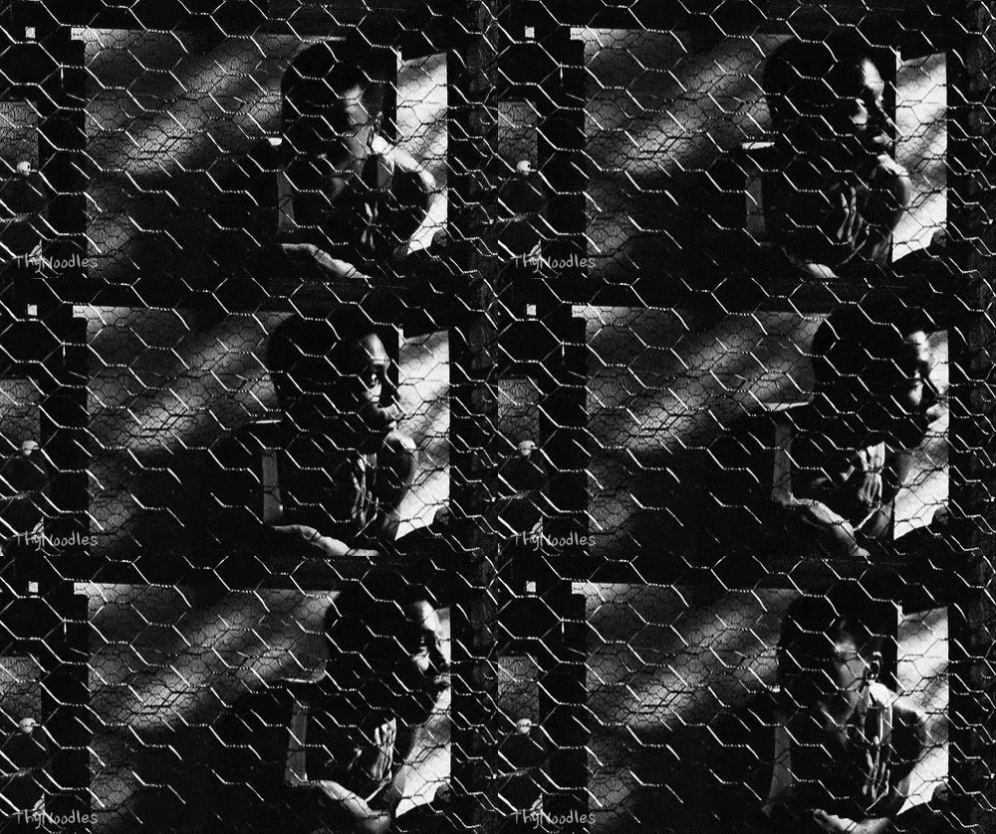
After CIA arrest and torture, ex-detainee still talks of ‘The Darkness’
At first, the Americans seemed confused about Suleiman Abdullah Salim. They apparently had been expecting a light-skinned Arab, and instead at a small airport outside Mogadishu that day in March 2003, they had been handed a dark-skinned African. “They said, ‘You changed your face,’” Salim, a Tanzanian, recalled the American men telling him when he arrived. “They said, ‘You are Yemeni. You changed your face.’” That was the beginning of Salim’s strange ordeal in US custody. It has been 13 years since he was tortured in a secret prison in Afghanistan run by the CIA, a place he calls “The Darkness.”
It has been eight years since he was released – no charges, no explanations – back into the world.
Even after so much time, Salim (45) is struggling to move on. Suffering from depression and post-traumatic stress, according to a medical assessment, he is withdrawn and wary. He cannot talk about his experiences with his wife, who he says worries that the Americans will come back to snatch him. He is fearful of drawing too much attention at home in Stone Town in Zanzibar, Tanzania, concerned that his neighbours will think he is an American spy. When he speaks, not in his native Swahili but in the English he learned from his jailers, Salim nearly whispers. “Many times now I feel like I have something heavy inside my body,” he said in an interview. “Sometimes I walk, and I walk, and I forget, I forget everything, I forget prison, The Darkness, everything. But it is always there. The Darkness comes.” Salim was one of 39 men subjected to some of the CIA’s most brutal techniques – beatings, hanging in chains, sleep deprivation and water dousing, which creates a sensation of drowning, even though interrogators had been denied permission to use that last tactic on him, according to a Senate Intelligence Committee investigation into the agency’s classified interrogation programme. In a series of recent interviews in Dubai, Salim described his incarceration by the CIA and the US military as a terrorism suspect. His account closely parallels those provided by other detainees, witnesses and court documents, and confirms details in the Senate report about his treatment.
Today, back in Stone Town, Salim is trying to support his family, though some of his attempts at jobs have not worked out. He now breeds pigeons, raising them for a local market. They are both his livelihood and his solace. They help him, Salim said. They quiet his mind. Exactly why Salim fell into American hands remains murky; leaks to the press at the time of his capture suggested that intelligence officials suspected he had links to al-Qaeda, but the CIA has never publicly disclosed the reasons. An agency spokesman declined to comment for this article. He had been drifting into a nomadic life in one of the world’s poorest regions, where the CIA after the September 11th, 2001, attacks had promised allies cash rewards for terrorism suspects. Governments and warlords turned over hundreds of men to the United States, in many cases with little evidence of wrongdoing. Salim grew up on Africa’s eastern edges, but from boy to man never quite found himself. One of eight children in a family in Stone Town, a historic district of Zanzibar City, he apprenticed on the local fishing piers, then joined the crews going out for kingfish and barracuda in the Indian Ocean.
He dropped out of school after ninth or 10th grade and headed for Dar es Salaam, Tanzania’s largest city, where he worked in a clothing shop. He moved a few years later to Mombasa, on Kenya’s coast, where he ferried cargoes of dried fish, rice and oil with a crew of two. Then the outside world intruded. In August 1998, al-Qaeda suicide truck bombers blew up the US embassies in Kenya and Tanzania. Salim said a man whose boat he used for the cargo runs was suspected of involvement in the plot. (Salim said that while he was in prison, US officials told him that the man had died, but he knows no other details.) The boat was soon seized by a Somali pirate, he said. Salim moved on to Kismayu, a Somali port town, and was hired as a harbour pilot. It was a good job, maybe too good for a foreigner with no ties to Somalia’s powerful clans and militias. “You had to pay off militias every time you moved a ship,” he said. “The clans were trouble, so I left.” By 2000, he was sleeping in a mosque and begging on the streets of Mogadishu, the Somali capital. Eventually, a shop owner offered him odd jobs and work as a driver for him and his sister, who Salim said worked for Mohammed Dheere, a Somali warlord. In March 2003, Salim was driving his employer through the capital when they pulled over to help a stalled vehicle. Suddenly, three gunmen appeared, dragged Salim out and started beating him, he said. He got away, but the men found him at the hospital where Salim’s boss had taken him. The men said they worked for Dheere, and claimed he owed the warlord money, Salim recounted. “I said no, but they kept saying, ‘You stole money from Mohammed Dheere.’” The men drove him to a small airport outside the city. The Americans were waiting. They asked him over and over about his appearance, Salim said. “They said, ‘You are not Suleiman. You changed your face.’ I say, ‘Go to Tanzania. Go see my mother and take a picture of me.’” He was turned over to the Kenyan authorities, who flew him to Nairobi. But after questioning him, the Kenyans sent him back to Somalia and the Americans. (Kenyan officials did not respond to a request for comment about Salim’s case.)
At first, the Americans seemed confused about Suleiman Abdullah Salim. They apparently had been expecting a light-skinned Arab, and instead at a small airport outside Mogadishu that day in March 2003, they had been handed a dark-skinned African. “They said, ‘You changed your face,’” Salim, a Tanzanian, recalled the American men telling him when he arrived. “They said, ‘You are Yemeni. You changed your face.’” That was the beginning of Salim’s strange ordeal in US custody. It has been 13 years since he was tortured in a secret prison in Afghanistan run by the CIA, a place he calls “The Darkness.”
It has been eight years since he was released – no charges, no explanations – back into the world.
Even after so much time, Salim (45) is struggling to move on. Suffering from depression and post-traumatic stress, according to a medical assessment, he is withdrawn and wary. He cannot talk about his experiences with his wife, who he says worries that the Americans will come back to snatch him. He is fearful of drawing too much attention at home in Stone Town in Zanzibar, Tanzania, concerned that his neighbours will think he is an American spy. When he speaks, not in his native Swahili but in the English he learned from his jailers, Salim nearly whispers. “Many times now I feel like I have something heavy inside my body,” he said in an interview. “Sometimes I walk, and I walk, and I forget, I forget everything, I forget prison, The Darkness, everything. But it is always there. The Darkness comes.” Salim was one of 39 men subjected to some of the CIA’s most brutal techniques – beatings, hanging in chains, sleep deprivation and water dousing, which creates a sensation of drowning, even though interrogators had been denied permission to use that last tactic on him, according to a Senate Intelligence Committee investigation into the agency’s classified interrogation programme. In a series of recent interviews in Dubai, Salim described his incarceration by the CIA and the US military as a terrorism suspect. His account closely parallels those provided by other detainees, witnesses and court documents, and confirms details in the Senate report about his treatment.
Today, back in Stone Town, Salim is trying to support his family, though some of his attempts at jobs have not worked out. He now breeds pigeons, raising them for a local market. They are both his livelihood and his solace. They help him, Salim said. They quiet his mind. Exactly why Salim fell into American hands remains murky; leaks to the press at the time of his capture suggested that intelligence officials suspected he had links to al-Qaeda, but the CIA has never publicly disclosed the reasons. An agency spokesman declined to comment for this article. He had been drifting into a nomadic life in one of the world’s poorest regions, where the CIA after the September 11th, 2001, attacks had promised allies cash rewards for terrorism suspects. Governments and warlords turned over hundreds of men to the United States, in many cases with little evidence of wrongdoing. Salim grew up on Africa’s eastern edges, but from boy to man never quite found himself. One of eight children in a family in Stone Town, a historic district of Zanzibar City, he apprenticed on the local fishing piers, then joined the crews going out for kingfish and barracuda in the Indian Ocean.
He dropped out of school after ninth or 10th grade and headed for Dar es Salaam, Tanzania’s largest city, where he worked in a clothing shop. He moved a few years later to Mombasa, on Kenya’s coast, where he ferried cargoes of dried fish, rice and oil with a crew of two. Then the outside world intruded. In August 1998, al-Qaeda suicide truck bombers blew up the US embassies in Kenya and Tanzania. Salim said a man whose boat he used for the cargo runs was suspected of involvement in the plot. (Salim said that while he was in prison, US officials told him that the man had died, but he knows no other details.) The boat was soon seized by a Somali pirate, he said. Salim moved on to Kismayu, a Somali port town, and was hired as a harbour pilot. It was a good job, maybe too good for a foreigner with no ties to Somalia’s powerful clans and militias. “You had to pay off militias every time you moved a ship,” he said. “The clans were trouble, so I left.” By 2000, he was sleeping in a mosque and begging on the streets of Mogadishu, the Somali capital. Eventually, a shop owner offered him odd jobs and work as a driver for him and his sister, who Salim said worked for Mohammed Dheere, a Somali warlord. In March 2003, Salim was driving his employer through the capital when they pulled over to help a stalled vehicle. Suddenly, three gunmen appeared, dragged Salim out and started beating him, he said. He got away, but the men found him at the hospital where Salim’s boss had taken him. The men said they worked for Dheere, and claimed he owed the warlord money, Salim recounted. “I said no, but they kept saying, ‘You stole money from Mohammed Dheere.’” The men drove him to a small airport outside the city. The Americans were waiting. They asked him over and over about his appearance, Salim said. “They said, ‘You are not Suleiman. You changed your face.’ I say, ‘Go to Tanzania. Go see my mother and take a picture of me.’” He was turned over to the Kenyan authorities, who flew him to Nairobi. But after questioning him, the Kenyans sent him back to Somalia and the Americans. (Kenyan officials did not respond to a request for comment about Salim’s case.)