http://noisey.vice.com/blog/just-bl...g-room-producing-for-kanye-dre-kendrick-drake
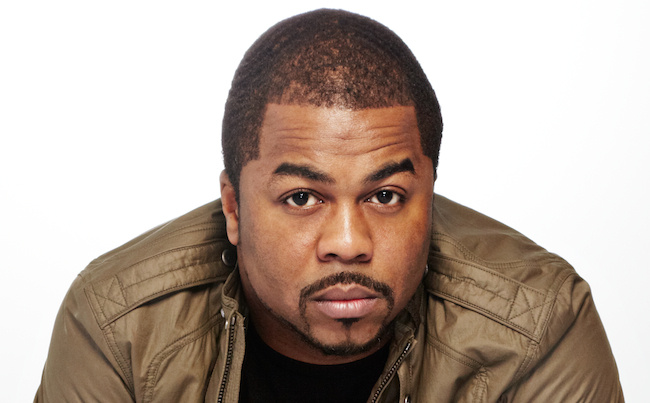
I end up running way over my allotted time with Just Blaze, but how can you keep things brief with a guy who has a 15-year back catalog of some of the biggest songs in hip-hop and pop history?
Partly, I hadn’t expected Blaze, real name Justin Smith, would be able to recall in such detail how each of his beats—many of which he made over a decade ago—came together. But perhaps that’s unsurprising given the dedication and single-mindedness that he has toward his craft. As he goes on to tell me, he often stayed up working on his productions overnight in The Cutting Room studios after finishing his day shift there. Even much later in his career, with the luxury of owning his own studios, Just Blaze talks about being unable to let a day go by without making at least one beat.
More recently, he's returned to his DJing roots. Before he moved to New York to pursue a career as a producer, he was better known as a DJ, playing high school parties and clubs with a mix of hip-hop and dance music. The latter is something which he cites as a significant influence on his production style—in particular he is drawn to the tempo and sound of UK jungle and drum and bass, which perfectly catered to his shared interest in rave and hip hop. But more than anything, the energy of those early breakbeat dance records came to define his own sound. "Some producers you come to when you want something for the club, some producers you come to when you want something really raw and gritty. And you have some producers, like me, that you come to when you want a really high energy record," he tells me, speaking over the phone from his studios in New York.
Noisey: So I wanted to begin by going right back to one the earliest beats you produced—I think while you were at The Cutting Room studios in New York—Buckshot’s "Heavy Weighters" in 1999.
Just Blaze: That was a very early stage in my career when I was still trying to figure out what my sound was going to be. I had dropped out of college by then, and I was interning at The Cutting Room. I originally produced that for a friend of mine by the name of Matt Fingaz. Buckshot had an artist by the name of Swan who was on the Fingaz record, so Buckshot came down to the studio while Swan was doing his verse. And he liked the record and jumped on it, which we thought was great, you know, for Matt and for his record label because Buck was big at the time. But then all of a sudden the record ends up on Buckshot's album minus Matt. So, it was a bit of a weird situation for all of us. He didn't even offer us any compensation, and we didn't even know the record was going to be on the album. It was stressful at the time, but it all worked out in the end. Me and Buckshot have a good relationship now. So it's all good, but at the time it was a tense thing.
I read that at that point you didn't really sleep, that you just stayed in the studio.
Yeah, I would work all day in the studio as an employee, 10 AM to 7 PM, and then from 7 PM until 9 PM I was Blaze in training.
Let's talk about "Streets Is Talking," which is significant for two reasons: firstly, as the first track you worked on with Jay Z and, secondly, as the first track you produced using Pro Tools.
Yeah, that track was sampled and produced all within Pro Tools, and back then it wasn't as simple as it is now when you can just load up the program and go. There was a lot of setup involved. Back then nobody was really using Pro Tools. It was more of an experiment to figure out a more streamline way of working, and that beat came out of that experiment. But then when Jay heard it he liked it so much that he rapped to it straight off the cassette.
How did you make that jump from The Cutting Room to Roc-A-Fella?
Long story short, I had a meeting with a guy by the name of Dino Delvaille—who is also the guy who discovered Cash Money and brought them in—just to play some music for him. Initially, nothing came out of it, but a few weeks later he had a meeting with a guy by the name of Gee Roberson, an assistant A&R at Roc-A-Fella, and he had an artist called Bathgate. Bathgate didn't have a demo at the time, and instead would just rap for the A&Rs live. Dino wanted to hear him on a beat instead of freestyling a capella, and my beat CD happened to be the one he picked up and played. Gee liked the music so much that he tried calling me at The Cutting Room to set up a meeting for later on that day. I thought it was a joke actually; I couldn't believe that Jay Z's A&Rs would be looking for me. I hung up on him. I thought it was a prank call. But he ended up calling me back, and we met later that night, and rest is history.
Thank god that he called you back. One of your productions from that time that I keep coming back to is Memphis Bleek's "We Get Low." It's an incredible collage of sirens, soul samples, James Brown screams and these tones that remind me of early techno.
Soul and techno were two of the things I grew up on, I grew up on electronic music—house, techno and rave—just as much hip-hop and soul. I would say my style is actually an amalgamation of those two sounds. You know how EDM has what's called "the drop"? I read an interesting review of one my shows a few months back where the writer came to the realization that I had been doing the drop in hip-hop for a very a long time. I also like to build things up, make the instrumentation swell, and then all of a sudden let the beat drop very heavily. I think that's for two reasons: I was a DJ for many years before I started making music, and the dance music I played influenced how I structured my records. So, I came just as much from the world of hip-hop as the world of house and techno. Using the two sounds in my productions is something that came instinctively.
Back when you were DJing did you ever contemplate becoming a house or techno producer instead of a hip-hop producer?
That could have happened. I've always done both, but I just didn't exist in that world professionally until very recently after doing the DJ circuit. So in a way I've come back around to where I started.
I end up running way over my allotted time with Just Blaze, but how can you keep things brief with a guy who has a 15-year back catalog of some of the biggest songs in hip-hop and pop history?
Partly, I hadn’t expected Blaze, real name Justin Smith, would be able to recall in such detail how each of his beats—many of which he made over a decade ago—came together. But perhaps that’s unsurprising given the dedication and single-mindedness that he has toward his craft. As he goes on to tell me, he often stayed up working on his productions overnight in The Cutting Room studios after finishing his day shift there. Even much later in his career, with the luxury of owning his own studios, Just Blaze talks about being unable to let a day go by without making at least one beat.
More recently, he's returned to his DJing roots. Before he moved to New York to pursue a career as a producer, he was better known as a DJ, playing high school parties and clubs with a mix of hip-hop and dance music. The latter is something which he cites as a significant influence on his production style—in particular he is drawn to the tempo and sound of UK jungle and drum and bass, which perfectly catered to his shared interest in rave and hip hop. But more than anything, the energy of those early breakbeat dance records came to define his own sound. "Some producers you come to when you want something for the club, some producers you come to when you want something really raw and gritty. And you have some producers, like me, that you come to when you want a really high energy record," he tells me, speaking over the phone from his studios in New York.
Noisey: So I wanted to begin by going right back to one the earliest beats you produced—I think while you were at The Cutting Room studios in New York—Buckshot’s "Heavy Weighters" in 1999.
Just Blaze: That was a very early stage in my career when I was still trying to figure out what my sound was going to be. I had dropped out of college by then, and I was interning at The Cutting Room. I originally produced that for a friend of mine by the name of Matt Fingaz. Buckshot had an artist by the name of Swan who was on the Fingaz record, so Buckshot came down to the studio while Swan was doing his verse. And he liked the record and jumped on it, which we thought was great, you know, for Matt and for his record label because Buck was big at the time. But then all of a sudden the record ends up on Buckshot's album minus Matt. So, it was a bit of a weird situation for all of us. He didn't even offer us any compensation, and we didn't even know the record was going to be on the album. It was stressful at the time, but it all worked out in the end. Me and Buckshot have a good relationship now. So it's all good, but at the time it was a tense thing.
I read that at that point you didn't really sleep, that you just stayed in the studio.
Yeah, I would work all day in the studio as an employee, 10 AM to 7 PM, and then from 7 PM until 9 PM I was Blaze in training.
Let's talk about "Streets Is Talking," which is significant for two reasons: firstly, as the first track you worked on with Jay Z and, secondly, as the first track you produced using Pro Tools.
Yeah, that track was sampled and produced all within Pro Tools, and back then it wasn't as simple as it is now when you can just load up the program and go. There was a lot of setup involved. Back then nobody was really using Pro Tools. It was more of an experiment to figure out a more streamline way of working, and that beat came out of that experiment. But then when Jay heard it he liked it so much that he rapped to it straight off the cassette.
How did you make that jump from The Cutting Room to Roc-A-Fella?
Long story short, I had a meeting with a guy by the name of Dino Delvaille—who is also the guy who discovered Cash Money and brought them in—just to play some music for him. Initially, nothing came out of it, but a few weeks later he had a meeting with a guy by the name of Gee Roberson, an assistant A&R at Roc-A-Fella, and he had an artist called Bathgate. Bathgate didn't have a demo at the time, and instead would just rap for the A&Rs live. Dino wanted to hear him on a beat instead of freestyling a capella, and my beat CD happened to be the one he picked up and played. Gee liked the music so much that he tried calling me at The Cutting Room to set up a meeting for later on that day. I thought it was a joke actually; I couldn't believe that Jay Z's A&Rs would be looking for me. I hung up on him. I thought it was a prank call. But he ended up calling me back, and we met later that night, and rest is history.
Thank god that he called you back. One of your productions from that time that I keep coming back to is Memphis Bleek's "We Get Low." It's an incredible collage of sirens, soul samples, James Brown screams and these tones that remind me of early techno.
Soul and techno were two of the things I grew up on, I grew up on electronic music—house, techno and rave—just as much hip-hop and soul. I would say my style is actually an amalgamation of those two sounds. You know how EDM has what's called "the drop"? I read an interesting review of one my shows a few months back where the writer came to the realization that I had been doing the drop in hip-hop for a very a long time. I also like to build things up, make the instrumentation swell, and then all of a sudden let the beat drop very heavily. I think that's for two reasons: I was a DJ for many years before I started making music, and the dance music I played influenced how I structured my records. So, I came just as much from the world of hip-hop as the world of house and techno. Using the two sounds in my productions is something that came instinctively.
Back when you were DJing did you ever contemplate becoming a house or techno producer instead of a hip-hop producer?
That could have happened. I've always done both, but I just didn't exist in that world professionally until very recently after doing the DJ circuit. So in a way I've come back around to where I started.