

ogc163
Superstar
WASHINGTON — As the nation awaited the conclusion of a bitter 2020 election, the fears among bankers of a "blue wave" bringing new regulations and higher taxes quickly dissipated.
With Joe Biden on the verge of winning the presidential election, Republicans appeared close to keeping their Senate majority, although the outcome in two Georgia races could ultimately determine which party controls the upper chamber.
With divided government a likelier prospect than before the election, when many pollsters were predicting a Democratic sweep, bankers and other analysts sounded increasingly confident that the industry dodged a bullet.
Two-party control of Washington "serves as a backstop" to prevent "some of the most extreme progressive legislation coming over from the House of Representatives that we witnessed over the last two years,” said Richard Hunt, president and CEO of the Consumer Bankers Association.
The final count in the Senate was still uncertain late Friday. The race in North Carolina was not yet decided, although Sen. Thom Tillis, R-N.C., appeared close to reelection. Meanwhile, both Senate races in Georgia appeared headed for runoffs Jan. 5 to determine the winners.
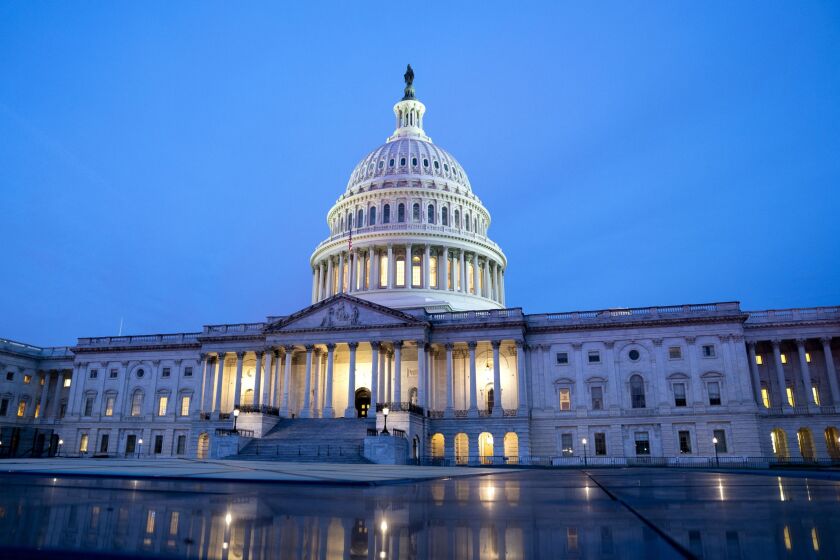
With a divided Congress a likelier prospect than before the election, when many pollsters were predicting a Democratic sweep, bankers and other analysts sounded increasingly confident that the industry dodged a bullet.
Bloomberg News
If Tillis can hold on and the GOP can win one of the two seats in Georgia, banks will likely be able to fend off progressive legislative proposals to cap interest rates on credit cards, break up "too big to fail" institutions, create a postal banking system, and establish a public credit reporting agency. It also means that potential Biden picks for cabinet and regulatory positions would need approval from GOP senators.
Ideas such as a "cap on interest rates, a [national] consumer credit reporting bureau, [and] breaking up the big banks" can "rest in peace," Hunt said.
But divided government could have some negative consequences for banks. The industry's two main legislative priorities — making it easier for banks to serve cannabis businesses and easing anti-money-laundering requirements — were both backed by the Democratic House and face opposition from GOP senators.
J.W. Verret, an assistant professor of law at George Mason University, said legislative gridlock between House Democrats and Senate Republicans that started after the 2018 midterm elections will likely continue.
“It’s hard to see what sort of financial services legislation the House and the Senate can agree on," Verret said.
Hunt said that banks will be able to fend off new tax increases with the divided government scenario. He said that the election, which resulted in Democrats losing several House seats, could make the party rethink tax increases.
“Moderate Democrats, given what they saw [in the election], they are going to be embracing tax increases with less enthusiasm than they would have otherwise," Hunt said. "I think it’s highly doubtful that the kind of tax increases that Biden laid out in his stump speeches and his platform, none of that gets through.”
From the perspective of bank investors, divided government would be mostly a plus for banks.
A split Senate would be a relief to an industry that had worried about a “blue wave” that led to higher taxes, said Bradley Rinschler, managing partner at the Dallas hedge fund Down Range Capital Management, which invests in small banks under the direction of the activist investor Johnny Guerry.
“We think that the corporate tax rate staying neutral would be a fantastic win for the banks,” Rinschler said Friday.
But the gridlock may put a damper on several industry-backed proposals.
Bankers have been pushing for Congress to pass legislation to enable banks to service cannabis businesses in states that have legalized the substance. The Secure and Fair Enforcement Banking Act, which would bar federal regulators from penalizing financial institutions that serve state-legal cannabis businesses, passed the House in 2019 with some Republican support. But the bill has stalled in the Senate where a number of Republicans oppose legislation viewed as benefiting the cannabis industry.
In addition, one of the most vocal supporters of cannabis banking in the Republican party, Sen. Cory Gardner of Colorado, lost his reelection bid.
“That actually is going to hurt the chances of the kind of pot banking bill that the industry would like,” Camden Fine, president and CEO of Calvert Advisors and former head of the Independent Community Bankers of America.
Still, Aaron Klein, policy director at the Brookings Institution’s Center on Regulation and Markets, said he thinks the cannabis banking issue is still alive after several new states legalized cannabis for recreational purposes, including South Dakota, which had some of the strictest cannabis laws prior to the election.
“Election results showing big wins for cannabis in deep red states like South Dakota and Mississippi are a reminder that cannabis is not a partisan issue,” Klein said. “Cannabis is a bipartisan issue. Americans of both parties throughout the country want a change in how cannabis is dealt with.”
With Joe Biden on the verge of winning the presidential election, Republicans appeared close to keeping their Senate majority, although the outcome in two Georgia races could ultimately determine which party controls the upper chamber.
With divided government a likelier prospect than before the election, when many pollsters were predicting a Democratic sweep, bankers and other analysts sounded increasingly confident that the industry dodged a bullet.
Two-party control of Washington "serves as a backstop" to prevent "some of the most extreme progressive legislation coming over from the House of Representatives that we witnessed over the last two years,” said Richard Hunt, president and CEO of the Consumer Bankers Association.
The final count in the Senate was still uncertain late Friday. The race in North Carolina was not yet decided, although Sen. Thom Tillis, R-N.C., appeared close to reelection. Meanwhile, both Senate races in Georgia appeared headed for runoffs Jan. 5 to determine the winners.
With a divided Congress a likelier prospect than before the election, when many pollsters were predicting a Democratic sweep, bankers and other analysts sounded increasingly confident that the industry dodged a bullet.
Bloomberg News
If Tillis can hold on and the GOP can win one of the two seats in Georgia, banks will likely be able to fend off progressive legislative proposals to cap interest rates on credit cards, break up "too big to fail" institutions, create a postal banking system, and establish a public credit reporting agency. It also means that potential Biden picks for cabinet and regulatory positions would need approval from GOP senators.
Ideas such as a "cap on interest rates, a [national] consumer credit reporting bureau, [and] breaking up the big banks" can "rest in peace," Hunt said.
But divided government could have some negative consequences for banks. The industry's two main legislative priorities — making it easier for banks to serve cannabis businesses and easing anti-money-laundering requirements — were both backed by the Democratic House and face opposition from GOP senators.
J.W. Verret, an assistant professor of law at George Mason University, said legislative gridlock between House Democrats and Senate Republicans that started after the 2018 midterm elections will likely continue.
“It’s hard to see what sort of financial services legislation the House and the Senate can agree on," Verret said.
Hunt said that banks will be able to fend off new tax increases with the divided government scenario. He said that the election, which resulted in Democrats losing several House seats, could make the party rethink tax increases.
“Moderate Democrats, given what they saw [in the election], they are going to be embracing tax increases with less enthusiasm than they would have otherwise," Hunt said. "I think it’s highly doubtful that the kind of tax increases that Biden laid out in his stump speeches and his platform, none of that gets through.”
From the perspective of bank investors, divided government would be mostly a plus for banks.
A split Senate would be a relief to an industry that had worried about a “blue wave” that led to higher taxes, said Bradley Rinschler, managing partner at the Dallas hedge fund Down Range Capital Management, which invests in small banks under the direction of the activist investor Johnny Guerry.
“We think that the corporate tax rate staying neutral would be a fantastic win for the banks,” Rinschler said Friday.
But the gridlock may put a damper on several industry-backed proposals.
Bankers have been pushing for Congress to pass legislation to enable banks to service cannabis businesses in states that have legalized the substance. The Secure and Fair Enforcement Banking Act, which would bar federal regulators from penalizing financial institutions that serve state-legal cannabis businesses, passed the House in 2019 with some Republican support. But the bill has stalled in the Senate where a number of Republicans oppose legislation viewed as benefiting the cannabis industry.
In addition, one of the most vocal supporters of cannabis banking in the Republican party, Sen. Cory Gardner of Colorado, lost his reelection bid.
“That actually is going to hurt the chances of the kind of pot banking bill that the industry would like,” Camden Fine, president and CEO of Calvert Advisors and former head of the Independent Community Bankers of America.
Still, Aaron Klein, policy director at the Brookings Institution’s Center on Regulation and Markets, said he thinks the cannabis banking issue is still alive after several new states legalized cannabis for recreational purposes, including South Dakota, which had some of the strictest cannabis laws prior to the election.
“Election results showing big wins for cannabis in deep red states like South Dakota and Mississippi are a reminder that cannabis is not a partisan issue,” Klein said. “Cannabis is a bipartisan issue. Americans of both parties throughout the country want a change in how cannabis is dealt with.”


