https://www.washingtonpost.com/tech...th-whomever-theyd-like-company-tells-senator/

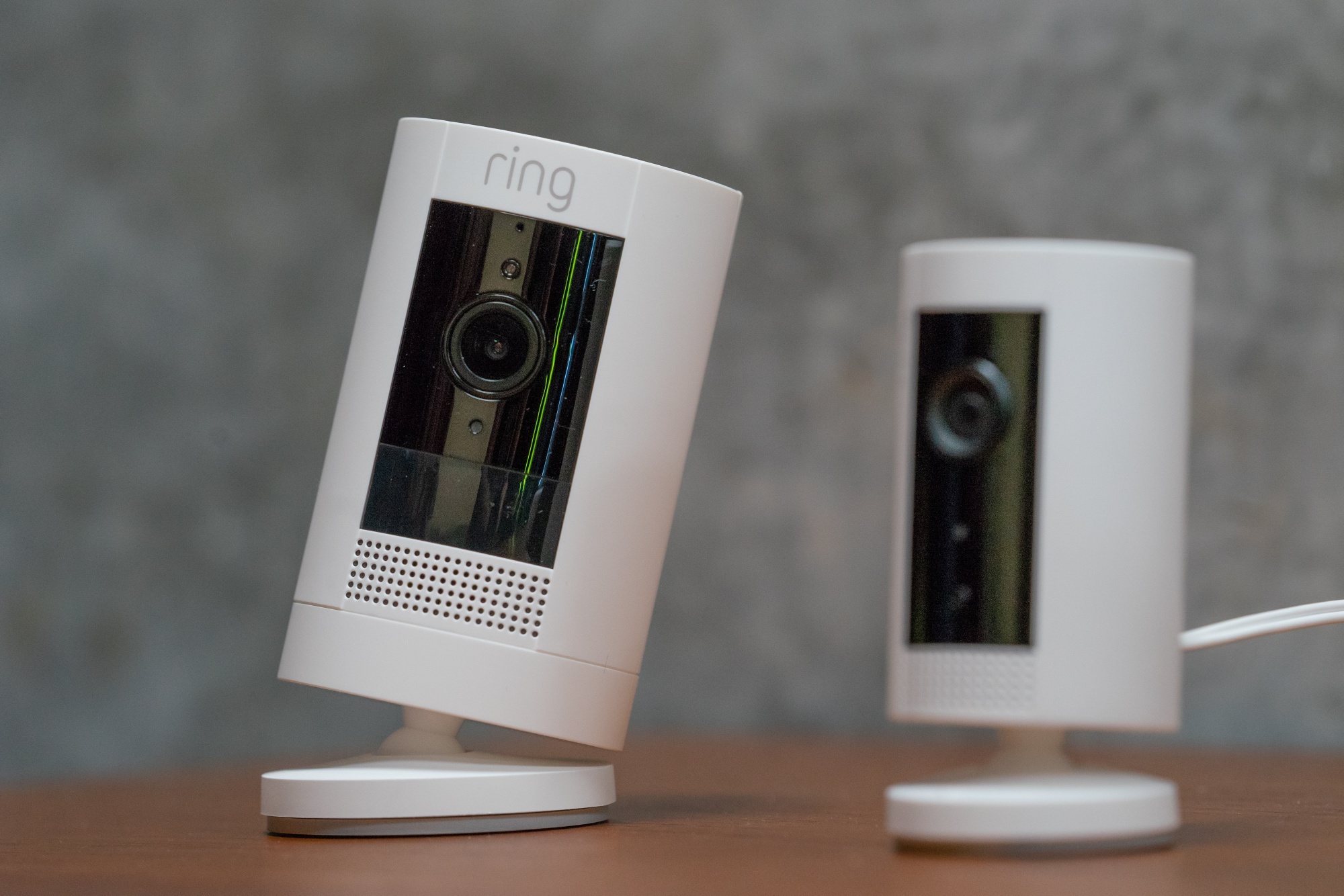
Amazon’s Ring sells a line of motion-detecting, Internet-connected cameras for use in doorbells, peepholes and inside the home. The company has signed video-sharing deals with more than 600 police departments nationwide. (Ring)
By
Drew Harwell
November 19, 2019 at 3:32 p.m. EST
Police officers who download videos captured by homeowners’ Ring doorbell cameras can keep them forever and share them with whomever they’d like without providing evidence of a crime, the Amazon-owned firm told a lawmaker this month.
More than 600 police forces across the country have entered into partnerships with the camera giant, allowing them to quickly request and download video recorded by Ring’s motion-detecting, Internet-connected cameras inside and around Americans’ homes.
The company says that the videos can be a critical tool in helping law enforcement investigate crimes such as trespassing, burglary and package theft, and that homeowners are free to decline the requests. But some lawmakers and privacy advocates say the systems could empower more widespread police surveillance, fuel racial profiling and spark new neighborhood fears.
Read the letters
Full PDFs
In September, following reports about Ring’s police partnerships by The Washington Post and other outlets, Sen. Edward J. Markey (D-Mass.) wrote to Amazon asking for details about how it protected the privacy and civil liberties of people caught on camera. Since that report, the number of law enforcement agencies working with Ring has increased nearly 50 percent.
In two responses from Amazon’s vice president of public policy, Brian Huseman, which Markey’s office made public Tuesday, the company said it placed few restrictions on how police used or shared the videos offered up by homeowners. (Amazon chief executive Jeff Bezos owns The Washington Post.)
Doorbell-camera firm Ring has partnered with 400 police forces, extending surveillance concerns
Police in those communities can use Ring software to request up to 12 hours of video from anyone within half a square mile of a suspected crime scene, covering a 45-day time span, Huseman wrote. Police are required to include a case number for the crime they are investigating, but not any other details or evidence related to the crime or their request.
Markey said in a statement that Ring’s policies showed that the company had failed to enact basic safeguards to protect Americans’ privacy.
“Connected doorbells are well on their way to becoming a mainstay of American households, and the lack of privacy and civil rights protections for innocent residents is nothing short of chilling,” he said.
“If you’re an adult walking your dog or a child playing on the sidewalk, you shouldn’t have to worry that Ring’s products are amassing footage of you and that law enforcement may hold that footage indefinitely or share that footage with any third parties.”
Che’von Lewis, a spokeswoman for Ring’s Neighbors social network, said in a statement that “Ring users place their trust in us to help protect their homes and communities, and we take that responsibility very seriously.”
Ring, she added, “does not own or otherwise control users’ videos, and we intentionally designed the Neighbors Portal to ensure that users get to decide whether to voluntarily provide their videos to the police.”
Sen. Markey seeks answers from Ring on doorbell-camera police network
Markey’s questions focused in on ways the cameras could be used to capture children and other passersby without their knowledge or consent. Ring’s terms of service state that users must install the cameras so they do not “take any recordings beyond the boundary” of a user’s property, such as a public road or sidewalk. When asked by Markey how the company enforced that, Huseman wrote that users are responsible for following the rules and that Ring does not “view users’ videos to verify compliance.”
Ring’s privacy policy states that it does not “knowingly collect personal information online from children under the age of 13.” When asked by Markey how the company ensured that its cameras would not record children, Huseman wrote that no such oversight system existed: Its customers “own and control their video recordings,” and “similar to any security camera, Ring has no way to know or verify that a child has come within range of a device.”
Ring allows users to decline police requests for video and does not directly identify them based on their refusal, which Huseman wrote would “eliminate the pressure implicit in receiving an in‐person request from police.” “Users must expressly choose to assist police, the same way they would traditionally answer the door or respond to a public request for tips,” he added.
Asked about Ring’s plans regarding adding facial-recognition capabilities to its cameras, Huseman wrote that it was a “contemplated but unreleased feature” that would be made available to the public only with “thoughtful design including privacy, security and user control.” Huseman also listed other security cameras that offer facial-recognition features and wrote, “We do frequently innovate based on customer demand.”
The doorbells have eyes: The privacy battle brewing over home security cameras
Best known for its popular doorbell cameras, Ring has sold millions of motion-detecting cameras that can be installed in peepholes, floodlights and indoors. Police requests can target footage from any of Ring’s cameras, including video recorded inside an owner’s home. The company says millions of homes across the United States now have Ring camera systems installed.
The cameras begin recording as soon as motion is detected and offer live-streaming access to homeowners, who can then share the footage on the Ring video-based social network Neighbors. The stream of videos often includes high-resolution footage of people’s faces, as well as labels for people homeowners have deemed suspicious, and the company advertises the system as the core of a high-tech “new neighborhood watch.”
Ring’s police partnerships have exploded across the country, from the local police department in Seward, Alaska, to the sheriff’s office in Key West, Fla. Roughly 630 law enforcement agencies can now request homeowners’ video through Ring, including 200 agencies that joined up within the past three months, according to a company map.
Ring has invested heavily in marketing itself as a high-tech safety companion for the American neighborhood, and its massive reserve of videos of children at doorsteps — shared by homeowners to Ring’s “Neighbors” social network — has become an unmistakable signature of its holiday advertising campaigns.
This month, the company said Ring doorbell buttons had been pressed 15.8 million times on Halloween, up from 8.3 million times last year. The peak time in Houston was 7 p.m., with more than 300,000 rings. How many of those trick-or-treaters had their image captured by Ring cameras is unknown.
Amazon’s Ring sells a line of motion-detecting, Internet-connected cameras for use in doorbells, peepholes and inside the home. The company has signed video-sharing deals with more than 600 police departments nationwide. (Ring)
By
Drew Harwell
November 19, 2019 at 3:32 p.m. EST
Police officers who download videos captured by homeowners’ Ring doorbell cameras can keep them forever and share them with whomever they’d like without providing evidence of a crime, the Amazon-owned firm told a lawmaker this month.
More than 600 police forces across the country have entered into partnerships with the camera giant, allowing them to quickly request and download video recorded by Ring’s motion-detecting, Internet-connected cameras inside and around Americans’ homes.
The company says that the videos can be a critical tool in helping law enforcement investigate crimes such as trespassing, burglary and package theft, and that homeowners are free to decline the requests. But some lawmakers and privacy advocates say the systems could empower more widespread police surveillance, fuel racial profiling and spark new neighborhood fears.
Read the letters
Full PDFs
In September, following reports about Ring’s police partnerships by The Washington Post and other outlets, Sen. Edward J. Markey (D-Mass.) wrote to Amazon asking for details about how it protected the privacy and civil liberties of people caught on camera. Since that report, the number of law enforcement agencies working with Ring has increased nearly 50 percent.
In two responses from Amazon’s vice president of public policy, Brian Huseman, which Markey’s office made public Tuesday, the company said it placed few restrictions on how police used or shared the videos offered up by homeowners. (Amazon chief executive Jeff Bezos owns The Washington Post.)
Doorbell-camera firm Ring has partnered with 400 police forces, extending surveillance concerns
Police in those communities can use Ring software to request up to 12 hours of video from anyone within half a square mile of a suspected crime scene, covering a 45-day time span, Huseman wrote. Police are required to include a case number for the crime they are investigating, but not any other details or evidence related to the crime or their request.
Markey said in a statement that Ring’s policies showed that the company had failed to enact basic safeguards to protect Americans’ privacy.
“Connected doorbells are well on their way to becoming a mainstay of American households, and the lack of privacy and civil rights protections for innocent residents is nothing short of chilling,” he said.
“If you’re an adult walking your dog or a child playing on the sidewalk, you shouldn’t have to worry that Ring’s products are amassing footage of you and that law enforcement may hold that footage indefinitely or share that footage with any third parties.”
Che’von Lewis, a spokeswoman for Ring’s Neighbors social network, said in a statement that “Ring users place their trust in us to help protect their homes and communities, and we take that responsibility very seriously.”
Ring, she added, “does not own or otherwise control users’ videos, and we intentionally designed the Neighbors Portal to ensure that users get to decide whether to voluntarily provide their videos to the police.”
Sen. Markey seeks answers from Ring on doorbell-camera police network
Markey’s questions focused in on ways the cameras could be used to capture children and other passersby without their knowledge or consent. Ring’s terms of service state that users must install the cameras so they do not “take any recordings beyond the boundary” of a user’s property, such as a public road or sidewalk. When asked by Markey how the company enforced that, Huseman wrote that users are responsible for following the rules and that Ring does not “view users’ videos to verify compliance.”
Ring’s privacy policy states that it does not “knowingly collect personal information online from children under the age of 13.” When asked by Markey how the company ensured that its cameras would not record children, Huseman wrote that no such oversight system existed: Its customers “own and control their video recordings,” and “similar to any security camera, Ring has no way to know or verify that a child has come within range of a device.”
Ring allows users to decline police requests for video and does not directly identify them based on their refusal, which Huseman wrote would “eliminate the pressure implicit in receiving an in‐person request from police.” “Users must expressly choose to assist police, the same way they would traditionally answer the door or respond to a public request for tips,” he added.
Asked about Ring’s plans regarding adding facial-recognition capabilities to its cameras, Huseman wrote that it was a “contemplated but unreleased feature” that would be made available to the public only with “thoughtful design including privacy, security and user control.” Huseman also listed other security cameras that offer facial-recognition features and wrote, “We do frequently innovate based on customer demand.”
The doorbells have eyes: The privacy battle brewing over home security cameras
Best known for its popular doorbell cameras, Ring has sold millions of motion-detecting cameras that can be installed in peepholes, floodlights and indoors. Police requests can target footage from any of Ring’s cameras, including video recorded inside an owner’s home. The company says millions of homes across the United States now have Ring camera systems installed.
The cameras begin recording as soon as motion is detected and offer live-streaming access to homeowners, who can then share the footage on the Ring video-based social network Neighbors. The stream of videos often includes high-resolution footage of people’s faces, as well as labels for people homeowners have deemed suspicious, and the company advertises the system as the core of a high-tech “new neighborhood watch.”
Ring’s police partnerships have exploded across the country, from the local police department in Seward, Alaska, to the sheriff’s office in Key West, Fla. Roughly 630 law enforcement agencies can now request homeowners’ video through Ring, including 200 agencies that joined up within the past three months, according to a company map.
Ring has invested heavily in marketing itself as a high-tech safety companion for the American neighborhood, and its massive reserve of videos of children at doorsteps — shared by homeowners to Ring’s “Neighbors” social network — has become an unmistakable signature of its holiday advertising campaigns.
This month, the company said Ring doorbell buttons had been pressed 15.8 million times on Halloween, up from 8.3 million times last year. The peak time in Houston was 7 p.m., with more than 300,000 rings. How many of those trick-or-treaters had their image captured by Ring cameras is unknown.