
You are using an out of date browser. It may not display this or other websites correctly.
You should upgrade or use an alternative browser.
You should upgrade or use an alternative browser.
Pornhub 2025 year in review
- Thread starter Jaguar93
- Start date
More options
Who Replied?




Richard Glidewell
Yall done tore all the bottom of ya shoes w/me!!!
Russia got some splaining to do!! 

PUT IN WORK
The East
 I don't do porn anymore but did the Japanese stop censoring?

TheEgyptianConniption
All Star
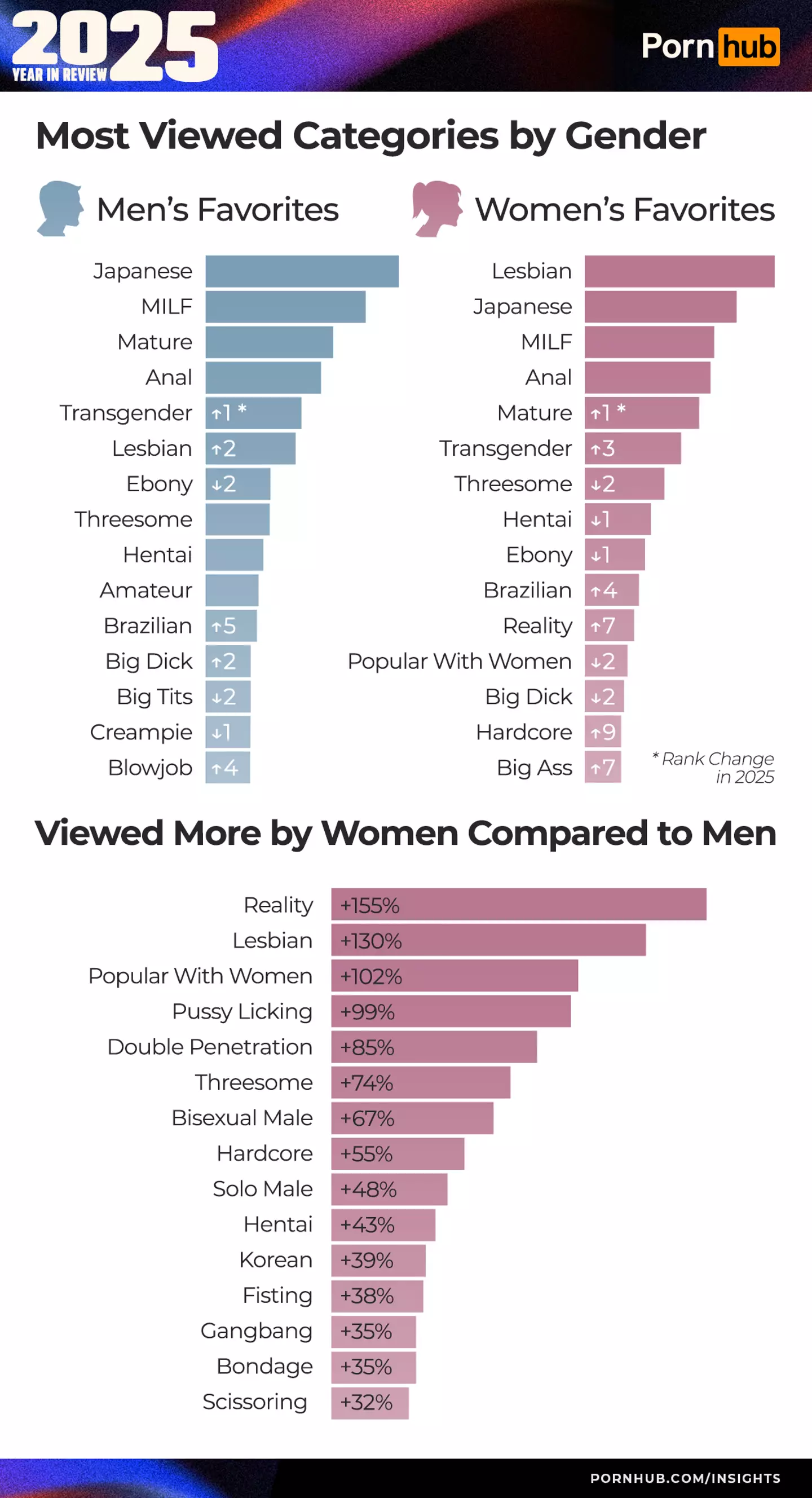
Last girl I was with she was sleep i turned on her ipad. It was like 30 different tabs all big ass lesbian porn.
I was like damn what she got me here for she dont even like dikk
I was like damn what she got me here for she dont even like dikk

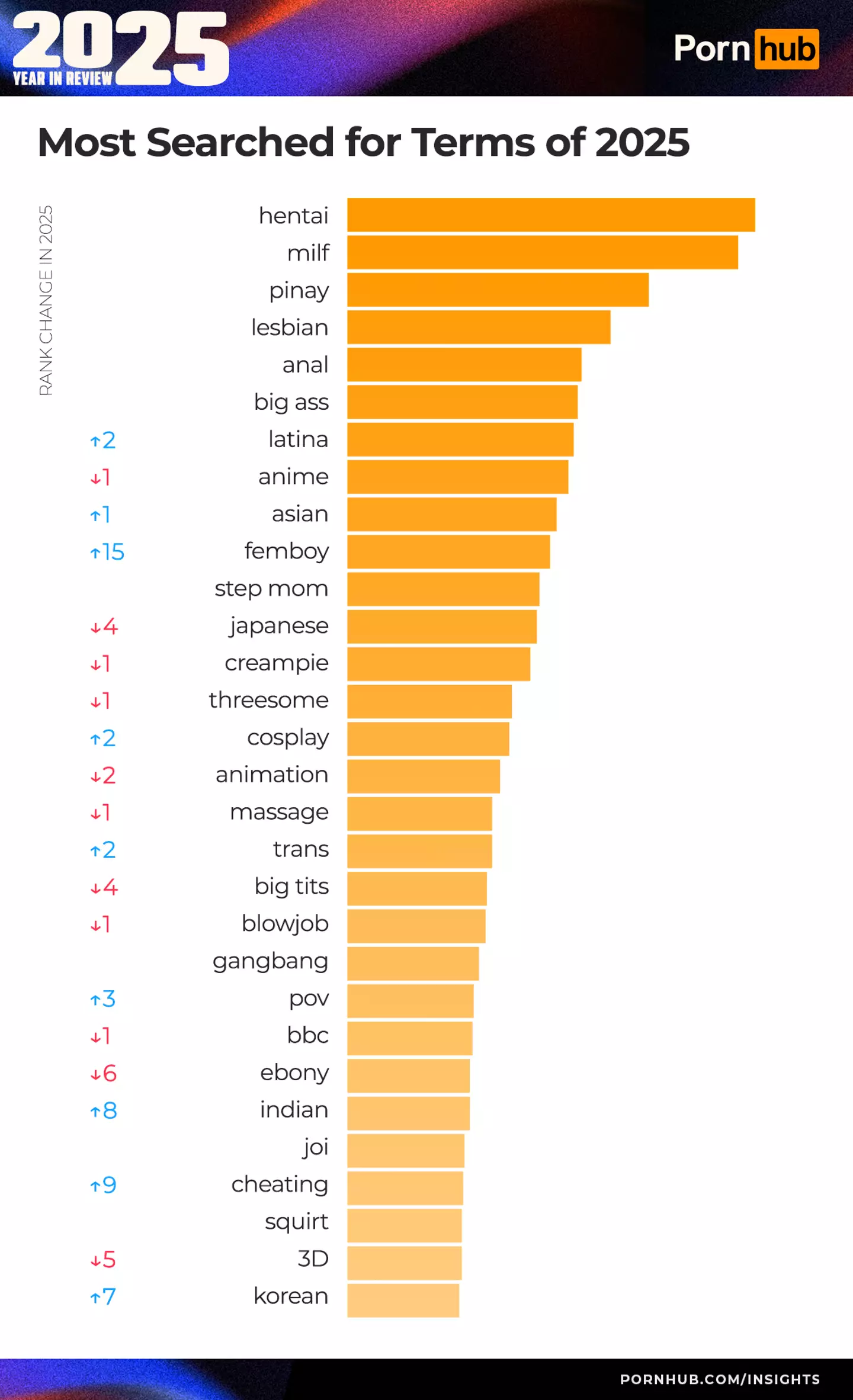
Every year I keep seeing the Tranny category move up the charts, what type of sicko is watching that 

StretfordRed
Afro-European
Sometimes it is transgender women with women.Every year I keep seeing the Tranny category move up the charts, what type of sicko is watching that
Apparently


Elim Garak
Veteran
I've said it before and will say it again. Pornhub is an awful streaming site. Idk who the hell is going there to watch porn. 

Kunty McPhuck
Scust Szn has Returned
Every year I keep seeing the Tranny category move up the charts, what type of sicko is watching that
Inception of the subconscious. The more something is spoken (not the porn the Transgender topic and that for the last decade has been a major talking point ) about and put out there the more curious the mind is.
Kunty McPhuck
Scust Szn has Returned
Russia got some splaining to do!!
The more you make something taboo the more people want to see it.
Pornhub 2025: Russia Transgender Porn Boom Amidst Anti-LGBTQ+ Ban
Written by
Kendra J Styles
Update On : December 9, 2025
Pornhub 2025: Russia Transgender Porn Boom Amidst Anti-LGBTQ+ Ban
Russia’s escalating crackdown on LGBTQ+ rights confronts an unexpected digital phenomenon: a surge in online interest for transgender content, according to a recent report.
Policies restricting LGBTQ+ rights in Russia date back to 2013 with the initial “gay propaganda” law. This measure banned promoting “non-traditional sexual relations” to minors. By 2022, this expanded into broader censorship, outlawing such promotion to all ages and equating LGBTQ+ mentions in media with extremism. This led to significant fines for streaming services like Netflix.
Following the 2022 Ukraine invasion, the government intensified its efforts. In July 2023, President Putin signed a law banning gender-affirming care and legal gender changes. These policies are part of broader Russia LGBT bans. By mid-2025, authorities had issued over 100 convictions under these laws, with some cases tragically leading to suicides.
The impact of these policies is profound. Transgender individuals face deportation, severe barriers to healthcare, and heightened violence, especially in regions like Chechnya. These statutes align with Putin’s rhetoric, which frames LGBTQ+ rights as a direct threat to Russian traditional values.
Enforcement has driven the LGBTQ+ community further underground. Groups like the Russian LGBT Network have been labeled “foreign agents,” and many activists have fled the country. A July 2025 law further restricts online activity, making searches for related content punishable by fines and leading to increased self-censorship.
Against this backdrop, the Pornhub 2025 report reveals a striking contrast in online behavior. While “Hentai” typically leads global search categories, “Transgender” is now the top category in Russia, making “Russia transgender porn” the leading search term, surpassing “Anal.” This surge highlights a complex dynamic between governmental censorship and online curiosity.
Globally, LGBTQ+ content has seen a significant increase, with searches like “lesbian scissoring” and “trans threesome” rising. Other nations show diverse preferences: In the United States, “MILF” dominates, while Canada records high views for “Lesbian” and “Transgender” content.
Experts are weighing in on these trends. Natassia Dreams, a Pornhub expert, noted a “cultural shift” occurring amidst a rise in anti-trans incidents. Dreams cautioned that the data might be skewed by the widespread use of VPNs to circumvent online restrictions.
“The data shows a shift, but it is not a surprise. A culture that is repressed will find outlets to express itself, and in the case of Russia, the outlet might be online activity,”
— Natassia Dreams, Pornhub Expert
The situation has also sparked humorous reactions on social media platforms like NEXTA, where users highlighted what they perceive as hypocrisy. Some joked about Russians “becoming transgender in Ukrainian fields,” while others directed satire at Kremlin elites, contributing to broader global commentary on the situation.
The implications of this online data extend beyond mere search trends. They expose a deeper societal dynamic where increasingly restrictive laws collide with evolving cultural norms and individual expression. The growing online interest in LGBTQ+ content, despite severe official censorship, reveals a complex interplay between governmental control and the resilience of human curiosity.
This juxtaposition underscores the inherent difficulty governments face in controlling information in the digital age. The censorship irony at play suggests that attempts to suppress queer visibility may inadvertently draw more attention to it, prompting questions about the long-term societal impacts within Russia.

Pornhub 2025: Russia Transgender Porn Boom Amidst Anti-LGBTQ+ Ban
Russia’s escalating crackdown on LGBTQ+ rights confronts an unexpected digital phenomenon: a surge in online interest for transgender content, according to a recent report. Policies restricting LGBTQ+ rights in Russia date back to 2013 with the initial “gay propaganda” law. This measure banned...
 www.hypefresh.com
This from 2018.
In Russia, trans porn was viewed 45 percent more than anywhere else in the world.
When breaking down the statistics by age, Porn Hub found that over 65-year-olds were 36 percent more likely than to watch trans porn than any other age group.

Born2BKing
Veteran
Shoutout my Louisiana nikkas,
Justin Nitsuj
Superstar
Can’t even enjoy watching Black porn because the algorithm is designed to include other races. 


 Russia
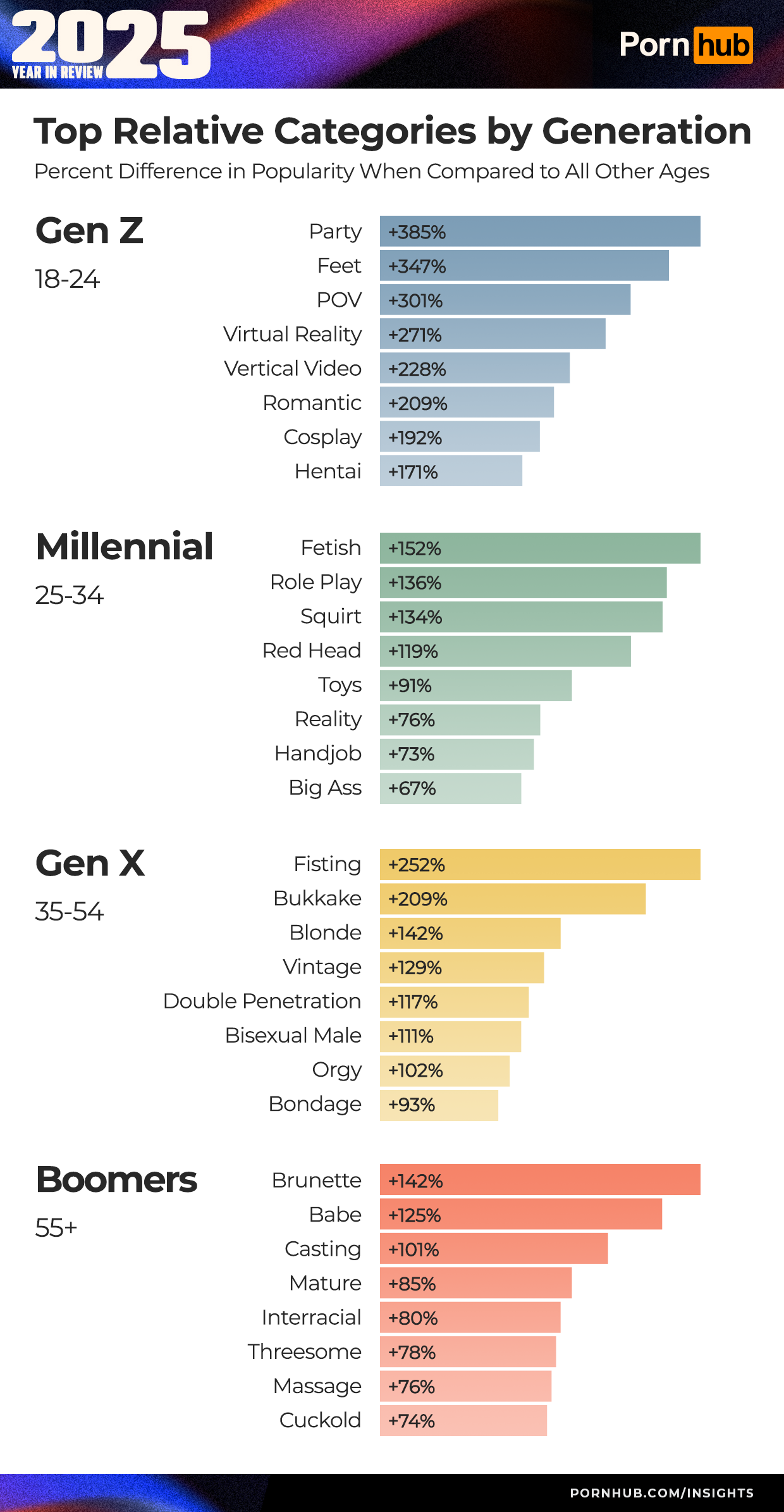
Gen Z are feet fetish
And i see why guys go to South America or Parts of asis since their women look at porn the most

a lot of straight women love lesbian porn..my main chick likes the sensuality of itLast girl I was with she was sleep i turned on her ipad. It was like 30 different tabs all big ass lesbian porn.
I was like damn what she got me here for she dont even like dikk


