

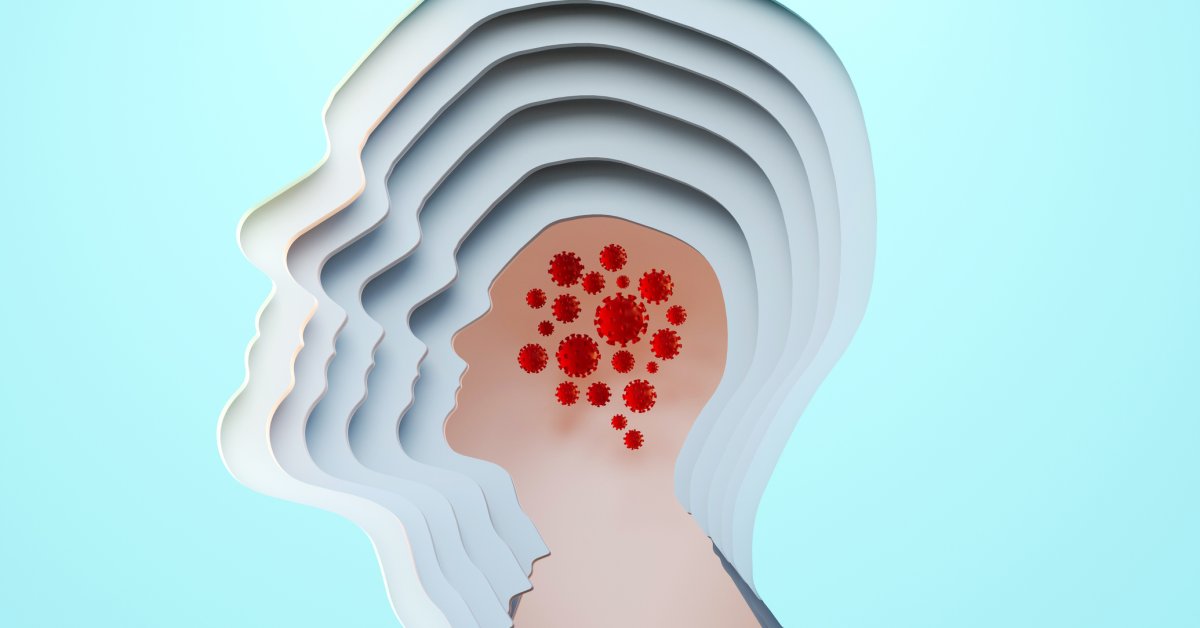
How COVID-19 Affects the Brain, Even Long After an Infection
It's been linked to brain fog, dementia, stroke, and more.
 time.com
The list of neurocognitive issues that Meropol’s team and other researchers must track is extensive: cognitive decline, changes in brain size and structure, depression and suicidal thinking, tremors, seizures, memory loss, and new or worsened dementia have all been linked to previous SARS-CoV-2 infections. In some cases, these longer-term problems occur even in patients with relatively mild COVID-19.
Virus in the brain
Since Nath’s brain-scanning project early in the pandemic, other researchers have found the virus in the brains of people who died from COVID-19.
For a 2022 paper in Nature, researchers analyzed brain tissue of 11 people who had COVID-19 when they died. In all but one of those individuals, the researchers found the virus’ genetic material in central-nervous-system tissue—which, they wrote, “prov[ed] definitively that SARS-CoV-2 is capable of infecting and replicating within the human brain.”
To Nath, however, that’s still an open question, and one worthy of more research. His team has continued to study the brains of COVID-19 patients and has yet to find concrete evidence of the SARS-CoV-2 virus in those organs. In one instance, he says, they found viral proteins—but not the full virus—in biopsied tissue from someone who had COVID-19 at the time they were undergoing brain surgery for epilepsy. Researchers behind an April 2023 study not yet been peer-reviewed also found SARS-CoV-2 spike proteins—which are found on the virus’ surface and allow it to enter human cells—in the brains of people who died from COVID-19.
But the research is “inconsistent,” Nath says. “Some have found it, some have not, and some people who have found it, have found very small amounts. There’s still a gap in knowledge there.”

