Scientists Grow “Synthetic” Embryo With Brain and Beating Heart – Without Eggs or Sperm
Scientists from the University of Cambridge have created model embryos from mouse stem cells that form a brain, a beating heart, and the foundations of all the other organs of the body. It represents a new avenue for recreating the first stages of life. The team of researchers, led by Professor M
scitechdaily.com
TOPICS:Developmental BiologyEmbryoReproductive BiologyStem CellsUniversity Of Cambridge
By UNIVERSITY OF CAMBRIDGE AUGUST 27, 2022
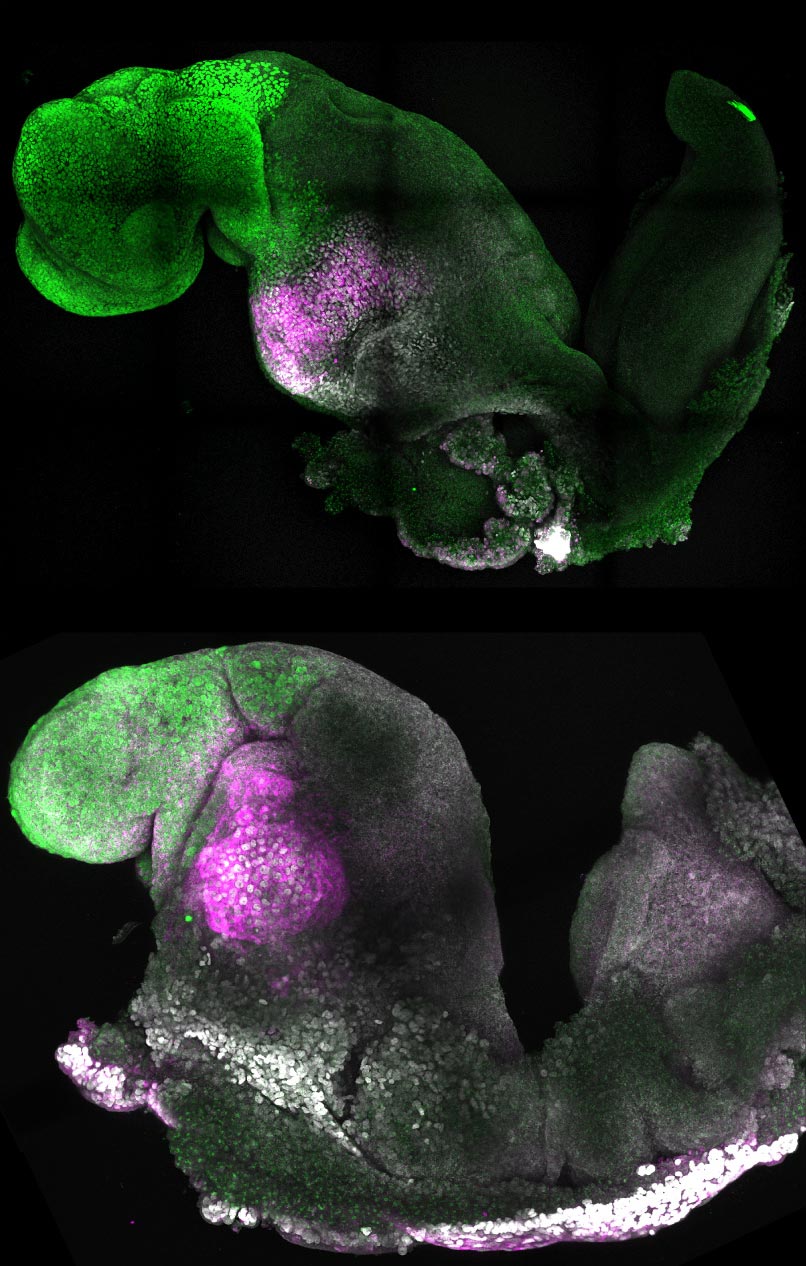
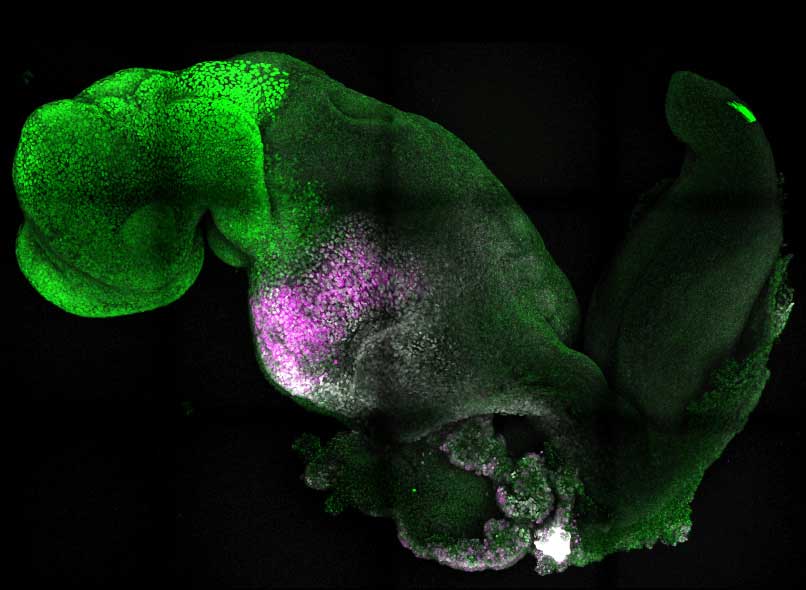
Natural and synthetic embryos side by side show comparable brain and heart formation. Credit: Amadei and Handford
Scientists from the University of Cambridge have created model embryos from mouse stem cells that form a brain, a beating heart, and the foundations of all the other organs of the body. It represents a new avenue for recreating the first stages of life.
The team of researchers, led by Professor Magdalena Zernicka-Goetz, developed the embryo model without eggs or sperm. Instead, they used stem cells – the body’s master cells, which can develop into almost any cell type in the body.
By guiding the three types of stem cells found in early mammalian development to the point where they start interacting, the researchers mimicked natural processes in the lab. The scientists were able to get the stem cells to ‘talk’ to each other by inducing the expression of a particular set of genes and establishing a unique environment for their interactions.“It’s just unbelievable that we’ve got this far. This has been the dream of our community for years, and major focus of our work for a decade and finally we’ve done it.” — Magdalena Zernicka-Goetz
The stem cells self-organized into structures that progressed through the successive developmental stages until they had beating hearts and the foundations of the brain They also had the yolk sac where the embryo develops and gets nutrients from in its first weeks. Unlike other synthetic embryos, the Cambridge-developed models reached the point where the entire brain, including the anterior portion, began to develop. This is a further point in development than has been achieved in any other stem cell-derived model.
According to the team, their results could help researchers understand why some embryos fail while others go on to develop into a healthy pregnancy. In addition, the results could be used to guide the repair and development of synthetic human organs for transplantation. The study, which is the result of more than a decade of research that progressively led to more and more complex embryo-like structures, was reported on August 25, 2022, in the journal Nature.
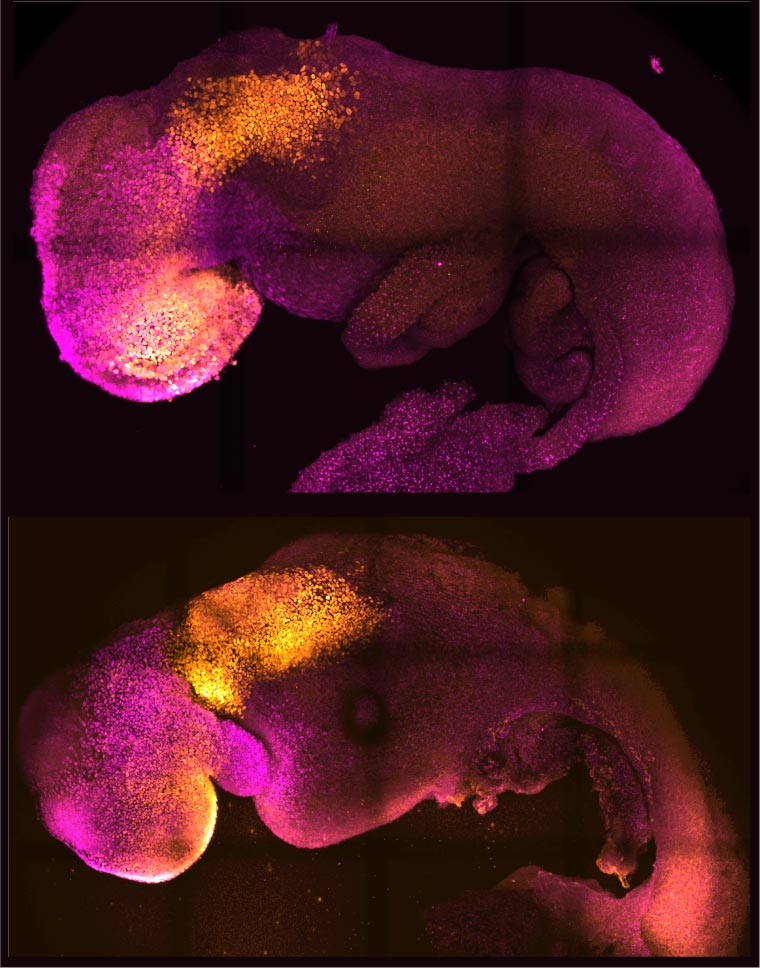
Natural and synthetic embryos side by side show comparable brain and heart formation. Credit: Amadei and Handford
“Our mouse embryo model not only develops a brain, but also a beating heart, all the components that go on to make up the body,” said Zernicka-Goetz, Professor in Mammalian Development and Stem Cell Biology in Cambridge’s Department of Physiology, Development and Neuroscience. “It’s just unbelievable that we’ve got this far. This has been the dream of our community for years, and major focus of our work for a decade and finally we’ve done it.”
A “dialog” between the tissues that will form the embryo and the tissues that will connect the embryo to the mother is necessary for the healthy development of a human embryo. Three different stem cell types begin to form in the first week following fertilization; one of these will eventually develop into the bodily tissues, while the other two support the embryo’s development. One of these extraembryonic stem cell types will become the placenta, which connects the fetus to the mother and provides oxygen and nutrients. The second is the yolk sac, where the embryo grows and where it gets its nutrients from in early development.
Many pregnancies fail at the point when the three types of stem cells begin to send mechanical and chemical signals to each other, which instruct the embryo on how to develop properly.
“So many pregnancies fail around this time, before most women realize they are pregnant,” said Zernicka-Goetz, who is also Professor of Biology and Biological Engineering at Caltech. “This period is the foundation for everything else that follows in pregnancy. If it goes wrong, the pregnancy will fail.”
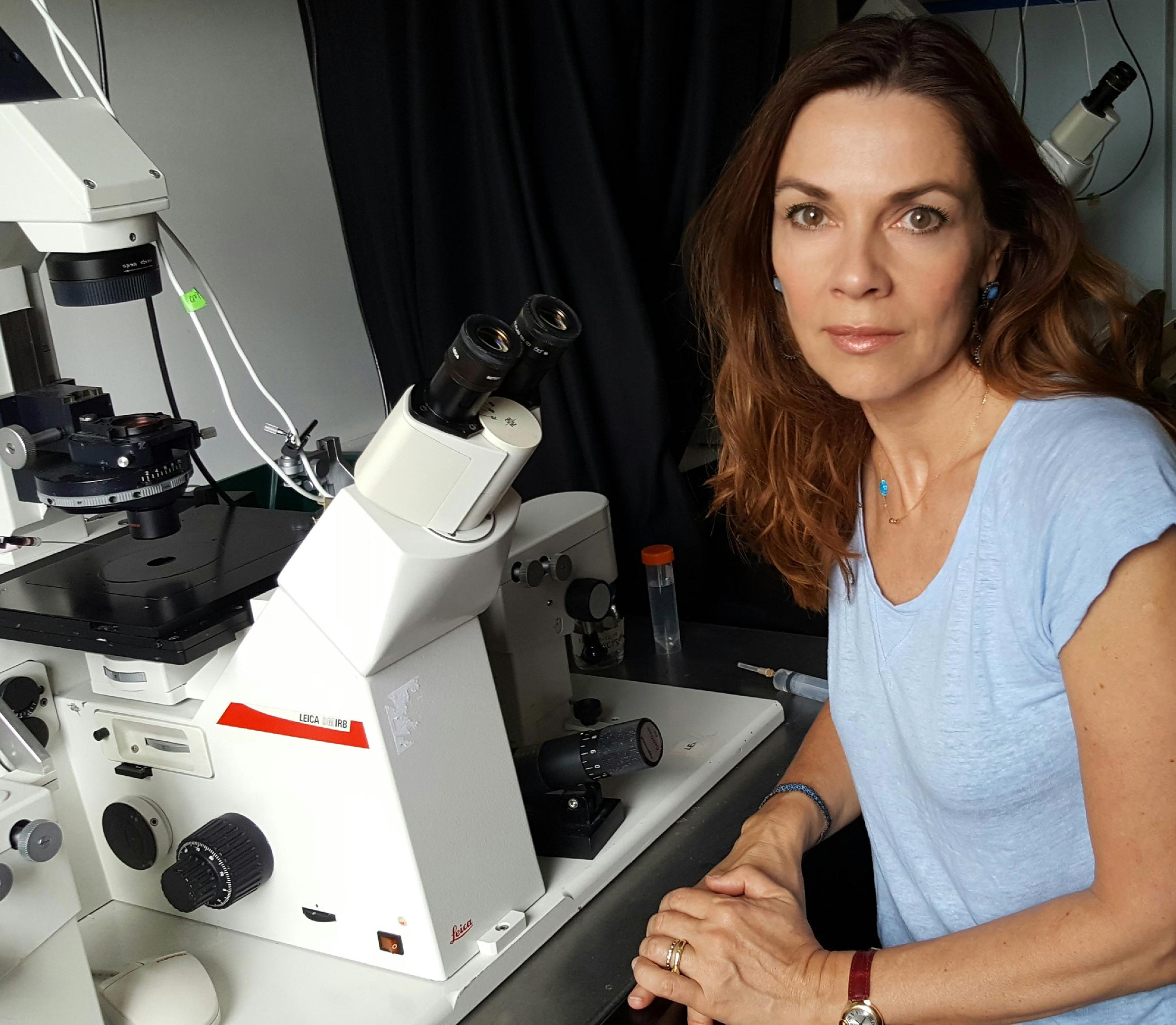
Professor Zernicka-Goetz in the lab. Credit: University of Cambridge
Professor Zernicka-Goetz’s group in Cambridge has been studying these earliest stages of pregnancy over the past decade, in order to understand why some pregnancies fail and some succeed.
“The stem cell embryo model is important because it gives us accessibility to the developing structure at a stage that is normally hidden from us due to the implantation of the tiny embryo into the mother’s womb,” said Zernicka-Goetz. “This accessibility allows us to manipulate genes to understand their developmental roles in a model experimental system.”
To guide the development of their synthetic embryo, the scientists put together cultured stem cells representing each of the three types of tissue in the right proportions and environment to promote their growth and communication with each other, eventually self-assembling into an embryo.
The research team discovered that the extraembryonic cells signal to embryonic cells by chemical signals but also mechanistically, or through touch, guiding the embryo’s development.
“This period of human life is so mysterious, so to be able to see how it happens in a dish – to have access to these individual stem cells, to understand why so many pregnancies fail and how we might be able to prevent that from happening – is quite special,” said Zernicka-Goetz. “We looked at the dialogue that has to happen between the different types of stem cell at that time – we’ve shown how it occurs and how it can go wrong.”
A major advance in the study is the ability to generate the entire brain, in particular the anterior part, which has been a major goal in the development of synthetic embryos. This works in Zernicka-Goetz’s system because this part of the brain requires signals from one of the extraembryonic tissues to be able to develop. The team thought that this might be taking place from their 2018 and 2021 studies, which used the same component cells to develop into embryos at a slightly earlier stage. Now, by pushing development just one day further, they can definitively say that their model is the very first to signal development of the anterior, and in fact the whole, brain.
“This opens new possibilities to study the mechanisms of neurodevelopment in an experimental model,” said Zernicka-Goetz. “In fact, we demonstrate the proof of this principle in the paper by knocking out a gene already known to be essential for formation of the neural tube, precursor of the nervous system, and for brain and eye development. In the absence of this gene, the synthetic embryos show exactly the known defects in brain development as in an animal carrying this mutation. This means we can begin to apply this kind of approach to the many genes with unknown function in brain development.”
While the current research was carried out in mouse models, the researchers are developing similar human models with the potential to be directed towards the generation of specific organ types to understand mechanisms behind crucial processes that would be otherwise impossible to study in real embryos. At present, UK law permits human embryos to be studied in the laboratory only up to the 14th day of development.
If the methods developed by Zernicka-Goetz’s team are shown to be successful with human stem cells in the future, they could also be used to guide development of synthetic organs for patients awaiting transplants.
“There are so many people around the world who wait for years for organ transplants,” said Zernicka-Goetz. “What makes our work so exciting is that the knowledge coming out of it could be used to grow correct synthetic human organs to save lives that are currently lost. It should also be possible to affect and heal adult organs by using the knowledge we have on how they are made.
“This is an incredible step forward and took 10 years of hard work of many of my team members – I never thought we’d get to this place. You never think your dreams will come true, but they have.”
Professor Magdalena Zernicka-Goetz has made an incredible scientific breakthrough.
The creation of synthetic mouse embryos in a test tube that develop brains and beating hearts, starting only with embryonic stem cells, is the culmination of a decade’s work.
Magda explains:
I’m fascinated by the mystery of how embryos work. Every embryo follows a similar journey: one cell becomes many, then they communicate with each other and arrange themselves to form a structure that will provide a blueprint for all adult body parts. But how do embryo cells decide their fate, how do they know where to go and what to do? How do they form the right parts in the right place at the right time?
Building the first ‘synthetic embryo’ models was a process we achieved step by step. Setting out, we knew that embryonic stem cells could be cultured indefinitely in the lab, and that when they’re injected into an embryo they can potentially contribute to any tissue in the adult organism. The challenge was to guide them to develop into a complete embryo. In addition to the embryonic stem cells we used two kinds of extraembryonic tissue: one of which forms the placenta and the other a sac in which the embryo develops. These tissues are very important, as they send signals to the embryo to develop all its parts at the right time and in the right place.
Combining stem cells representing each of these three types of tissue is easier said than done. We had to find an environment where all three distinct cell types could grow and communicate with each other. And we had to find the right proportions of each cell type, and add them in the right sequence. Once we established these basic principles, the stem cells did the rest: they self-organized to progress through successive developmental stages until they had beating hearts and the foundations for a brain.


 please let it be walking dead zombies and not world war z
 your username is perfect for this