thernbroom
Superstar
 oil
oil You are 200 miles directly above the Martian surface — looking down. This image was taken by the Mars Reconnaissance Orbiter on Jan. 27, 2010. (The color was added later.) What do we see? Well, sand, mostly. As you scroll down, there's a ridge crossing through the image, then a plain, then dunes, but keep looking. You will notice, when you get to the dunes, there are little black flecks dotting the ridges, mostly on the sunny side, like sunbathing spiders sitting in rows. Can you see them?

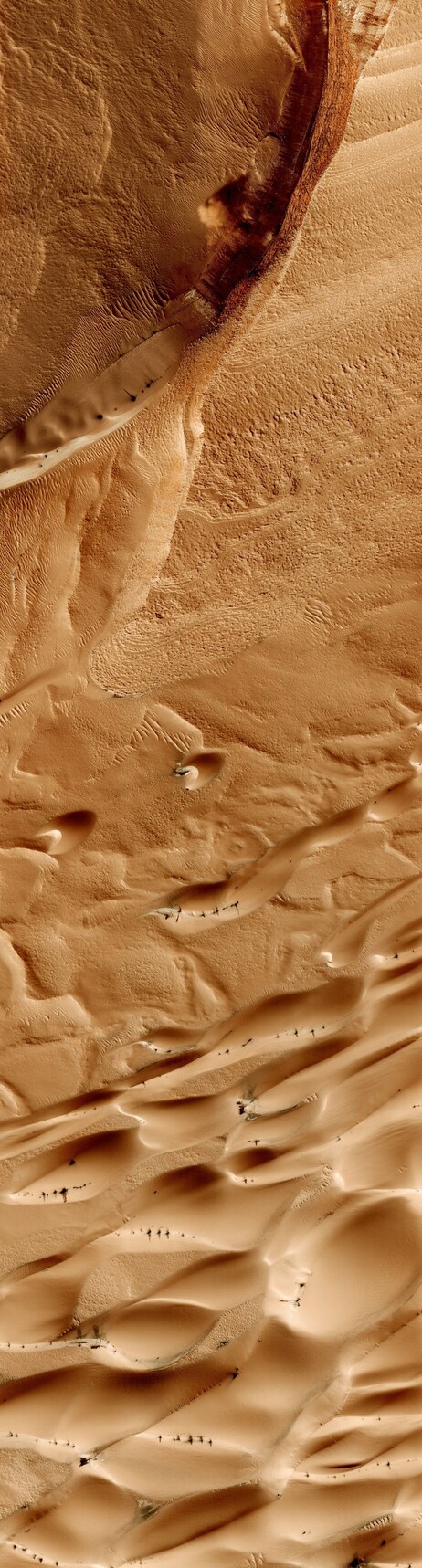
What are those things? They were first seen in 1998; they don't look like anything we have here on Earth. To this day, no one is sure what they are, but we now know this: They come, then they go. Every Martian spring, they appear out of nowhere, showing up — 70 percent of the time — where they were the year before. They pop up suddenly, sometimes overnight. When winter comes, they vanish.
As the sun gets hotter, they get more spidery. Here's a closer image — like the one above, this gorgeous print was created by the photographer Michael Benson, just published in his new book, Planetfall. It shows two mounds of sand. The spidery thingies, you'll notice, stay on the rises, not on the flat sandy plains.
What could they be? Scientists from the U.S. Geological Survey, from Hungary, from the European Space Agency have all proposed explanations; the leading one is so weird, it's transformed my idea of what it's like to be on Mars. For 20 years, I've thought the planet to be magnificently desolate, a dead zone, painted rouge. But imagine this: Every spring, the sun beats down on a southern region of Mars, morning light melts the surface, warms up the ground below, and a thin, underground layer of frozen CO2 turns suddenly into a roaring gas, expands, and carrying rock and ice, rushes up through breaks in the rock, exploding into the Martian air. Geysers shoot up in odd places. It feels random, like being surprise attacked by a monstrous, underground fountain. Here's what it might look like:

Full article and more pics here:Are Those Spidery Black Things On Mars Dangerous? (Maybe) : Krulwich Wonders... : NPR


 if those are oil spouts, where is the oil puddles