

newworldafro
DeeperThanRapBiggerThanHH
Let me preface by saying I'm no racist.
I love humanity. I want people across the board to live long, prosperous, fulfilling lives.
But without a doubt I want to see African Diaspora succeed.
So I just found this article that really struck me. Ive never been to North Miami Beach (48% Haitian alone; 2% Asian), but I know its in that collection of largely African American/Caribbean cities and neighborhoods just north of downtown Miami. Basically a potential South Florida Wakanda.
So this article struck me, when we talk about Chinese infusion, good and bad into Africa, and more and more into the Caribbean...the fact that they believe building a non-organic Chinatown is the best way to initiate economic development is a gumbo of weirdness disheartening-ness, c00nery, disrespect, and lack of vision in some ways.
A Chinatown for North Miami
North Miami moves closer to Chinatown architectural plan
It would be one thing if Chinese immigrants had organically developed over decades and then linked with Diasporic Chinese capital, but here are black politicians, economic developers, and planners creating a non-organic Chinatown, on prime real estate, in the Black corridor of South Florida.
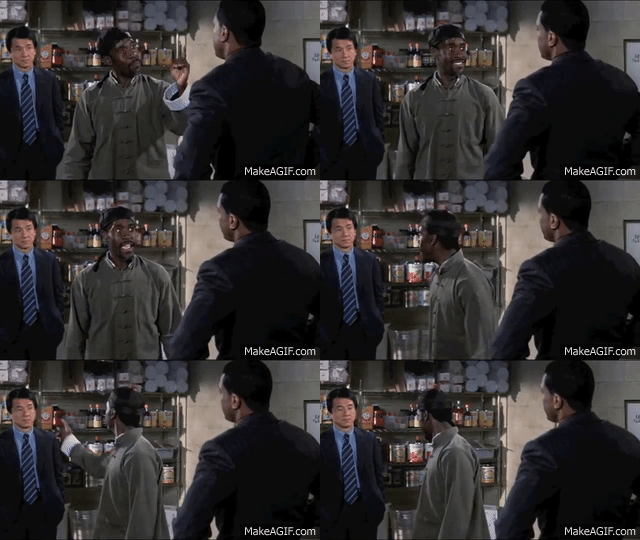
Do yall see my point? Why are they not envisioning a Caribbean style mixed use development on those 90 acres, that brings in African, African American, Caribbean business and capital. How many black owned businesses do you foresee in Chinatown?? . What type of ownership are they projecting? Is it going be like Don Cheadle in Rush Hour 2?
I hope it's successful as the first Chinatown in Florida and brings jobs and taxesto the coffers.......but ......
There is a glitch in the Afro Diasporic matrix yall..Im not just harping on North Miami Beach either, but this example is so telling ..it's combination of lack of resources, lack of collaboration to bring resources together, and lack of confidence. Do we not have anywhere to turn to build amazing blockbuster financially sustainable developments in our own communities?
Thoughts?
I love humanity. I want people across the board to live long, prosperous, fulfilling lives.
But without a doubt I want to see African Diaspora succeed.
So I just found this article that really struck me. Ive never been to North Miami Beach (48% Haitian alone; 2% Asian), but I know its in that collection of largely African American/Caribbean cities and neighborhoods just north of downtown Miami. Basically a potential South Florida Wakanda.
So this article struck me, when we talk about Chinese infusion, good and bad into Africa, and more and more into the Caribbean...the fact that they believe building a non-organic Chinatown is the best way to initiate economic development is a gumbo of weirdness disheartening-ness, c00nery, disrespect, and lack of vision in some ways.
A Chinatown for North Miami
A Chinatown for North Miami
How one city—and its city manager—is embracing unique economic development thinking [PM Magazine, March 2019]
ARTICLE | Mar 11, 2019
By Larry Spring, Jr.
I wasn’t a stranger to big projects, but the idea that awaited me as I started work as city manager of North Miami, Florida, was unlike anything else I’d been involved in. Building a Chinatown? In North Miami?
I had worked on the development of the new Miami Marlins stadium (retractable roof and all) in my previous post, so I had a good sense for the complexity of projects in urban areas. But that was the city of Miami.
I’d just become manager of North Miami, a suburban community of some 60,000 in the much larger Miami metro area of more than 5 million. Councilman Alix Desulme, who had been approached by local business leaders, had done some initial research. He was passionate and persistent; I listened.
He had an idea to revitalize a 90-acre corridor in his district. My predecessor and now deputy manager Arthur Sorey, had made a significant time investment, flying to China, to get the basics of what is now a Chinatown community redevelopment project.
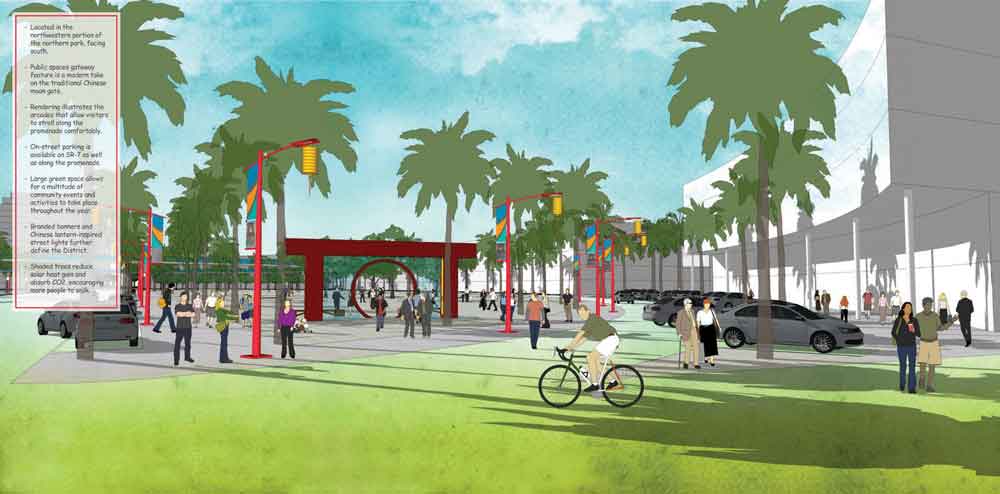
And slowly, what seemed like a crazy concept, started to materialize as an exciting and viable project. It morphed from an intriguing possibility all the way to a detailed, realistic urban city revitalization plan, complete with zoning, infrastructure, tax incentive, community engagement, and international components.
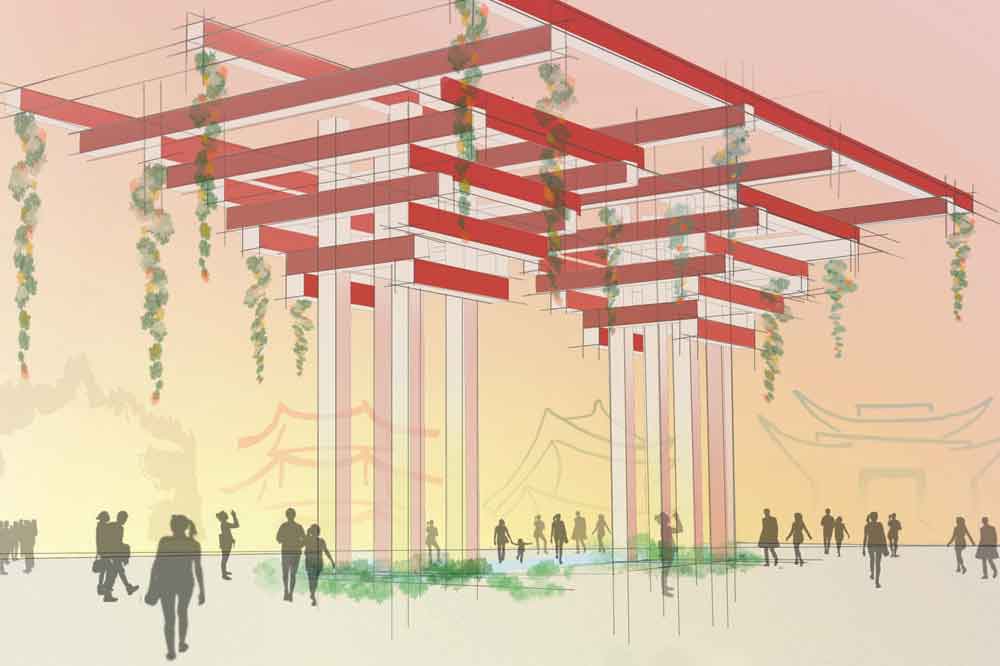
North Miami is the first community in Florida to designate a Chinatown district and the first with a master plan. Our signature gateway arch, which will celebrate the innovation of New China, will see a groundbreaking later this year.
“I must credit the administration,” Desulme would later say. “All of us were surprised how fast everything kind of evolved and unrolled.”
A Non-Organic Concept
Before I came to my current job, I knew there had been discussions of creating a cultural district in greater Miami as many other cities have done—be it a Little Italy, a Fisherman’s Pier, or other.
The idea of a Chinatown in South Florida was not new but for various reasons, it just never got off the ground. This, despite the fact that China is Miami’s third-largest trading partner with $6.7 billion of import and export transactions in 2016 alone.
And while the Miami metro area is today culturally vibrant with large Hispanic and Caribbean populations, migration from China was blocked by anti-Chinese federal immigration laws until the 1940s, a period overlapping Miami’s heady post-World War II surge.
The patterns set in those decades ripple into today. The most recent U.S. Census data shows that North Miami’s Asian population is just 1.7 percent, and the Chinese demographic is just 0.6 percent. (By way of comparison, San Francisco, San Jose, Los Angeles, and New York have Chinese-American populations ranging from three to 10 percent of their communities). Indeed, while North Miami’s population is majority foreign-born, nearly 48 percent is of Haitian ancestry.
How one city—and its city manager—is embracing unique economic development thinking [PM Magazine, March 2019]
ARTICLE | Mar 11, 2019
By Larry Spring, Jr.
I wasn’t a stranger to big projects, but the idea that awaited me as I started work as city manager of North Miami, Florida, was unlike anything else I’d been involved in. Building a Chinatown? In North Miami?
I had worked on the development of the new Miami Marlins stadium (retractable roof and all) in my previous post, so I had a good sense for the complexity of projects in urban areas. But that was the city of Miami.
I’d just become manager of North Miami, a suburban community of some 60,000 in the much larger Miami metro area of more than 5 million. Councilman Alix Desulme, who had been approached by local business leaders, had done some initial research. He was passionate and persistent; I listened.
He had an idea to revitalize a 90-acre corridor in his district. My predecessor and now deputy manager Arthur Sorey, had made a significant time investment, flying to China, to get the basics of what is now a Chinatown community redevelopment project.
And slowly, what seemed like a crazy concept, started to materialize as an exciting and viable project. It morphed from an intriguing possibility all the way to a detailed, realistic urban city revitalization plan, complete with zoning, infrastructure, tax incentive, community engagement, and international components.
North Miami is the first community in Florida to designate a Chinatown district and the first with a master plan. Our signature gateway arch, which will celebrate the innovation of New China, will see a groundbreaking later this year.
“I must credit the administration,” Desulme would later say. “All of us were surprised how fast everything kind of evolved and unrolled.”
A Non-Organic Concept
Before I came to my current job, I knew there had been discussions of creating a cultural district in greater Miami as many other cities have done—be it a Little Italy, a Fisherman’s Pier, or other.
The idea of a Chinatown in South Florida was not new but for various reasons, it just never got off the ground. This, despite the fact that China is Miami’s third-largest trading partner with $6.7 billion of import and export transactions in 2016 alone.
And while the Miami metro area is today culturally vibrant with large Hispanic and Caribbean populations, migration from China was blocked by anti-Chinese federal immigration laws until the 1940s, a period overlapping Miami’s heady post-World War II surge.
The patterns set in those decades ripple into today. The most recent U.S. Census data shows that North Miami’s Asian population is just 1.7 percent, and the Chinese demographic is just 0.6 percent. (By way of comparison, San Francisco, San Jose, Los Angeles, and New York have Chinese-American populations ranging from three to 10 percent of their communities). Indeed, while North Miami’s population is majority foreign-born, nearly 48 percent is of Haitian ancestry.
North Miami moves closer to Chinatown architectural plan
It would be one thing if Chinese immigrants had organically developed over decades and then linked with Diasporic Chinese capital, but here are black politicians, economic developers, and planners creating a non-organic Chinatown, on prime real estate, in the Black corridor of South Florida.
Do yall see my point? Why are they not envisioning a Caribbean style mixed use development on those 90 acres, that brings in African, African American, Caribbean business and capital. How many black owned businesses do you foresee in Chinatown??
. What type of ownership are they projecting? Is it going be like Don Cheadle in Rush Hour 2?
I hope it's successful as the first Chinatown in Florida and brings jobs and taxesto the coffers.......but ......
There is a glitch in the Afro Diasporic matrix yall..Im not just harping on North Miami Beach either, but this example is so telling ..it's combination of lack of resources, lack of collaboration to bring resources together, and lack of confidence. Do we not have anywhere to turn to build amazing blockbuster financially sustainable developments in our own communities?
Thoughts?
Last edited:


