

88m3
Fast Money & Foreign Objects
ByJoel Wernerand99% Invisible
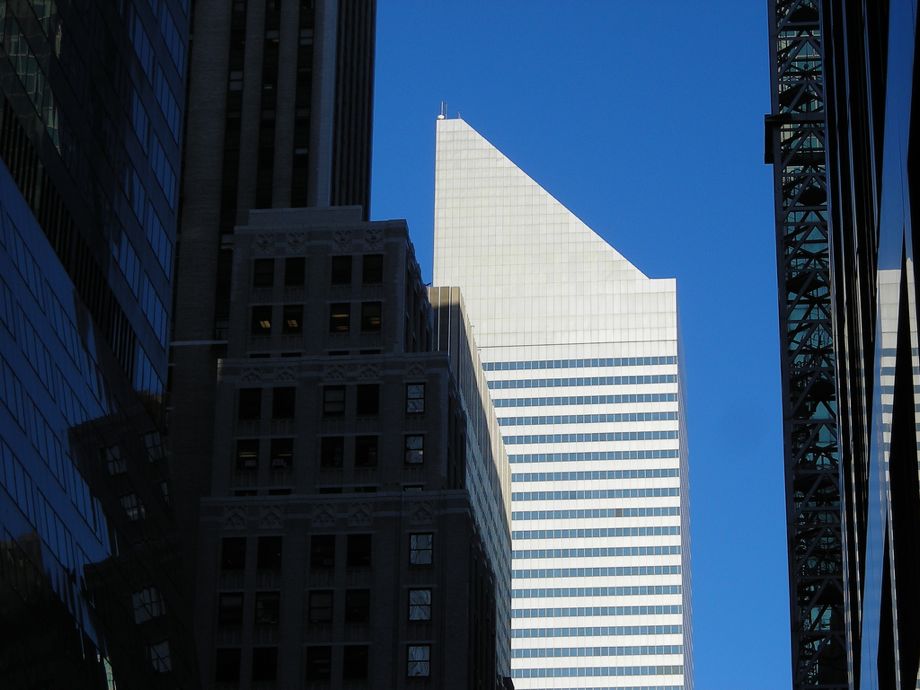
601 Lexington in New York City.
Courtesy of Antonio Campoy via Flickr
Roman Mars’ podcast99% Invisiblecovers design questions large and small, fromhis fascination with rebartothe history of slot machinesto thegreat Los Angeles Red Car conspiracy. Here at The Eye, we cross-post new episodes and host excerpts from the 99% Invisible blog, which offers complementary visuals for each episode.
This week's edition—about the design flaw that almost wiped out one of New York City’s tallest buildings—can be played below. Or keep reading to learn more.
When it was built in 1977, Citicorp Center (later renamed Citigroup Center, now called 601 Lexington) was, at 59 stories, the seventh-tallest building in the world. You can pick it out of the New York City skyline by its 45 degree-angled top.
But it’s the base of the building that really makes the tower so unique. The bottom nine of its 59 stories are stilts.
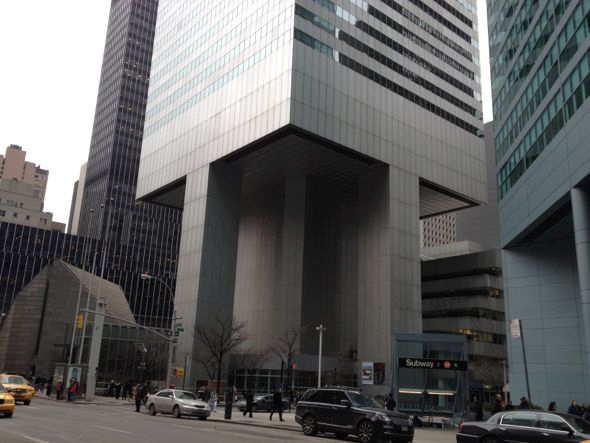
A skyscraper on stilts.
Courtesy of Joel Werner
This thing does not look sturdy. But it has to be sturdy. Otherwise they wouldn’t have built it this way.
Right?
The architect of Citicorp Center was Hugh Stubbins, but most of the credit for this building is given to its chief structural engineer, William LeMessurier.
The design originated with the need to accommodateSt. Peter’s Lutheran Church, which occupied one corner of the building site at 53rdStreet and Lexington Avenue in midtown Manhattan. (LeMessurier called the a church “a crummy old building … the lowest point in Victorian architecture."You can be the judge.)
The condition that St. Peter’s gave to Citicorp was that they build the church a new building in the same location. Provided that corner of the lot not be touched, the company was free to build their skyscraper around the church and in the airspace above it.
LeMessurier said he got the idea for the design while sketching on a napkin at a Greek restaurant.
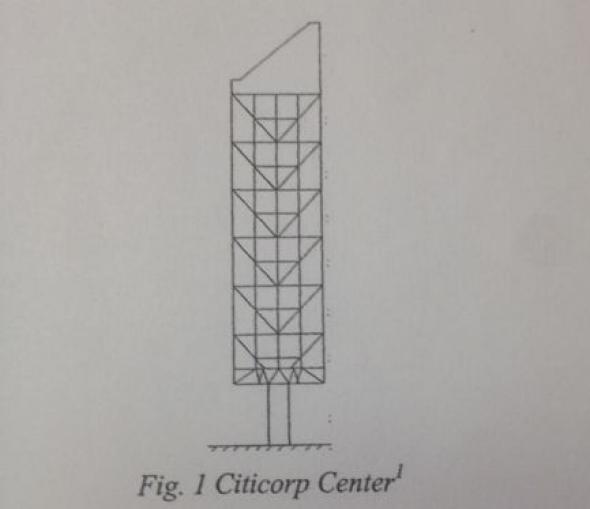
Chief structural engineer William LeMessurier's napkin sketch of 601 Lexington.
Courtesy of David Billington
Here’s what’s going on with this building:
According to LeMessurier, in 1978 an undergraduate architecture student contacted him with a bold claim about LeMessurier’s building: that Citicorp Center could blow over in the wind.
The student (who has since been lost to history) was studying Citicorp Center and had found that the building was particularly vulnerable to quartering winds (winds that strike the building at its corners). Normally, buildings are strongest at their corners, and it’s the perpendicular winds (winds that strike the building at its faces) that cause the greatest strain. But this was not a normal building.
LeMessurier had accounted for the perpendicular winds, but not the quartering winds. He checked the math and found that the student was right. He compared what velocity winds the building could withstand with weather data and found that a storm strong enough to topple Citicorp Center hits New York City every 55 years.
But that’s only if the tuned mass damper, which keeps the building stable, is running. LeMessurier realized that a major storm could cause a blackout and render the tuned mass damper inoperable. Without the tuned mass damper, LeMessurier calculated that a storm powerful enough to take out the building his New York every 16 years.
In other words, for every year Citicorp Center was standing, there was about a 1-in-16 chance that it would collapse.
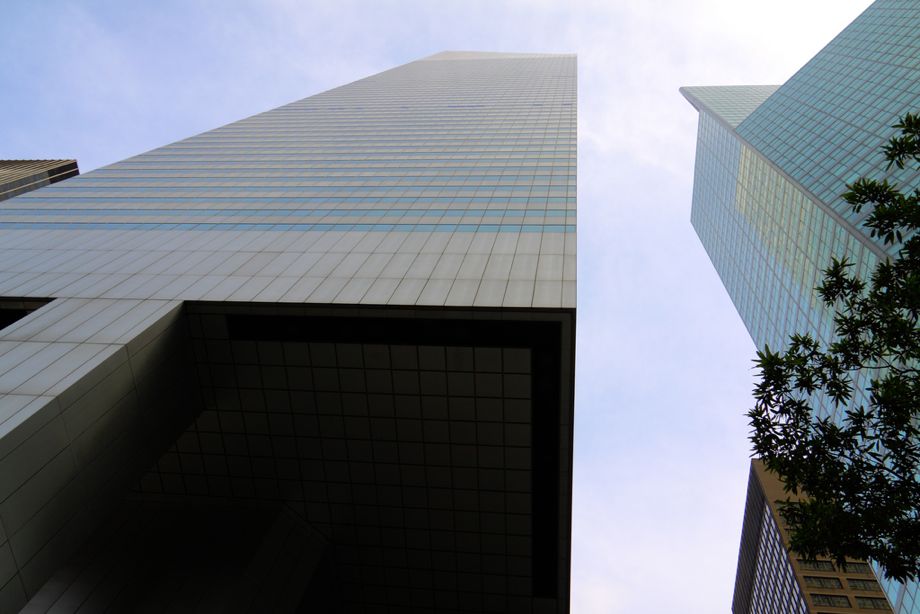
View from below 601 Lexington.
Courtesy of Andrew Smith via Flickr
LeMessurier and his team worked with Citicorp to coordinate emergency repairs. With the help of the NYPD, they worked out an evacuation plan spanning a 10-block radius. They had 2,500 Red Cross volunteers on standby, and three different weather services employed 24/7 to keep an eye on potential windstorms. They welded throughout the night and quit at daybreak, just as the building occupants returned to work.
But all of this happened in secret, even as Hurricane Ella was racing up the eastern seaboard.
Hurricane Ella never made landfall. And so the public—including the building’s occupants—were never notified. And it just so happened that New York City newspapers were on strike at the time.
The story remained a secret until writer Joe Morgenstern overheard it being told at a party, and interviewed LeMessurier. Morgensternbroke the story inTheNew Yorkerin 1995.
And that would have been the end of the story. But then this happened:
The BBC aired a special on the Citicorp Center crisis, and one of its viewers was Diane Hartley. It turns out thatshewas the student in LeMessurier’s story. She never spoke with LeMessurier; rather, she spoke with one of his junior staffers.
Hartley didn’t know that her inquiry about how the building deals with quartering winds lead to any action on LeMessurier’s part. It was only after seeing the documentary that she began to learn about the impact that her undergraduate thesis had on the fate of Manhattan.
To learn more, check out the99% Invisible postorlisten to the show.
99% Invisible is distributed byPRX.
The Citicorp tower design flaw that could have wiped out the skyscraper: 99% Invisible by Roman Mars.
601 Lexington in New York City.
Courtesy of Antonio Campoy via Flickr
Roman Mars’ podcast99% Invisiblecovers design questions large and small, fromhis fascination with rebartothe history of slot machinesto thegreat Los Angeles Red Car conspiracy. Here at The Eye, we cross-post new episodes and host excerpts from the 99% Invisible blog, which offers complementary visuals for each episode.
This week's edition—about the design flaw that almost wiped out one of New York City’s tallest buildings—can be played below. Or keep reading to learn more.
When it was built in 1977, Citicorp Center (later renamed Citigroup Center, now called 601 Lexington) was, at 59 stories, the seventh-tallest building in the world. You can pick it out of the New York City skyline by its 45 degree-angled top.
But it’s the base of the building that really makes the tower so unique. The bottom nine of its 59 stories are stilts.
A skyscraper on stilts.
Courtesy of Joel Werner
This thing does not look sturdy. But it has to be sturdy. Otherwise they wouldn’t have built it this way.
Right?
The architect of Citicorp Center was Hugh Stubbins, but most of the credit for this building is given to its chief structural engineer, William LeMessurier.
The design originated with the need to accommodateSt. Peter’s Lutheran Church, which occupied one corner of the building site at 53rdStreet and Lexington Avenue in midtown Manhattan. (LeMessurier called the a church “a crummy old building … the lowest point in Victorian architecture."You can be the judge.)
The condition that St. Peter’s gave to Citicorp was that they build the church a new building in the same location. Provided that corner of the lot not be touched, the company was free to build their skyscraper around the church and in the airspace above it.
LeMessurier said he got the idea for the design while sketching on a napkin at a Greek restaurant.
Chief structural engineer William LeMessurier's napkin sketch of 601 Lexington.
Courtesy of David Billington
Here’s what’s going on with this building:
- Nine-story stilts suspend the building over St. Peter’s church. But rather than putting the stilts in the corners, they had to be located at the midpoint of each side to avoid the church.
- Having stilts in the middle of each side made the building less stable, so LeMessurier designed a chevron bracing structure—rows of eight-story V’s that served as the building’s skeleton.
- The chevron bracing structure made the building exceptionally light for a skyscraper, so it would sway in the wind. LeMessurier added atuned mass damper, a 400-ton device that keeps the building stable.
According to LeMessurier, in 1978 an undergraduate architecture student contacted him with a bold claim about LeMessurier’s building: that Citicorp Center could blow over in the wind.
The student (who has since been lost to history) was studying Citicorp Center and had found that the building was particularly vulnerable to quartering winds (winds that strike the building at its corners). Normally, buildings are strongest at their corners, and it’s the perpendicular winds (winds that strike the building at its faces) that cause the greatest strain. But this was not a normal building.
LeMessurier had accounted for the perpendicular winds, but not the quartering winds. He checked the math and found that the student was right. He compared what velocity winds the building could withstand with weather data and found that a storm strong enough to topple Citicorp Center hits New York City every 55 years.
But that’s only if the tuned mass damper, which keeps the building stable, is running. LeMessurier realized that a major storm could cause a blackout and render the tuned mass damper inoperable. Without the tuned mass damper, LeMessurier calculated that a storm powerful enough to take out the building his New York every 16 years.
In other words, for every year Citicorp Center was standing, there was about a 1-in-16 chance that it would collapse.
View from below 601 Lexington.
Courtesy of Andrew Smith via Flickr
LeMessurier and his team worked with Citicorp to coordinate emergency repairs. With the help of the NYPD, they worked out an evacuation plan spanning a 10-block radius. They had 2,500 Red Cross volunteers on standby, and three different weather services employed 24/7 to keep an eye on potential windstorms. They welded throughout the night and quit at daybreak, just as the building occupants returned to work.
But all of this happened in secret, even as Hurricane Ella was racing up the eastern seaboard.
Hurricane Ella never made landfall. And so the public—including the building’s occupants—were never notified. And it just so happened that New York City newspapers were on strike at the time.
The story remained a secret until writer Joe Morgenstern overheard it being told at a party, and interviewed LeMessurier. Morgensternbroke the story inTheNew Yorkerin 1995.
And that would have been the end of the story. But then this happened:
The BBC aired a special on the Citicorp Center crisis, and one of its viewers was Diane Hartley. It turns out thatshewas the student in LeMessurier’s story. She never spoke with LeMessurier; rather, she spoke with one of his junior staffers.
Hartley didn’t know that her inquiry about how the building deals with quartering winds lead to any action on LeMessurier’s part. It was only after seeing the documentary that she began to learn about the impact that her undergraduate thesis had on the fate of Manhattan.
To learn more, check out the99% Invisible postorlisten to the show.
99% Invisible is distributed byPRX.
The Citicorp tower design flaw that could have wiped out the skyscraper: 99% Invisible by Roman Mars.

