
Obamas speak out on 'racist experiences.' Why now?

Editors' Picks
4 Free Issues
MORE
In an interview with People magazine, the Obamas appeared to be edging into the national conversation about race sparked by the events in Ferguson, Mo., and Staten Island, N.Y.
By Peter Grier, Staff writer DECEMBER 17, 2014
-

Jonathan Ernst/Reuters
View Caption
Not (for the most part) as president and first lady, of course. Since 2008, they’ve been protected by the symbols of the presidency and by the Secret Service from that sort of thing, they told People magazine in an interview released Wednesday.
“Before that, Barack Obama was a black man that lived on the South Side of Chicago, who had his share of troubles catching cabs,” said first lady Michelle Obama to People.
Mrs. Obama said her husband, in his pre-White House days, was also mistaken for a waiter at a black-tie gala and asked to get coffee. President Obama himself said a white person once assumed he was a parking valet.
“There’s no black male my age, who’s a professional, who hasn’t come out of a restaurant and is waiting for their car and somebody didn’t hand them their car keys,” he said.
In discussing these indignities, the first couple appeared to be edging into the national conversation about race sparked by the police shooting of teen Michael Brown in Ferguson, Mo., and the death of Eric Garner after an apparent police chokehold in Staten Island, N.Y.
Up until now, Mr. Obama has been impersonal and somewhat restrained in his remarks in the wake of these tragedies. With his People magazine comments, he seems to be making two points. The first is that small racist experiences happen to every black person in the United States. That goes a long way toward explaining why blacks as a whole have much more suspicion about police action and racial progress than do whites, as measured by polls.
“Since the late 1990s, blacks’ optimism that there will be a solution to the country’s racial problems has consistently trailed whites’ by about 12 percentage points,” write Gallup poll editors in a recent roundup of racial attitudes.
Obama’s second point seems to be that there’s been progress on these issues despite the fact that he's suffered racial slights.
“The small irritations or indignities that we experience are nothing compared to what a previous generation experienced,” he told the magazine.
He might also be trying to address his own polls in a small way. Since August, his rating on how he’s handling race relations has dropped eight points, according to Pew Research.
Overall, the public disapproves of Obama’s actions in this area by 50 percent to 40 percent, according to Pew. Within those numbers is a big racial split: Blacks approve of Obama’s job on race relations by 57 to 33 percent. Whites approve by (coincidentally) the same numbers, but reversed: 33 percent approve and 57 percent disapprove.
------------------------------------------------------------------------------------------------------------------------
People Exclusive
The Obamas: How We Deal with Our Own Racist Experiences
8kSHARES

0 Comments
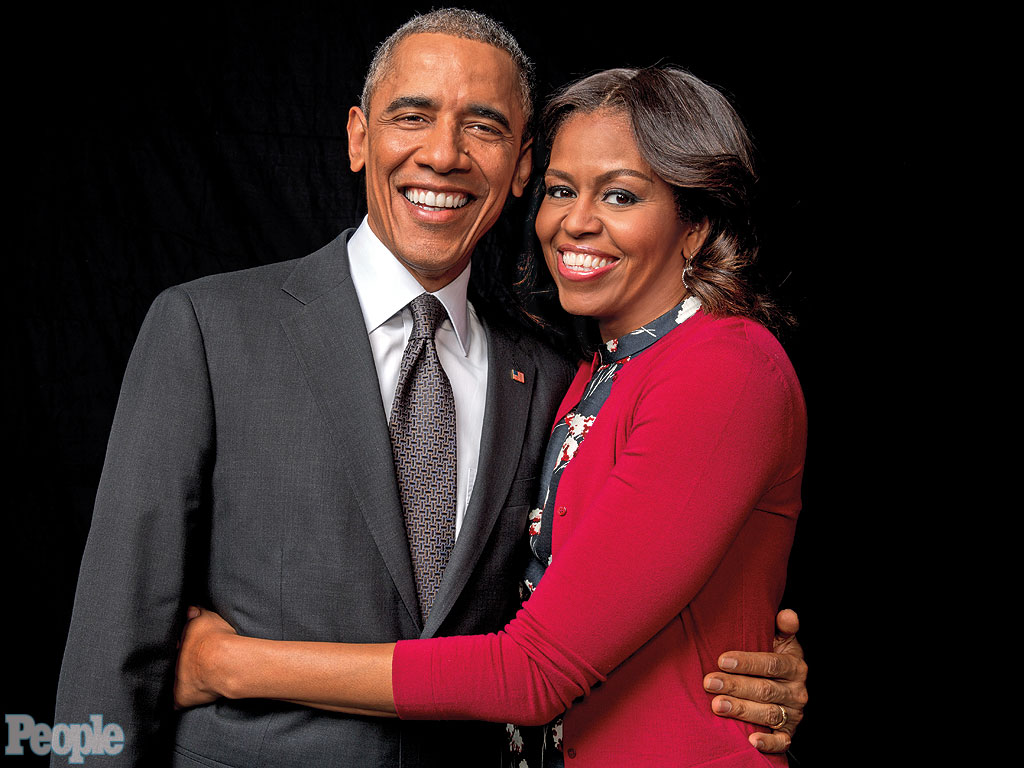
Barack and Michelle Obama
GILLIAN LAUB
BY SANDRA SOBIERAJ WESTFALL
@sswestfall
12/17/2014 AT 06:30 AM EST
The Obamas open up about raising their daughters, the impact of stereotypes, and what's on the POTUS dance party playlist. Subscribe now for instant access to the exclusive PEOPLE interview!
The protective bubble that comes with the presidency – the armored limo, the Secret Service detail, the White House – shields Barack and Michelle Obamafrom a lot of unpleasantness. But their encounters with racial prejudice aren't as far in the past as one might expect. And they obviously still sting.
"I think people forget that we've lived in the White House for six years," the first lady told PEOPLE, laughing wryly, along with her husband, at the assumption that the first family has been largely insulated from coming face-to-face with racism.
"Before that, Barack Obama was a black man that lived on the South Side of Chicago, who had his share of troubles catching cabs," Mrs. Obama said in the Dec. 10 interview appearing in the new issue of PEOPLE.
"I tell this story – I mean, even as the first lady – during that wonderfully publicized trip I took to Target, not highly disguised, the only person who came up to me in the store was a woman who asked me to help her take something off a shelf. Because she didn't see me as the first lady, she saw me as someone who could help her. Those kinds of things happen in life. So it isn't anything new."
In a 30-minute conversation, the president and Mrs. Obama candidly added their stories to the national discussion of race and racial profiling that was sparked by the deaths of Michael Brown in Ferguson, Missouri, and Eric Garner in Staten Island, New York.
"There's no black male my age, who's a professional, who hasn't come out of a restaurant and is waiting for their car and somebody didn't hand them their car keys," said the president, adding that, yes, it had happened to him.
Mrs. Obama recalled another incident: "He was wearing a tuxedo at a black-tie dinner, and somebody asked him to get coffee."
Things have gotten better, both Obamas agreed, but there's still more progress to be made.
"The small irritations or indignities that we experience are nothing compared to what a previous generation experienced," President Obama said. "It's one thing for me to be mistaken for a waiter at a gala. It's another thing for my son to be mistaken for a robber and to be handcuffed, or worse, if he happens to be walking down the street and is dressed the way teenagers dress."
For more from our exclusive interview with the President and First Lady, pick up the new issue of PEOPLE, on newsstands Friday


 , I can't help but respect Obama immensely as a person.


