III. Looking Back
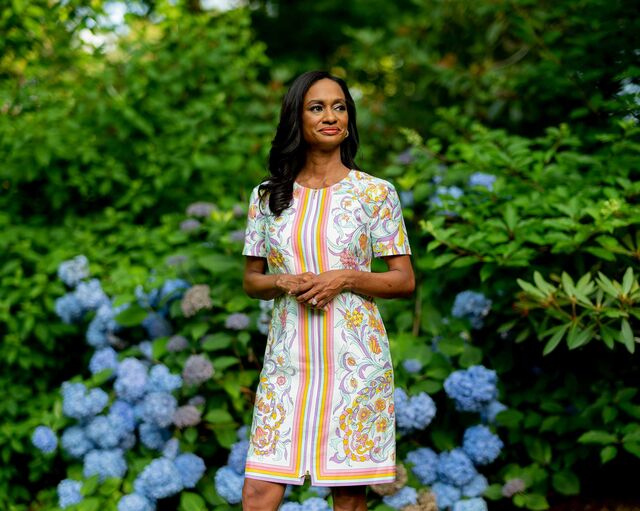
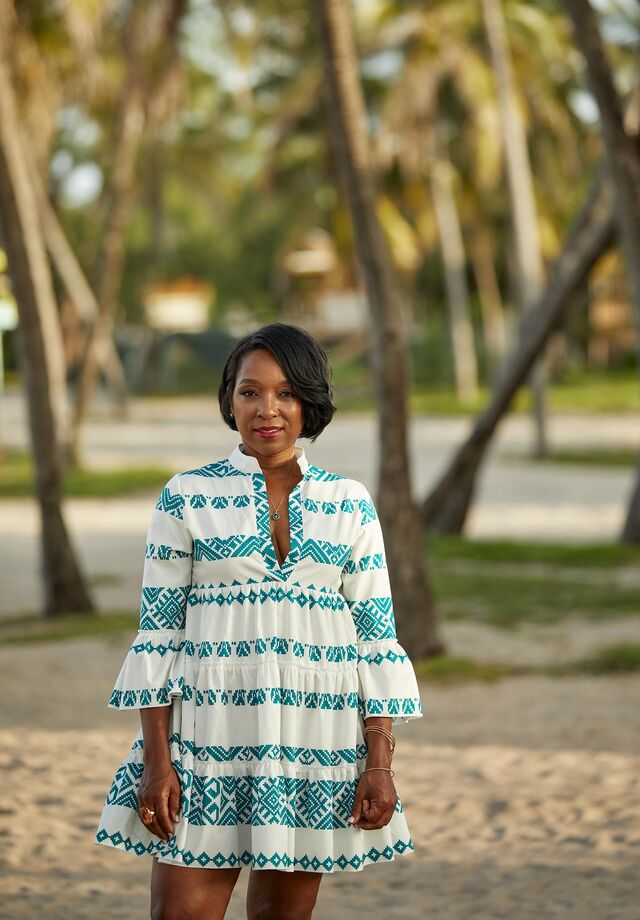
Racquel Oden: I call this moment hopeful. And I am superhopeful. I believe, truly believe, that this is a moment that feels so different this time, and that it can be different. I’m committed to making it real, personally. And I think that’s what we all have to say, right? We’ve got to hope and believe, and then we have to be committed to making it real.
I would probably push a little further on mentors and sponsors. A mentor is that person that you can bounce an idea [off of], get some advocacy from. But what’s really critical is sponsorship—that senior executive that’s going to be your advocate whether you are in the room or not and who is looking at you as the next talent.
If you can’t find yourself in your organization, that’s why outside networks are extremely important. Certainly [that’s the case] in my own personal cabinet of senior executives that look like me, other Black females and Black males. You’ve got to be able to speak to others who understand the things that you’re going through that are specific to what they’re experiencing as well. You can’t look in one place for it. I think you have to have that circle of trust.
If we think about where we were as Blacks on Wall Street, that number hasn’t improved. If you think about where we are as Black females on Wall Street, that number certainly hasn’t improved. So statistically it hasn’t changed.
But is the conversation different, and do we feel this could be a turning point where we can finally change the statistics? I think that’s what’s different. And I think that’s what’s going to be really critical as we think about this moment. How do we make this moment more than a moment, where we actually have what I call sustainable change and real impact, so we’re not repeating statistics again?
I would tell my younger self, “You’re going to find it harder, you’re going to work harder, you’re going to experience more obstacles, but your persistence and drive and faith are going to allow you to have a journey that will make it better for your daughter and girls that are coming behind you.” And I’d end it with, “I see you. I see you.”
—Kelsey Butler
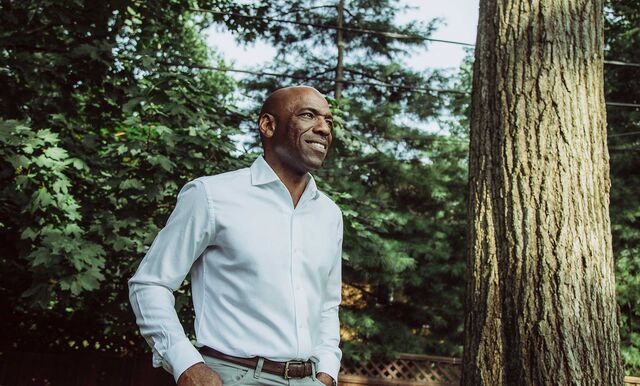
Tessie Petion: Wall Street is not doing a good enough job thinking about why people fall out. We expect juniors to fall out, but midcareer? That’s the vulnerability for many people. Why are people falling out midcareer? I think that 100% can be improved. If you’re midcareer, it either means you were a junior and kept at it, or it means you came in post-business school. But either way, that’s the point in your career where you’re likely to stay somewhere for maybe five, six years.
Post-financial crisis, if you are a junior and you have offers from an investment bank and a tech company, I think at this point you’re more likely to pick the tech company. Amazon is 26 years old, and nothing we do is “because we did this 20 years ago.”
The whole point of diversity—the proof case of diversity—is that you have people that come to the table with different experiences. I think about systemic inequality, because maybe it’s something I might have experienced. So I push you to think about it differently. It’s hard, though. I didn’t sense the pushback was because I was a Black woman. I think the pushback is because Wall Street doesn’t historically think deeply.
That’s what ESG tries to change. But 20 years ago, if I tried to have that [ESG] conversation at an investment bank, they would have laughed me out of the room. I don’t think it’s different because of who I am. I think it is because status quo works, right?
Obviously, I got hired at a very senior level at Amazon. Now I am [a mentor]. And to be fair, I was that person for several people at HSBC. I can say that I think that there were lots of juniors who saw me there and thought, OK, maybe I can do this, right? Yes. And so I did think about that a lot when I left. I’m the person, and I’m leaving. What does that mean? How did they interpret that?
The VP of customer fulfillment—obviously that’s a big deal for Amazon—is a Black woman. I looked at the person who does transportation, and that’s a Black man. Anyone who is a VP at Amazon is someone who could be a CEO of a smaller company. I looked and said, Can I see myself on that trajectory? I think I can. But I was really conscious of the fact that by leaving the bank, I was one less person that modeled, “This is how you can do Wall Street at HSBC.”
I was lucky to only sort of bookend my career [in finance]. I was a junior, and then I came back in supersenior. And so that’s really specific to my career. For sure there have been people that have been allies that have been really helpful.
At the bank, there have been people that have said, “I’m looking out for you and making sure that you have all of the [opportunities] possible.” One hundred percent that happened to me at HSBC. It’s what put me into the room. I guess my expertise did it. But also you had people that said, “Hey, I want to make sure you find this person.” You always need that first opportunity in order to get the rest of them.
—Gillian Tan
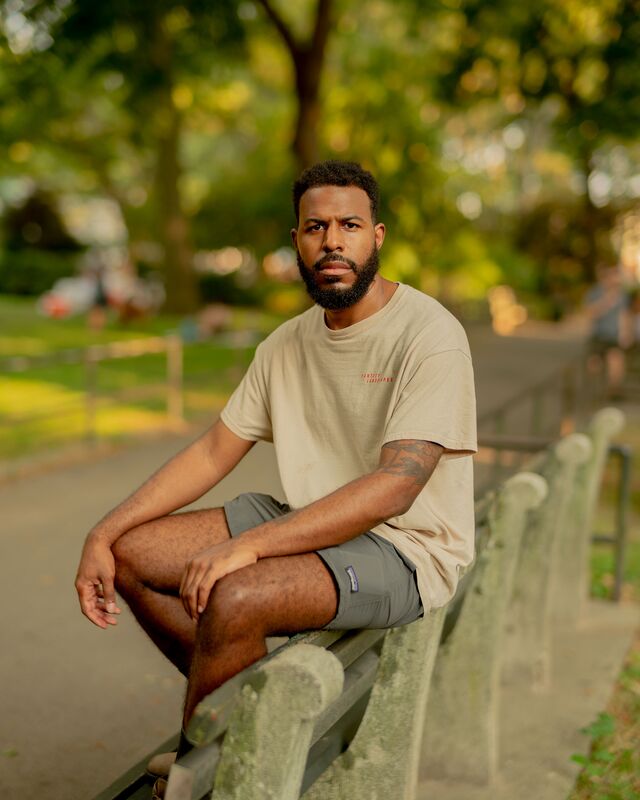
Jared Johnson: The summer at the bank would look different than the winter at the bank, because there were a lot more young Black people [interning]. [But they] didn’t get offers.
I did internalize a lot of those messages to be a nonthreatening Black person to White people. As traditional as they come: That’s the idea. Wear a suit. Present yourself this way, so people don’t feel a sense that this is uncomfortable. You don’t want to look like you’re overindulging.
It was all of these rules. The way I would describe it is “respectability strategy.” It’s this idea of, if you can show up and show proof that you’re more professional, more buttoned-up, more polished, than your peers, then you’ll overcome whatever challenges are thrown your way. Because you don’t fit the stereotypes of what people think about Black people. —Max Abelson
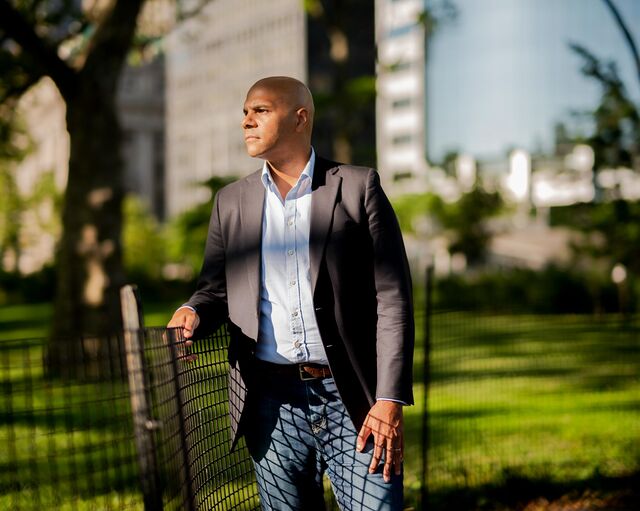
Anré Williams: People still say in the workplace, “Don’t talk about race, don’t talk about religion, don’t talk about politics.” And people try to do that. But I think what’s happened now in [the aftermath of George Floyd’s death] is that we’ve gotten to a point where people know they can’t remain silent.
Remaining silent in a way is almost an implicit acknowledgment that you’re OK with the way things are and you’re just going to ignore it. And people aren’t comfortable ignoring it anymore or allowing it to be ignored. And that’s what’s different right now, I think.
You want people to feel comfortable being who they are at work and being comfortable doing that. I think as the years have gone by, more and more people are encouraged to do that. Whether it’s someone’s sexual preference or orientation, whether it’s gender, whether it’s religion—I mean, people are encouraged to be a little bit more open and forthright about who they are and what their needs or expectations are. And I think that’s a good thing, because that’s a big part of their life. It’s who they are, and that shouldn’t take away from the talent and what they can produce.
Over the years, I was involved in campus recruiting and making sure that—if I wanted the company to have diversity—I should be one of the people to go on campus. With what happened [this year], it just struck a chord with me that things were really, really bad. And I just didn’t feel that I could remain silent. I wanted to be able to say something to all of our Black employees [1,400 or so] in our network in the United States. And I wanted them to hear from me directly.
A few people reached out to me and said they were going through a lot, and they thought it was really difficult. And so I just wanted them to hear from me. I want to share my feelings. I want them to know that I found the recent instance to be horrific, to be inexcusable, and to be maddening.
But I also wanted to share personally that at times I feel terrified about the things that could happen to me or to my friends or to my relatives or to my son in a world which sometimes is completely unpredictable. You just don’t know how things can go sideways sometimes when they shouldn’t. The point I was trying to make to all of them [in an internal video] is that everybody is going through a lot emotionally, but they need to remain positive.
The video ended up being shared internally by other leaders with their teams. I think people were surprised that it was personally coming from me and it was a personal perspective, because usually I stay focused on the business side and this was really how I feel about this personally.
It’s not like this has never happened before, as if there’s no one that’s ever lost their life as a result of law enforcement being too forceful. It happened with Eric Garner here in New York City. It happened with Philando Castile [in Falcon Heights, Minn.]. It’s happened before. But I think the difference this time is that you’re in the middle of a global health crisis, a global pandemic where everyone in most large cities around the world was required to shelter at home.
So, parents are having to be at home with their kids in the house, sheltering, not sure what’s next. In that environment, we have a lot of emotion, a lot of anxiety, a lot of stress, a lot of uncertainty. Everyone’s watching television, watching the news, on social media and online.
And then we see these incidents that are happening, and they just get people really upset. It just reminds you that there is racial inequality. That was where I think people finally said enough is enough. And the demonstrations and the protests didn’t just happen in Minneapolis where it started. They had gone global. And when you look at the images of the people who were demonstrating, they weren’t just Black Americans, right? That was the key to me.
The key was it wasn’t just Black Americans. It was all races, all ages. And it wasn’t just U.S. It was global. And to me, that’s so different than anything we’ve ever experienced before. This time just felt very, very different.
—Jenny Surane
Chris White: It’s 2020, and you’re like, “Wait, how many Black MDs are there at this global investment bank?” And you’re shocked by the number. That’s because during ’08 or ’09—or any year you can pick that wasn’t such a good year—we definitely feel more susceptible to being let go.
I’ll tell you something I observed. One of the biggest accounts on Wall Street for fixed income as a salesperson is an annuity, because they’re just so big in the volume that they do that you always look like a big producer. Most of the people who are running sales desks or are MDs and things like that, they’re people who cover those accounts.
This young African-American guy wasn’t young—he was like 26, 27—he was the backup coverage on this account. The lead coverage got moved to a different desk. And so they hadn’t figured out who the new coverage was going to be. As the backup coverage, he’s doing all of the work.
And here’s the thing: This is what I mean about when the leadership opportunities come.
Here, through natural circumstance, [is] a leadership opportunity where this 27-, 28-year-old kid could be covering this account. That would make him the biggest producer on the desk. Do they let him cover the account? No. They pulled [in] some partner, like out of semiretirement, and that partner covers the account with him remaining as the backup.
Here’s how the story would have been different: They let him cover the account. He knocks the cover off the ball. He then gets fast-tracked to MD. He then becomes the head of the desk at 33 or 34, because he looks like such a frickin’ superstar.
It’s a little butterfly effect, things like that. When people ask me, how come there’s so few desk heads or MDs in this space that are Black? It’s stuff like that.
Why everyone’s interested in this topic right now is George Floyd and police brutality. That’s a perception issue, too. That’s perceiving someone as a threat or being violent or as a criminal just on sight.
On Wall Street, it’s being perceived as not being competent or being too aggressive or not being worthy of leadership based on sight, not on any of the other evidence around you. As a Black professional on Wall Street, you have to figure out how to deal with that.
Here’s the last thing: So I’m very happy with my career. I’m not angry about any of this. Are there times where it makes me slightly frustrated hearing some of the bulls---? Yes, of course. But this is not isolated within Wall Street.
So now I’m a tech entrepreneur. Look at my résumé. I worked for one of the most successful fixed-income startups in the history of fixed-income startups. I worked at some of the most prestigious dealers. I have patents in my name for platforms that I’ve built as the lead inventor.
The problems with perception definitely impact my ability to raise money. No question about it. You have to ask yourself a question, and this is a real question: If Mark Zuckerberg was Jamal Zuckerberg, would Facebook exist?
It goes back to that benefit of the doubt. Is it possible that someone could have seen a Black kid who didn’t graduate from Harvard in a hoodie and sneakers and jeans and looked at him and said, “I believe that he’s really onto something here”?
—Matthew Leising
The Only One in the Room: What It's Like Being Black on Wall Street