The Slave Who Helped Create Jack Daniels Whisky: When Jack Daniel’s Failed to Honor a Slave

Dr. Acula

Posts on Dapcity.com
Supporter
Joined
Jul 26, 2012
Messages
27,067
Reputation
9,422
Daps
144,860
When Jack Daniel’s Failed to Honor a Slave, an Author Rewrote History
By CLAY RISEN
August 15, 2017
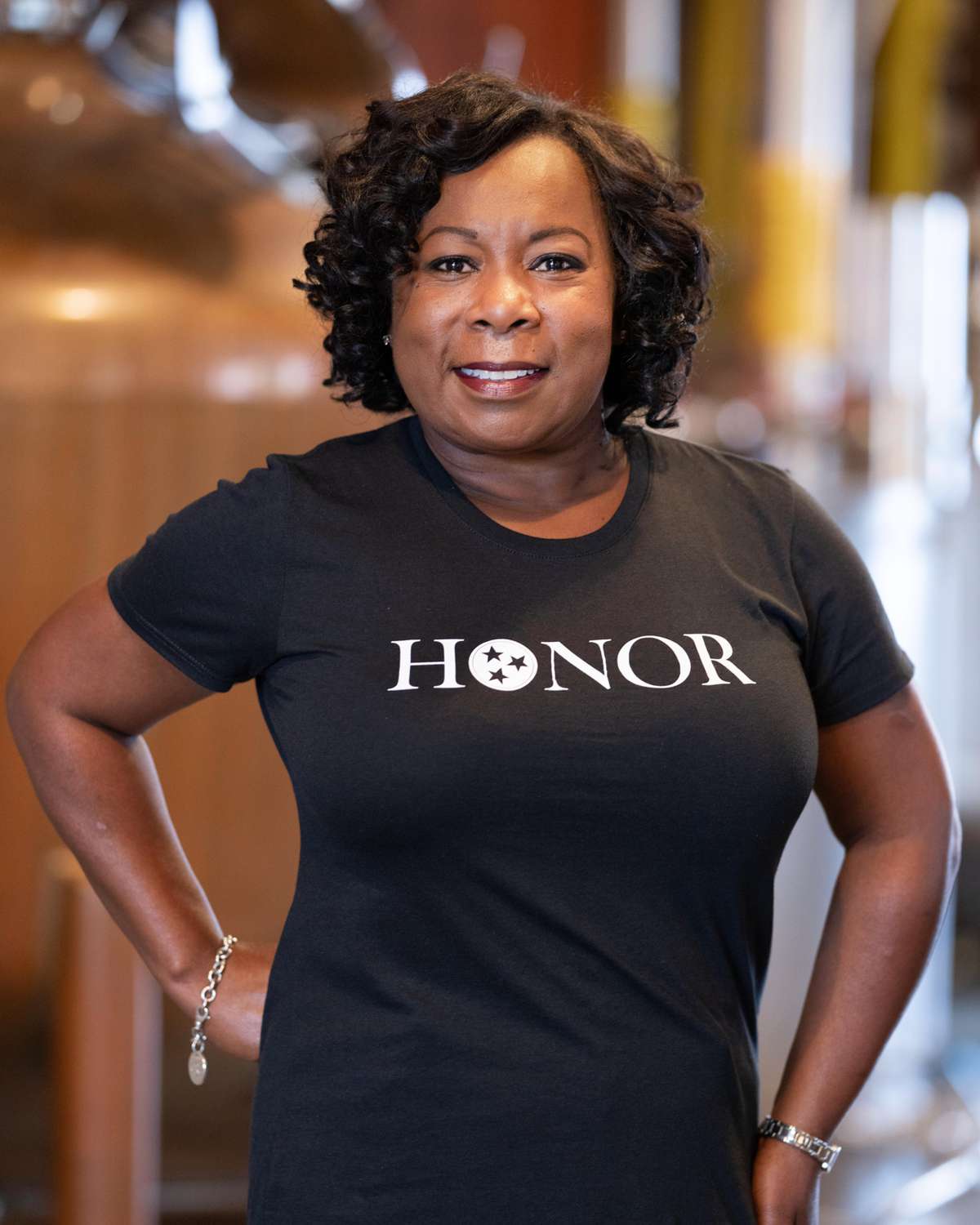
Fawn Weaver on a farm in Lynchburg, Tenn., where Nearest Green and Jack Daniel first began distilling whiskey together. Nathan Morgan for The New York Times

LYNCHBURG, Tenn. — Fawn Weaver was on vacation in Singapore last summer when she first read about Nearest Green, the Tennessee slave who taught Jack Daniel how to make whiskey.

Green’s existence had long been an open secret, but in 2016 Brown-Forman, the company that owns the Jack Daniel Distillery here, made international headlines with its decision to finally embrace Green’s legacy and significantly change its tours to emphasize his role.

“It was jarring that arguably one of the most well-known brands in the world was created, in part, by a slave,” said Ms. Weaver, 40, an African-American real estate investor and author.

Determined to see the changes herself, she was soon on a plane from her home in Los Angeles to Nashville. But when she got to Lynchburg, she found no trace of Green. “I went on three tours of the distillery, and nothing, not a mention of him,” she said.

Rather than leave, Ms. Weaver dug in, determined to uncover more about Green and persuade Brown-Forman to follow through on its promise to recognize his role in creating America’s most famous whiskey. She rented a house in downtown Lynchburg, and began contacting Green’s descendants, dozens of whom still live in the area.

Scouring archives in Tennessee, Georgia and Washington, D.C., she created a timeline of Green’s relationship with Daniel, showing how Green had not only taught the whiskey baron how to distill, but had also gone to work for him after the Civil War, becoming what Ms. Weaver believes is the first black master distiller in America. By her count, she has collected 10,000 documents and artifacts related to Daniel and Green, much of which she has agreed to donate to the new National Museum of African American History and Culture in Washington.

Mementos from the photo album of Annabelle Mammie Green, a granddaughter of Nearest Green. Nathan Morgan for The New York Times
“It’s absolutely critical that the story of Nearest gets added to the Jack Daniel story,” Mark I. McCallum, the president of Jack Daniel’s Brands at Brown-Forman, said in an interview.

The company’s decision to recognize its debt to a slave, first reported last year by The New York Times, is a momentous turn in the history of Southern foodways. Even as black innovators in Southern cooking and agriculture are beginning to get their due, the tale of American whiskey is still told as a whites-only affair, about Scots-Irish settlers who brought Old World distilling knowledge to the frontier states of Tennessee and Kentucky.

Nathan Morgan for The New York Times
The company had intended to recognize Green’s role as master distiller last year as part of its 150th anniversary celebration, Mr. McCallum said, but decided to put off any changes amid the racially charged run-up to the 2016 election. “I thought we would be accused of making a big deal about it for commercial gain,” he said.

It didn’t help that many people misunderstood the history, assuming that Daniel had owned Green and stolen his recipe. In fact, Daniel never owned slaves and spoke openly about Green’s role as his mentor.

Frank Wilson, the Motown Records songwriter who co-wrote “Love Child”and “Castles in the Sand” before becoming a minister in Los Angeles, Ms. Weaver began her career as a restaurant and real estate entrepreneur. She wrote the 2014 best seller “Happy Wives Club: One Woman’s Worldwide Search for the Secrets of a Great Marriage.”

As she tells it, she was looking for a new project when she picked up that newspaper in Singapore.

“My wife often thinks and acts as a single activity,” said her husband, Keith Weaver, an executive vice president at Sony Pictures. “As her husband, I knew, ‘Here we go again.’”

In a photo in Jack Daniel’s old office, Jack Daniel, with mustache and white hat, is shown at his distillery in Tennessee in the late 1800s. The man to his right could be Nearest Green, a slave who helped teach Jack Daniel how to make whiskey, or one of Green’s sons.
What was meant to be a quick trip to Lynchburg turned into a monthslong residency, as Ms. Weaver discovered an unwritten history, hidden in forgotten archives, vacant land and the collective memory of the town’s black residents.

Through dozens of conversations, local people, many of whom worked or still work for Jack Daniel’s, told her about learning Green’s story from their parents and grandparents, holding it as fact even as the company kept silent.

“It’s something my grandmother always told us,” said Debbie Ann Eady-Staples, a descendant of Green who lives in Lynchburg and has worked for the distillery for nearly 40 years. “We knew it in our family, even if it didn’t come from the company.”

Debbie Ann Eady-Staples, a great-great-granddaughter of Nearest Green, works on the bottling crew at the Jack Daniel’s distillery. Nathan Morgan for The New York Times
Mr. McCallum says he left reinvigorated, and within a few weeks he had plans in place to put Green at the center of the Jack Daniel’s story line. In a May meeting with 100 distillery employees, including several of Green’s descendants, he outlined how the company would incorporate Green into the official history, and that month the company began training its two dozen tour guides.

At one point Jack Daniel’s proposed adding a Nearest Green bottle to its “Master Distiller” series, a limited-edition run of bottles that celebrate its former master distillers, but dropped the idea over concerns from inside and outside the company about appearing to cash in on Green’s name.

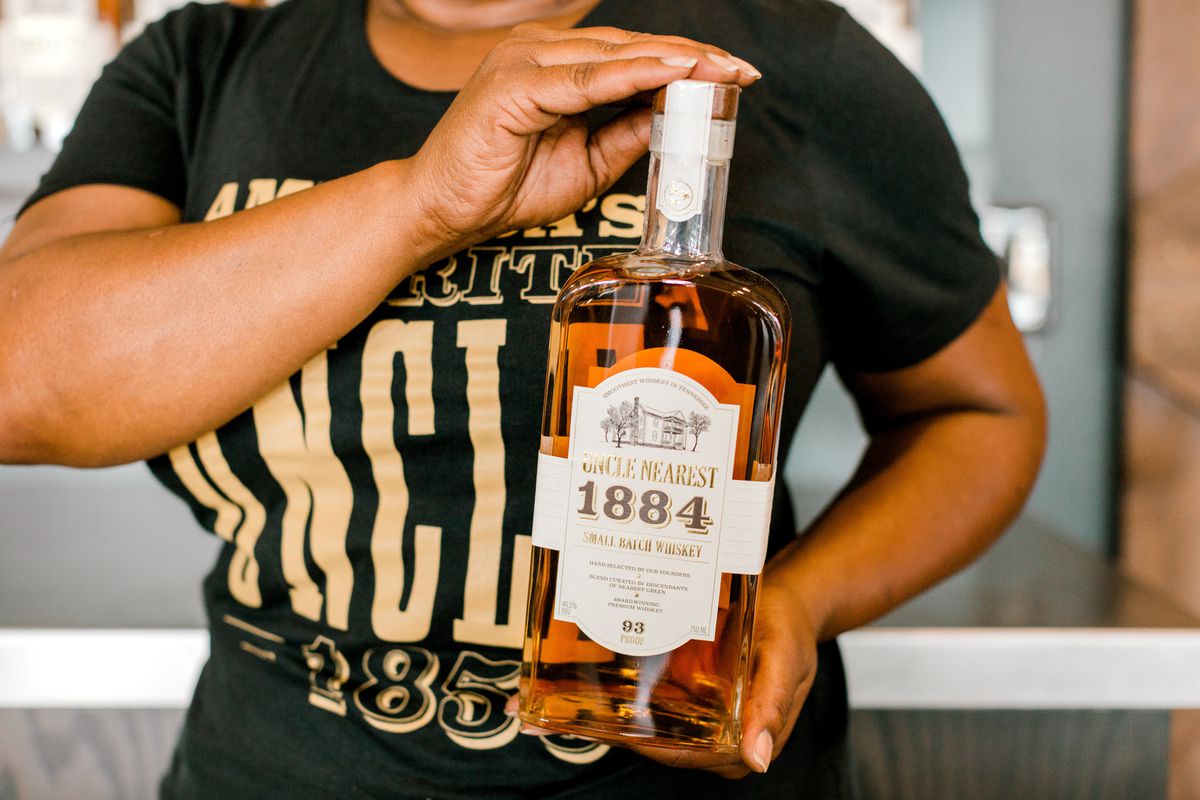
Instead, Ms. Weaver has released her own whiskey, Uncle Nearest 1856, which she bought in bulk from another distillery. She is planning to produce a second, unaged spirit, made according to her specifications, which she says will mimic the style of whiskey that Green and Daniel probably made.

Jack Daniel’s seems unfazed, for now, by the use of Green’s name on someone else’s liquor. “We applaud Ms. Weaver for her efforts to achieve a similar goal with the launch of this new product,” a Brown-Forman spokesman said.

Ms. Eady-Staples, who met privately with Mr. McCallum before the big meeting, said she was proud that her employer was finally doing the right thing. “I don’t blame Brown-Forman for not acting earlier, because they didn’t know,” she said. “Once they did, they jumped on it.”

An original jug stencil from about 1879. Nathan Morgan for The New York Times
And although there is no known photograph of Green, the company placed a photo of Daniel seated next to an unidentified black man — he may be Green or one of his sons who also worked for the distillery — on its wall of master distillers, a sort of corporate hall of fame.

“We want to get across that Nearest Green was a mentor to Jack,” said Steve May, who runs the distillery’s visitors center and tours. “We have five different tour scripts, and each one incorporates Nearest. I worked some long days to get those ready.”

Mr. May said that so far, visitor response to the new tours spotlighting Green’s contribution has been positive. It’s not hard to see why: At a rough time for race relations in America, the relationship between Daniel and Green allows Brown-Forman to tell a positive story, while also pioneering an overdue conversation about the unacknowledged role that black people, as slaves and later as free men, played in the evolution of American whiskey.

For her part, Ms. Weaver isn’t finished with her search for Green — and may never be.

“I’ve lost track of him after 1884,” the year when Jack Daniel moved his distillery to its current location, and Green disappeared from the fledgling company’s records, she said. She is still hoping to find Green’s gravesite, and has recently been traveling to St. Louis to meet with a branch of the family there.

“I could be doing this the rest of my life,” she said.

Follow NYT Food on Facebook, Instagram, Twitter and Pinterest. Get regular updates from NYT Cooking, with recipe suggestions, cooking tips and shopping advice.

Jack Daniel’s Embraces a Hidden Ingredient: Help From a Slave
June 25, 2016
 

Dr. Acula

Posts on Dapcity.com
Supporter
Joined
Jul 26, 2012
Messages
27,067
Reputation
9,422
Daps
144,860
regardless of acknowledgement, 1800's america robbed this man of an opportunity to start his own business and cement his legacy.
A story repeated a million times over.

These type of stories hit home with me more recently after finishing Malcolm Gladwell's Outliers book. Our society takes for granted how access, circumstances,and opportunity plays a role in success.

This man, due to his circumstance had the misfortune to be born during a time and in a place where he is systematically kept in subservience to a racist white majority. This cascades down to loss of opportunity for his children where maybe he could have provided them an inherentence and property that would lead to generational wealth and therefore generational access for those descendants to provide better for themselves.

This is just one man.
 

Pressure

#PanthersPosse
Supporter
Joined
Nov 19, 2016
Messages
48,827
Reputation
7,410
Daps
154,275
Reppin
CookoutGang
That's why I drink Jameson. :demonic:

full
 

re'up

Veteran
Joined
May 26, 2012
Messages
21,452
Reputation
6,683
Daps
67,545
Reppin
San Diego
Saw in the Times this morning, haven't read yet. I like what you said about Outliers, and taking for granted circumstances and opportunity, it's very American, and probbaly human nature, where many people just ascribe it all to sheer will power and "bootstraps", as if it's possible to duplicate the time, location and circumstances of the men and women whom are deemed "successful" and loom larger than life, at times across all of our screens and lives.
 

Pressure

#PanthersPosse
Supporter
Joined
Nov 19, 2016
Messages
48,827
Reputation
7,410
Daps
154,275
Reppin
CookoutGang
These stories are pretty wild and there are so many. But don't fool yourselves even with rights we're still letting people finesse and strong arm us out of what's rightfully ours.
 

David_TheMan

Banned
Joined
Dec 2, 2015
Messages
40,574
Reputation
-3,363
Daps
89,599
This is posted once a year it seems.
Its theft, but what are you going to do about it.
 

hashmander

Hale End
Supporter
Joined
Jan 17, 2013
Messages
21,290
Reputation
5,668
Daps
91,487
Reppin
The Arsenal

MalikX

Superstar
Joined
Dec 24, 2015
Messages
7,554
Reputation
1,920
Daps
39,339
Reppin
Worldwide Entertainment
There was another slave (his name escapes me) that created a steam engine that was large enough to power a warship. He couldn't file the patent in his own name because he was a slave. Instead, he sold it to a white man who went on to file the patent for himself, and used the money to buy his freedom.

Edit - Benjamin Bradley...that was his name

Benjamin Bradley was an African American engineer and inventor. Born a slave in Maryland, around 1830, Bradley learned literacy from his Master's children when, at the time, was against the law to teach a slave how to read or write because they would demand rights. Bradley was also good at mathematics, and showed a natural talent for making things. As a teenager, Bradley was put to work at an office where he built a working steam engine from pieces of scrap metal. Others were so impressed with Bradley's mechanical skills that he was given a job as an assistant in the science department at the United States Naval Academy in Annapolis, Maryland where he set up and helped conduct experiments. Professors at the Naval Academy were impressed with Bradley, saying he was smart, a quick learner, and did not make mistakes. Bradley was paid in full for his work, but the money he had made went to his Master, who allowed Bradley to keep five dollars a month for himself.

Bradley had not forgotten his work with steam engines. He saved the money he earned, and sold his original model engine to a student at the Academy. Bradley then used his savings to develop and build an engine large enough to run the first steam-powered warship. Because he was a slave, Bradley was not allowed to get a patent for the engine he developed. He was, however, able to sell the engine and keep the money, which he used to buy his freedom. He lived the rest of his life as a free man.

Benjamin Bradley's name appears in few books, perhaps because he was not able to get a patent for his work. Just as there was disagreement over the issue of slavery, there was also disagreement over whether a slave should be allowed to hold a patent. Some people said anyone who came up with an original idea should be allowed to patent it. It should not matter whether that person was free or a slave. Others said that, because he, a slave, was his or her master's property, anything that a slave produced, including ideas, belonged to the master. In 1857, however, a slave owner named Oscar Stewart applied for a patent on something one of his slaves had invented. Stewart argued that he owned all the results of his slave's labor, whether that work had been manual. Despite the laws, the Patent Office agreed. The patent was granted, giving Stewart credit for the invention. The slave who actually came up with the idea (a cotton-processing device) is mentioned in the patent only as "Ned." Because of the decision in the Stewart case, the patent law was changed to say that a slave could not hold a patent. When the Confederate States broke away from the United States in 1861, the Confederate government surprised many people by once again allowing slaves to hold patents. After the Civil War, however, the patent law was changed again, specifying that all people throughout the United States had the right to patent their own inventions. Benjamin Bradley's cause of death was unknown.
 

get these nets

Veteran
Joined
Jul 8, 2017
Messages
60,153
Reputation
16,777
Daps
216,885
Reppin
Above the fray.
UPDATE

The First African-American Woman Master Blender Is Here to End the White-Washing of American Whiskey

Victoria Eady Butler on launching a new career in whiskey thanks to her great-great-grandfather

July 13, 2020

image

Victoria Eady Butler


The story of how Victoria Eady Butler went from working as Analytical Manager in the Department of Justice to being the first known African-American woman Master Blender in the American spirits industry has everything to do with her great-great-grandfather. Butler is a descendant of Nathan “Nearest” Green, the man who mentored Jack Daniel in the craft of whiskey distilling. Green, who was enslaved until 1865, was a highly skilled whiskey-maker and an indispensable advisor and distiller for Jack Daniel’s now internationally recognized whiskey business.

Historical documents indicate Green’s enslavers were a firm known as Landis & Green, who “leant out” Nearest Green for a fee to local preacher Dan Call. Green continued to work for Call after emancipation, and it was through Call that Green and Daniel met. Historians believe that Green was the person who first taught Daniel the “Lincoln County” method, by which unaged whiskey is filtered through charcoal to remove impurities, a process likely derived from West African alcohol-production traditions. When Jack Daniel began his whiskey business, he employed Green as his first master distiller.

The erasure of Black innovation from the history of American foodways is nothing new. But in 2016, Jack Daniel’s parent company Brown-Forman formally acknowledged Green’s pivotal role in the formation of the brand’s signature product. The following year, author, entrepreneur, and researcher Fawn Weaver founded an independent whiskey brand in Nathan Green’s honor called Uncle Nearest. Weaver intended for each batch of the 1884 Uncle Nearest whiskey to be blended by one of Green’s descendants, and Butler was the first one to step into the role.

nearest_green.jpg

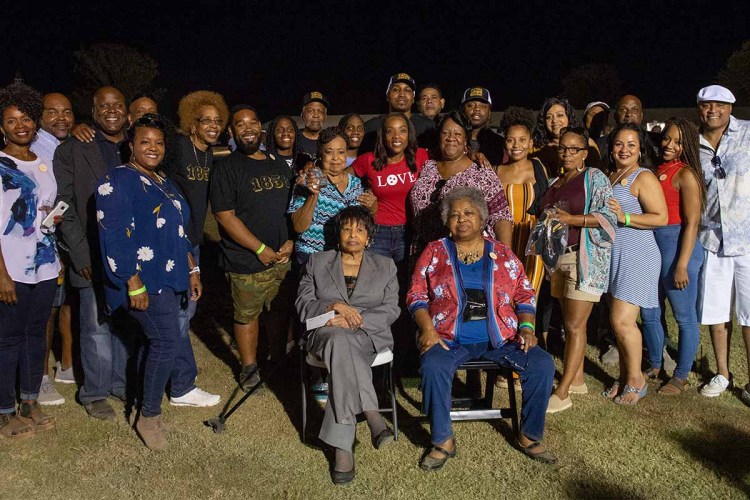
Fawn Weaver(center) with Nathan Green's desendants

Turns out that Butler has a knack for blending whiskey. The first batch she blended went on to win several awards and quickly sold out. “I don’t want to sound like I’m bragging or anything, but I did a good job,” Butler said in a phone interview. “I picked according to my palate, and it felt pretty natural for me, oddly enough.” Butler’s success led to another batch, and to a new title: master blender, the first Black woman to have held the role for a whiskey company, as far as Weaver and Butler have been able to confirm.

In the traditionally cloistered male and white world of whiskey, Uncle Nearest is a brand that is proudly Black-owned and operated, rooted in the history of long-overlooked Black innovation in the beverage space, and, by its very existence, a refutation of the old narratives that white-washed the American whiskey industry. American whiskey marketing often centers on the drink’s roots in Ireland and Scotland, or emphasizing its image as the de facto drink of masculine, dapper gentlemen, which are almost always white gentlemen. Centering the history and contributions of a Black distiller is way to question the lens that white historians and marketers have used to tell the narrative of American spirits.

image


Butler’s role isn’t just focused on blending. She is also the director of the nonprofit Nearest Green Foundation, another endeavor co-founded by Fawn Weaver established to spread Green’s story and provide scholarships for any of Green's descendants to go to whatever school they wish to attend. “We’ll pay your way all the way through a Ph.D,” Butler said. “We just had three recipients graduate this spring. Once Fawn does the research on something, the vision comes to fruition very quickly. We don’t sit on things.”

Even in the midst of the pandemic, Weaver and Butler have moved forward on other important initiatives. Uncle Nearest donated 300,000 masks to hospitals, essential workers, and communities. In June, Uncle Nearest teamed up with Jack Daniel’s to announce the Nearest & Jack Advancement Initiative, a program intended to diversify the American whiskey industry and to introduce Black distillers to mentors, apprenticeship, and other resources. A key part of the initiative is the creation of The Nearest Green School of Distilling, a certificate program at Tennessee's Motlow State College. Both Uncle Nearest and Brown-Forman have promised $5 million in funding for the initiative.

“We are continuing to break barriers and be the first at things,” Butler said. “We have the only distillery owned and run by a Black female, and the only whiskey that honors a Black man on the bottle. I’m proud of what we’re doing. I can’t imagine what the future will be, but nothing surprises me anymore about what we’re going to do. I know this for sure: Whenever we decide to do something, we do it. I have enough to keep me busy, I’d say.

===============

THE STORY OF NEAREST GREEN


StatUS

Veteran
Supporter
Joined
Apr 30, 2012
Messages
31,186
Reputation
2,110
Daps
68,823
Reppin
Everywhere
UPDATE

The First African-American Woman Master Blender Is Here to End the White-Washing of American Whiskey

Victoria Eady Butler on launching a new career in whiskey thanks to her great-great-grandfather

July 13, 2020

image

Victoria Eady Butler


The story of how Victoria Eady Butler went from working as Analytical Manager in the Department of Justice to being the first known African-American woman Master Blender in the American spirits industry has everything to do with her great-great-grandfather. Butler is a descendant of Nathan “Nearest” Green, the man who mentored Jack Daniel in the craft of whiskey distilling. Green, who was enslaved until 1865, was a highly skilled whiskey-maker and an indispensable advisor and distiller for Jack Daniel’s now internationally recognized whiskey business.

Historical documents indicate Green’s enslavers were a firm known as Landis & Green, who “leant out” Nearest Green for a fee to local preacher Dan Call. Green continued to work for Call after emancipation, and it was through Call that Green and Daniel met. Historians believe that Green was the person who first taught Daniel the “Lincoln County” method, by which unaged whiskey is filtered through charcoal to remove impurities, a process likely derived from West African alcohol-production traditions. When Jack Daniel began his whiskey business, he employed Green as his first master distiller.

The erasure of Black innovation from the history of American foodways is nothing new. But in 2016, Jack Daniel’s parent company Brown-Forman formally acknowledged Green’s pivotal role in the formation of the brand’s signature product. The following year, author, entrepreneur, and researcher Fawn Weaver founded an independent whiskey brand in Nathan Green’s honor called Uncle Nearest. Weaver intended for each batch of the 1884 Uncle Nearest whiskey to be blended by one of Green’s descendants, and Butler was the first one to step into the role.

nearest_green.jpg

Fawn Weaver(center) with Nathan Green's desendants

Turns out that Butler has a knack for blending whiskey. The first batch she blended went on to win several awards and quickly sold out. “I don’t want to sound like I’m bragging or anything, but I did a good job,” Butler said in a phone interview. “I picked according to my palate, and it felt pretty natural for me, oddly enough.” Butler’s success led to another batch, and to a new title: master blender, the first Black woman to have held the role for a whiskey company, as far as Weaver and Butler have been able to confirm.

In the traditionally cloistered male and white world of whiskey, Uncle Nearest is a brand that is proudly Black-owned and operated, rooted in the history of long-overlooked Black innovation in the beverage space, and, by its very existence, a refutation of the old narratives that white-washed the American whiskey industry. American whiskey marketing often centers on the drink’s roots in Ireland and Scotland, or emphasizing its image as the de facto drink of masculine, dapper gentlemen, which are almost always white gentlemen. Centering the history and contributions of a Black distiller is way to question the lens that white historians and marketers have used to tell the narrative of American spirits.

image


Butler’s role isn’t just focused on blending. She is also the director of the nonprofit Nearest Green Foundation, another endeavor co-founded by Fawn Weaver established to spread Green’s story and provide scholarships for any of Green's descendants to go to whatever school they wish to attend. “We’ll pay your way all the way through a Ph.D,” Butler said. “We just had three recipients graduate this spring. Once Fawn does the research on something, the vision comes to fruition very quickly. We don’t sit on things.”

Even in the midst of the pandemic, Weaver and Butler have moved forward on other important initiatives. Uncle Nearest donated 300,000 masks to hospitals, essential workers, and communities. In June, Uncle Nearest teamed up with Jack Daniel’s to announce the Nearest & Jack Advancement Initiative, a program intended to diversify the American whiskey industry and to introduce Black distillers to mentors, apprenticeship, and other resources. A key part of the initiative is the creation of The Nearest Green School of Distilling, a certificate program at Tennessee's Motlow State College. Both Uncle Nearest and Brown-Forman have promised $5 million in funding for the initiative.

“We are continuing to break barriers and be the first at things,” Butler said. “We have the only distillery owned and run by a Black female, and the only whiskey that honors a Black man on the bottle. I’m proud of what we’re doing. I can’t imagine what the future will be, but nothing surprises me anymore about what we’re going to do. I know this for sure: Whenever we decide to do something, we do it. I have enough to keep me busy, I’d say.

===============

THE STORY OF NEAREST GREEN


My pops bought me some of this months ago. It was pretty decent :ehh:
 

jj23

Veteran
Supporter
Joined
Nov 26, 2016
Messages
27,141
Reputation
6,328
Daps
120,973
That's why I appreciate the history of Mount Gay Rum in Barbados, but even then, they eventually were bought by Remy Martin.
 
Top