88m3
Fast Money & Foreign Objects
NORTH KOREA
The UN Just Approved Harsh Sanctions That Will Isolate North Korea Even More
By Samuel Oakford
March 2, 2016 | 11:25 am
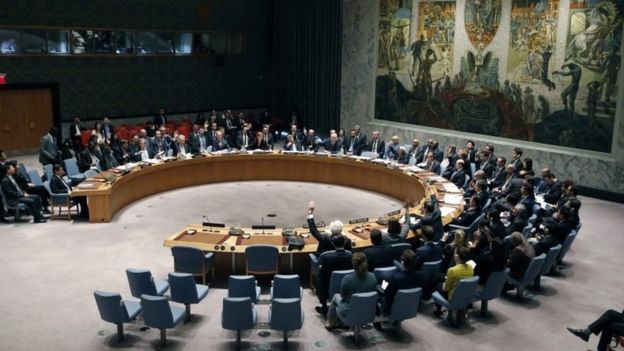
The UN Security Council unanimously approved massively stepped-up sanctions against North Korea on Wednesday, nearly two months after the country conducted its fourth nuclear test, and a month after it launched a ballistic missile in violation of previous council resolutions.
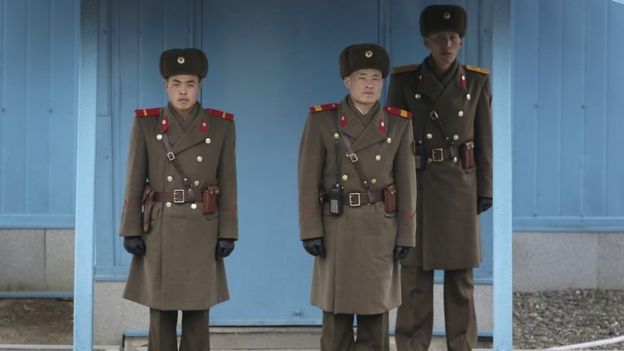
Among the 19-page resolution's elements, countries will be required to inspect all cargo entering and leaving North Korea, effectively creating a blockade of the already-isolated nation, which is officially known as the Democratic People's Republic of Korea (DPRK).
"Virtually all of the DPRK's resources are channeled into its reckless and relentless pursuit of weapons of mass destruction," US ambassador Samantha Power told the Council after the resolution's adoption.
In addition to implementing mandatory cargo inspections, the resolution bans the export of several commodities, including iron, coal, and rare earth metals, which North Korea has used to finance its nuclear program. Additionally, countries will now be explicitly prohibited from selling North Korea aircraft fuel, including the type used to fuel its rockets, as well as all small arms and conventional weapons. Luxury goods, such as watches, jet skis, and snowmobiles — items Power said "the ruling elite seems to prioritize over their own people" — will also now be banned.
Related: UN Report Details North Korea's Exploits in Africa, Including Training Cops in Martial Arts
The resolution also requires countries to expel North Korean officials that are found to have abused their diplomatic protections overseas. In total, Security Council diplomats said the new course of sanctions were the strongest the body had adopted in two decades.
In early January, North Korea conducted a fourth nuclear test, which it claimed was of a hydrogen bomb, though international experts suspect it may have actually been a less powerful type of nuclear weapon. The test set off seven weeks of intense negotiations, as diplomats from Washington and Beijing worked to hash out a final document. By this week, the resulting text was co-sponsored by more than 50 countries, from Sweden to Vanuatu. During the drafting process, North Korea further ratcheted up tensions when it tested a ballistic missile on February 7.
Previous resolutions, dating back to 1993, have failed to stymie the nuclear ambitions of North Korea, which views its arsenal as a necessity for self-preservation. In the past, China has pushed back on some of the most stringent proposals put forward by the US and other countries, but this year they appeared to give ground, agreeing to severe and punitive measures against its neighbor. Much of the responsibility for implementation will fall on China, which shares a porous border with the DPRK and remains the country's largest trading partner.
Despite their mutual condemnation of North Korea's nuclear program and its potential to destabilize the Korean peninsula, China and the US remain at loggerheads over Washington's planned deployment of sophisticated THAAD anti-missile defense systems in South Korea. On Wednesday, Beijing's ambassador to the UN Liu Jieyi said such a step would "harm the strategic interests of China."
Related: How North Korea's Rocket Launch Could End Up Screwing China in a War Against the US
Russian ambassador Vitaly Churkin similarly criticized such a move by the US, and in a thinly veiled criticism of Washington, warned that bilateral sanctions — as opposed to UN Security Council authorized measures — could worsen the already dire humanitarian sitution in North Korea.
Many countries that spoke on Wednesday attempted to answer concerns that the highly-punitive measures they had just approved could lead to greater scarcity of basic resources in the DPRK.
"The sanctions in this resolution, while most comprehensive in scope, do not target the North Korean population or intend to negatively impact on their livelihood," said South Korean ambassador Oh Joon. "On the contrary, they explicitly target the relentless pursuit of WMDs by the regime that is causing the hardship of the North Korean people. We hope this resolution will help alleviate their plight."
The UN Just Approved Harsh Sanctions That Will Isolate North Korea Even More | VICE News
The UN Just Approved Harsh Sanctions That Will Isolate North Korea Even More
By Samuel Oakford
March 2, 2016 | 11:25 am
The UN Security Council unanimously approved massively stepped-up sanctions against North Korea on Wednesday, nearly two months after the country conducted its fourth nuclear test, and a month after it launched a ballistic missile in violation of previous council resolutions.
Among the 19-page resolution's elements, countries will be required to inspect all cargo entering and leaving North Korea, effectively creating a blockade of the already-isolated nation, which is officially known as the Democratic People's Republic of Korea (DPRK).
"Virtually all of the DPRK's resources are channeled into its reckless and relentless pursuit of weapons of mass destruction," US ambassador Samantha Power told the Council after the resolution's adoption.
In addition to implementing mandatory cargo inspections, the resolution bans the export of several commodities, including iron, coal, and rare earth metals, which North Korea has used to finance its nuclear program. Additionally, countries will now be explicitly prohibited from selling North Korea aircraft fuel, including the type used to fuel its rockets, as well as all small arms and conventional weapons. Luxury goods, such as watches, jet skis, and snowmobiles — items Power said "the ruling elite seems to prioritize over their own people" — will also now be banned.
Related: UN Report Details North Korea's Exploits in Africa, Including Training Cops in Martial Arts
The resolution also requires countries to expel North Korean officials that are found to have abused their diplomatic protections overseas. In total, Security Council diplomats said the new course of sanctions were the strongest the body had adopted in two decades.
In early January, North Korea conducted a fourth nuclear test, which it claimed was of a hydrogen bomb, though international experts suspect it may have actually been a less powerful type of nuclear weapon. The test set off seven weeks of intense negotiations, as diplomats from Washington and Beijing worked to hash out a final document. By this week, the resulting text was co-sponsored by more than 50 countries, from Sweden to Vanuatu. During the drafting process, North Korea further ratcheted up tensions when it tested a ballistic missile on February 7.
Previous resolutions, dating back to 1993, have failed to stymie the nuclear ambitions of North Korea, which views its arsenal as a necessity for self-preservation. In the past, China has pushed back on some of the most stringent proposals put forward by the US and other countries, but this year they appeared to give ground, agreeing to severe and punitive measures against its neighbor. Much of the responsibility for implementation will fall on China, which shares a porous border with the DPRK and remains the country's largest trading partner.
Despite their mutual condemnation of North Korea's nuclear program and its potential to destabilize the Korean peninsula, China and the US remain at loggerheads over Washington's planned deployment of sophisticated THAAD anti-missile defense systems in South Korea. On Wednesday, Beijing's ambassador to the UN Liu Jieyi said such a step would "harm the strategic interests of China."
Related: How North Korea's Rocket Launch Could End Up Screwing China in a War Against the US
Russian ambassador Vitaly Churkin similarly criticized such a move by the US, and in a thinly veiled criticism of Washington, warned that bilateral sanctions — as opposed to UN Security Council authorized measures — could worsen the already dire humanitarian sitution in North Korea.
Many countries that spoke on Wednesday attempted to answer concerns that the highly-punitive measures they had just approved could lead to greater scarcity of basic resources in the DPRK.
"The sanctions in this resolution, while most comprehensive in scope, do not target the North Korean population or intend to negatively impact on their livelihood," said South Korean ambassador Oh Joon. "On the contrary, they explicitly target the relentless pursuit of WMDs by the regime that is causing the hardship of the North Korean people. We hope this resolution will help alleviate their plight."
The UN Just Approved Harsh Sanctions That Will Isolate North Korea Even More | VICE News