

Looks like some in the Senate are finally awakening from their coma/slumber in regards to the financial lords of the universe.
The Vultures’ Vultures: How A New Hedge-Fund Strategy Is Corrupting Washington
And it’s paying off.
Ryan Grim Washington bureau chief for The Huffington Post
05/13/2016 12:00 pm ET | Updated 4 hours ago
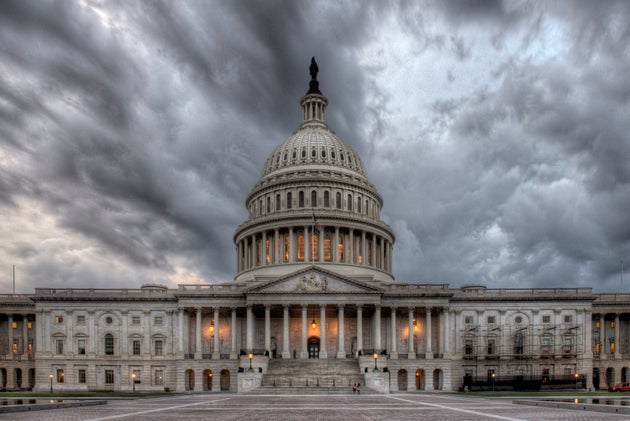
The Washington Post via Getty Images
Hedge funds are waging lobbying wars that would boost their profits by billions of dollars.
WASHINGTON - Take Robert Shapiro.
A Harvard-trained political economist, Shapiro is the head of a consulting firm called Sonecon. That business card doesn’t do it for you? He’s got a few more in his wallet:
Senior fellow at the Georgetown University School of Business.
Adviser to the International Monetary Fund.
Director of the Globalization Initiative at NDN, a progressive think tank.
Shapiro, a Democrat, has advised presidents and presidential candidates, and has held powerful government posts. It stands to reason, then, that when he has thoughts on public policy, he can find an outlet ready to publish them.
Recently, he’s had ideas on how the government can address the debt crisis in Puerto Rico and how it can end the conservatorship of Fannie Mae and Freddie Mac by moving them into the private market. Before that, he had a take on how to deal with Argentina’s debt crisis. For all three, he produced academic-looking papers, complete with footnotes and charts.
All three situations have one thing in common: If they were resolved the way Shapiro suggested, a variety of bets placed by a select group of the most politically powerful hedge funds would pay off in a huge way. In the case of Argentina, they mostly have. Fights over how to resolve the other two issues are still raging in Washington.
For this article, we called Shapiro to ask on whose behalf he has been waging these intellectual battles. His answer was surprising in its honesty: He’s working with DCI Group, a political dark arts master known to be advocating on behalf of a group of powerful hedge funds that are changing how Washington works.
Shapiro, it turns out, is but one foot soldier in the hedge fund infantry. A review of public documents, tax filings and interviews with people involved finds that in each of the three campaigns, hedge funds have enlisted the same set of lobbyists, political operatives, dark money groups and think-tank experts spanning the political spectrum.
No single document or set of disclosures ties all of these groups together. They don’t put out joint press releases, parade themselves around Washington as part of a coalition, or chat together on conference calls. Finding the players in this game, instead, is more a process of deduction. For a group of firms and experts to be working for vulture funds on the issue of Argentine debt is normal Washington practice. (Vulture’s meaning here isn’t pejorative: it refers to an investment strategy that feeds off of assets the market has left for dead.)
For the exact same people and groups to be working on the next big issue that these funds care about — the Puerto Rican debt crisis — could be a coincidence. But now, the hedge funds are focused on a third issue — government-sponsored enterprise reform, which refers to the effort to establish new housing finance policy in the wake of the federal takeover of lenders Fannie Mae and Freddie Mac. And it’s the same political firms and the same independent experts that are once again weighing in — coincidentally, all on the side of the hedge funds.
Maybe it’s all coincidence, but let’s run the traps either way.
The band that has gotten together for the big three hedge fund jam sessions includes some unlikely allies: There’s DCI Group, the powerhouse lobbying firm. Then there’s the Raben Group, operatives whose specialty is working in the progressive space and lobbying Democrats. There’s the American Continental Group, a bipartisan lobbying firm. There’s 60 Plus and the Center for Individual Freedom, two groups that call themselves part of the conservative movement, but in reality are dark money groups known to run whatever campaign they’re paid to run, and that are happy to conceal the source of the funding. All these groups have roughly nothing in common, other than that they all have united in advocacy campaigns that alternately go up against the Argentinian people, Puerto Ricans and the rest of the American public.
Each of these campaigns appears to have been run by or aided by the DCI Group. We say “appears” because DCI is one of Washington’s great black boxes — news articles that involve DCI routinely include a line informing readers that the organization did not respond to a request for comment. This article is no different.
Old Washington hands involved in these particular fights say that nothing they’ve seen before in politics has prepared them for the mercenary campaigns the hedge funds are now waging.
“There’s something about this that’s almost more disturbing, because you get an issue that’s not particularly a big public issue and people can spend and spend and spend,” said a veteran policymaker who found himself on the wrong end of the hedge funds. “And I don’t know how anybody can compete with it. And then you start losing the narrative and you see groups on the left get bought out and corrupted — really corrupted. I don’t know what to do about it.”
What is being done only exacerbates the situation. Current tax policy allows hedge fund managers to pay billions less every year than competitors who don’t get the same advantage. And tax-exempt pension funds — teachers, nurses, firefighters — invest heavily in hedge funds, hoping to make up big shortfalls with risky investments. The generous tax policy leaves hedge funds flush with cash. What money they’re not stashing off shore, they’ve been spreading freely around Washington.
They may have finally gone too far. A backlash is brewing, threatening not just their current bets, but their various tax benefits too. One senior House Republican aide who’s worked closely with the hedge funds says that members of Congress have seen enough. “I think on the Fannie stuff, they’ve hurt themselves,” he said. “We’re like, fukk em. If they’re not your friends, they’re your enemies.”
And the hedge funds may be losing a crucial progressive ally. Responding to concerns from the Hispanic advocacy community, the Raben Group dropped its work on Puerto Rico two weeks ago.
***
When big banks squared off against merchants such as Walmart in 2011 over the cost of debit card and credit card swipe fees, Washington saw a spending spree and a dirty campaign the likes of which it hasn’t seen since. But at least the arguments on both sides of the swipe fees issue made some rational sense.
“This one, I feel just disgusted by it,” said one GOP Senate aide who witnessed both.
With the hedge fund battles, a group of rich investors simply picks a side and then spends endlessly to tilt the battlefield to make sure that side wins. And in true Washington fashion, people are annoyed that the sellouts have sold low. As the same Senate GOP aide put it: “Sure, I’ll go after a few individuals, and help make Congress dysfunctional, so we can have Donald fukking Trump as our nominee, just so I can make $25,000. That’s just sad for our country.”
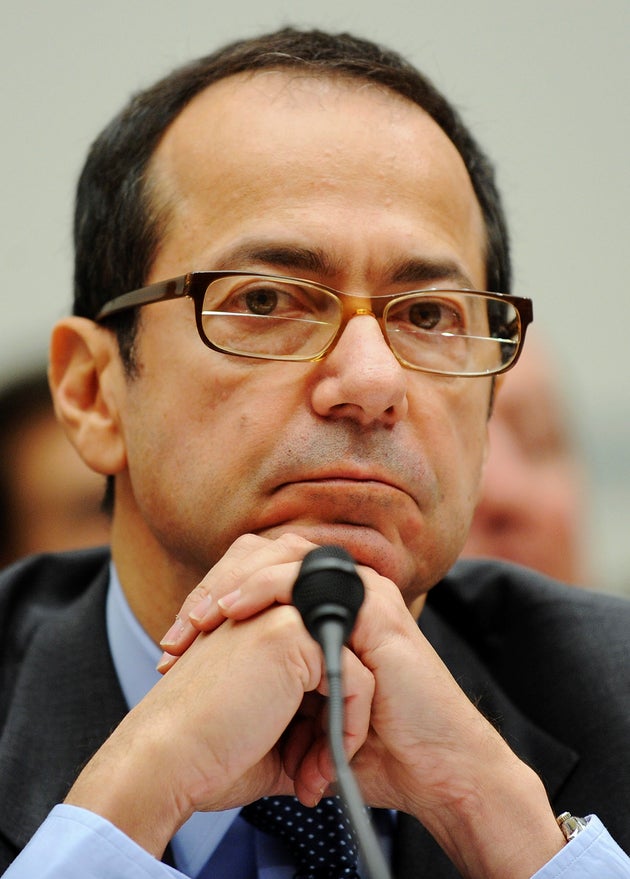
Jonathan Ernst / Reuters
John Paulson, billionaire head of Paulson & Co., stands to make massive profits if lobbying campaigns on Puerto Rican debt and Fannie Mae and Freddie Mac go his way.
Not everybody sells out that cheaply. The Wall Street Journal on Thursday ran a piece on the hedge-fund lobbying around reform of government-sponsored entities, or GSEs.
Last year, The Raben Group, a Washington lobbying firm, offered a minority trade association $25,000 contingent on the association signing its name to an editorial arguing that Fannie and Freddie should be recapitalized and returned to private hands, said Gary Acosta, chief executive of the National Association of Hispanic Real Estate Professionals.
“They said, ‘If you won’t say exactly what you need to say, we’re not going to sponsor you,’” Mr. Acosta said. He said the association declined the offer.
Raben Group founder Robert Raben said the firm frequently matches funding from corporations with nonprofits that share a position but doesn’t ask them to change their stance. He declined to disclose the source of the money offered to the association.
What makes the hedge fund pressure campaign distinctive is the ambivalence, or even nihilism, that lies behind the public policy suggestions. Hedge funds want whatever policy outcome will make their leveraged bet pay off. It makes gauging the merits of a particular policy extraordinarily difficult. The targets of the campaign are largely beside the point: It’s not personal, it’s just business. Hedge funder Bill Ackman’s very public lobbying and PR campaign against Herbalife serves as the clearest example of the influence strategy deployed by hedge funds. But in that case, Ackman was only taking on a single company, so the damage to potential bystanders was limited. The same playbook applied to entire countries, a commonwealth or the housing industry itself amplifies the threat exponentially.
This one, I feel just disgusted by it.
And it’s not ideological, either. If a big group of hedge funds decided to short the health insurance industry, it could easily be in their interests to fund a dark money campaign on behalf of single-payer health care. If they short the big banks, they’ve now become allies with Sen. Elizabeth Warren (D-Mass.).
It’s less far-fetched than it might seem. Today, billionaire hedge fund managers are working the halls of Congress with civil rights groups and affordable housing advocates. The progressive groups have long wanted any GSE reform to include big money to make housing more affordable for the working class. Now that the hedge funds are in the game, the groups suddenly have an additional demand: Make sure any final plan pays out the shareholders (i.e., the hedge funds) handsomely.
The hedge funds bought a mountain of Fannie Mae stock after the government took it over and declared it worthless. The funds are trying to revive the share price by pressuring the government to let Fannie keep its profit and ultimately re-privatize the company. The alliance is understandable: For years, the progressive groups have been outmatched and out-funded, and along come some billionaires willing to back their effort. All these new advocates want is for their property rights to be protected. Why not?
“We knew we were getting in bed with people who wanted to see [Fannie Mae] pay them off,” Potomac Coalition founder Larry Parks told The Wall Street Journal for Thursday’s article. “It wasn’t anything we were so ideologically against.”
The Vultures’ Vultures: How A New Hedge-Fund Strategy Is Corrupting Washington
And it’s paying off.
Ryan Grim Washington bureau chief for The Huffington Post
05/13/2016 12:00 pm ET | Updated 4 hours ago
The Washington Post via Getty Images
Hedge funds are waging lobbying wars that would boost their profits by billions of dollars.
WASHINGTON - Take Robert Shapiro.
A Harvard-trained political economist, Shapiro is the head of a consulting firm called Sonecon. That business card doesn’t do it for you? He’s got a few more in his wallet:
Senior fellow at the Georgetown University School of Business.
Adviser to the International Monetary Fund.
Director of the Globalization Initiative at NDN, a progressive think tank.
Shapiro, a Democrat, has advised presidents and presidential candidates, and has held powerful government posts. It stands to reason, then, that when he has thoughts on public policy, he can find an outlet ready to publish them.
Recently, he’s had ideas on how the government can address the debt crisis in Puerto Rico and how it can end the conservatorship of Fannie Mae and Freddie Mac by moving them into the private market. Before that, he had a take on how to deal with Argentina’s debt crisis. For all three, he produced academic-looking papers, complete with footnotes and charts.
All three situations have one thing in common: If they were resolved the way Shapiro suggested, a variety of bets placed by a select group of the most politically powerful hedge funds would pay off in a huge way. In the case of Argentina, they mostly have. Fights over how to resolve the other two issues are still raging in Washington.
For this article, we called Shapiro to ask on whose behalf he has been waging these intellectual battles. His answer was surprising in its honesty: He’s working with DCI Group, a political dark arts master known to be advocating on behalf of a group of powerful hedge funds that are changing how Washington works.
Shapiro, it turns out, is but one foot soldier in the hedge fund infantry. A review of public documents, tax filings and interviews with people involved finds that in each of the three campaigns, hedge funds have enlisted the same set of lobbyists, political operatives, dark money groups and think-tank experts spanning the political spectrum.
No single document or set of disclosures ties all of these groups together. They don’t put out joint press releases, parade themselves around Washington as part of a coalition, or chat together on conference calls. Finding the players in this game, instead, is more a process of deduction. For a group of firms and experts to be working for vulture funds on the issue of Argentine debt is normal Washington practice. (Vulture’s meaning here isn’t pejorative: it refers to an investment strategy that feeds off of assets the market has left for dead.)
For the exact same people and groups to be working on the next big issue that these funds care about — the Puerto Rican debt crisis — could be a coincidence. But now, the hedge funds are focused on a third issue — government-sponsored enterprise reform, which refers to the effort to establish new housing finance policy in the wake of the federal takeover of lenders Fannie Mae and Freddie Mac. And it’s the same political firms and the same independent experts that are once again weighing in — coincidentally, all on the side of the hedge funds.
Maybe it’s all coincidence, but let’s run the traps either way.
The band that has gotten together for the big three hedge fund jam sessions includes some unlikely allies: There’s DCI Group, the powerhouse lobbying firm. Then there’s the Raben Group, operatives whose specialty is working in the progressive space and lobbying Democrats. There’s the American Continental Group, a bipartisan lobbying firm. There’s 60 Plus and the Center for Individual Freedom, two groups that call themselves part of the conservative movement, but in reality are dark money groups known to run whatever campaign they’re paid to run, and that are happy to conceal the source of the funding. All these groups have roughly nothing in common, other than that they all have united in advocacy campaigns that alternately go up against the Argentinian people, Puerto Ricans and the rest of the American public.
Each of these campaigns appears to have been run by or aided by the DCI Group. We say “appears” because DCI is one of Washington’s great black boxes — news articles that involve DCI routinely include a line informing readers that the organization did not respond to a request for comment. This article is no different.
Old Washington hands involved in these particular fights say that nothing they’ve seen before in politics has prepared them for the mercenary campaigns the hedge funds are now waging.
“There’s something about this that’s almost more disturbing, because you get an issue that’s not particularly a big public issue and people can spend and spend and spend,” said a veteran policymaker who found himself on the wrong end of the hedge funds. “And I don’t know how anybody can compete with it. And then you start losing the narrative and you see groups on the left get bought out and corrupted — really corrupted. I don’t know what to do about it.”
What is being done only exacerbates the situation. Current tax policy allows hedge fund managers to pay billions less every year than competitors who don’t get the same advantage. And tax-exempt pension funds — teachers, nurses, firefighters — invest heavily in hedge funds, hoping to make up big shortfalls with risky investments. The generous tax policy leaves hedge funds flush with cash. What money they’re not stashing off shore, they’ve been spreading freely around Washington.
They may have finally gone too far. A backlash is brewing, threatening not just their current bets, but their various tax benefits too. One senior House Republican aide who’s worked closely with the hedge funds says that members of Congress have seen enough. “I think on the Fannie stuff, they’ve hurt themselves,” he said. “We’re like, fukk em. If they’re not your friends, they’re your enemies.”
And the hedge funds may be losing a crucial progressive ally. Responding to concerns from the Hispanic advocacy community, the Raben Group dropped its work on Puerto Rico two weeks ago.
***
When big banks squared off against merchants such as Walmart in 2011 over the cost of debit card and credit card swipe fees, Washington saw a spending spree and a dirty campaign the likes of which it hasn’t seen since. But at least the arguments on both sides of the swipe fees issue made some rational sense.
“This one, I feel just disgusted by it,” said one GOP Senate aide who witnessed both.
With the hedge fund battles, a group of rich investors simply picks a side and then spends endlessly to tilt the battlefield to make sure that side wins. And in true Washington fashion, people are annoyed that the sellouts have sold low. As the same Senate GOP aide put it: “Sure, I’ll go after a few individuals, and help make Congress dysfunctional, so we can have Donald fukking Trump as our nominee, just so I can make $25,000. That’s just sad for our country.”
Jonathan Ernst / Reuters
John Paulson, billionaire head of Paulson & Co., stands to make massive profits if lobbying campaigns on Puerto Rican debt and Fannie Mae and Freddie Mac go his way.
Not everybody sells out that cheaply. The Wall Street Journal on Thursday ran a piece on the hedge-fund lobbying around reform of government-sponsored entities, or GSEs.
Last year, The Raben Group, a Washington lobbying firm, offered a minority trade association $25,000 contingent on the association signing its name to an editorial arguing that Fannie and Freddie should be recapitalized and returned to private hands, said Gary Acosta, chief executive of the National Association of Hispanic Real Estate Professionals.
“They said, ‘If you won’t say exactly what you need to say, we’re not going to sponsor you,’” Mr. Acosta said. He said the association declined the offer.
Raben Group founder Robert Raben said the firm frequently matches funding from corporations with nonprofits that share a position but doesn’t ask them to change their stance. He declined to disclose the source of the money offered to the association.
What makes the hedge fund pressure campaign distinctive is the ambivalence, or even nihilism, that lies behind the public policy suggestions. Hedge funds want whatever policy outcome will make their leveraged bet pay off. It makes gauging the merits of a particular policy extraordinarily difficult. The targets of the campaign are largely beside the point: It’s not personal, it’s just business. Hedge funder Bill Ackman’s very public lobbying and PR campaign against Herbalife serves as the clearest example of the influence strategy deployed by hedge funds. But in that case, Ackman was only taking on a single company, so the damage to potential bystanders was limited. The same playbook applied to entire countries, a commonwealth or the housing industry itself amplifies the threat exponentially.
This one, I feel just disgusted by it.
And it’s not ideological, either. If a big group of hedge funds decided to short the health insurance industry, it could easily be in their interests to fund a dark money campaign on behalf of single-payer health care. If they short the big banks, they’ve now become allies with Sen. Elizabeth Warren (D-Mass.).
It’s less far-fetched than it might seem. Today, billionaire hedge fund managers are working the halls of Congress with civil rights groups and affordable housing advocates. The progressive groups have long wanted any GSE reform to include big money to make housing more affordable for the working class. Now that the hedge funds are in the game, the groups suddenly have an additional demand: Make sure any final plan pays out the shareholders (i.e., the hedge funds) handsomely.
The hedge funds bought a mountain of Fannie Mae stock after the government took it over and declared it worthless. The funds are trying to revive the share price by pressuring the government to let Fannie keep its profit and ultimately re-privatize the company. The alliance is understandable: For years, the progressive groups have been outmatched and out-funded, and along come some billionaires willing to back their effort. All these new advocates want is for their property rights to be protected. Why not?
“We knew we were getting in bed with people who wanted to see [Fannie Mae] pay them off,” Potomac Coalition founder Larry Parks told The Wall Street Journal for Thursday’s article. “It wasn’t anything we were so ideologically against.”




 you don't say?