

Top 5 Big Ten teams of BCS era
The '02 Ohio State Buckeyes lead list of best Big Ten teams since 1998
Originally Published: August 8, 2014
By Brian Fremeau | ESPN Insider
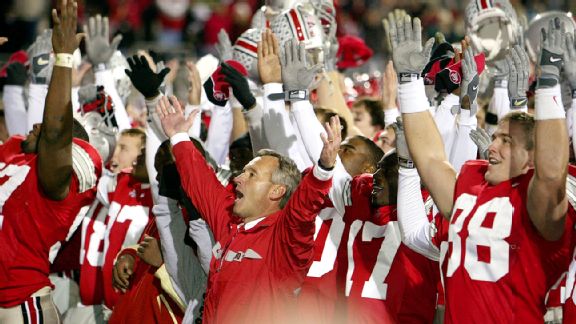 Tom Pidgeon/Getty ImagesThe 2002 Buckeyes were headlined by one of the best college defenses in recent years.
As a final farewell to the BCS era, I used my opponent-adjusted FEI ratings to identify the five best individual team seasons in each of the Power Five conferences. The ratings reward dominant victories combined with strong competition, which are key elements that we expect the College Football Playoff committee to take into account, as well.
(Note: Due to the lack of available play-by-play and drive data, FEI ratings have been calculated only since 2003. For the 1998 to 2002 seasons, we produced an alternate set of ratings based on opponent-adjusted final scores. The alternate ratings have a 0.95 correlation with FEI).
Here are the five best Big Ten teams from the BCS era:

1. 2002 Ohio State Buckeyes (14-0)
The Buckeyes played in three national championship games in the BCS era, but this appearance makes our top five. Ohio State didn't steamroll every opponent on the schedule, and in fact had a number of close calls down the stretch -- six of their last seven games were decided by a touchdown or less. The national championship game against Miami was won in double overtime. But the Ohio State defense was extraordinary.
After surrendering 21 points to Texas Tech in their opener, the Buckeyes didn't allow another opponent to score more than 19 points in regulation the rest of the season, and six opponents failed to reach double digits. According to end-of-year FEI ratings, Ohio State faced three top-15 opponents in the regular season -- Washington State, Penn State and Michigan -- and those teams scored a total of only 23 points.
2. 2005 Ohio State Buckeyes (10-2)
It may be a bit of a surprise to see a two-loss team ranked so highly on this list, but these Buckeyes were a very strong team that faced a very difficult schedule. Seven opponents were ranked at the time of the game, and four opponents were ranked in the final FEI top 10. Their only losses came against the national champion Texas Longhorns (No. 1 on our list of the best Big 12 teams of the BCS era) and an 11-1 Penn State team that made this top-5 list, as well.
As has been the case with many strong Ohio State teams over the years, the 2005 unit was led by its defense. The Buckeyes allowed only 2.4 yards per rush and only 73 rushing yards per game. The offense was efficient, as well -- quarterback Troy Smith led the nation in yards per completion (15.3) and ranked sixth nationally in opponent-adjusted QBR.

3. 2013 Michigan State Spartans (13-1)
The Spartans ended the 2013 season with two of the most impressive wins of the year, a takedown of previously undefeated Ohio State in the Big Ten title game and a physical victory over Stanford in the Rose Bowl. Coach Mark Dantonio recently said that he believes his team would have won the playoff if the system had been in place last season. Our numbers don't agree with that bold prediction, but the Spartans would have been a big challenge for other contenders.
Michigan State's defense led the nation in yards allowed per game (251.9) and yards allowed per play (4.0). Only 20 percent of opponent possessions crossed the Michigan State 30-yard line, the lowest percentage allowed in FBS. The Spartans generated 38.5 points of field position value from turnovers alone, and the defense contributed at least 10 points of scoring and field position value in six games.

4. 2005 Penn State Nittany Lions (11-1)
Penn State nearly went undefeated in 2005, losing only once on a fourth-and-4 touchdown pass against Michigan in Ann Arbor on the final play of the game. One week earlier, the Nittany Lions beat Ohio State 17-10, and only two other opponents came within seven points of Penn State all year. The Nittany Lions aren't ranked ahead of the Buckeyes on this list, however, due to an overall mediocre strength of schedule. And even if that Michigan game was a win, they would have been left out of the BCS title game anyway due to the undefeated USC and Texas juggernauts.
Penn State's pass defense was one of its biggest strengths. Only two opponents completed more than 60 percent of their passes against the Nittany Lions, who ranked eighth nationally in yards per pass attempt (5.8) and third nationally in opponent-adjusted QBR.
5. 1998 Ohio State Buckeyes (11-1)
Ohio State carried the No. 1 ranking through most of the season before suffering its only loss in early November against Michigan State -- a game in which the Buckeyes blew a 15-point second-half lead, ultimately costing them an opportunity to play in the inaugural BCS title game. The Spartans were the only opponent to score more than 20 points against the Buckeyes all season. Eight opponents were held to 14 points or fewer.
Ohio State's schedule was no cakewalk, either, though it didn't face conference co-champion Wisconsin. Five of the Buckeyes' opponents were ranked in the FEI top 25 at season's end, including two nonconference, regular-season foes in West Virginia and Missouri, plus Sugar Bowl opponent Texas A&M (Big 12 champs).
Next five:
6. 1999 Michigan (10-2)
7. 2006 Ohio State (12-1)
8. 2008 Penn State (11-2)
9. 1998 Wisconsin (11-1)
10. 2009 Ohio State (11-2)
The '02 Ohio State Buckeyes lead list of best Big Ten teams since 1998
Originally Published: August 8, 2014
By Brian Fremeau | ESPN Insider
 Subscribe
As a final farewell to the BCS era, I used my opponent-adjusted FEI ratings to identify the five best individual team seasons in each of the Power Five conferences. The ratings reward dominant victories combined with strong competition, which are key elements that we expect the College Football Playoff committee to take into account, as well.
(Note: Due to the lack of available play-by-play and drive data, FEI ratings have been calculated only since 2003. For the 1998 to 2002 seasons, we produced an alternate set of ratings based on opponent-adjusted final scores. The alternate ratings have a 0.95 correlation with FEI).
Here are the five best Big Ten teams from the BCS era:
1. 2002 Ohio State Buckeyes (14-0)
The Buckeyes played in three national championship games in the BCS era, but this appearance makes our top five. Ohio State didn't steamroll every opponent on the schedule, and in fact had a number of close calls down the stretch -- six of their last seven games were decided by a touchdown or less. The national championship game against Miami was won in double overtime. But the Ohio State defense was extraordinary.
After surrendering 21 points to Texas Tech in their opener, the Buckeyes didn't allow another opponent to score more than 19 points in regulation the rest of the season, and six opponents failed to reach double digits. According to end-of-year FEI ratings, Ohio State faced three top-15 opponents in the regular season -- Washington State, Penn State and Michigan -- and those teams scored a total of only 23 points.
2. 2005 Ohio State Buckeyes (10-2)
It may be a bit of a surprise to see a two-loss team ranked so highly on this list, but these Buckeyes were a very strong team that faced a very difficult schedule. Seven opponents were ranked at the time of the game, and four opponents were ranked in the final FEI top 10. Their only losses came against the national champion Texas Longhorns (No. 1 on our list of the best Big 12 teams of the BCS era) and an 11-1 Penn State team that made this top-5 list, as well.
As has been the case with many strong Ohio State teams over the years, the 2005 unit was led by its defense. The Buckeyes allowed only 2.4 yards per rush and only 73 rushing yards per game. The offense was efficient, as well -- quarterback Troy Smith led the nation in yards per completion (15.3) and ranked sixth nationally in opponent-adjusted QBR.
3. 2013 Michigan State Spartans (13-1)
The Spartans ended the 2013 season with two of the most impressive wins of the year, a takedown of previously undefeated Ohio State in the Big Ten title game and a physical victory over Stanford in the Rose Bowl. Coach Mark Dantonio recently said that he believes his team would have won the playoff if the system had been in place last season. Our numbers don't agree with that bold prediction, but the Spartans would have been a big challenge for other contenders.
Michigan State's defense led the nation in yards allowed per game (251.9) and yards allowed per play (4.0). Only 20 percent of opponent possessions crossed the Michigan State 30-yard line, the lowest percentage allowed in FBS. The Spartans generated 38.5 points of field position value from turnovers alone, and the defense contributed at least 10 points of scoring and field position value in six games.
4. 2005 Penn State Nittany Lions (11-1)
Penn State nearly went undefeated in 2005, losing only once on a fourth-and-4 touchdown pass against Michigan in Ann Arbor on the final play of the game. One week earlier, the Nittany Lions beat Ohio State 17-10, and only two other opponents came within seven points of Penn State all year. The Nittany Lions aren't ranked ahead of the Buckeyes on this list, however, due to an overall mediocre strength of schedule. And even if that Michigan game was a win, they would have been left out of the BCS title game anyway due to the undefeated USC and Texas juggernauts.
Penn State's pass defense was one of its biggest strengths. Only two opponents completed more than 60 percent of their passes against the Nittany Lions, who ranked eighth nationally in yards per pass attempt (5.8) and third nationally in opponent-adjusted QBR.
5. 1998 Ohio State Buckeyes (11-1)
Ohio State carried the No. 1 ranking through most of the season before suffering its only loss in early November against Michigan State -- a game in which the Buckeyes blew a 15-point second-half lead, ultimately costing them an opportunity to play in the inaugural BCS title game. The Spartans were the only opponent to score more than 20 points against the Buckeyes all season. Eight opponents were held to 14 points or fewer.
Ohio State's schedule was no cakewalk, either, though it didn't face conference co-champion Wisconsin. Five of the Buckeyes' opponents were ranked in the FEI top 25 at season's end, including two nonconference, regular-season foes in West Virginia and Missouri, plus Sugar Bowl opponent Texas A&M (Big 12 champs).
Next five:
6. 1999 Michigan (10-2)
7. 2006 Ohio State (12-1)
8. 2008 Penn State (11-2)
9. 1998 Wisconsin (11-1)
10. 2009 Ohio State (11-2)