Utilities push back against growth of rooftop solar panels
In most states, utilities pay solar customers for power they send back to the grid. But there's a battle over what that sun-fueled energy is worth.
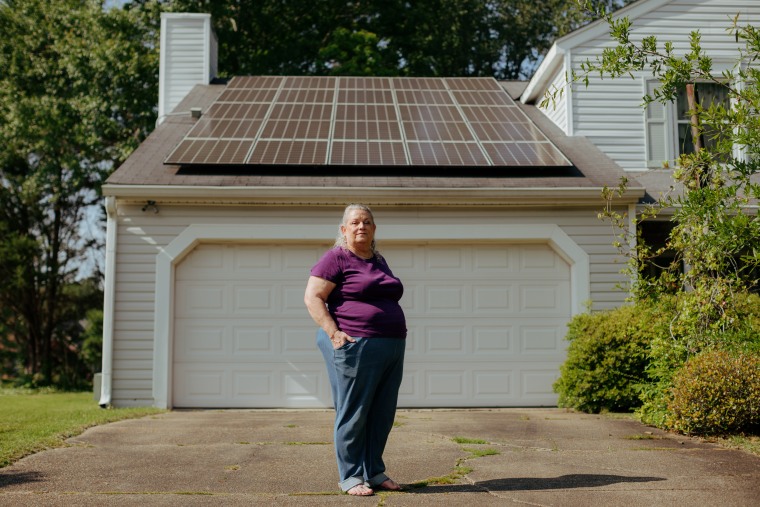
Lynn Krell is unhappy with the reimbursements she gets from her utility for having solar panels on her garage in Hattiesburg, Miss.Bryan Tarnowski for NBC News
May 8, 2022, 4:30 AM EDT / Updated May 8, 2022, 10:46 AM EDT
By Jon Schuppe
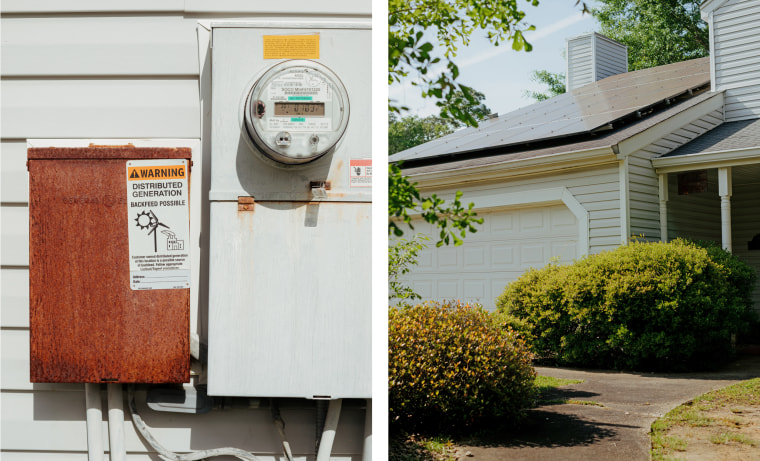
One of the biggest thrills Lynn Krell and her husband felt after they installed solar panels on the roof of their Hattiesburg, Mississippi, home was watching their power meter run backward as their utility credited them for excess power they sold back to the grid.
Those credits also showed up on their electricity bill, helping to cut their average monthly payments by $11 — in addition to the $250 or so they saved during peak summer months by using solar power themselves.
But eventually the Krells began to question the value of the credits. The Krells learned that Mississippi regulations allowed utility companies to buy roof-generated solar power at a small fraction of the retail rate they charge to deliver that power back to customers’ homes. The Krells talked to rooftop solar owners in other states where more generous compensation rules allowed them to offset their entire electricity bills.
It felt unfair.
“I’m royally ticked,” Krell, 63, said.
Mississippi, which gets a lot of sun, was one of the last states to give subsidies to people who install solar panels on their roofs in 2015, and those subsidies remain among the stingiest in the country. Thirty-seven states reimburse at the full retail rate, but Mississippi offers significantly less. That, experts say, is one of the reasons rooftop solar hasn’t caught on there. Only 586 Mississippi households have the technology.
How to fix that is the subject of a fight before the Mississippi Public Service Commission, which is considering rules that would expand subsidies for rooftop solar. The battle is one of several around the country that could determine the future of home solar panels, which advocates say are crucial to weaning the energy system off power sources that emit carbon dioxide, a major cause of global warming.
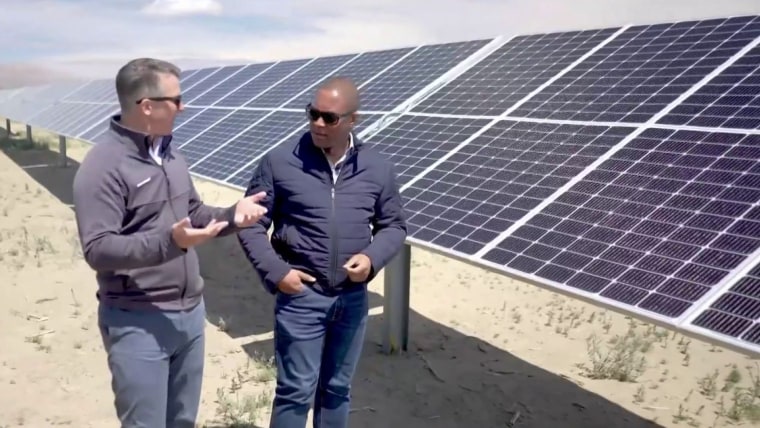
Rooftop solar has a “huge potential” to cut air pollution, create jobs, protect against outages and shrink utility bills, said Mark Jacobson, a professor of civil and environmental engineering at Stanford University. The technology will be vital for the U.S. to make the transition to all-renewable energy by 2050, he said.
“It’s such a low-hanging fruit, such an easy thing to do, to put panels on people’s roofs,” Jacobson said. “We are really shooting ourselves in the foot by not doing it.”
The question is who pays for it.
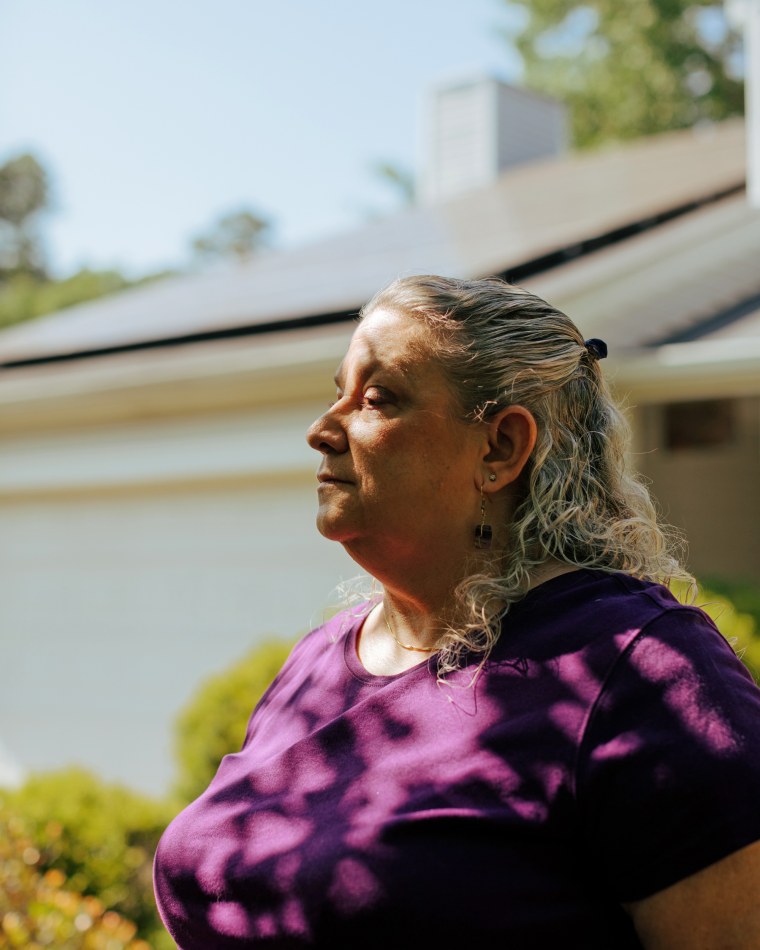
Lynn Krell at her home in Hattiesburg. Bryan Tarnowski for NBC News
Almost every state offers some kind of credit to rooftop solar owners who send excess power to the grid. But as solar power has become cheaper and more widespread, utilities in some states have pushed to curb the payments, said Autumn Proudlove, senior policy program director at the NC Clean Energy Technology Center at North Carolina State University.
In Florida, the state’s largest utility persuaded lawmakers to vote to gut the state’s rooftop solar credits, a measure that Gov. Ron DeSantis, a Republican, vetoed last week, saying it would hurt consumers. In California, state regulators, at utilities’ urging, are considering whether to cut rooftop solar incentives. In North Carolina, utility-backed proposals to change the state’s relatively generous rooftop solar subsidies have split environmentalists, with opponents saying the plan puts solar customers and installers in financial risk.
In most states, utilities pay solar customers for power they send back to the grid. But there's a battle over what that sun-fueled energy is worth.
Lynn Krell is unhappy with the reimbursements she gets from her utility for having solar panels on her garage in Hattiesburg, Miss.Bryan Tarnowski for NBC News
May 8, 2022, 4:30 AM EDT / Updated May 8, 2022, 10:46 AM EDT
By Jon Schuppe
One of the biggest thrills Lynn Krell and her husband felt after they installed solar panels on the roof of their Hattiesburg, Mississippi, home was watching their power meter run backward as their utility credited them for excess power they sold back to the grid.
Those credits also showed up on their electricity bill, helping to cut their average monthly payments by $11 — in addition to the $250 or so they saved during peak summer months by using solar power themselves.
But eventually the Krells began to question the value of the credits. The Krells learned that Mississippi regulations allowed utility companies to buy roof-generated solar power at a small fraction of the retail rate they charge to deliver that power back to customers’ homes. The Krells talked to rooftop solar owners in other states where more generous compensation rules allowed them to offset their entire electricity bills.
It felt unfair.
“I’m royally ticked,” Krell, 63, said.
Mississippi, which gets a lot of sun, was one of the last states to give subsidies to people who install solar panels on their roofs in 2015, and those subsidies remain among the stingiest in the country. Thirty-seven states reimburse at the full retail rate, but Mississippi offers significantly less. That, experts say, is one of the reasons rooftop solar hasn’t caught on there. Only 586 Mississippi households have the technology.
How to fix that is the subject of a fight before the Mississippi Public Service Commission, which is considering rules that would expand subsidies for rooftop solar. The battle is one of several around the country that could determine the future of home solar panels, which advocates say are crucial to weaning the energy system off power sources that emit carbon dioxide, a major cause of global warming.
Rooftop solar has a “huge potential” to cut air pollution, create jobs, protect against outages and shrink utility bills, said Mark Jacobson, a professor of civil and environmental engineering at Stanford University. The technology will be vital for the U.S. to make the transition to all-renewable energy by 2050, he said.
“It’s such a low-hanging fruit, such an easy thing to do, to put panels on people’s roofs,” Jacobson said. “We are really shooting ourselves in the foot by not doing it.”
The question is who pays for it.
Lynn Krell at her home in Hattiesburg. Bryan Tarnowski for NBC News
Almost every state offers some kind of credit to rooftop solar owners who send excess power to the grid. But as solar power has become cheaper and more widespread, utilities in some states have pushed to curb the payments, said Autumn Proudlove, senior policy program director at the NC Clean Energy Technology Center at North Carolina State University.
In Florida, the state’s largest utility persuaded lawmakers to vote to gut the state’s rooftop solar credits, a measure that Gov. Ron DeSantis, a Republican, vetoed last week, saying it would hurt consumers. In California, state regulators, at utilities’ urging, are considering whether to cut rooftop solar incentives. In North Carolina, utility-backed proposals to change the state’s relatively generous rooftop solar subsidies have split environmentalists, with opponents saying the plan puts solar customers and installers in financial risk.