Though only 68, WWE Chairman and CEO Vince McMahon is an almost Murdoch-like figure in that his succession plan has forever been an industry guessing game — in a recent Forbes profile McMahon even hinted he might be willing to sell the company. So when Shane McMahon announced he was leaving WWE, the prevailing theory amongst the wrestling “dirt sheets” and diehards was that he lost an internal power struggle to his sister Stephanie and her husband, the wrestler Triple H, who at the time was transitioning into a front office role; Triple H (real name Paul Levesque) is now Executive VP of Talent, Live Events & Creative and still a part-time performer.
Like her brother, Stephanie McMahon, 37, grew up in the industry occasionally getting physical in the ring. Then in the early 2000s, she started working on the creative team, the central nervous system of the company and the department said to be most critical to her father. As she worked her way up to Executive Vice President, Creative, McMahon became known for her decisiveness — one of her father’s marked traits.
”Stephanie would say what she meant and what she thought and if you didn’t like it, too bad, and I think that’s a lot like her dad,” says Kurt Angle, who was released from WWE in 2006 and has since wrestled for Total Nonstop Action wrestling. Rumors have him contemplating a WWE return once his contract ends later this year. “She wanted it the way she wanted it and 99.9 percent of the time she was right. I believe Shane had the same talent but he wasn’t as forward. He wanted to be your friend and your co-worker and when you mix it, you don’t lose respect but it’s like, this guy is my buddy but also the boss, when do I separate it?”
Former WWE writer Court Bauer worked alongside Stephanie McMahon in creative when it became apparent she was Vince’s likely heir apparent. At times, Shane dropped into meetings. “I liked his approach. It was very playful, and really just an exciting, ‘What if we did this?’” says Bauer. “If you went into Shane’s department, it was fun, laid-back, loose vibes. The energy and positivity wasn’t there in creative the way it was in digital. When it came out [in 2009] that he was leaving the company, I spoke to people at WWE, a lot of people were walking around like someone had died. ‘Oh gosh, he’s going to leave us?’”
(As far as Shane’s popularity: Both Angle and the wrestler Kevin Nash, whom I also spoke to for this story, asked me to pass along their contacts and regards. “I’d love for you to throw my number to him so I can take him out to get something to eat next time I’m in New York,” Nash says. “I always liked hanging out with him.”)
As might be expected, Shane McMahon matter-of-factly denies rumors of a family feud with his sister, now the Chief Brand Officer, a lofty position described as no less than the “face of the company.” “No, there was no civil war,” he says. “My sister is still involved in the company now with her husband Triple H. They’re there. My dad is there. Things are moving forward.”
One thing he will admit: Vince McMahon is, to put it mildly, a difficult person to work for, a boss who demands perfection from everyone, especially from his son. “My dad held me to a different standard, without question, sometimes unfairly so and that’s OK,” Shane McMahon says. “It’s tough to bat 1.000 all the time. It’s that one wrong all the time. It teaches you. It definitely teaches you. It’s a way of teaching.”
“When you have family in business, you expect more out of family, same with my daughter, same with my son-in-law, same with my wife, you just expect more from them. I think there’s no doubt I was harder on Shane than a non-family member for sure,” Vince McMahon tells me. He stresses that their relationship hasn’t changed. “We’re close, we’ve always been close and we always will be. Anytime there’s family in business, there is some degree of difficulty but at the same time, you put the business part aside and when you have a relationship with a son and his father, those bonds you never break.”
Bauer, who wrote for the WWE from 2005-07, compares them to a father and son from popular culture. “If you look at Shane McMahon, I don’t think he had that ruthlessness in him that Vince does,” he says. “Have you seen the movie
There Will Be Blood? There are so many qualities to that character that I see in Vince McMahon; Shane McMahon does not have those qualities.”
McMahon first became involved with YOU on Demand about five years ago when Marc Urbach, a friend of a friend, and chief financial officer of what was then known as China Broadband, approached him for guidance. Having recently secured a 20-year joint venture agreement with CCTV6’s China Home Cinema, Urbach, admittedly, was clueless on how to run a video-on-demand company. McMahon, with his experience in pay-per-view and global media, seemed like the perfect brain to pick. Best case scenario, Urbach thought, McMahon would invest, maybe even sit on the board. A 10-month dialogue ensued, and when it was all over, McMahon, a fourth-generation pro wrestling doyenne, had left his family’s empire to become CEO of the newly christened YOU on Demand. “We were thrilled. He gave credibility to our business,” Urbach says. “He changed everything.”
Since arriving at YOU on Demand, McMahon has helped secure content agreements with Hollywood studios (of the majors, Fox and Sony are the only holdouts), and roped in new partners while also focusing on infrastructure, marketing and promotion — “blocking and tackling,” as he calls the unsexy grunt work of launching a business.
As an executive, McMahon says he’s a combination of his parents: The enthusiastic killer instinct was inherited from Vince; he learned to rein in that aggression from Linda, who was CEO of WWE from 1997 until quitting in 2009 to launch two failed U.S. Senate campaigns. He also had the benefit of sitting at the same table as Barry Diller, dikk Ebersol, David Stern, Rupert Murdoch, and Ari Emanuel. “That is an invaluable education,” McMahon says. “I pick a little something from everybody.”
With over 700 million smartphone users and 210 million cable TV subscribers in China, YOU on Demand’s growth potential seems enormous. But there are hurdles unique to doing business in China, a nation where pirate DVDs are a $6 billion industry. But that rampant piracy, McMahon says, proves two things: There’s an appetite for the product and consumers are paying for it. “We just have to change that model around,” he says, cutting into a spinach and feta egg-white omelet. YOU on Demand set a low price point of $1-3 per movie with piracy in mind. “If you are able to just give them a better experience through their TV and make it easier where you click a button and buy it, that’s where you want to be.”
There’s also the dark connections between media and government espionage. Last November, YOU on Demand announced their app YOU Cinema would come preloaded on all Huawei Mate smartphones; Huawei is the world’s third largest smartphone maker after Samsung and Apple. Though it was a huge coup for the company, American officials have long considered Huawei a front for the People’s Liberations Army. In October 2012, the House Intelligence Committee called Huawei a national security threat; a March 2014 report in the
New York Times revealed that the NSA had hacked into its networks, and noted that Huawei has “all but given up its hopes of entering the American market.”
McMahon insists that despite government censorship of media, doing business in China is not so different from dealing with any other foreign market. “You just have to play within the rules of each individual system,” says McMahon, who doesn’t speak a lick of Mandarin. “Europe is much more lenient of sex, but they shy away from violence. China definitely controls what content is seen on television. We follow those rules. You aren’t going to see a lot of hardcore [violence], definitely not on YOU on Demand. You won’t see many Richard Gere movies because he is very pro-Tibet.”





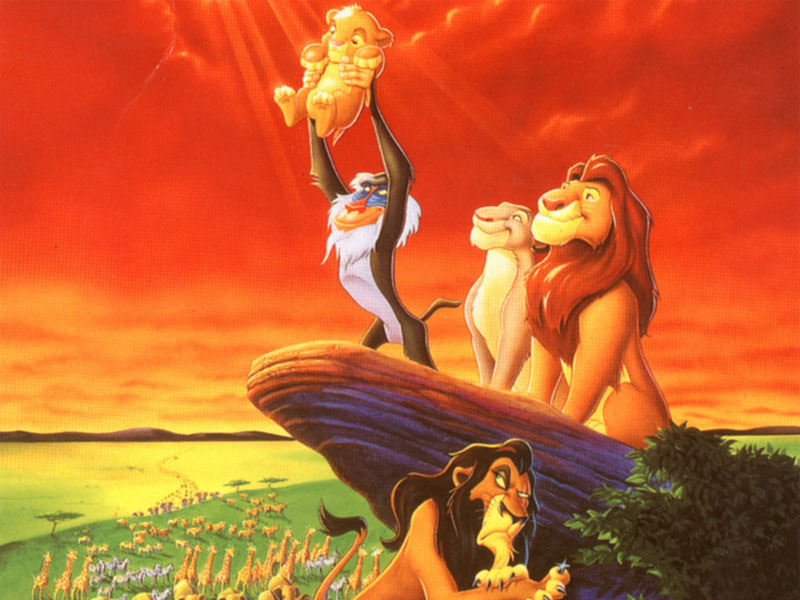


 But the prideland needs Simba back. WWE without a McMahon to run it after Vince dies would be shameful.