

Gonna have a series of West African Highlights to combat the non stop infatuation of north, north east Africa, and the Middle East. 
I know this won't get many looks but, this for the brehs who are proud of our rich and downright mystical origins before slavery and colonialism.
Starting with the Igbo:
Origin: Pottery dated at around 2500 BCE showing similarities with later Igbo work was found at Nsukka, along with pottery and tools at nearby Ibagwa; the traditions of the Umueri clan have as their source the Anambra valley. In the 1970s theOwerri, Okigwe, Orlu, Awgu, Udi and Awka divisions were determined to constitute "an Igbo heartland" from the linguistic and cultural evidence
The Nri people of Igbo land have a creation myth which is one of the many creation myths that exist in various parts of Igbo land. The Nri and Aguleri people are in the territory of the Umueri clan who trace their lineages back to the patriarchal king-figureEri.[28] Eri's origins are unclear, though he has been described as a "sky being" sent byChukwu (God).[28][29] He has been characterized as having first given societal order to the people of Anambra.[29] The historian Elizabeth Allo Isichei says "Nri and Aguleri and part of the Umueri clan, [are] a cluster of Igbo village groups which traces its origins to a sky being called Eri."[30]
Archaeological evidence suggests that Nri hegemony in Igboland may go back as far as the 9th century,[31] and royal burials have been unearthed dating to at least the 10th century. Eri, the god-like founder of Nri, is believed to have settled the region around 948 with other related Igbo cultures following after in the 13th century.[32] The first Eze Nri (King of Nri) Ìfikuánim followed directly after him. According to Igbo oral tradition, his reign started in 1043.[33] At least one historian puts Ìfikuánim's reign much later, around 1225 AD
Igbo people - Wikipedia, the free encyclopedia
Government:
Nearly all communities in Igboland were organized according to a title system. Igbo west of the Niger River and on its east bank developed kingship, governing states such as Aboh, Onitsha and Oguta, their title Obi.[11][N 1] The Igbo of Nri, on the other hand, developed a state system sustained by ritual power.[6]
The Kingdom of Nri was a religio-polity, a sort of theocratic state, that developed in the central heartland of the Igbo region.[7]The Nri had a taboo symbolic code with six types. These included human (such as twins), animal, object, temporal, behavioral, speech and place taboos. The rules regarding these taboos were used to educate and govern Nri's subjects. This meant that, while certain Igbo may have lived under different formal administration, all followers of the Igbo religion had to abide by the rules of the faith and obey its representative on earth, the eze Nri.[12]
An important symbol among the Nri religion was the omu, a tender palm frond, used to sacralize and restrain. It was used as protection for traveling delegations or safeguarding certain objects; a person or object carrying an omu twig was considered protected.[12] The influence of these symbols and institutions extended well beyond Nri, and this unique Igbo socio-political system proved capable of controlling areas wider than villages or towns.[11]
For many centuries, the people within the Nri hegemony were committed to peace. This religious pacifism was rooted in a belief that violence was an abomination which polluted the earth.[3] Instead, the eze Nri could declare a form of excommunication from the odinani Nri against those who violated specific taboos. Members of the Ikénga could isolate entire communities via this form of ritual siege.
Region: Southeastern Nigeria, is the indigenous homeland of the Igbo people.[3][4]:307 It is a non-governmental cultural and common linguistic region in southern Nigeria. Geographically, it is divided by the lower Niger River into two unequal sections – an eastern (which is the larger of the two) and a western section
Economics: "As great travelers, they were also business people involved in the long distant Tran Saharan trade"
"Prior to European contact, Igbo trade routes stretched as far as Mecca, Medina and Jeddah on the continent."
Art: Igbo-Ukwu - Wikipedia, the free encyclopedia


Language: Igbo language - Wikipedia, the free encyclopedia
Nsibidi - Wikipedia, the free encyclopedia
"Nsibidi name written"

Court case

Religion: Odinani - Wikipedia, the free encyclopedia
"Odinani has monotheistic and panentheistic attributes, having a single God as the source of all things."
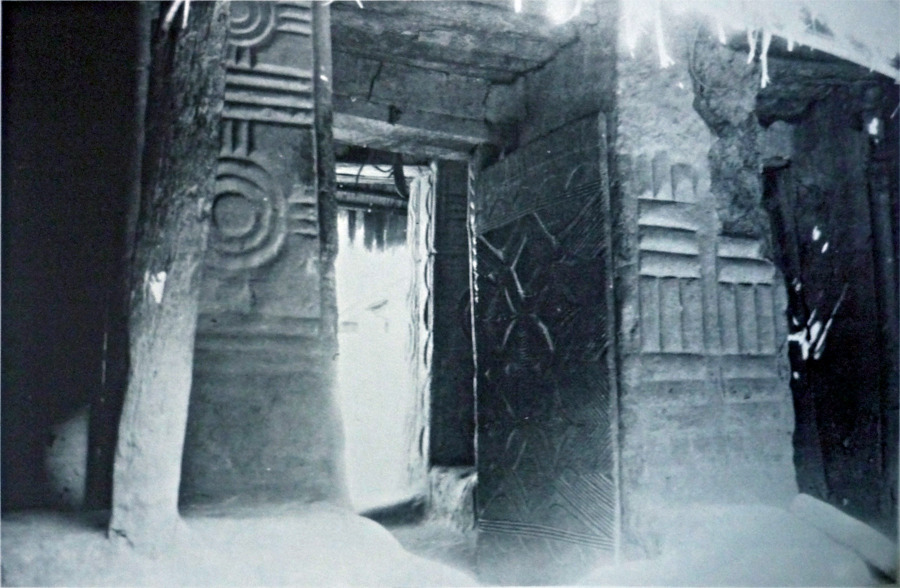
Architecture:
Mbari


Music:
Igbo music - Wikipedia, the free encyclopedia

Udu - Wikipedia, the free encyclopedia
Cuisine:
Igbo cuisine - Wikipedia, the free encyclopedia
Yam is the staple food

Yam Pottage
Clothing: Traditionally, the attire of the Igbo generally consisted of little clothing, as the purpose of clothing originally was simply to conceal private parts.Uli body art was used to decorate both men and women in the form of lines forming patterns and shapes on the body.
General Culture: Igbo culture - Wikipedia, the free encyclopedia
My opinions on the Igbo:
Advanced forest culture that was incredibly peaceful and spiritual.
these nikkas didn't even have to conquer neighbors
they just ran up on 'em like "tryin to get down with this utopia?" and nikkas was like "bet"
Feel free to add on brehs
Next up will be the Mossi Kingdoms
I know this won't get many looks but, this for the brehs who are proud of our rich and downright mystical origins before slavery and colonialism.
Starting with the Igbo:
Origin: Pottery dated at around 2500 BCE showing similarities with later Igbo work was found at Nsukka, along with pottery and tools at nearby Ibagwa; the traditions of the Umueri clan have as their source the Anambra valley. In the 1970s theOwerri, Okigwe, Orlu, Awgu, Udi and Awka divisions were determined to constitute "an Igbo heartland" from the linguistic and cultural evidence
The Nri people of Igbo land have a creation myth which is one of the many creation myths that exist in various parts of Igbo land. The Nri and Aguleri people are in the territory of the Umueri clan who trace their lineages back to the patriarchal king-figureEri.[28] Eri's origins are unclear, though he has been described as a "sky being" sent byChukwu (God).[28][29] He has been characterized as having first given societal order to the people of Anambra.[29] The historian Elizabeth Allo Isichei says "Nri and Aguleri and part of the Umueri clan, [are] a cluster of Igbo village groups which traces its origins to a sky being called Eri."[30]
Archaeological evidence suggests that Nri hegemony in Igboland may go back as far as the 9th century,[31] and royal burials have been unearthed dating to at least the 10th century. Eri, the god-like founder of Nri, is believed to have settled the region around 948 with other related Igbo cultures following after in the 13th century.[32] The first Eze Nri (King of Nri) Ìfikuánim followed directly after him. According to Igbo oral tradition, his reign started in 1043.[33] At least one historian puts Ìfikuánim's reign much later, around 1225 AD
Igbo people - Wikipedia, the free encyclopedia
Government:
Nearly all communities in Igboland were organized according to a title system. Igbo west of the Niger River and on its east bank developed kingship, governing states such as Aboh, Onitsha and Oguta, their title Obi.[11][N 1] The Igbo of Nri, on the other hand, developed a state system sustained by ritual power.[6]
The Kingdom of Nri was a religio-polity, a sort of theocratic state, that developed in the central heartland of the Igbo region.[7]The Nri had a taboo symbolic code with six types. These included human (such as twins), animal, object, temporal, behavioral, speech and place taboos. The rules regarding these taboos were used to educate and govern Nri's subjects. This meant that, while certain Igbo may have lived under different formal administration, all followers of the Igbo religion had to abide by the rules of the faith and obey its representative on earth, the eze Nri.[12]
An important symbol among the Nri religion was the omu, a tender palm frond, used to sacralize and restrain. It was used as protection for traveling delegations or safeguarding certain objects; a person or object carrying an omu twig was considered protected.[12] The influence of these symbols and institutions extended well beyond Nri, and this unique Igbo socio-political system proved capable of controlling areas wider than villages or towns.[11]
For many centuries, the people within the Nri hegemony were committed to peace. This religious pacifism was rooted in a belief that violence was an abomination which polluted the earth.[3] Instead, the eze Nri could declare a form of excommunication from the odinani Nri against those who violated specific taboos. Members of the Ikénga could isolate entire communities via this form of ritual siege.
Region: Southeastern Nigeria, is the indigenous homeland of the Igbo people.[3][4]:307 It is a non-governmental cultural and common linguistic region in southern Nigeria. Geographically, it is divided by the lower Niger River into two unequal sections – an eastern (which is the larger of the two) and a western section
Economics: "As great travelers, they were also business people involved in the long distant Tran Saharan trade"
"Prior to European contact, Igbo trade routes stretched as far as Mecca, Medina and Jeddah on the continent."
Art: Igbo-Ukwu - Wikipedia, the free encyclopedia
Language: Igbo language - Wikipedia, the free encyclopedia
Nsibidi - Wikipedia, the free encyclopedia
"Nsibidi name written"
Court case
Religion: Odinani - Wikipedia, the free encyclopedia
"Odinani has monotheistic and panentheistic attributes, having a single God as the source of all things."
Architecture:
Mbari
Music:
Igbo music - Wikipedia, the free encyclopedia
Udu - Wikipedia, the free encyclopedia
Cuisine:
Igbo cuisine - Wikipedia, the free encyclopedia
Yam is the staple food
Yam Pottage
Clothing: Traditionally, the attire of the Igbo generally consisted of little clothing, as the purpose of clothing originally was simply to conceal private parts.Uli body art was used to decorate both men and women in the form of lines forming patterns and shapes on the body.
General Culture: Igbo culture - Wikipedia, the free encyclopedia
My opinions on the Igbo:
Advanced forest culture that was incredibly peaceful and spiritual.
these nikkas didn't even have to conquer neighbors
they just ran up on 'em like "tryin to get down with this utopia?" and nikkas was like "bet"
Feel free to add on brehs
Next up will be the Mossi Kingdoms


