@ignorethis
This is a comment about an earlier thread about pan africanism.
Topic has been covered multiple times, in multiple threads, across multiple forums.
Arguments and D-measuring contests get more activity than actual discussions, even those discussing the actual global events, figures, and organizations that carried the idea and pushed the action.
So I decided to post it here.
The "definition" and primary focus/goal of Pan Africanism changed and responded to what was occuring in the world at the time.
Rough timeline
- Ending the transatlantic slave trade
- the abolition of slavery
- the resettlement of free and/ or freed ex enslaved people from the Western hemisphere to the continent and to Haiti
- abolition of slavery
- agitating against the colonization of Africa
- celebrating Ethiopia defeating Italian invaders at Adwa and leveraging it against current colonies in Africa
- agitating against US mistreatment of Black migrant workers building the Panama Canal
- agitating against US invasion of Haiti
- the 20th century resettlement of people from Western hemisphere to the continent
- rallying around Ethiopia after Italy invaded in the 1930s, enlisting recruits to fight
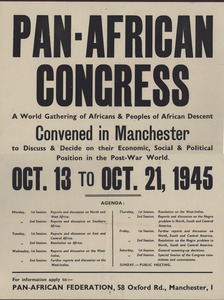
- post WW2 drive for decolonization in Africa/Caribbean and the US Civil Rights Movement
- Last major global focus would have been abolishing Apartheid in South Africa.
So, events, campaigns, movements fit in this timeline and shape and influence what occurs later, and themselves are shaped by world and national events. Even before the term Pan African(ism) is coined.
*And primarily focusing on people events in England and her colonies
Agree with you about Equiano and the Sons of Africa. They are early in the timeline, as you pointed out , and their activities and goals are documented.
I disagree with your take on Garvey.
As invalid pointed out , there were calls and actions taken by free Black people to repatriate in the 19th century, across different former/present colonies, and they did it.
What made the UNIA's call different was that it occured after abolition had occured across the Hemisphere, that it was a mass movement, and that it was run and funded by Black people. Some of the earlier movements were connected to white organizations/depts. who supported the goal of (free) Blacks leaving, but who had different motives.
I also disagree with your take that Garvey was rejected in America. The UNIA had a huge mass following in the US, and across the Hemisphere/world . The number of chapters in different cities/countries, and the businesses and holdings of the organization attest to that.
Such a big following , that the Fed. govt lead a spy campaign, and targeted him with sabotage, criminal probe and charges. (a blueprint the feds would use later)
The Black people and public figures who disagreed with Garvey had different reasons. In terms of those who disagreed with repatriation to Africa, their voices echoed the people who opposed the 19th century calls. Frederick Douglass rejected the 19th century calls, for example. So people opposed to that message from the UNIA were rejecting that message, not necessarily rejecting/dismissing Garvey outright.Lot of the other things he promoted resonated and got broad support.
The legacy and influence of the UNIA continued long after Garvey was taken down. Many of the activists who came after him openly spoke about that.




 www.theguardian.com

