---------------------------------------------------------------------------------
Your proposition!
Akatamba:
That's all well.
What worries me though it's the approximately 25% percentage of the "white" genes that clearly make part of VAST majority of African descendants in "America", if not all. What to do about that?
I'm going to interpret that statement as 75%+ of African Americans(that's over 30m of the 40 million AA) have "approximately 25% percentage of the "white" genes".
RandomAfricanAm:
Before I begin quoting from the DNA studies of Rick kittles, Shomarka O. Y. Keita, & Tishkoff, etc ... I'm curious where did you get your lovely little numbers from?
From here I assume any information given by you will at least validate your given statement and at most also validate my interpreted meaning.
---------------------------------------------------------------------------------
Now with that as a given here we go...
"statistical methods are based on the idea of analyzing a sample drawn from a population. For this idea to work, the sample must be chosen in an appropriate way....
...You might think that it would be reasonable to use some conveniently obtained sample, for example, all students living in a certain dorm or all students enrolled in engineering statistics. After all , there is no reason to think that the heights of these students would tend to differ from the heights of students in general. Samples like this are not ideal, however, because they can turn to be misleading in ways that are not anticipated. The best sampling methods involve random sampling. There are many different random sampling methods, the most basic of which is simple random sampling .
Other Sampling Methods
...In stratified random sampling , the population is divided up into subpopulations, called strata, and a simple random sample is drawn from each stratum. In cluster sampling , items are drawn from the population in groups, or clusters. Cluster sampling is useful when the population is too large and spread out for simple random sampling to be feasible.
Types of Experiments
...In a one-sample experiment, there is only one population of interest, and a single sample is drawn from it.
...In a multisample experiment, there are two or more populations of interest, and a sample is drawn from each population."
-Statistics for Engineers and Scientist 3rd edition
William Navidi
Publisher McGraw-Hill
Ok and why did you post this statistical information?
So that we have a common terminology and set of conceptual processes to work from.
...and what does your "terminology" & "processes" have to do with my comment and provided links/quote ?
African Americans are not a homogenous group and there admixture can swing depending on what group you're talking about.
1. Some Gullah/Geechee in the Carolinas, Georgia, and northern Florida areas were isolated in places from other people.
2. Southern Louisiana creoles (Example: Beyoncé ) had a history of mixing between the African and French populations
3. L.A. California has African Americans in close proximity to Mexican Americans (Indigenous/Spanish people)
4. Oakland California has African Americans in close proximity to east/southeast Asians
5. New York has African Americans in close proximity to well ...everything especially Caribbean & African immigrants.
That said most live in the southern U.S not in those Urban
Populations (remember that word)


The three southern African American populations
(New Orleans, Houston, and Charleston) show a wide
range of admixture values (11.6%–22.5%). The
Charleston population is of special interest because data
on admixture proportions in African Americans from
the former southern British colonies (South Carolina and
Georgia) have been used to postulate differences in gene
flow between the northern and southern African American
populations. The population of Charleston shows
the lowest m value (11.6%) of all the U.S. populations
analyzed in the present study, but it is not very different
from the estimates of one of the northern African American
populations—namely, Philadelphia. It would be
very interesting to have data on additional samples of
southern African American populations to confirm the
existence of a low European contribution in this particular
area and to study the extent of heterogeneity in the
admixture proportions at this geographical level.
In any case, our study shows that not all the southern
African American populations have as low a European
genetic contribution as that found in the Charleston sample.
The estimate forHouston (16.9%) is similar to other
values observed in northern urban populations (Detroit
and Baltimore), and New Orleans shows the highest m
value of the cities studied (22.5%), which deserves special
attention. The history of the Louisiana territory has
been quite different from the history of other southern
regions in the United States. This area was under French
rule for a substantial period, until it became part of the
Spanish territory in 1763 and, finally, of the United
States some decades later, in 1803. Both the geographic
origin of the slaves imported to Louisiana and their
status during the French domination have been distinct
from what happened in the southern British colonies
(e.g., South Carolina). There have been historical accounts
of more substantial intermixture in the New Orleans
area (Williamson 1995; Piersen 1996), so this
could partly explain the observed differences in ancestral
proportions between Charleston and New Orleans.
- Estimating African American Admixture Proportions by Use of Population-Specific Alleles
1998
Any serious population study of African Americans that doesn't take this heterogeneous nature into account is flawed. That said there has been no "serious population study of African Americans", only studies of the genetic variability in African Americans which is where most people get there data from. This is also where people such as yourself attempt to draw conclusions from the data that can't be reasonably drawn.
Example:
We have 100,000 lottery balls randomly split between 10 locations. Each ball has a set of numbers used to determine the winner. We want to know what are the range of numbers on the 100,000 balls.
We take a random sample of 100 balls from 1 of the 10 locations and note the numbers on the balls. We note that the lowest number recorded is 1 and the highest is 9. We can reasonably assume that of the 100,000 balls the variety of numbers between them is 1-9.
What we can't say is what's the average number of 5, 3, or 7 balls out of the 100,000 split between the 10 locations. If we want to do that we would have to take a random sample at each of the 10 locations.
---------------------------------------------------------------------------------
The data on African Americans mostly taken so far has been for the purposes of finding the breath(types) of genotypes(genetic variability). To check for cancers, reaction to medicines, etc. The depth(amount) of African Americans with any given genotype / admixture can't be attested to because such a study hasn't been done.
---------------------------------------------------------------------------------
So what about my links/quotes?
Well your quote doesn't assert nor validate your above "lovely little numbers". It is also a quote you pulled from some random poster on...
http://dienekes.blogspot.com/2010/05/european-admixture-major-source-of.html
so I suggest you ask him the same question I asked you...
RandomAfricanAm:
Before I begin quoting from the DNA studies of Rick kittles, Shomarka O. Y. Keita, & Tishkoff, etc ...I'm curious where did you get your lovely little numbers from?
This is before noting that pulling something from dienekes.blog, mathilda's blog, etc is reaching toward the same direction as st0rmfr0nt in my view.
What about my studies posted
The first study "Effects of cis and trans Genetic Ancestry on Gene Expression in African Americans " has nothing to do with the proposition of...
Akatamba:
That's all well.
What worries me though it's the approximately 25% percentage of the "white" genes that clearly make part of VAST majority of African descendants in "America", if not all. What to do about that?
It also only has a sample size of...
"100 African-American (AA) samples from the Coriell HD100AA panel were genotyped on the Affymetrix SNP 6.0 GeneChip."
that was further reduced to...
"The gene expression data is publicly available (GEO accession number GSE10824) (see Web Resources). For HD100AA samples, we excluded two cryptically related samples (see above), four samples identified as genetic outliers (see Results), and five samples for which gene expression measurements were not obtained, so that 89 AA samples were included in gene expression analyses.
and admits to my prime contention of population concerns that...
"A caveat is that the proportion of European ancestry in African Americans might in principle be correlated to environmental variables. However, such correlations would not affect our approach unless they specifically tracked environmental differences between CEU and YRI.An additional caveat is that the Coriell panel of AA samples is known to be sampled from several (unknown) cities in the United States; AA samples from different U.S. cities might differ systematically in both the average proportion of European ancestry [21],[26] and in the preparation of cell lines."
Your last study "Characterizing the admixed African ancestry of African Americans" also runs into the same fundamental issues of not validating the proposition of...
Akatamba:
That's all well.
What worries me though it's the approximately 25% percentage of the "white" genes that clearly make part of VAST majority of African descendants in "America", if not all. What to do about that?
This study primarily deals with the mixture of African ethnic groups in the African portion of AA DNA and the limitations in using Y or mtda data to understand that African ancestry.
It also only has a sample size of...
"Here we applied recently developed statistical and computational techniques to the question of African ancestry in African Americans by using data on more than 450,000 single-nucleotide polymorphisms (SNPs) genotyped in 94 Africans of diverse geographic origins included in the HGDP, as well as 136 African Americans and 38 European Americans participating in the Atherosclerotic Disease Vascular Function and Genetic Epidemiology (ADVANCE) study. To focus on African ancestry, we reduced the data to include only those genotypes in each African American determined statistically to be African in origin."
Now lets look at the population pools & sample sizes from those pools...
" For 76 (55.9%) of these African-American individuals, we had information on state of birth, with 58 stating they were born in the West (California), 12 in the South (Alabama, Louisiana, Mississippi, Virginia), four in the Midwest (Indiana, Michigan, Missouri, Ohio), and two in the Southwest (Texas). The description of recruitment of these subjects can be found elsewhere [35]. "
Now we just concluded that most of the population pools reside in the south(Because that's where most African Americans live ...not in NYC)



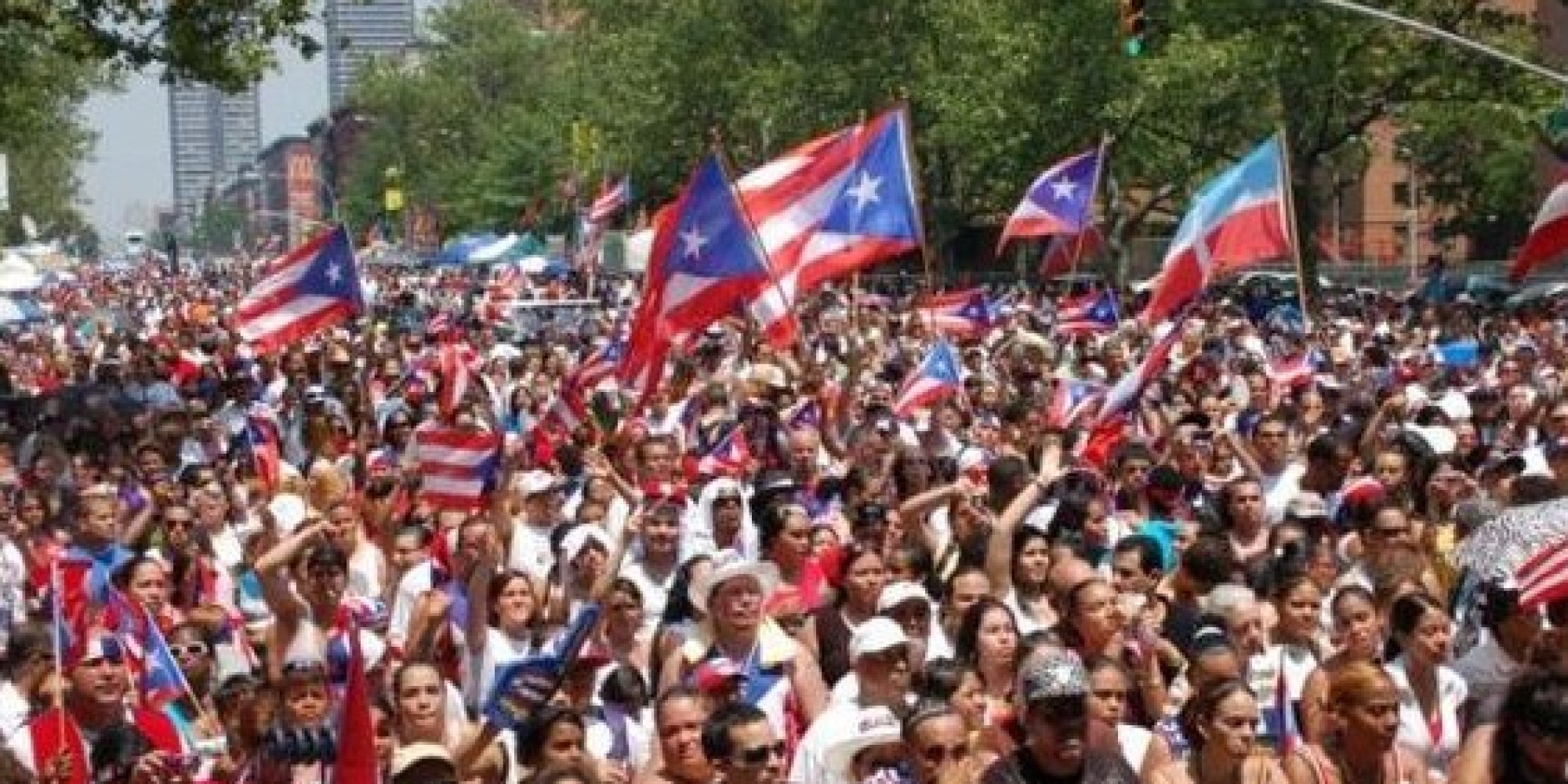
 This is in relation to other Hispanics/Latinos not the African Diaspora. What it's saying is that Mexicans or Central American tend to have more native ancestry and Puerto Rican or Dominicans tend have more African ancestry. It does NOT and I repeat NOT imply that Puerto Ricans and Dominicans are more African than African Americans. You totally misread what they are saying.


 Though most of them has been on some fukkery most people don't catch because they fail to read past the abstract
  Not talking about you


 So all these years my mom watching Amen and me watching Wayans Bros and the Fridays movies I always assumed she was AA. I found about Carlton be Dominican like 5 years ago. And now I found out fine ass Tatiana Ali is Panamanian.
 , Afro-Latinos don't trust em THEY c00nS man
 nikka worry about your own

