Artificial spinal cords are now a thing

Ezekiel 25:17

Veteran
Joined
Jul 17, 2018
Messages
38,868
Reputation
3,114
Daps
136,750
I think 85 is probably the longest I would want to live unless I am just mad healthy, still able to go where I wanna go, and don’t need no one to take care of me

We need to work on aging better. Don't get me wrong, curing ailments and having longer life expectancy is great, but just how agile are you at 90?

But with a slower aging process, If I was 90 but had the body of a 30 year old I'd be content.
 

bnew

Veteran
Joined
Nov 1, 2015
Messages
69,521
Reputation
10,662
Daps
187,944
Source : Rats walk again after breakthrough spinal cord repair with 3D printing

Science News
from research organizations


Rats walk again after breakthrough spinal cord repair with 3D printing​


Scientists have pioneered a new way to help repair spinal cord injuries by combining 3D printing, stem cell technology, and lab-grown tissues.​


Rats Walk Again After Spinal Cord Repair
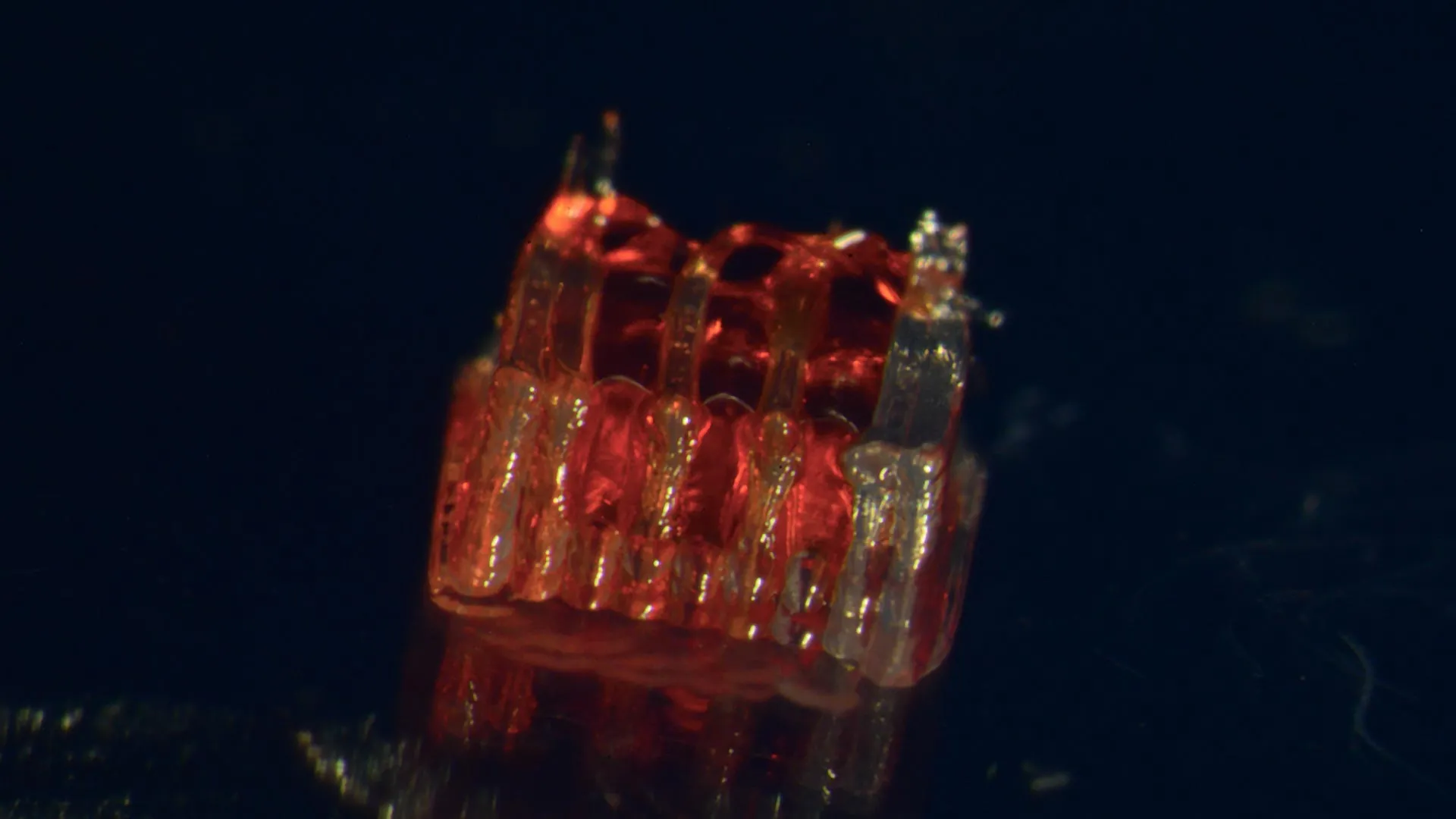
The method involves creating a unique 3D-printed framework for lab-grown organs, called an organoid scaffold, with microscopic channels. Credit: McAlpine Research Group, University of Minnesota

For the first time, a research team at the University of Minnesota Twin Cities demonstrated a groundbreaking process that combines 3D printing, stem cell biology, and lab-grown tissues for spinal cord injury recovery.

The study was recently published in Advanced Healthcare Materials, a peer-reviewed scientific journal.

According to the National Spinal Cord Injury Statistical Center, more than 300,000 people in the United States suffer from spinal cord injuries, yet there is no way to completely reverse the damage and paralysis from the injury. A major challenge is the death of nerve cells and the inability for nerve fibers to regrow across the injury site. This new research tackles this problem head-on.

The method involves creating a unique 3D-printed framework for lab-grown organs, called an organoid scaffold, with microscopic channels. These channels are then populated with regionally specific spinal neural progenitor cells (sNPCs), which are cells derived from human adult stem cells that have the capacity to divide and differentiate into specific types of mature cells.

"We use the 3D printed channels of the scaffold to direct the growth of the stem cells, which ensures the new nerve fibers grow in the desired way," said Guebum Han, a former University of Minnesota mechanical engineering postdoctoral researcher and first author on the paper who currently works at Intel Corporation. "This method creates a relay system that when placed in the spinal cord bypasses the damaged area."

In their study, the researchers transplanted these scaffolds into rats with spinal cords that were completely severed. The cells successfully differentiated into neurons and extended their nerve fibers in both directions -- rostral (toward the head) and caudal (toward the tail) -- to form new connections with the host's existing nerve circuits.

The new nerve cells integrated seamlessly into the host spinal cord tissue over time, leading to significant functional recovery in the rats.

"Regenerative medicine has brought about a new era in spinal cord injury research," said Ann Parr, professor of neurosurgery at the University of Minnesota. "Our laboratory is excited to explore the future potential of our 'mini spinal cords' for clinical translation."

While the research is in its beginning stages, it offers a new avenue of hope for those with spinal cord injuries. The team hopes to scale up production and continue developing this combination of technologies for future clinical applications.

In addition to Han and Parr, the team included Hyunjun Kim and Michael McAlpine from the University of Minnesota Department of Mechanical Engineering; Nicolas S. Lavoie, Nandadevi Patil and Olivia G. Korenfeld from the University of Minnesota Department of Neurosurgery; Manuel Esguerra from the University of Minnesota Department of Neuroscience; and Daeha Joung from the Department of Physics at Virginia Commonwealth University.

This work was funded by the National Institutes of Health, the State of Minnesota Spinal Cord Injury and Traumatic Brain Injury Research Grant Program and the Spinal Cord Society.

Read the full paper entitled, "3D-Printed Scaffolds Promote Enhanced Spinal Organoid Formation for Use in Spinal Cord Injury" on the Advanced Healthcare Materials website.


Story Source:

Materials provided by University of Minnesota. Note: Content may be edited for style and length.


Journal Reference:

  1. Guebum Han, Nicolas S. Lavoie, Nandadevi Patil, Olivia G. Korenfeld, Hyunjun Kim, Manuel Esguerra, Daeha Joung, Michael C. McAlpine, Ann M. Parr. 3D‐Printed Scaffolds Promote Enhanced Spinal Organoid Formation for Use in Spinal Cord Injury. Advanced Healthcare Materials, 2025; DOI: 10.1002/adhm.202404817


Cite This Page:


University of Minnesota. "Rats walk again after breakthrough spinal cord repair with 3D printing." ScienceDaily. ScienceDaily, 26 August 2025. <www.sciencedaily.com/releases/2025/08/250826005226.htm>.

University of Minnesota. (2025, August 26). Rats walk again after breakthrough spinal cord repair with 3D printing. ScienceDaily. Retrieved September 3, 2025 from www.sciencedaily.com/releases/2025/08/250826005226.htm

University of Minnesota. "Rats walk again after breakthrough spinal cord repair with 3D printing." ScienceDaily. www.sciencedaily.com/releases/2025/08/250826005226.htm (accessed September 3, 2025).
 

Orbital-Fetus

cross that bridge
Supporter
Joined
May 5, 2012
Messages
42,162
Reputation
19,258
Daps
156,347
Reppin
Humanity
What cures have been developed in the last 25 years? I could be wrong

No cures yet, but the treatment is 1000x better. Lot of diseases were instant death sentence but now a chance at normal life is possible…. Then fast forward 100 years in medical advances and it’s going to be a thing of the past

Look at the life expectancy of previous eras (Middle Ages…)
Google AI:

While no disease has been completely "cured" in the last 20 years, several diseases have been effectively eradicated or significantly reduced in incidence:

Eradicated Diseases:

  • Smallpox: Eradicated worldwide in 1980.
  • Rinderpest: Eradicated worldwide in 2011.
  • Polio: On the verge of eradication, with only a few cases remaining in a few countries.
Significantly Reduced Incidence:

  • Measles: Nearly eliminated in many countries due to widespread vaccination.

    • Malaria: Incidence has declined significantly in many parts of the world, particularly in Africa.
    • Tuberculosis: Treatment and control efforts have led to a decline in cases.
    • Lymphatic filariasis: Eliminated in several countries through mass drug administration programs.
Other Diseases with Improved Control:
    • Chickenpox: Incidence has decreased significantly since the introduction of the chickenpox vaccine.
    • Tetanus: Vaccination programs have reduced cases significantly.
    • Diphtheria: Also controlled through vaccination.
It's important to note that these diseases can still reappear if vaccination rates decline or if new variants emerge that are resistant to existing treatments.
What's the point in living longer when you don't have the vigor to move around? Unless you exercise like crazy, even then, you still old.

I think 85 is probably the longest I would want to live unless I am just mad healthy, still able to go where I wanna go, and don’t need no one to take care of me

We need to work on aging better. Don't get me wrong, curing ailments and having longer life expectancy is great, but just how agile are you at 90?

But with a slower aging process, If I was 90 but had the body of a 30 year old I'd be content.

You are all kinda saying the same thing but missing the point. Think of aging as a disease and all of the things that come along with it are symptoms of aging. If the process of aging itself can be managed then all of the deterioration that comes from it will diminish as well. Imagine being 95 with the body and mind of a 45 year old. That is the goal.
 

Givethanks

Superstar
Joined
Dec 4, 2015
Messages
11,045
Reputation
1,490
Daps
23,016
How so?:patrice:


Science in that series was from the stone ages.I think that planet basically discovered hot air baloons during season3:pachaha:
My lazy ass saw spinal cord and thought AoT lol.

I swear the world was pretty modern, was it just the Eldians of Paradise Island that were living in the stone ages lol

Side note, have you watched Code Geass?
 

Ezekiel 25:17

Veteran
Joined
Jul 17, 2018
Messages
38,868
Reputation
3,114
Daps
136,750
Google AI:

While no disease has been completely "cured" in the last 20 years, several diseases have been effectively eradicated or significantly reduced in incidence:

Eradicated Diseases:

  • Smallpox: Eradicated worldwide in 1980.
  • Rinderpest: Eradicated worldwide in 2011.
  • Polio: On the verge of eradication, with only a few cases remaining in a few countries.
Significantly Reduced Incidence:

  • Measles: Nearly eliminated in many countries due to widespread vaccination.

    • Malaria: Incidence has declined significantly in many parts of the world, particularly in Africa.
    • Tuberculosis: Treatment and control efforts have led to a decline in cases.
    • Lymphatic filariasis: Eliminated in several countries through mass drug administration programs.
Other Diseases with Improved Control:
    • Chickenpox: Incidence has decreased significantly since the introduction of the chickenpox vaccine.
    • Tetanus: Vaccination programs have reduced cases significantly.
    • Diphtheria: Also controlled through vaccination.
It's important to note that these diseases can still reappear if vaccination rates decline or if new variants emerge that are resistant to existing treatments.


You are all kinda saying the same thing but missing the point. Think of aging as a disease and all of the things that come along with it are symptoms of aging. If the process of aging itself can be managed then all of the deterioration that comes from it will diminish as well. Imagine being 95 with the body and mind of a 45 year old. That is the goal.


Solve cancer isn't reducing aging.

Your skin still wrinkled. Your reflexes are still slow. Your joints are still aching.

We just gone have a bunch of 120 year olds playing chess in the park because that's all they can do. :russ:
 

Jammer22

All Star
Joined
Oct 31, 2015
Messages
1,541
Reputation
786
Daps
3,955
Really excited to see how organoid tech really takes off. They already got the buzz from that neural tissue trained to playing pong. I'm thinking space stocks and organoids is gonna be the next area for the markets to look to.
 

god shamgod

Veteran
Joined
May 26, 2012
Messages
37,551
Reputation
6,454
Daps
111,606
This is crazy , hope this advances enough for someone like Darryl Mitchell to walk again

Dude spent half his life with the ability to walk and been paralyzed since 2001
 
Top