BREAKING NEWS: Al-Jazeera to shut down in April 2016

The Amerikkkan Idol

The Amerikkkan Nightmare
Joined
Jun 9, 2012
Messages
14,468
Reputation
4,029
Daps
38,882
-yeah you and like Alqeida-jazzera staff's family/friends:mjlol:
-look at this abeed :cape:for sand cacs whom see blacks/slaves as interchangeable:scust:..it's ironic the bolded typo is the most honest thing you said in that whole post...Palestinians are just down with their plight of their own people..you Uncle Bilal negros bytching about what Israelis cacs or doing to sand cacs in Palestine should take note:sas2:

and your simple ass really believed that:comeon:Palestinians/Lebanese(air-rubsin general) have their own white power which abuses and oppresses their local black population but we really supposed to believe these sand cacs relate the plight of Afro Americans:childplease:


Dude, racism's everywhere including in African countries run by Africans. I'm telling you about people I've met in my personal life. A lot of them see how Amerikka shyts on Black people and look up to people like Rosa Parks and MLK like in this line below

Palestinian


Where was everyone watching their news from?!:dwillhuh:

They got an actual channel?:lupe: How can I find it?
[/QUOTE]

It's 347 on Direct TV
 
Joined
Jan 26, 2015
Messages
3,901
Reputation
-2,875
Daps
4,928
Dude, racism's everywhere including in African countries run by Africans. I'm telling you about people I've met in my personal life. A lot of them see how Amerikka shyts on Black people and look up to people like Rosa Parks and MLK like in this line below

Palestinian

I[/QUOTE]
nikka those camel jockeys mistreat blacks the same way if not worst in their own countries yet you really believe their sympathy for our struggle is genuine:stopitslime:i've had personal contact with enough arabs to comfortably state their superiority complex toward black is as palpable as any Dixie cracker ...sounds like your arab associates buttering up your dumbass and you eating up:snoop:...i'm sure those same arabs whom pretend to identify with our plight and site our civil rights icons as inspiration consider us beneath them and if they were accepted would have been with the white mobs spitting and beating on MLK during in Selma:comeon:

keep :cape:for sweet talking sand cacs and end up like this Uncle Bilal:ufdup:
19399478-mmmain.jpg

N.J. man held in Yemen as terrorist gets 10 years for killing ...
www.nj.com
620 × 413Search by image
Former New Jersey resident Sharif Mobley stands behind bars during a sentencing hearing at a court in Sana'a, Yemen on Wednesday. Mobley was sentenced to 10 ...
 

The Amerikkkan Idol

The Amerikkkan Nightmare
Joined
Jun 9, 2012
Messages
14,468
Reputation
4,029
Daps
38,882
nikka those camel jockeys mistreat blacks the same way if not worst in their own countries yet you really believe their sympathy for our struggle is genuine:stopitslime:i've had personal contact with enough arabs to comfortably state their superiority complex toward black is as palpable as any Dixie cracker ...sounds like your arab associates buttering up your dumbass and you eating up:snoop:...i'm sure those same arabs whom pretend to identify with our plight and site our civil rights icons as inspiration consider us beneath them and if they were accepted would have been with the white mobs spitting and beating on MLK during in Selma:comeon:

keep :cape:for sweet talking sand cacs and end up like this Uncle Bilal:ufdup:
19399478-mmmain.jpg

N.J. man held in Yemen as terrorist gets 10 years for killing ...
www.nj.com
620 × 413Search by image
Former New Jersey resident Sharif Mobley stands behind bars during a sentencing hearing at a court in Sana'a, Yemen on Wednesday. Mobley was sentenced to 10 ...[/QUOTE]

:francis:Or maybe you just hang out with stupid ass people and I don't:yeshrug:

ACTIVISM
The Fascinating Story of How the Ferguson-Palestine Solidarity Movement Came Together
The people of Palestine and Ferguson are reaching out to each other because they are fighting a common system of injustice, control and racism.
By Bassem Masri / AlterNet
February 18, 2015

Print
89 COMMENTS

Only recently, America imagined that it had entered the “post-racial” era. But with discourse on social injustice spreading across the country and forcing a discussion in the corporate media about everything from mass deportations to Islamophobia to police brutality, it is clear that phrase represented a pipe dream.

You only have to look to Ferguson to see why. This suburb of Saint Louis has become the epicenter of nationwide protests against hyper militarized police forces that target communities of color. And I have been there since the beginning, watching them unfold against a backdrop of police violence targeting the poor and people of color.

In one of the most amazing shows of solidarity, the people of Palestine and Ferguson are reaching out to each other because they are fighting a common system of injustice, control and racism.

I speak about this connection from personal experience. I am a Palestinian-American who has lived in both Jerusalem and in Ferguson. I have lived under the racist regimes of both cities and know first hand the sense of occupation that both populations experience on a daily basis.

The Ferguson protests have highlighted a racist system by kindling a worldwide conversation about police brutality, a conversation sparked by the execution of Mike Brown at the hands of an officer in the Ferguson Police Department. The police’s hard-handed reaction to protests made it inevitable that people around the globe would draw similarities between the people of Ferguson and the ongoing struggles of the people of Palestine. Both movements would have collided at some point.

But “Palestine 2 Ferguson” manifested itself from day one.

Linked Oppression, Linked Struggle

In August 2014, Palestinians reached out via Twitter with advice to protesters on how to protect themselves properly from chemical agents. These Palestinians were veterans of the weekly protests in occupied towns in the West Bank like Nabi Saleh and Bil’in. They had faced the teargas, rubber coated steel bullets and even live fire that the Israeli army used to crush unarmed demonstrations. They had served as lab rats as the Israelis tested weapons and methods of repression they would later export to American police departments. While Palestinians were tweeting out that advice and support, instructing Ferguson protesters on how to wash teargas residue from their eyes and how to make a gas mask from Hawaiian punch bottles, bombs were raining down on the Gaza Strip and demonstrators were cut down with live bullets at the Qalandiya checkpoint that separated Ramallah from Jerusalem. In one picture shared widely on social media, a resident of Bil’lin, Hamde Abu Rahme, held a sign reading, "The Palestinian people know what it means to be shot while unarmed because of your ethnicity." He concluded the sign with the hashtags #Ferguson and #Justice.

That was a very powerful statement of solidarity, and it showed that oppressed people could make alliances across oceans and heavily fortified borders in a joint struggle to achieve justice. Before August 9, the day Brown was killed, many Palestinians didn't know the struggles African Americans and other minorities faced in America, and many African Americans didn’t know much about Palestine. But in the assault against peaceful protesters following the murder of Mike Brown, the system made a huge mistake. It wound up uniting people from all across the world who were sick of violent police repression and the impunity that their oppressors enjoyed. More importantly, it exposed how America and Israel share values of ethnic cleansing and discrimination.

It is no coincidence that the United States of America and Israel claim to share certain values. Both nations are expert practitioners in ethnic cleansing and colonialism. In 1948, Israel stole Palestine from her natural inhabitants in a series of events in 1948 referred to as "al Nakba," which means “disaster,” "catastrophe, "or "cataclysm." With 750,000 indigenous Palestinians driven from their land and homes by Zionist militias, they scattered all across the world as refugees, with some fleeing north into Lebanon, some to Jordan, and some south to the Gaza Strip. After the founding of Israel in 1948, laws were passed preventing Palestinians from returning or reclaiming the property from which they fled. The descendants of those Palestinians are still waiting in refugee camps to this day - waiting for their right to return.

During this time, the first civil rights movement in the USA was just getting underway. The hundreds of years of enslavement and oppression of people of color exposed the hypocrisy of the United States. White supremacy (the idea that the white race is inherently superior and therefore entitled to legal and economic privilege) was a cancer within American culture. People of color were forced to use separate facilities, schools, and housing. Every aspect of American life was segregated by race, if not legally than through practices like residential redlining in northern cities. The civil rights movement ultimately succeeded in winning more freedoms for minorities. But this "freedom" was short lived. With every right they gave, the U.S. government figured out systematic ways to take them back.

In the United States, political supporters of the so-called war on drugs made blacks synonymous with criminals and thugs, justifying the mass incarceration of young men demonized in the media as “super predators.” In Palestine, indigenous people resisting their occupation were branded as “terrorists,” hell bent on Israel’s destruction. Palestinians are even demonized for simply being born; they are called “demographic threats” whose very existence threatens the racial purity of the Jewish state.

In both Saint Louis and Jerusalem, segregation is alive and well. Both areas are zones of occupation overseen by violent police departments enforcing regimes of racism. The main difference is that the United States is more careful about how it forces cruelty on people of color.

Segregated Spaces

I’ve experienced the Ferguson to Palestine connection in visceral ways.

Walking down the street in Al Quds (Jerusalem), the smells of the bakeries and coffee shops fill the air. The unrelenting dry heat beats down on you and history is beneath every step. It’s breathtaking. Succumbing to that beauty makes it easy to forget you live under a brutal military occupation--at least for a little bit.

When I’m in Jerusalem, I feel how tense it is. I remember walking down the street minding my own business, watching a teenager kick around a soccer ball, doing tricks with it. Out of no where a military jeep stopped and threw this teenager in the back of the jeep. There was no question, no muss, no fuss--this was the the Israeli military’s version of Stop and Frisk. The same sort of thing happens here in Saint Louis on a daily basis, where the police stop people for no apparent reason, hauling them off to jail, splitting families apart to instill fear into a community. Both Israel and the police do this for a very specific reason: to force people into obedience.

There is a constant military presence in every Arab neighborhood. You can't enjoy the small pleasures of life without being reminded of it. At all times, Zionists are trying to dictate how the majority of Palestinians live. On our streets, within our neighborhoods, they relentlessly invade the privacy of every single Palestinian. They look at us like dogs that need to be beaten into obedience. And every action of theirs has a reaction. Israeli policies push people to the edge and when Palestinians react, they demonize them even more in order to implement more "security” measures. Does this sound familiar?

There is no real interaction between Jews and Arabs. Schools in Jerusalem are segregated. In the old city, there are separate quarters for Palestinians and Jews. Daily hate crimes and violence are perpetrated against Palestinians with little to no consequences for the Zionists who commit them. The goal is to keep Palestinians in a constant state of fear and paranoia, so that maybe one day we will leave.

In Ferguson, being caught in a neighborhood where you don’t “belong” raises immediate suspicion among the police. I have found myself wandering into neighborhoods I didn't “belong” in in both Jerusalem and in St. Louis. In both cases, I was harassed by racist authorities, who ask me what I am doing there and suggest that if I don’t leave, there will be consequences.

Invisible borders exist between separated communities. Your race determines if you are allowed to cross that border drawn along lines of fear, intimidation, and generations of violence and pain.

Now the task is clear: we must break down these borders together.

The Road Ahead: Black Liberation to Palestinian Liberation

On August 9th, we in Ferguson started a conversation about human rights and police brutality. I have made it my personal mission to inform as many people as I can about how the United States enables and supports oppression both here and abroad.

More than a conversation is taking place, though. Concrete links are being forged.

Front line Ferguson protesters recently traveled on a delegation to Palestine. Among them were members of Hands Up United, the Dream Defenders and more — groups that were integral to the demonstrations that broke out on August 9 in reaction to Mike Brown’s shooting. They took it upon themselves to go see these atrocities in Palestine with their own eyes.

I was excited that my friends were able to see what Palestinians have experienced for decades. They came back with an intense sense of purpose.

"There is no grey area in right or wrong. This is one of the greatest catastrophes in the history of human rights," Tef Poe said after returning from Palestine. Poe is an African-American hip-hop artist and co-founder of Hands Up United who has emerged as one of the most outspoken Ferguson activists. He added: “What's happening in Palestine is bloody murder and the Israeli settlers are guilty of building an empire on the bones of the Palestinians."

What Poe’s statements show is that we have created a collective voice where we amplify one another, a voice most prominent on social media. We have connected using hashtags such as #Palestine2Ferguson, #BlackLivesMatter, #CommonOppressor and #BlackAndBrownAlianza. It has been a way to intersect struggles, raise awareness, and unite under the banner of humanity.

The struggle against police brutality has extended into the year 2015. But the lesson of the hot summer of 2014 is that we can build our ranks with solidarity our natural allies -- people who have experienced racism and occupation beneath the cover of a fake democracy. For, Palestinian freedom and Black Liberation have become inseparable.

 

The Amerikkkan Idol

The Amerikkkan Nightmare
Joined
Jun 9, 2012
Messages
14,468
Reputation
4,029
Daps
38,882
Palestinians tweet support for Ferguson protesters
West Bank residents express solidarity with Missouri protesters, suggest methods of coping with tear gas

BY TIMES OF ISRAEL STAFF AND AP August 15, 2014, 10:43 pm


Palestinians have taken to Twitter to express their support for American protesters in Ferguson, Missouri — where demonstrators have been clashing with police over the shooting of an unarmed black teenager by a policeman — with some advising local residents on how to cope with tear gas, based on their own experience with Israeli forces.

Get The Times of Israel's Daily Edition by email
and never miss our top stories
FREE SIGN UP!

The images from Ferguson, where police in heavy riot gear met angry protesters with tear gas and smoke bombs, sparked a strong reaction among Palestinians online, Al Jazeera reported.

Many Palestinians said they identified with the tear-gassed protesters, as they felt they too had suffered injustices at the hands of IDF soldiers during protests in the West Bank.

“From Gaza to Ferguson, much respect and love,” one Gaza resident, Inas Safadi tweeted.

From #Gaza to #Ferguson much respect and love.

— Inas Safadi (@InassSafadi) August 14, 2014

Another user posted a picture comparing Palestinian and American rioters.

The oppressed stands with the oppressed. #Palestine stands with#Ferguson. pic.twitter.com/hxK94VqfsO

— فلسطين i (@iFalasteen) August 14, 2014

Throughout the week, dozens of Twitter user posted advice, pictures and words of support for the demonstrators in Ferguson.

Solidarity with #Ferguson. Remember to not touch your face when teargassed or put water on it. Instead use milk or coke!

— مريم البرغوثي (@MariamBarghouti) August 14, 2014

Others went as far as accusing Israeli soldiers of demonstrating to police in Ferguson how to disperse a crowd.

Dear #Ferguson. The Tear Gas used against you was probably tested on us first by Israel. No worries, Stay Strong. Love, #Palestine

— Rajai abuKhalilرجائي (@Rajaiabukhalil) August 14, 2014

On August 9, 18-year-old Michael Brown was shot and killed after he and his friend, Dorian Johnson, were suspected of stealing cigars from a convenience store, according to police reports.


These images provided by the Ferguson Police Department show security camera footage from a convenience store in Ferguson, Mo., on Aug. 9, 2014, the day that Michael Brown was fatally shot by a police officer. A report released Friday, Aug. 15, 2014, by Ferguson Police Chief Thomas Jackson says the footage shows a confrontation between Brown and an employee at the store. The report says that Brown and his friend, Dorian Johnson, stole a box of cigars from the store shortly before Brown’s death. (photo credit: AP Photo/Ferguson Police Department)

Police have said Brown was shot after an officer encountered him and another man on the street during a routine patrol. They say one of the men pushed the officer into his squad car, then physically assaulted him in the vehicle and struggled with the officer over the officer’s weapon. At least one shot was fired inside the car before the struggle spilled onto the street, where Brown was shot multiple times, according to police.

Johnson has told media a different story. He said an officer ordered him and Brown onto the sidewalk, then grabbed his friend’s neck and tried to pull him into the car before brandishing his weapon and firing. He said Brown started to run and the officer pursued him, firing multiple times.

Tensions in Ferguson, a town of 21,000 that is nearly 70 percent black and patrolled by a nearly all-white police force, boiled over after a candlelight vigil Sunday night, as looters smashed and burned businesses in the neighborhood, where police have repeatedly fired tear gas and smoke bombs.

By Thursday, there was a dramatic shift in the atmosphere in Ferguson after Gov. Jay Nixon assigned protest oversight to Highway Patrol Capt. Ron Johnson, who is black and grew up near Ferguson. He marched alongside protesters.

“We’re here to serve and protect,” Johnson said. “We’re not here to instill fear.”

The streets were filled with music, free food and even laughter. When darkness fell — the point at which previous protests have grown tense — no uniformed officers were in sight outside the burned-out QuikTrip convenience store, which had become a flashpoint for standoffs between police and protesters.

“All they did was look at us and shoot tear gas,” Pedro Smith, who has participated in the nightly protests, said Thursday. “This is totally different. Now we’re being treated with respect.”

The more tolerant response came as President Barack Obama spoke publicly for the first time about the shooting — and the subsequent violence. Obama said there was “no excuse” for violence either against the police or by officers against peaceful protesters.

Attorney General Eric Holder has said federal investigators have interviewed witnesses to the shooting.

On Friday, Ferguson Police Chief Thomas Jackson released several police reports and documents during a news conference where he also identified the officer who shot Brown as Darren Wilson.

Jackson said Wilson is a six-year veteran of the police department, but he refused to release any other details about the officer.

The family’s attorney, Benjamin Crump, accused police of trying to draw attention away from Brown’s death. He said Brown’s parents were “incensed” by what he calls “the old game of smoke and mirrors.”

“It’s bad enough they assassinated him, and now they’re trying to assassinate his character,” Crump said.
 
Joined
Jan 26, 2015
Messages
3,901
Reputation
-2,875
Daps
4,928
^^^

or maybe you just ay-rab lover who wants their validation and ignores anything which paints them in a a bad light:comeon:..if Palestenian cared about oppressed black people why don't they stop oppressing their own black population :stopitslime:.. Those Hamas terrorist tried to high jack the internationally media focus on Ferguson and place it on themselves...nothing more or less:aicmon:

here's how your ay-rab friends talk among themselves about black Americans when they think we aint listening:sas2:

  1. Responses to my calling out the term 'abeed'

    Responses to my calling out the term ‘abeed’
    Two months ago, I wrote an oped titled “Fellow humans are not abeed” for the Arab American News to address the usage of the term abeed, meaning slaves, used by many Arabs to describe black people. After receiving some positive feedback from some of my Arab-American friends, primarily in Metro Detroit, I decided to search Twitter for the usage of this term in varying transliterations (abeed, 3abeed, 3beed, 3bid, 3abid & 3abed). What I found was very casual usage of the term, almost exclusively from teenagers and young adults, who are Arab-Americans and appear to have been raised in the USA.


    The second response is that some have actually apologized for using the term. Of those, some of them also said that they didn’t know abeed meant slaves. They said that their families simple refer to all blacks as abeed. This is a deeper structural issue of racism among Arabs, primarily in the Levant, which I plan on writing about later.
    The third response is that of defending the usage of the term abeed that we are all abeedullah (slaves of Allah), and that I should stop being so touchy. Of course, this is insincere because they don’t really view blacks as the best worshippers, nor do they call other Arabs with light skin including their own family abeed. Calling anyone slave is haram (forbidden) anyway according to the Qur’an and Sunnah.
    The last of the responses has been horrendous, which involve cussing me out to calling me a slave.

    Some Arab-Americans who joined me in calling out the usage of abeed themselves have even been attacked. One tactic of shame used is calling someone “abeed lover” like how white supremacists say “****** lover.”


    Given, however, that the most overt discrimination that I see on Twitter is Arab on black racism and my personal interests as a black man, who has felt my share of anti-black racism in the heart of Arab America, Metro Detroit, I’m obliged to deal with this most entrenched form that I see. This is in no way an indictment on all Arab Americans. I do know, however, that this issue has been dealt with too passively for many years. Problems don’t fix themselves on their own as proof of the racism exhibited by those born and raised in the USA. I hope that my challenging it will push more Arab Americans to take more aggressive stands against anti-black racism.


  2. @hackpeace_
    Imagine if we referred to Black people in America in English as slaves. Imagine the reaction. But we do it in Arabic all the time.


    Follow
    Abdo @hackpeace_

    And the problem is of course, western Arabs, our parents grew up on it, it was in their culture. They're racist. But you say you aren't.

    3:44 PM - 15 Feb 2015


    Abdo @hackpeace_
    And the problem is of course, western Arabs, our parents grew up on it, it was in their culture. They're racist. But you say you aren't.


    Follow
    Abdo @hackpeace_

    My generation of Arabs say we're not racist but we still defend the usage of the word 3abeed.
 
Last edited:

The Amerikkkan Idol

The Amerikkkan Nightmare
Joined
Jun 9, 2012
Messages
14,468
Reputation
4,029
Daps
38,882
^^^

or maybe you just ay-rab lover who wants their validation and ignores anything which paints them in a a bad light:comeon:..if Palestenian cared about oppressed black people why don't they stop oppressing their own black population :stopitslime:.. Those Hamas terrorist tried to high jack the internationally media focus on Ferguson and place it on themselves...nothing more or less:aicmon:

here's how your ay-rab friends talk among themselves about black Americans when they think we aint listening:sas2:

  1. Responses to my calling out the term 'abeed'

    Responses to my calling out the term ‘abeed’
    Two months ago, I wrote an oped titled “Fellow humans are not abeed” for the Arab American News to address the usage of the term abeed, meaning slaves, used by many Arabs to describe black people. After receiving some positive feedback from some of my Arab-American friends, primarily in Metro Detroit, I decided to search Twitter for the usage of this term in varying transliterations (abeed, 3abeed, 3beed, 3bid, 3abid & 3abed). What I found was very casual usage of the term, almost exclusively from teenagers and young adults, who are Arab-Americans and appear to have been raised in the USA.


    The second response is that some have actually apologized for using the term. Of those, some of them also said that they didn’t know abeed meant slaves. They said that their families simple refer to all blacks as abeed. This is a deeper structural issue of racism among Arabs, primarily in the Levant, which I plan on writing about later.
    The third response is that of defending the usage of the term abeed that we are all abeedullah (slaves of Allah), and that I should stop being so touchy. Of course, this is insincere because they don’t really view blacks as the best worshippers, nor do they call other Arabs with light skin including their own family abeed. Calling anyone slave is haram (forbidden) anyway according to the Qur’an and Sunnah.
    The last of the responses has been horrendous, which involve cussing me out to calling me a slave.

    Some Arab-Americans who joined me in calling out the usage of abeed themselves have even been attacked. One tactic of shame used is calling someone “abeed lover” like how white supremacists say “****** lover.”


    Given, however, that the most overt discrimination that I see on Twitter is Arab on black racism and my personal interests as a black man, who has felt my share of anti-black racism in the heart of Arab America, Metro Detroit, I’m obliged to deal with this most entrenched form that I see. This is in no way an indictment on all Arab Americans. I do know, however, that this issue has been dealt with too passively for many years. Problems don’t fix themselves on their own as proof of the racism exhibited by those born and raised in the USA. I hope that my challenging it will push more Arab Americans to take more aggressive stands against anti-black racism.


  2. @hackpeace_
    Imagine if we referred to Black people in America in English as slaves. Imagine the reaction. But we do it in Arabic all the time.


    Follow
    Abdo @hackpeace_

    And the problem is of course, western Arabs, our parents grew up on it, it was in their culture. They're racist. But you say you aren't.

    3:44 PM - 15 Feb 2015


    Abdo @hackpeace_
    And the problem is of course, western Arabs, our parents grew up on it, it was in their culture. They're racist. But you say you aren't.


    Follow
    Abdo @hackpeace_

    My generation of Arabs say we're not racist but we still defend the usage of the word 3abeed.

I'm not an A-rab lover or any other type of lover. I just understand that oppressed people fighting each other is fukking stupid.

Dude, EVERY government oppresses Black people, even Black ones.

I could find African nations run by Black people who do worst things to Black people.

South Africa, Zimbabwe, Sudan, etc. . .

The fact of the matter is that plenty of the PEOPLE understand White supremacy and understand Black people's struggle here in Amerikkka.
 
Joined
Jan 26, 2015
Messages
3,901
Reputation
-2,875
Daps
4,928
I'm not an A-rab lover or any other type of lover. I just understand that oppressed people fighting each other is fukking stupid.

Dude, EVERY government oppresses Black people, even Black ones.

I could find African nations run by Black people who do worst things to Black people.

South Africa, Zimbabwe, Sudan, etc. . .

The fact of the matter is that plenty of the PEOPLE understand White supremacy and understand Black people's struggle here in Amerikkka.

nah you definitely an bootlickig donkey...what's even more stupid is black people sympathizing for one our worst and longest historical oppressors...
you sound like a cac whom brings up black on black violence whenever white Amerikkka's history abuse and massacres of black people is brought up:mjpls:

ayrabs on black racism and oppression isf white supremacy dumb abeed:pacspit:
 

The Amerikkkan Idol

The Amerikkkan Nightmare
Joined
Jun 9, 2012
Messages
14,468
Reputation
4,029
Daps
38,882
nah you definitely an bootlickig donkey...what's even more stupid is black people sympathizing for one our worst and longest historical oppressors...
you sound like a cac whom brings up black on black violence whenever white Amerikkka's history abuse and massacres of black people is brought up:mjpls:

ayrabs on black racism and oppression isf white supremacy dumb abeed:pacspit:


nikka, shut your fakkit ass up.

Most Palestinians don't have enough money or power to be a threat to Black people and are dealing with the same type of oppression that we are here and MANY of them see that, as I've shown you.

Yo dumb ass, takes isolated incidents from governments and ignorant people and paint the entire group of people with a broad brush, when there's plenty of Palestinians who understand and support Black people

Black Lives Matter Activists Declare Solidarity with Palestine
The statement revives the internationalism of the ’60s and ’70s, when black activists saw themselves as part of a global fight against Western colonialism

BY SALIM MUWAKKIL
Share6953TweetReddit11StumbleUpon14EmailPrint
'The same urban police departments that harass, brutalize and murder black folks here train with Israeli law enforcement—who oppress Palestinians.'

Long before the killing of Michael Brown by a Ferguson cop coincided with the bombing of Gaza by Israeli forces, there were parallels between the Palestinian and African-American freedom struggles. On Nov. 1, 1970, black activists published an ad in the New York Times titled, “An Appeal by Black Americans Against United States Support of the Zionist Government of Israel.” Signed by more than 50 writers, educators, students and union leaders, the statement opened, “We, the black American signatories of this advertisement, are in complete solidarity with our Palestinian bothers and sisters, who, like us, are struggling for self-determination and an end to racist oppression.”

When news reports last summer revealed that the tear gas canisters used by police to disband Ferguson protests were the same as those used by Israeli soldiers in occupied Palestinian territories, it boosted the connection—and led to a stunning public statement of African-American solidarity with Palestinians. The Black Solidarity Statement with Palestine was published in August, a year after the assault on Gaza. It defines the struggle for the “liberation of Palestine’s land and people” as “a key matter of our time.”

Co-author and Boston-based activist Khury Petersen-Smith was inspired when Palestinians produced two statements of solidarity with Ferguson and the black struggle in the United States. The gesture was well-received among black activists organizing against police violence, and Petersen-Smith saw an opportune moment to reciprocate. He also noted a growing willingness among prominent black intellectuals, such as Cornel West and Alice Walker, to express solidarity with Palestinians. So he hooked up with Kristian Davis Bailey, a Detroit-based activist who had penned a piece on Ebonymagazine’s website titled “Why Black People Must Stand with Palestine.” Together, they composed the solidarity statement, which explicitly connects the African-American and Palestinian struggles:

Out of the terror directed against us—from numerous attacks on black life to Israel’s brutal war on Gaza and chokehold on the West Bank—strengthened resilience and joint struggle have emerged between our movements.

More than 1,000 black scholars, activists, students and artists and nearly 50 organizations have signed. Among them are names like Angela Davis, Cornel West, Mumia Abu-Jamal and Talib Kweli, and groups like the Dream Defenders.

The statement calls upon the U.S. government to end diplomatic and economic aid to Israel, and upon African-American institutions to support the call for Boycott, Divestment, and Sanctions (BDS) against Israel until it complies with its obligations under international law.

There are some in the black movement, particularly black nationalists, who argue the Palestinian and African-American struggles are separate, and that linking them fosters confusion and distraction. Petersen-Smith begs to differ. “The U.S. and Israel make the connections for us,” he told Salon. “The same urban police departments that harass, brutalize and murder black folks here train with Israeli law enforcement—who oppress Palestinians.” Funds for Israeli weapons are resources diverted from black neighborhoods in desperate need, he added.

The statement, which has been signed by several signatories on the 1970 ad—Phil Hutchings, Charles Simmons and Kwame Somburu—feels like a revival of the internationalism of the 1960s and 1970s. Black activists then saw the African-American struggle as part of the global fight against the Western colonialism that afflicted people of color worldwide, including Palestinians. The United States was the de facto headquarters of that colonial empire—the belly of the beast. In recent years, however, that focus had shifted, especially with the election of a black man as custodian of that empire.

But the pendulum appears to be swinging back. The young activists involved in movements like Black Lives Matter, We Charge Genocide and Black Youth Project 100 are cultivating international connections. Petersen-Smith, for example, traveled to Gaza in 2009 as part of the Viva Palestina medical relief delegation. It seems the need for global solidarity has revealed itself to a new generation of black activists.

Palestinians salute Black solidarity, call for joint struggle
Ali Abunimah Activism and BDS Beat 27 August 2015

18287967778_27fe64c549_o.jpg

Israel advocates are alarmed by growth in Black-Palestinian solidarity. (Sarah-Ji/Flickr)

Palestinians have welcomed the declaration signed by more than 1,000 Black activists, artists and scholars in solidarity with the Palestinian people.

This comes as an Israel lobby group is expressing concern at the growing cooperation between Black activists and Palestinians.

The statement, whose endorsers include scholar-activists Angela Davis and Cornel West and Black Lives Matter co-founder Patrisse Cullors, urges full support for the Palestinian-led campaign of boycott, divestment and sanctions (BDS) on Israel.

First appearing in Ebony earlier this month, the statement emphasizes “return to their homeland in present-day Israel” as “the most important aspect of justice for Palestinians.”

Mahmoud Nawajaa, general coordinator of the Palestinian BDS National Committee (BNC) said that the Black activists’ “support for BDS against Israel’s regime of occupation, settler colonialism and apartheid is particularly inspiring as it translates principled positions into morally consistent actions that are capable of righting injustices.”

The BNC is the broad Palestinian civil society coalition that leads the BDS movement.

“The US civil rights movement has always been a key inspiration for us in the BDS movement,” Nawajaa added in a statement from the BNC. “We are deeply moved by this powerful proclamation that evokes the spirit of that heroic civil rights struggle.”

Omar Barghouti, co-founder of the BDS movement, called the statement “a poignant testament to the organic links that connect the Palestinian struggle for self-determination with the struggle of the oppressed around the world, including ongoing struggles for racial and economic justice by Black people in the US and across the world.”

“Despite the obvious differences, there are compelling similarities between the forms of oppression that both Palestinians and African Americans live under,” Barghouti added. “Dehumanization, dispossession, racial injustice and discrimination, state violence, criminalization of entire communities and impunity are all key characteristics of the oppression faced by Black Americans and Palestinians.”

The Black activists’ statement calls for joint campaigns against G4S, the multinational security firm that works in Israeli prisons in the occupied West Bank and runs detention centers that are part of the US system of mass incarceration that targets people of color.

Alarm
The Black activists’ statement – and the Palestinian response – represent the kind of solidarity that is ringing alarm bells in the offices of Israel lobby groups.

This week, the Israel on Campus Coalition (ICC) warned in a report that Students for Justice in Palestine (SJP) “and its allies continue to deepen their involvement with social justice-oriented organizations on campus.”

“This year saw efforts by anti-Israel groups to build coalitions with progressive campus organizations that deal with issues such as LGBT rights, fossil fuel divestment, private prison reform, racial discrimination and immigration reform,” the ICC report states.

In particular, ICC – which evidently closely monitors the Palestine solidarity movement – says it “observed strong ties between SJP and many African American student groups during the 2014-2015 academic year.”

“As recently as May 2015, SJP student activists were actively involved in Black Lives Matter-linked demonstrations,” it states.

ICC also notes an “increasing number of SJP-backed slates and candidates winning legislative and executive positions within student governments.”

“These candidates are running on platforms that call for reform on a wide range of social issues; BDS is now mentioned alongside other issues such as private prison divestment, minority rights and fossil fuels,” it adds.

But ICC assures Israel supporters that anti-Palestinian activists are “fighting back” by “forming coalitions to educate the broader campus community, and working to build support for Israel on campus.”

The Israel lobby group says that media reports alleging that BDS is taking over college campuses are exaggerated.

It warns, however, that “if the current trends on campuses nationwide persist, the result could be dangerously close to that reality.”
 

The Amerikkkan Idol

The Amerikkkan Nightmare
Joined
Jun 9, 2012
Messages
14,468
Reputation
4,029
Daps
38,882
5 Highlights of Black-Palestinian Solidarity in 2014-15
October 2, 2015 by Dominick Hall & Nadine Darwish


In the summer of 2014, an Israeli assault on the Gaza Strip ended the lives of over 2,100 Palestinians, igniting worldwide protests in solidarity with the Palestinian people. Simultaneously, the murder of Mike Brown at the hands of the Ferguson Police Department in August 2014, sparked protests across the country, and gained international attention, calling for accountability and an end to police violence. The coinciding times of these tragedies resulted in momentous solidarity between Palestinian and Black people.

There have been several events that have been pivotal to the overall movements of both demographics. This article will analyze five significant highlights in the Black-Palestinian solidarity movement that have occurred in the past year, and explain the significance of Blacks and Palestinians standing together.

1. Solidarity on US Campuses

In adherence to the Palestinian call for Boycott, Divestment and Sanctions (BDS), until the Israeli government complies with international law, solidarity groups across the country launched divestment campaigns. These campaigns called on respective religious and academic institutions to remove their investments from corporations that profit from human rights violations in the occupied Palestinian territories.

There was overwhelming support for divestment from multicultural and ethnic groups across the board. In fact, coalitions became so strong, that the Israel on Campus Coalition (ICC) warned in a report that a student organization called Students for Justice in Palestine (SJP) “and its allies continue to deepen their involvement with social justice-oriented organizations on campus.”

Divestment campaigns arose at a plethora of universities across the country, including but not limited to Loyola University Chicago, DePaul University, Northwestern University, University of Michigan, UCLA, UC Davis, Marquette University, and UC Riverside.

Divestment surrounding the Israeli occupation was not the only campaign to take heed this year on college campuses. Columbia University became the first university to divest from prisons following a year-long student-run campaign, under the name of Columbia Prison Divest. SJP at Columbia endorsed the campaign. A letter on SJP Columbia’s website, in support of Columbia Prison Divest, states “it is communities of color, international communities, LGBTQ communities and working class communities who are disproportionately targeted by all levels of the United States penal system, from police profiling to biased conviction patterns.”

Columbia Prison Divest demanded that the university remove its investments from G4S, a British multinational corporation, that was also a major target of SJP divestment campaigns across the country. G4Sprovides security systems for detention, interrogation facilities, checkpoints and high-security prisons and profits from mass incarceration globally, including Palestine.

This type of coalition building on U.S. campuses is expected to continue.

2. Palestine 2 Ferguson Contingent

Community leaders and organizers in Ferguson called on people of conscience to join them for the Weekend of Resistance in October 2014. In response to this call for solidarity, USPCN led the Palestine 2 Ferguson contingent, which consisted of 11 organizations, including the US Campaign to End the Israeli Occupation, the St. Louis Palestine Solidarity Committee, and the Palestine Youth Movement.

“The Black community has stood next to the Palestinian community in their time of need. The events in Ferguson exposed that the repressive tactics that law enforcement use here was from training they received in Israel,” said Nesreen Hasan, a Palestinian youth organizer on the Southside of Chicago who traveled to Ferguson with the contingent. She continued to explain the importance of the contingent by saying “the US and Israel collaborate on mechanisms to oppress both Blacks and Palestinians. That it is why it is our duty as Palestinians to speak up against police violence and answer our Black brothers and sisters call to action.”

The contingent stood with the protests that evolved after the murder of Mike Brown, and demanded an end to police violence and militarization of law enforcement. The demonstrations challenged systemic racism faced by black and brown communities across the nation. More than 100 Palestine activists joined the demonstrations with signs that read “From Palestine to Ferguson: End Racism Now.”

3. Dream Defenders, BYP100, & Ferguson Reps Take Historic Trip to Palestine

Renowned black community organizers from the Dream Defenders, Black Youth Project 100, and Ferguson representatives took a trip to the occupied territories of Palestine. The trip lasted 10 days, following the 2014 summer bombing attacks on Gaza, high profile repression in the West Bank, including East Jerusalem, and a high profiled case of the killing of Mike Brown in Ferguson.

Ebony magazine described this historical event as “another chapter in the recent history of Black-Palestinian solidarity.” The black organizers on this trip were very enlightened and were able to draw many parallels between their struggle and the Palestinian fight for freedom.

The Israeli Defense Force (IDF) soldiers that are killing and torturing innocent Palestinians are the same soldiers that are responsible for the training and militarization of police departments across the United States.

4. USPCN in solidarity with the Black community of Baltimore

Following the death of Freddie Gray, as a result of spinal injuries caused by the Baltimore Police Department, massive protests erupted in Baltimore demanding the indictment and sentencing of the police officers responsible for his death.

Mainstream news outlets maligned the protests, created an illusion that Freddie Gray died independently from police custody, and valued the property of Baltimore over Black life. The United States Palestinian Community Network (USPCN) issued a statement voicing support for the Black community of Baltimore.

In the statement, USPCN declared, “Enough is enough. That is what Black people in Baltimore are saying, and what they have every right to say. Police are killing Black people at an alarming rate, and the response from mayors, governors, even presidents, is nothing more than a call for calm. USPCN is not calling for calm. We are calling for unqualified support and solidarity with Black people in Baltimore, Chicago, New York, Detroit, Oakland, Ferguson, Miami, Milwaukee, and everywhere else police are killing their sisters, brothers, mothers, and fathers.”

5. 2015 Black Solidarity Statement With Palestine

More than 1,000 Black scholars, activists, writers, artists and students signed onto a statement declaring “solidarity with the Palestinian struggle and commitment to the liberation of Palestine’s land and people.” Signatories include Angela Davis, Cornel West, Charlene Carruthers, and Black Lives Matter co-founder Patrisse Cullors.

The statement recognizes that the racism towards Palestinians by the Israeli government is “also directed against others in the region, including intolerance, police brutality, and violence against Israel’s African population.” Discrimination directed to dark skinned people is also prevalent in Israel. For example, asylum seekers from Sudan and Eritrea that flee to Israel are referred to by Israeli officials as “infiltrators,” and are systematically discriminated against.
There needs to be unified action against anti-Blackness, white supremacy, and Zionism.
 
Joined
Jan 26, 2015
Messages
3,901
Reputation
-2,875
Daps
4,928
nikka, shut your fakkit ass up.

Most Palestinians don't have enough money or power to be a threat to Black people and are dealing with the same type of oppression that we are here and MANY of them see that, as I've shown you.

Yo dumb ass, takes isolated incidents from governments and ignorant people and paint the entire group of people with a broad brush, when there's plenty of Palestinians who understand and support Black people
:russ:look at this nutless eunuch bytch nikka capping for his a-rab daddies:scust:like i told your simple ass before Palestinians don't give a shyt about black people(they have their own black population whom they openly refer to as slave ******s...

obviously those oppressed Palestinian goat fukkers have enough power and money to have an historical black slave caste they whom are still at the bottom of Palestine society:comeon:

like i told your simple ass those terrorist are trying to hijack the black lives matter movement and take attention from the plight to black people in Amerikkka to suicide bombers in Palestine...considering its has been suggested that black lives matters is a hoax started by the same liberal cacs whom are behind the Free Palestine movement it's no surprise they want to link the 2 up and is all the more testament of how weak blacks will reach out to any and everybody for validation than anything and certainly doesn't equate Palestinians being our friends:stopitslime:

it's not isolated incidents though Bilal al abeed..the racist anti black mindsate is pervasive across the the A-rab world(including Palestine)fukk the Gaza Strip and the whole air-rub..may Allah use Israel to punish those sand cacs for the persecution and oppression of black people:pacspit:
 
Joined
Jan 26, 2015
Messages
3,901
Reputation
-2,875
Daps
4,928
that article is nothing short of cac liberal propaganda..there is no black/Palestinian alliance :childplease:most black Americans don't give a shyt about them and the feeling i'm sure is mutual...furthermore last time i checked when those Syrian and Palestinian refugees move into this country they align themselves with the dominant European Amerikkkan society and demean and exploit the most vulnerable black communities:aicmon:
trying to identify with an historical oppressor is pathetic and reeks of desperation..your dumbass would have got gutted bending over to help this Palestinian skinhead and ended strecehd out on the pavement bleeding on your last dying breath talking about bbbut 'Free Palestine":heh:

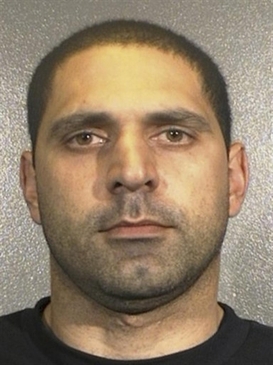
Elias-Abuelazam.jpg

Elias Abuelazam (Arabic: الياس أبو عزام‎, Hebrew: אליאס אבו אל עזאם‎, born August 29, 1976) is an Israeli-Arab convicted murderer, and suspect of racial[1]serial killing and multiple stabbings. He is suspected in a string of 18 stabbing attacks in the spring and summer of 2010 which resulted in five deaths.Abuelazam is also suspected in an unsolved March 2009 homicide in Leesburg. All of Abuelazam's alleged victims were described as "small framed" (e.g. short, thin, non-muscular) men, most of them African Americans.

 
Last edited:
Top