

Two parts.
http://www.stltoday.com/entertainme...9-8bd2-077c4de28b62.html#.UioQ-gqGibY.twitter
Hulk Hogan returns to St. Louis with TNA Wrestling for a live show, "No Surrender," at Chaifetz Arena on Thursday. The Hulkster talked with us about his current role in TNA, the wrestling industry, his favorite wrestlers, his movie career and more.
Why did you decide to officially sign with TNA in 2009? I talked to Dixie Carter (president of TNA Wrestling) a couple of times. A lot of it was timing. I lot of it was I could live without the wrestling business but pursuing other projects, trying to reshift gears and move in a different direction business-wise, I realized no matter what I did, I was always thinking about wrestling.
It's kinda like when you get addicted to chocolate or cigarettes or something, you gotta have your fix. It's almost like wrestling is in your blood. ... I got to the point where I got hooked on watching the TNA show.
I finally called Dixie back and told her I understand where I fit in. It was being addicted to being around the business. I thought I could shake it, but I'm still addicted to it. I just love being here. And the choice was made because I finally figured out that I could add to the mix, I could contribute and I could wrestle on a limited basis because I'm in the twilight of my so-called wresting career.
I knew I could bring my brand and bring awareness to the company and then behind the scenes, creatively, I could contribute and basically keep the art form alive with the timing, instinct and help the young guys.
What obstacles did you encounter when you started working for TNA? Communication was tough. The creative people were kind of a wild card. It was a situation where we all sat in a meetings and agree on creative directions. ... We would agree on stuff, then I would sit back and watch the show and it was completely different than what we talked about earlier in the production meetings. ... Those were the biggest hurdles I had in the beginning was why this perfect little unit wasn't functioning as planned. The biggest obstacle was keeping people from going into business for themselves.
What is unique about TNA's product today? The majority of our time we stay consistent with storylines. I think we are really, really consistent with delivering the action and keeping the business in the ring as much as possible. There are certain times where you can watch a quarter hour and minute-by-minute and see where the girls are on there and doing certain things in the background, having a certain conversation. That works. We try not to go against the grain. But the majority of the time the people want the action in the ring and we try to be really consistent with that, and that's what we are trying to do.
Which TNA young talent has the most star potential? I'm pretty much torn between Jeff Hardy and AJ Styles. They both get it. They both have the "it" factor. It's a toss-up because they both shine and they outshine each other certain times. I think either one of those guys has the potential to go on to greatness.
Have much creative control do you have over the company? I do not control creative at all. I'm kind of like the last pass before we go out in front of the cameras. I will be here during the day listening to ideas and contributing, but at the end of the day, the decision lays in the hands of the writers and Spike TV because they have equal say in direction.
Creatively I'm not involved. I cannot even begin to tell you the direction of a story six months from now backwards. But I do, on a weekly basis, get very involved with development and make sure 'OK you guys, you have to mention that Chris Sabin is having personal problems and he is not here this week' and mention that Rampage Jackson wasn't supposed to touch Tito Ortiz this week. I make sure that we stay within the parameters of that we've drawn for ourselves.
Pick your final four Bound for Glory participants to wrestle at "No Surrender" in St. Louis on Thursday. It's anybody's call at this moment. At the end of the day, I don't want to get into (picking a final four) because things change because it's a bunch of moving parts. All I know is that whoever comes out on top at "No Surrender" will be in San Diego for a shot at the (World Championship) belt. You have to be able to call an audible. And certain things happen when you are out there in the ring and certain people rise to the top.
What is unique about watching TNA's Impact Wrestling show live versus watching on television? I'm a huge wrestling fan. I got hooked on it very, very early. I was probably 8 or 9 years old when I got hooked on wrestling — when my father took me to the first live wrestling match in Tampa. When I heard the roar of the crowd, I heard guys throwing punches that sounded like cannons were going off in the building.
When you get to see it live, you get sucked in. ... It's just the experience of being in that building and the energy from the fans which makes the talent perform even better. The more electric the fans get about the matches, the harder the talent works.
Mixed martial artists Quinton "Rampage" Jackson and Tito Ortiz signed with TNA recently. Has that increased TV ratings and attendance at live events? I think they're intriguing. Some people watch wrestling and want to see wrestlers. Some people watch MMA and only want to see MMA. These guys have a chance to cross over like Brock Lesnar did. They have a chance to bring a new demographic to Bellator and bring a new demo to Impact Wrestling.
I talked to Tito (over 10 years ago) about wanting to be in the wrestling business. He's been a fan. He's had the passion for such a long time. And "Rampage" has national sneakers ads and the movies he's done and his exposure, I think it brings a lot to the table because these guys are passionate about the business.
I think it translates into a different demo into a larger audience. I think it makes the ratings shift. At the end of the day, it's not an overnight process. I think the more "Rampage" and Tito train in the ring for professional wrestling, I think the more interested the fans will get. We are going to have them hooking horns here soon.
How has their transition from MMA style to wrestling been? So far, so good. Being that they both have a great presence in front of the crowd and the fact that the fans know who they are makes it much easier to translate that energy from being an MMA guy to stepping into the wrestling business. They are not no-name guys. I think they've been in the ring on a pretty darn consistent basis trying to learn, to shift gears from the MMA ground and pound to the performance in the ring as wrestlers to becoming entertainers and mixing and matching both.
Everything I see is on the right track. Timing is an issue. Sometimes it takes five or 10 years to find your niche in professional wrestling. The fact that they've been in the ring doing a different type of competition doesn't take away from what they are doing, but it gives them a chance to find a difference really quick and make quick adjustments.
For St. Louis, they better be ready.
TNA has parted ways with some talent recently. Any plans to fill those vacancies? That's a Dixie Carter question. I'm not involved in any talent development or talent leaving or coming, but it's the nature of the business. You look at other companies, and every couple of months they start to clean house. Then the herd thins out.
What you mean to the company is basically what the numbers, attendance and what the crowd and fan reaction means to (the company). I think there is a certain point where you need to reshuffle the deck. It's a normal transition period that is only a temporary situation.
http://www.stltoday.com/entertainme...9-8bd2-077c4de28b62.html#.UioQ-gqGibY.twitter
Hulk Hogan returns to St. Louis with TNA Wrestling for a live show, "No Surrender," at Chaifetz Arena on Thursday. The Hulkster talked with us about his current role in TNA, the wrestling industry, his favorite wrestlers, his movie career and more.
Why did you decide to officially sign with TNA in 2009? I talked to Dixie Carter (president of TNA Wrestling) a couple of times. A lot of it was timing. I lot of it was I could live without the wrestling business but pursuing other projects, trying to reshift gears and move in a different direction business-wise, I realized no matter what I did, I was always thinking about wrestling.
It's kinda like when you get addicted to chocolate or cigarettes or something, you gotta have your fix. It's almost like wrestling is in your blood. ... I got to the point where I got hooked on watching the TNA show.
I finally called Dixie back and told her I understand where I fit in. It was being addicted to being around the business. I thought I could shake it, but I'm still addicted to it. I just love being here. And the choice was made because I finally figured out that I could add to the mix, I could contribute and I could wrestle on a limited basis because I'm in the twilight of my so-called wresting career.
I knew I could bring my brand and bring awareness to the company and then behind the scenes, creatively, I could contribute and basically keep the art form alive with the timing, instinct and help the young guys.
What obstacles did you encounter when you started working for TNA? Communication was tough. The creative people were kind of a wild card. It was a situation where we all sat in a meetings and agree on creative directions. ... We would agree on stuff, then I would sit back and watch the show and it was completely different than what we talked about earlier in the production meetings. ... Those were the biggest hurdles I had in the beginning was why this perfect little unit wasn't functioning as planned. The biggest obstacle was keeping people from going into business for themselves.
What is unique about TNA's product today? The majority of our time we stay consistent with storylines. I think we are really, really consistent with delivering the action and keeping the business in the ring as much as possible. There are certain times where you can watch a quarter hour and minute-by-minute and see where the girls are on there and doing certain things in the background, having a certain conversation. That works. We try not to go against the grain. But the majority of the time the people want the action in the ring and we try to be really consistent with that, and that's what we are trying to do.
Which TNA young talent has the most star potential? I'm pretty much torn between Jeff Hardy and AJ Styles. They both get it. They both have the "it" factor. It's a toss-up because they both shine and they outshine each other certain times. I think either one of those guys has the potential to go on to greatness.
Have much creative control do you have over the company? I do not control creative at all. I'm kind of like the last pass before we go out in front of the cameras. I will be here during the day listening to ideas and contributing, but at the end of the day, the decision lays in the hands of the writers and Spike TV because they have equal say in direction.
Creatively I'm not involved. I cannot even begin to tell you the direction of a story six months from now backwards. But I do, on a weekly basis, get very involved with development and make sure 'OK you guys, you have to mention that Chris Sabin is having personal problems and he is not here this week' and mention that Rampage Jackson wasn't supposed to touch Tito Ortiz this week. I make sure that we stay within the parameters of that we've drawn for ourselves.
Pick your final four Bound for Glory participants to wrestle at "No Surrender" in St. Louis on Thursday. It's anybody's call at this moment. At the end of the day, I don't want to get into (picking a final four) because things change because it's a bunch of moving parts. All I know is that whoever comes out on top at "No Surrender" will be in San Diego for a shot at the (World Championship) belt. You have to be able to call an audible. And certain things happen when you are out there in the ring and certain people rise to the top.
What is unique about watching TNA's Impact Wrestling show live versus watching on television? I'm a huge wrestling fan. I got hooked on it very, very early. I was probably 8 or 9 years old when I got hooked on wrestling — when my father took me to the first live wrestling match in Tampa. When I heard the roar of the crowd, I heard guys throwing punches that sounded like cannons were going off in the building.
When you get to see it live, you get sucked in. ... It's just the experience of being in that building and the energy from the fans which makes the talent perform even better. The more electric the fans get about the matches, the harder the talent works.
Mixed martial artists Quinton "Rampage" Jackson and Tito Ortiz signed with TNA recently. Has that increased TV ratings and attendance at live events? I think they're intriguing. Some people watch wrestling and want to see wrestlers. Some people watch MMA and only want to see MMA. These guys have a chance to cross over like Brock Lesnar did. They have a chance to bring a new demographic to Bellator and bring a new demo to Impact Wrestling.
I talked to Tito (over 10 years ago) about wanting to be in the wrestling business. He's been a fan. He's had the passion for such a long time. And "Rampage" has national sneakers ads and the movies he's done and his exposure, I think it brings a lot to the table because these guys are passionate about the business.
I think it translates into a different demo into a larger audience. I think it makes the ratings shift. At the end of the day, it's not an overnight process. I think the more "Rampage" and Tito train in the ring for professional wrestling, I think the more interested the fans will get. We are going to have them hooking horns here soon.
How has their transition from MMA style to wrestling been? So far, so good. Being that they both have a great presence in front of the crowd and the fact that the fans know who they are makes it much easier to translate that energy from being an MMA guy to stepping into the wrestling business. They are not no-name guys. I think they've been in the ring on a pretty darn consistent basis trying to learn, to shift gears from the MMA ground and pound to the performance in the ring as wrestlers to becoming entertainers and mixing and matching both.
Everything I see is on the right track. Timing is an issue. Sometimes it takes five or 10 years to find your niche in professional wrestling. The fact that they've been in the ring doing a different type of competition doesn't take away from what they are doing, but it gives them a chance to find a difference really quick and make quick adjustments.
For St. Louis, they better be ready.
TNA has parted ways with some talent recently. Any plans to fill those vacancies? That's a Dixie Carter question. I'm not involved in any talent development or talent leaving or coming, but it's the nature of the business. You look at other companies, and every couple of months they start to clean house. Then the herd thins out.
What you mean to the company is basically what the numbers, attendance and what the crowd and fan reaction means to (the company). I think there is a certain point where you need to reshuffle the deck. It's a normal transition period that is only a temporary situation.


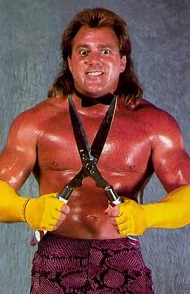


 Hogan introduced Brutus to the business....the wrestlers who introduced Hogan to the business were the Brisco Bros though...


