
OBAMA’S LOST ARMY
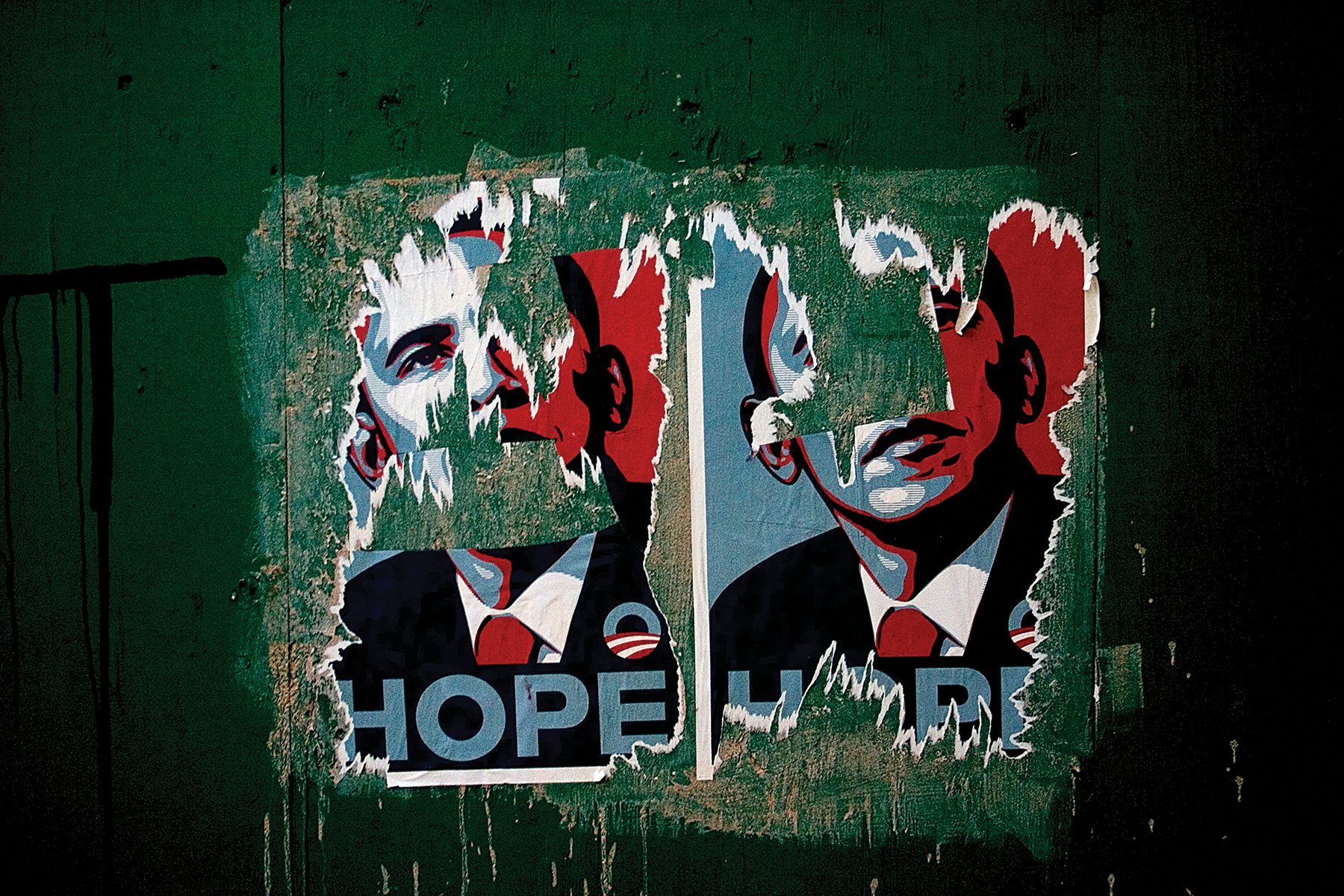
He built a grassroots machine of two million supporters eager to fight for change. Then he let it die. This is the untold story of Obama’s biggest mistake—and how it paved the way for Trump.
BY MICAH L. SIFRY
This is just a snippet, I'm not really going to go through all that effort to post the whole thing, but if the mods want to edit my post and try to do that, then by all means. But it will let you know about Obama's biggest failure and his team's biggest failure.
He built a grassroots machine of two million supporters eager to fight for change. Then he let it die. This is the untold story of Obama’s biggest mistake—and how it paved the way for Trump.
BY MICAH L. SIFRY
“I know you’re disappearing for a while to change diapers and play Mr. Dad,” Obama told Plouffe, “but just make sure you find time to help figure out how to keep our supporters involved. I don’t think we can succeed without them. We need to make sure they’re pushing from the grassroots on Washington and helping to spread what we’re trying to do in their local communities. And at the very least, we have to give them the opportunity to stay involved and in touch. They gave their heart and soul to us. This shouldn’t feel like a transactional relationship, because that’s not what it was. I want them along for the ride the next eight years, helping us deliver on all we talked about in the campaign.”
Three days later, Kapor emailed Edley and Alexander, frustrated that no progress was being made. “What is needed now,” he wrote, “is for the President-elect and his designees to decide how to move forward with Movement 2.0.” Would the group be independent or part of the DNC? Who would run it? How would it interact with the White House? “I don’t see how anything can happen until the project is given a green light and the basic issue of structure and leadership is settled by those with the power to do so,” Kapor concluded. “In other words, someone please just make a decision.”
Plouffe led Obama’s supporters to believe that the decision was in their hands. On November 19, he emailed a survey to everyone on the campaign’s list. “You’ve built an organization in your community and across the country that will continue to work for change,” Plouffe told them, “whether it’s by building grassroots support for legislation, backing state and local candidates, or sharing organizing techniques to effect change in your neighborhood. Your hard work built this movement. Now it’s up to you to decide how we move forward.”
Obama’s army was eager to be put to work. Of the 550,000 people who responded to the survey, 86 percent said they wanted to help Obama pass legislation through grassroots support; 68 percent wanted to help elect state and local candidates who shared his vision. Most impressive of all, more than 50,000 said they personally wanted to run for elected office.
But they never got that chance. In late December, Plouffe and a small group of senior staffers finally made the call, which was endorsed by Obama. The entire campaign machine, renamed Organizing for America, would be folded into the DNC, where it would operate as a fully controlled subsidiary of the Democratic Party. Plouffe stayed on as senior adviser, and put trusted field organizers Mitch Stewart and Jeremy Bird in charge of the new group. Bird says the OFA team was never even told about the idea for Movement 2.0. “None of these documents were even shared with us,” he says. “I’m not sure the senior staff on the campaign even knew they existed.”
Obama unveiled OFA a week before his inauguration. “Volunteers, grassroots leaders, and ordinary citizens will continue to drive the organization,” he promised. But that’s not what happened. Shunted into the DNC, MyBO’s tools for self-organizing were dismantled within a year. Instead of calling on supporters to launch a voter registration drive or build a network of small donors or back state and local candidates, OFA deployed the campaign’s vast email list to hawk coffee mugs and generate thank-you notes to Democratic members of Congress who backed Obama’s initiatives. As a result, when the political going got rough, much of Obama’s once-mighty army was AWOL. When the fight over Obama’s health care plan was at its peak, OFA was able to drum up only 300,000 phone calls to Congress. After the midterm debacle in 2010, when Democrats suffered their biggest losses since the Great Depression, Obama essentially had to build a new campaign machine from scratch in time for his reelection effort in 2012. (Plouffe and Messina declined requests to speak about Movement 2.0; Axelrod, Podesta, and Rouse said they had no comment.)
Ultimately, of course, the failure to keep the grassroots movement going rests with Obama. It was his original, and most costly, political mistake—not only a sin of omission, but a sin of imagination, one that helped decimate the Democratic Party at the state and local level and turn over every branch of the federal government to the far right. In December, in an exit interview with NPR’s Morning Edition, Obama himself sounded haunted by it. “You know, when I came into office, we were just putting out fires,” he said. “We were in a huge crisis situation. And so a lot of the organizing work that we did during the campaign, we started to see right away wasn’t immediately transferable to congressional candidates. More work would have needed to be done to just build up that structure. And, you know, one of the big suggestions that I have for Democrats as I leave, and something that, you know, I have some ideas about is: How do we do more of that ground-up building?”
This is just a snippet, I'm not really going to go through all that effort to post the whole thing, but if the mods want to edit my post and try to do that, then by all means. But it will let you know about Obama's biggest failure and his team's biggest failure.


