Powerful Black Minds - Beyond Entertainment

Claudex

Lord have mercy!
Supporter
Joined
Apr 30, 2014
Messages
6,431
Reputation
4,232
Daps
19,364
Reppin
Motherland
CAN YOU MODS HAVE SOME BALLS AND LEAVE THIS IN THE STICKY THREAD LIKE U DO WITH THAT BULLshyt RANDOM THOUGHTS THREAD.

WE NEED SOMETHING FOR BLACKS ON THIS BOARD AND LURKERS TO LEARN ABOUT WHO OUR ANCESTORS WAS AND DID AND WHAT NEW BLACK MINDS ARE DOING

Agreed!
 
  • Dap
Reactions: .r.

BlackMajik

Behind Enemy Lines
Joined
Dec 26, 2012
Messages
45,620
Reputation
12,638
Daps
232,739
Reppin
DSGB(Down South Georgia Boy)
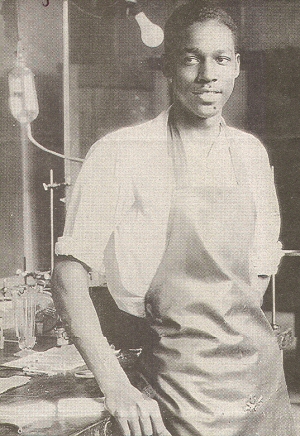
Dr. Vivien Thomas

thomas_vivien.jpg


Described as the “most untalked about, unappreciated, unknown giant in the African American community,” by Dr. Levi Watkins, Jr., Vivien Thomas received an honorary doctorate from Johns Hopkins University in 1976, and while this was undoubtedly memorable, the decades which preceded this moment were equally unforgettable. In Nashville, Tennessee, this high school honors graduate dreamed of becoming a physician. Thomas, a skilled carpenter, saved for seven years to pay for his education. However, he lost his savings during the Great Depression. Beginning in 1930, he worked at Vanderbilt University's Medical School as a laboratory assistant to Alfred Blalock, a white physician who became a pioneer in cardiac surgery. Blalock mentored Thomas and taught him to conduct experiments.

In 1941, Blalock transferred to Johns Hopkins University School of Medicine and asked Thomas to transfer as well. While at Hopkins, they developed a procedure to save “blue babies” afflicted with congenital heart defects. According to Partners of the Heart, Thomas often “stood on a step stool” behind Blalock, guiding the surgeon through surgery. Though earning low wages, Thomas performed surgeries, designed instruments needed to perform surgery on “blue babies,” did innovative work on the defibrillator, and taught surgical techniques to surgeons. He also moonlighted as a bartender to support his family.

In 1960, Blalock celebrated his 60th birthday, and while 500 people attended, Thomas, with whom he had worked for over 30 years, was not invited. After 37 years, Thomas was appointed to the faculty at Johns Hopkins University School of Medicine. Leaving an indelible mark, he became instructor emeritus of surgery. Vivien Thomas, who never earned a medical degree, died in Baltimore, Maryland at the age of 75.

Skills

Thomas's surgical techniques included one he developed in 1946 for improving circulation in patients whose great vessels (the aorta and the pulmonary artery) were transposed.[32] A complex operation called an atrial septectomy, the procedure was executed so flawlessly by Thomas that Blalock, upon examining the nearly undetectable suture line, was prompted to remark, "Vivien, this looks like something the Lord made".[32] To the host of young surgeons Thomas trained during the 1940s,[33] he became a figure of legend, the model of a dexterous and efficient cutting surgeon. "Even if you'd never seen surgery before, you could do it because Vivien made it look so simple," the renowned surgeon Denton Cooley[27] told Washingtonian magazine in 1989. "There wasn't a false move, not a wasted motion, when he operated." Surgeons like Cooley, along with Alex Haller,[34] Frank Spencer,[35] Rowena Spencer,[36] and others credited Thomas with teaching them the surgical technique that placed them at the forefront of medicine in the United States. Despite the deep respect Thomas was accorded by these surgeons and by the many black lab technicians he trained at Hopkins, he was not well paid.[37] He sometimes resorted to working as a bartender, often at Blalock's parties. This led to the peculiar circumstance of his serving drinks to people he had been teaching earlier in the day. Eventually, after negotiations on his behalf by Blalock, he became the highest paid technician at Johns Hopkins by 1946, and by far the highest paid African-American on the institution's rolls.[38] Although Thomas never wrote or spoke publicly about his ongoing desire to return to college and obtain a medical degree, his widow, the late Clara Flanders Thomas, revealed in a 1987 interview with Washingtonian writer Katie McCabe that her husband had clung to the possibility of further education throughout the blue baby period and had only abandoned the idea with great reluctance. Mrs. Thomas stated that in 1947, Thomas had investigated the possibility of enrolling in college and pursuing his dream of becoming a doctor, but had been deterred by the inflexibility of Morgan State University, which refused to grant him credit for life experience and insisted that he fulfill the standard freshman requirements. Realizing that he would be 50 years old by the time he completed college and medical school, Thomas decided to give up the idea of further education.

 

EdJo

Banned
Joined
Nov 17, 2017
Messages
517
Reputation
535
Daps
2,739
9jj88m.jpg


Patrick Awuah: Millionaire who quit Microsoft to educate future leaders - CNN

Patrick Awuah Jr grew up in Accra, Ghana. He moved to the U.S. in 1985 to attend Swarthmore College with a full scholarship. He earned bachelor's degrees in Engineering and Economics, graduating in 1989. Following graduation, Awuah worked as a software engineer and program manager for Microsoft from 1989 to 1997.

In 1997, Patrick Awuah left Microsoft with the goal of returning to Ghana to educate the next generation of African leaders. He enrolled at the Haas School of Business at UC Berkeley, focusing his work on preparing a business plan for Ashesi. Awuah, Nina Marini, and other graduate students from Berkeley went to Ghana to do a feasibility study for opening a private university there. Awuah graduated with his MBA in 1999. That same year, he moved back Ghana with his family to found Ashesi University.
Ashesi welcomed its first class of students in 2002. Since that time, its bachelor's programs have expanded to include, "Business Administration, Management Information Systems, Computer Science, Electrical Engineering, Computer Engineering and Mechanical Engineering." Awuah continues to serve as the president of Ashesi University.


EdJo

Banned
Joined
Nov 17, 2017
Messages
517
Reputation
535
Daps
2,739
214pdn9.jpg


Sir William Arthur Lewis (23 January 1915 – 15 June 1991) was a Saint Lucian economist well known for his contributions in the field of economic development. In 1979 he won the Nobel Memorial Prize in Economic Sciences.

When Ghana gained independence in 1957, its government appointed Lewis as their first economic advisor. He helped draw up its first Five-Year Development Plan (1959–63).

W. Arthur Lewis - Wikipedia


:jbhmm:In modern times, i wish we had this trust in each other...We should only trust in each other.
 

EdJo

Banned
Joined
Nov 17, 2017
Messages
517
Reputation
535
Daps
2,739
2ymeg6a.jpg


Akinwande Oluwole "Wole" Babatunde Soyinka (Yoruba: Akinwándé Oluwo̩lé Babátúndé S̩óyinká, pronounced [wɔlé ʃójĩŋká]; born 13 July 1934) is a Nigerian playwright, poet and essayist. He was awarded the 1986 Nobel Prize in Literature, the first African to be honored in that category.

Wole Soyinka - Wikipedia
 

EdJo

Banned
Joined
Nov 17, 2017
Messages
517
Reputation
535
Daps
2,739
33eln38.jpg


Brian Turyabagye, a young Ugandan engineer, has designed a biomedical “smart jacket” that can quickly and accurately diagnose pneumonia, an infection that inflames the lungs.

The jacket, which has been dubbed “Mamaope” or “mother’s hope,” consists of a stethoscope embedded in to a wearable vest.

The app monitors a patient’s chest and listens for the sound of the lungs. It also checks one’s breathing rate and temperature. Analysis of the audio can lead to an early and accurate diagnosis of pneumonia.


Ugandan Inventor Designs Smart Jacket To Diagnose Pneumonia


Medical smart jacket tackles misdiagnosis of pneumonia

The Bluetooth biomedical smart jacket - CNN
 

EdJo

Banned
Joined
Nov 17, 2017
Messages
517
Reputation
535
Daps
2,739
2s0xx1t.jpg


Kwabena Boahen is widely regarded as one of the pioneers of neuromorphic engineering, a field founded by Carver Mead in the 1980s. In contrast to the field of artificial intelligence, which merely takes inspiration from the brain, neuromorphic engineers seek to develop a new computing paradigm based on the brain's organizing principles. The brain employs a computing paradigm that is fundamentally different from digital computers. Instead of using digital signals for computation as well as communication, the brain uses analog signals (i.e., graded dendritic potentials) for computation and digital signals (i.e., all-or-none axonal potentials) for communication. Having explored this unique hybrid of digital and analogue techniques over the past three decades, neuromorphic engineers are now beginning to understand and exploit its advantages. Potential applications of their work include brain-machine interfaces, autonomous robots, and machine intelligence.

Kwabena Boahen - Wikipedia

Kwabena Boahen

"My group's contributions to the field of neuromorphic engineering include a silicon retina that could be used to give the blind sight, a self-organizing chip that emulates the way the developing brain wires itself up, and a mixed analog-digital hardware platform (Neurogrid) that simulates a million cortical neurons in real-time—rivaling a supercomputer while consuming only a few watts."


EdJo

Banned
Joined
Nov 17, 2017
Messages
517
Reputation
535
Daps
2,739
Andre Grey

30v0r5j.jpg


He was born in Belize.

- "The online digital music revolution was started on this day exactly 28 years today when, on August 8, 1988, revered inventor Andre Gray uploaded the very first
complete song on the Internet titled "Internet Killed The Video Star", a song he composed on a Yamaha DX7 synthesizer and in the MIDI format."


"The song "Internet Killed The video Star" by Andre Gray is now acknowledged by historians as the big bang and Rosetta Stone of digital music
and the birth of online entertainment in general."


- Andre Gray, an MBA graduate of Kent University in Canterbury, United Kingdom, is also well known as the inventor of:

-the 1991 Electronic Ticket;

- the 1995 Electronic Press Kit;

- the first mobile phone music player
, Microgrooves Electronic, in 1998;

- Online Music Sales Certifications in 1999.


- "Being the first person in the world to realize that consumers could not or would not be willing to purchase both a mobile phone and a MP3 player separately, Gray set out to rectify that problem and his finished product he simply named Microgrooves Electronic or Microgrooves-E for short."

- "Microgrooves Electronic, or Microgrooves-E for short, is the world's very first mobile phone music player software capable of storing and playing back pre-recorded music on a cellular phone like a portable digital MP3 player. Microgrooves-E was invented and given its name by prolific inventor Andre Gray who wrote the software using the C programming language for his IBM Simon smartphone that was given to him as a Christmas gift in 1993 by his dear friend Manny Roth, the legendary former operator of the famed Cafe Wha? Club in New York City."


- "In June of 1991, he invented the electronic ticket when he began selling concert tickets through his USENET newsgroup for a King’s X concert he promoted at the Elco Theatre in Elkhart. He invented ringtones and ring backs and the SYNC Programming Language in 1994 for his IBM Simon cell phone and single-handedly jumpstarted the mobile phone entertainment industry.”


- "One of Gray’s inventions that is getting a lot of attention in the technology world right now is his Mind Over Matter Technology, which he invented from as far back as 1994. With this technology, thoughts are inputted onto the computer without touching a keyboard or a muse."


- "Mind-Over-Matter Technology, sometimes called MOM Technology for short, is a branch of science & technology where the human brain or mind is utilized as the primary controlling mechanism for the instruction, manipulation and operation of all forms of electronic or digital electronics products, machinery, motor or hybrid operated vehicles (air, land, underwater) and all other known or yet to be invented machinery, digital electronics devices, products or apparatuses across all industries & technologies."


Andre Gray's – Belizean inventor vinyl countdown – Noted inventor turns the tables with the launch of innovative new vinyl record formats | | International Magazine Kreol

Art and Culture How Andre Gray Killed the MP3 Music Player - Amazines.com Article Search Engine

The Godfather of internet inventions is a Belizean-American, Andre Gray

Internet Killed The Video Star (1988) By Andre Gray Celebrates The 28th Anniversary Of The Birth Of Online Music

https://www.quora.com/Who-invented-Mind-Over-Matter-Technology

The 'Talented Tenth' Most Influential Blacks In Technology - Lightning Releases
 

EdJo

Banned
Joined
Nov 17, 2017
Messages
517
Reputation
535
Daps
2,739
Lilian Abron
ei8qqd.jpg


Chief executive officer and chemical engineer Lilia Ann Abron was born on March 8, 1945 in Memphis, Tennessee. Her father was a school principal and her mother was a school teacher who taught art and geography. Abron attended Lemoyne College in Memphis, Tennessee where she received her B.S. degree in chemistry in 1966. She earned her M.S. degree in sanitary engineering from Washington University in St. Louis in 1968. After receiving her M.S. degree, Abron worked for the Kansas City Water Department. She went on to become a research engineer for the Metropolitan Sanitary District of Greater Chicago. Abron received her Ph.D. in chemical engineering from the University of Iowa in 1972, the first African American woman to do so.

After completing her education, Abron served as an assistant professor of civil engineering at Tennessee State University and held a joint appointment as an assistant professor of environmental engineering at Vanderbilt University. In 1975, she joined the faculty of Howard University as an assistant professor of civil and environmental engineering while serving as a consultant to local engineering firms. Abron founded PEER Consultants in 1978, an environmental engineering consulting firm that provides solutions to the problems of contamination of the environment. Her firm had contracts with the Superfund program including the Boston Harbor cleanup; the Department of Defense and the Department of Energy through its Hazardous Waste Remedial Actions Program. In 1995, Abron founded Peer Africa with the mission of building energy-efficient homes in post-apartheid South Africa. Peer Africa’s Witsand iEEECO (Integrated Energy Environment Empowerment-cost Optimization) Sustainable Human Settlement won the American Academy of Engineers 2012 Superior Achievement Award.

Abron is a member of Delta Sigma Theta Sorority and the International Women’s Forum. Professionally, she is a member of the Water Environment Federation, American Water Works Association and American Society of Civil Engineers. She also serves on the Advisory Board for the College of Engineering, University of South Florida. Abron has been active in in community serving as the president of the Washington DC chapter of Jack and Jill of American, Inc., and as a board member for the Baptist Home for Children. She was an original participant of the 1975 American Association for the Advancement of Science (AAAS) study, “The Double Bind: The Price of Being a Minority Woman in Science.” In 1999, Abron was the recipient of the Hancher-Finkbine Alumni Medallion from the University of Iowa; in 2001, she was awarded the Magic Hands Award by LeMoyne-Owen College, and in 2004, she was elected to the National Academy of Arts and Sciences. Abron has three adult sons.

Lilia Abron | The HistoryMakers
 

EdJo

Banned
Joined
Nov 17, 2017
Messages
517
Reputation
535
Daps
2,739
Ilesanmi Adesida

23sdc00.jpg


6tpzr9.jpg


Electrical Engineer Ilesanmi Adesida was born in 1949 in Ifon, Ondo, Nigeria. Adesida enrolled in the University of California, Berkeley and earned his B.S. degree in 1974; his M.S. degree in 1975; and, his Ph.D. degree in 1979. Adesida was awarded an IBM postdoctoral fellowship from 1979 to 1981. His research interests include nanofabrication processes and ultra-high-speed optoelectronics.

Upon graduation, Adesida served as a research associate at the Cornell Nanofabrication Facility and School of Electrical Engineering at Cornell University from 1979 to 1984. He then returned to Africa and accepted a position as the head of the electrical engineering department at Abubakar Tafawa Belewa University in Bauchi, Nigeria. In 1987, Adesida returned to the United States and worked at the University of Illinois, Urbana-Champaign (UIUC) as a professor of electrical and computer engineering. In 1994, he was appointed as a research professor for the Coordinated Science Laboratory and as a professor in the Beckman Institute of Advanced Science and Technology. Adesida went on to serve in numerous academic and research capacities at UIUC. He served as the associate director for education for the NSF Engineering Research Center for Compound Semiconductor Microelectronics from 1990 to 1997. In 2000, Adesida became the director of the Micro and Nanotechnology Laboratory and was appointed as a professor of materials science and engineering. After serving as Dean of the College of Engineering from 2005 to 2012, Adesida was named provost and vice chancellor for Academic Affairs. A mentor as well as a research manager, he guided the education of nineteen post-doctoral fellows, conferred thirty-four Ph.D. degrees upon his students, and supervised numerous undergraduate research projects.

Adesida has organized and chaired many international conferences, including the International Symposium on Electron, Ion, and Photon Beams and Nanofabrication; the TMS Electronic Materials Conference; and the Topical Workshop on Heterostructure Microelectronics. He also served as the President of the IEEE Electron Device Society and was named a Distinguished Lecturer from 1997 to 2002. In addition, Adesida was a co-founder of Xindium Technologies, and served as a member of the board of Fluor. He has been a member of the National Academies Board of Army Science and Technology since 2009 and is a member of the National Academy of Engineering.

For his many contributions and service, Adesida was awarded the IEEE EDS Distinguished Service Award in 2011. He was elected as a Fellow of the Institute of Electrical and Electronic Engineers (IEEE), the American Association for the Advancement of Science (AAAS), the American Vacuum Society (AVS), the Optical Society of America, and the Materials Research Society. Adesida also received the Oakley Kunde Award for Excellence in Undergraduate Education and was elected as a University Scholar at UIUC. He was named as an Outstanding Alumnus of the EECS Department at the University of California, Berkeley in 2009.

Ilesanmi Adesida | The HistoryMakers


"Adesida's field of academic research is nanotechnology with special emphasis on high speed devices used in communications. His research expertise also includes nanofabrication science and technology, high-speed optoelectronic devices and wide-bandgap materials and devices."

"US Patent 5880482 - Low dark current photodetector"

Ilesanmi Adesida - Wikipedia


"Low dark current photodetector

Abstract

A low dark current metal-semiconductor-metal photodetector has an active region for receiving photons and generating charge carriers in the form of holes and electrons in response to the photons and an isolation region for allowing electrical coupling to occur without increasing the dark current. The photodetector is a III-V ternary semiconductor having its active region defined by a via through a dielectric layer. A pair of electrodes has contact portions extending into contact with the active region and terminating on the isolation region. One electrode of the pair provides a high Schottky barrier to holes. The other electrode provides a high Schottky barrier for electrons"

US5880482A - Low dark current photodetector - Google Patents
 

EdJo

Banned
Joined
Nov 17, 2017
Messages
517
Reputation
535
Daps
2,739
Sharon J. Barnes
mcvsdd.png


Biologist, chemist and inventor Sharon J. Barnes was born on November 28, 1955 to Selena and William Jefferson McDonald in Beaumont, Texas. She attended Sisblee High School where she received three scholarships to attend college. In 1978, Barnes received her B.S. degree in biology-chemistry and clinical laboratory science. During her time in college she interned at clinical laboratory science program for the Baptist Hospital of Southeast Texas.

After college, Barnes began working as a technologist in Clinical Laboratory Science at Veterans Administration Medical Center. During this same year, she received her certification as clinical laboratory scientist from the Veterans Administration at Baylor University. In 1981, Barnes obtained a new position at Brazosport Regional Health Center where she worked as an assistant lab director. Five years later, she pursued her interest as a chemist at the Dow Chemical Company serving as a special chemistry lab supervisor. In 1991, Barnes obtained a U.S. Patent for a new application in Infrared Thermography Technology. She was a member of a team of five, including one other African American, who invented the process and apparatus for con-tactless measurements of sample temperature. A year later, she received her certification as clinical laboratory director from the National Certification Agency at Baylor University and became laboratory director at Dow Chemical Company and clinical lab director in the Clinical Health Department. Barnes has also worked as a QA/QC chemist in Research & Development in the Texas Analytical and Environmental Lab. In 1996, Barnes became Dow Chemical Company’s training specialist as well as manager for Site Training and Development. She eventually assumed the role as human resource partner and consultant. In 2005, she received her MBA in human resources management from the University of Phoenix and promptly became human resources associate director for the Performance Plastics Division for manufacturing and engineering, finance, assets and supply chain, licensing and catalysts.

In 1991, Barnes was named Dow Texas Inventor, she has also received the Outstanding Scouter Award twice from Dow Chemical Company and was selected as one of the 50 Most Influential Blacks in Research by Engineer.com. Barnes was named Most Distinguished Alumnae for 2003 by Baylor University, Waco Texas. That same year she was elected to serve as National Secretary for the National Organization for the Professional Advancement of Black Chemist and Chemical Engineers (NOBCCHE). She has also serves two terms as Gubernational Appointee – District One Review Committee for Harris, Galveston and Brazoria countries (appointed by Governor George W. Bush and re-appointed by Governor Rick Perry). Barnes currently resides in Freeport, Texas with her husband Ronald Barnes. They have two children together, Ronald Barnes, II and Ashley Crawford.

Sharon Barnes | The HistoryMakers
 

Black Hans

Follow Jesus. Be Beautiful
Supporter
Joined
May 8, 2012
Messages
8,455
Reputation
-1,200
Daps
20,593
Reppin
John 14:6
One star for disrespecting black people who are entertainers. Looking down on black celebrities isn't going to cure your inferiority complex. :camby: Both can exist and both can be celebrated in our community :bunbcmon:
 
Top