President Maduro of Venezuela urges US diplomats to leave country within next 72hrs

loyola llothta

☭☭☭
Joined
Apr 17, 2014
Messages
35,064
Reputation
7,040
Daps
80,059
Reppin
BaBylon
The fascist Bolsonaro regime in Brazil is escalating its military threats against its neighbor Venezuela. There has been very little attention to Bolsonaro's many acts of war against Venezuela (especially in English-language media). He has already backed numerous terror attacks


Brazil’s far-right Bolsonaro regime backed a terror attack on Venezuela in December, as part of a larger US/Colombia-backed plot to violently overthrow elected President Maduro. The shocking terror operation received no coverage in mainstream US media


Brazil's far-right government backed terror plot against Venezuela, top newspaper reveals | The...
thegrayzone.com


loyola llothta

☭☭☭
Joined
Apr 17, 2014
Messages
35,064
Reputation
7,040
Daps
80,059
Reppin
BaBylon
US continues its outright war on Venezuela’s governmental institutions, this time offering a $5 million bounty for information leading to the arrest of Chief Justice Maikel Moreno of the country’s Supreme Court Big Mike doesn’t run a diplomatic office, he runs a mafia


loyola llothta

☭☭☭
Joined
Apr 17, 2014
Messages
35,064
Reputation
7,040
Daps
80,059
Reppin
BaBylon
tras-23-ac3b1os-de-uso-bc3a9lico-de-la-prensa-contra-venezuela-eeuu-dice-que-iniciarc3a1-la-guerra-medic3a1tica1-800x445.jpg

25 July 2020
After 23 Years of Media Warfare Against Venezuela, the US Says it Will Start a Media War

After 23 years of unremitting media warfare against Venezuela, the United States announces that it will start a media war against Venezuela. It’s cynical, it’s tragic, it’s even comical. Since 1997, when Commander Hugo Chávez Frías began to emerge in the polls as a presidential option, and until today, the United States has led the most violent media initiatives to influence Venezuelan politics and change the course that through elections the (Venezuelan) people have taken. A brief account of the main episodes of this communications war would clarify how old and stubborn this strategy is.

The serial genocide perpetretor Elliott Abrams (mastermind of massacres and attacks in El Salvador, Guatemala and Nicaragua, let it be known) was in charge of delivering this “news” more than two decades later.

Journalistic reports say that “the United States is preparing a new strategy against Venezuela in which it will use the media as part of its pressure campaign against Maduro.”

Abrams, also instigator of United States’ wars and invasions in this century, explained that Washington plans the launch of media actions on radio, television and internet, in order to penetrate Venezuelan territory.

Abrams spoke at an online conference sponsored by the Hudson Institute, one of Washington’s most influential think tanks, entities that, as Canadian professor Rodrigue Tremblay says, “provide political reports on various topics to government officials, usually from a very conservative viewpoint.”

23 years of war

The first movements of the US media war in Venezuela were against the powerful political movement that took the electoral course in 1997. When the then political establishment realized that its lifeboat, the candidacy of the former Miss Universe Irene Sáez, began to deflate, and that Chávez’s popularity grew rapidly, almost the entire media industry in Venezuela lined up behind desperate moves by the right to avoid a debacle.

Washington was a leading part of those alignments, through frequent diplomatic interference and through the unified action of the American media of the time, which was key for news networks such as CNN and Fox News.
tras-23-ac3b1os-de-uso-bc3a9lico-de-la-prensa-contra-venezuela-eeuu-dice-que-iniciarc3a1-la-guerra-medic3a1tica2.jpg
Then, when Chávez was in power, almost all of the media apparatus tried in vain to prevent the convocation of a National Constituent Assembly and, since it was not possible to stop that process either, it directed its efforts to try to get the people to reject the new Magna Carta (constitution).

All against Chávez

By 2000, the few media that had given support to Chávez turned around when they realized that the new president would not be their puppet. The war then turned into all-against-the-government and in that vein, the April 2002 coup d’état arrived, which according to all the evidence, including confessions and confidences of the protagonists, was mainly a media coup, closely coordinated by the State Department. At that moment, the perverse figure of Abrams appeared behind the scenes.

Rabidly mediatic were also the following chapters of the saga, including the “military rebellion” in Plaza Altamira and the oil sabotage and lock-down (Dec, 2002). The poisoned communications of those months led vast sectors of the Venezuelan population into mental breakdowns, from which at this point, 18 years later, many still have not recovered.

Maybe it’s something like that Abrams and his minions are considering now.


Only, many of the media that were then stellar no longer exist, have modified their editorial lines or are limited to small audiences. To a large extent, the fact of being turned into scrap metal is the consequence of their incursion into a media war in which they emerged as losers.

2004 to 2013: From plot to plot

The use of the media as a weapon of primary importance in the attack against Bolivarian Venezuela continued in 2004 with the backing of the first attempt by the extreme right to overthrow the government through outbreaks of urban disturbances, the wrongly named “guarimbas”.

Also that year, the media, acting in unison in a scenario that they widely dominated, did everything possible to relativize and ridicule the government’s complaint about the paramilitary operation of the Daktari estate, dismantled by intelligence agencies. Also in 2004, all the national and foreign media aligned against Chávez in the recall referendum.

The media were the deciding factor in 2005 in the opposition coalition’s decision to boycott the parliamentary elections, one of the main party leaders, Henry Ramos Allup, later revealed.

In 2007, the scoundrel media suffered a major loss with the non-renewal of a broadcasting television channel concession of RCTV, one of the most bitter enemies of the revolutionary process since 1997. In that year, without the stubborn support of the media, it would not have been possible to create the climate of turmoil that led to the defeat of the Constitutional Reform project and the promotion of a group of young people with far-right ideas, in the style of the fascist movements that carried out the so-called color revolutions in Eastern Europe.

During the following years, until 2011, the media machinery did not rest in its conspiracies, but there was little that it could achieve. The same thing happened to its counterpart, the political opposition, that was in the dark before a Chavez in all his splendor. But that year they found a streak in which they showed their most perverse imprint, by feeding on President Chávez’s illness. They went with that until March 2013, when the president died and even later, because they have continued to work systematically against the memory that a good part of the Venezuelan people and many other countries keep about Hugo Chavez.

2013: Casualties on the battlefront

That year, the media battalion also suffered considerable losses, when the owners of several of the most radically anti-Chavista media decided to sell them to business groups that assumed different editorial and news lines. It was a defeat inflicted on the rightwing media with the dented weapons of capitalism, as “Che” Guevara would have said, because the voice of money spoke. Be that as it may, in short, it was a defeat.

It is possible that the media that Abrams intends to create are the one that played the role that the media sold (by their owners) stopped playing at that time.

In that same 2013, while these plays were being completed, the rest of the media machinery, especially the one based in other countries, remained at war, encouraging adventures such as the “calentera” (new guarimbas) after the defeated Henrique Capriles in the Presidential race after Chavez’s death, which caused more than a dozen of deaths, and developed intense and daily smear campaigns against President Nicolás Maduro.

That same year the economic war intensified and the media component was essential for it to take shape.

2014-2017: More and worse violence with media support

In 2014, allied to the most undemocratic sectors of the Venezuelan right, the media encouraged a new attempted insurrection through a focussed tactic using the guarimba model. These were highly localized violent events in enclaves of the middle and upper classes, so the role of the media was crucial to create, on a global scale, the impression that a great anti-government popular rebellion was underway.

Between that year 2015 and 2017, the media were strategic props in the intensification of the war against the people through shortages, hoarding and speculation of essential goods. At this time, a newspaper network in the US, Latin America and Europe dedicated several pages a day to denouncing topics such as long lines to buy bread or toilet paper. Its purpose was to portray Venezuela as hell and blame the government for the evils intentionally caused by the business community and the reactionary political class.

In 2016, after the opposition victory in the legislative elections (in December 2015), the rightwing media went as crazy as the partisans. They launched together from all directions different attempts to put an early end to the Maduro government. The media (local and international) breathed life into suggestions as far-fetched as the removal of the President in six months, the abandonment of office, doubts about his nationality and forced early elections.

In 2017, another episode occurred in which the media is deeply involved. It was the third and bloodiest yet, wave of terrorist violence (guarimbas), which this time lasted four months and included lynchings and barbaric acts as few had been seen in many years in Venezuela. The anti-Chavez communication machinery (now reinforced by new digital native media, many of them openly funded by the US and the European Union) glorified violent protesters; it made martyrs of young people who were put to death by the extreme right-wing political leadership, and it hid or relativized the hate crimes and acts against humanity perpetrated in the opposition coven, including the vile murder of people who were burned alive (just because they “looked” Chavista).

The media manipulation regarding these days reached worldwide levels. On July 30, the date of the elections (for governors), the terrorist opposition tried to impede the elections and the communication apparatus presented the violence to the world as promoted by the government.

2017-2019: Diaspora, assassination and commissioning

Throughout all these years and until 2019, the power of the media was paramount in consolidating the narrative of Venezuela as a nation in humanitarian crisis and on the brink of famine as a result of erroneous policies. It was also key to encouraging hundreds of thousands of Venezuelans, especially young people, to leave the country. The “reports” about the so-called “diaspora” were part of a gigantic psychological operation that has had dire consequences for its victims, due to outbreaks of xenophobia, human trafficking, exploitation of workers and, this year, terrible human dramas.

In 2018, the same media were complicit in the political right that, after negotiating and reaching agreements, kicked over the table in the Dominican Republic on orders from the State Department. They also did their best to delegitimize the May presidential election and sought to discredit and ridicule the frustrated August assassination attempt [on Maduro] using drones. Only months after the events, one of those media decided to make the truth known, with testimonies from the material authors of the terrorist plot. Others have never deigned to admit that they misled their audiences.

Since 2019, the entire media machinery has been essential in sustaining the arbitrary “government in charge” of Juan Guaidó, on express instructions from Washington. The deployment that this character was given as a supposed national leader, has nothing to do with journalism, but is further proof of its role as a weapon in the conspiracy.

Among the highlights of 2019 in which the communication apparatus was – or claimed to be – of great weight in the insurrectional strategy, are Guaidó’s self-proclamation; Cúcuta’s concert and the failed invasion attempt under the guise of humanitarian aid; the blackouts in March, April and July, and the attempted coup d’état on April 30.

In the humanitarian aid episode, all the right-wing media conspired to support the false version that the Venezuelan government had ordered the burning of the trucks with food and medicine (allegedly coming from Cucuta), despite evidence that the fire had been caused by anti-Chavistas from the Colombian side of the border, as verified and recognized, weeks later, by The New York Times.

The same media that had demanded that Maduro be tried for crimes against humanity due to that destruction, did not ask for any sanction, not even a reprimand, against the true authors of the crime.

In 2020, the alleged informative bodies were, once again, a cog in the strategy of “regime change” by endeavoring to keep the Guaidó operation alive, hiding or downplaying the enormous cases of corruption that have been perpetrated under cover by his alleged commissioners.

Meanwhile, new media, which for the most part operate from outside the country, try to use the “fight against corruption” argument to destroy the social program of the Local Supply and Production Committees (CLAP), which have been a response to the economic war. In this way they serve the US strategy of suffocating the Venezuelan population until it rises up against the government.

What else might they try?

After this quick walk through of more than two decades of the media turned into cannons and bombs from the right, one has to wonder what the serial genocide Abrams is thinking now when he talks about “starting” a media offensive.

What are they going to do now, those who follow the instructions of this murderer of towns and recipient of “fees” from USAID, the more or less decent face of the CIA? What can they try that they have not already tried? We will see soon enough.

Link:

After 23 Years of Media Warfare Against Venezuela, the US Says it Will Start a Media War
 

loyola llothta

☭☭☭
Joined
Apr 17, 2014
Messages
35,064
Reputation
7,040
Daps
80,059
Reppin
BaBylon
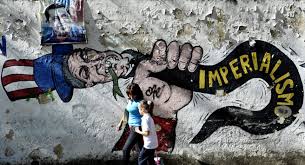
venezuela-us-imperialism.jpg

23 July 2020
Media Silent as Trump Declares Wars


Donald Trump’s attacks on Venezuela, Syria and Iran are criminal, but Joe Biden vows to be even worse.

The corporate media in this country can endlessly repeat lies about Russia paying Taliban bounties, but ignore important information that is public and easily provable. A recent example is President Donald Trump’s announcement of some sort of an attack against Venezuela.

While visiting the U.S. Southern Command (SOUTHCOM) in Florida, Trump gave an interview to Noticias Telemundo and said the following, “Something will happen with Venezuela. That’s all I can tell you. Something will be happening with Venezuela.”

The United States chose a puppet president to replace the elected president Nicolas Maduro, increased sanctions, attempted to send mercenaries to destabilize the country, and charged Maduro and his wife with drug trafficking. The U.S. puppet state known as the United Kingdom ruled that it will keep more than $1 billion worth of Venezuelan gold instead of turning it over to its rightful owners. The heist against Venezuela totals $24 billion in stolen and frozen assets. The wall that Trump said Mexico would pay for was actually paid for with ill gotten gains from Venezuela.

Venezuela has been under constant attack from the United States and its allies for years with the Trump administration making the most blatant regime change efforts. But the media who ordinarily pillory Trump are either silent or support these attacks. Trump’s remarks should have made headlines. The president of the United States once again declared some sort of hostilities against Venezuela but his words garnered hardly any attention.

Trump has placed the United States on the precipice of war in a variety of ways. He has withdrawn the U.S. from nuclear treaties with Russia that were ratified decades ago. His war of words against China is not merely rhetorical. Uttering slurs about the “Wuhan virus” and always adding the word communist along with the word China are not just stunts.


Inciting violence in Hong Kong was part of a larger scheme to weaken an economic and political rival.

The U.S. is waging war by other means all over the world. The war against Syria is lost. There will be no regime change there by military means, so Trump resorts to stealing oil, burning wheat crops and increasing sanctions that restrict access to food and medicine. Israel, the U.S. partner in crime, bombs Iranian defense facilities in hopes that they can finally see their war fantasy come to reality.

But none of these incidents receive sufficient coverage. If they are commented upon at all, the news relies on the ubiquitous anonymous intelligence source, or others who will parrot the official line. One must know where to look to find decent analysis.

The new devastation wrought upon Syria is either unreported or celebrated by the corporate media. There has been no critique of the policy, no one pointing out that a war crime is being committed in the name of the American people. In fact, the Washington Postapplauded the fact that the aptly named Caesar Act has “helped crash the Syrian currency.” They could have added that it helped increase suffering too.

Shrieking about Russiagate, Ukrainegate, Bountygate or any other gate that will be cooked up is smoke and mirrors for the masses and propaganda for the duopoly. There is no congressional opposition to Trump’s acts of aggression which are literally killing people around the world.

“War crimes are being committed in the name of the American people.”

Sadly, neither these policies nor the corporate media response will be different if Joe Biden becomes president. Biden’s Venezuela policy is the same as Trump’s. His attacks have in fact been further to the right. When Trump expressed a willingness to talk to Maduro, he backtracked after Biden condemned any effort to talk. “Trump talks tough on Venezuela, but admires thugs and dictators like Nicolas Maduro,” was Biden’s twitter rejoinder.

The end result of these machinations is that Russia and China are closer than ever, as both countries seek protection from U.S. imperialism. They try to keep the U.S. and its puppet state allies from interfering in their countries or destroying Syria or Iran or Venezuela and thereby making themselves impotent. Iran and China recently reached an agreement which will build Iran’s infrastructure and supply China with discounted oil for the next 25 years. While the media here keep Americans ignorant with ridiculous stories about Russian bounties, the targeted nations work together for their own benefit.

Only people with the interest and wherewithal to seek out independent media know how their country threatens the world. After all, Trump issued a public threat against Venezuela and it hardly registered as a blip on a screen. When the U.S. goes too far and the world faces a hot war, ignorant Americans will not know what hit them. They may babble about the latest fake scandal or cry out “They hate us for our freedoms,” but the rest of the world won’t care and ignorance will be no defense.

Link:Freedom Rider: Media Silent as Trump Declares Wars | Black Agenda Report
 

loyola llothta

☭☭☭
Joined
Apr 17, 2014
Messages
35,064
Reputation
7,040
Daps
80,059
Reppin
BaBylon
us-venezuela-1024x768.jpg

31 July 2020

“Operation Gideon”: The Amphibious Assault against Venezuela.

U.S. Aggression Against Venezuela Isn’t About Human Rights

On May, 3, U.S. mercenaries and the American-backed Venezuelan opposition launched a half-baked coup d’etat attempt to overthrow President Nicolás Maduro and the ruling Partido Socialista Unido de Venezuela (PSUV). Dubbed Operation Gideon, the “amphibious assault” was headed up by two U.S. former Special Forces members and 60 members of Venezuela’s opposition.

The plot was comically harebrained. The mercenaries were to storm the coastline just north of Caracas, defeat the Venezuelan military by inspiring an uprising, kidnap President Maduro, and transport him to the U.S. via a local airport. The “invasion” was set to begin with 300 men, yet the plan continued with only 62. The latest bungled attempt to upend the Bolivarian Revolution conjures up deja vu of the failed Bay of Pigs invasion and comes as the Trump administration has plotted coup attempts, executed vicious acts of economic warfare, and is now offering a $15 million bounty of U.S. taxpayer money on Maduro.

The mercenaries were sponsored by a Trump-linked and Florida-based private security contractor, SilverCorps U.S.A. The plot — set up by longtime Trump bodyguard and security consultant, Keith Schiller — was originally hatched by Jordan Goudreau, an ex-Green Beret and head of SilverCorps, and the Venezuelan opposition led by Juan Guaidó. The Trump administration denied any involvement in the attempted coup, yet given the administration has ramped up displays of open hostilities towards Venezuela, this denial should be taken with a grain of salt.

Operation Gideon was unearthed by Venezuelan intelligence back in March, and before the two boats carrying the marauders could begin storming the beaches, they were intercepted by fishermen loyal to Maduro. Goudreau later acknowledged that the two captured former U.S. Special Forces members Airan Berry and Luke Denman — were working with him. The ex-Green Beret previously ran security for Trump’s political events and at billionaire Richard Branson’s Live Aid event on the Venezuelan-Colombian border. According to a close friend of Goudreau’s, the plot to oust Maduro was likely a desperate bid to secure the U.S. State Department’s $15 million bounty.

After the maritime assault was foiled, a document obtained by the Washington Post showed that Operation Gideon was signed onto by Guaidó, with the goal of overthrowing Maduro, including an armed counter-insurgency. In an attempt to place a cushion between Guaidó and the would-be “invasion,” the agreement document’s validity was disputed by the Venezuelan opposition as a forgery. After the claim by the Venezuelan opposition, the documents were mysteriously retracted and replaced.

Bizarrely enough, Goudreau has sought out media attention to confirm Guaidó’s support for his failed raid releasing audio of the signing of the document and a general services agreement that he claims Guaidó was present for and signed. Goudreau is likely to remain in the headlines given that he is now under investigation by U.S. authorities. This most recent utterly baffling and seemingly implausible saga to topple a left-wing Latin American government by a dysfunctional cast of grifters amounts as a pandemic surges, having unprecedented impacts on health systems and economies.


While the U.S. is leading the world in COVID-19 cases and a skyrocketing death toll, murderous sanctions, and a knee-capping embargo are keeping medical necessities and aid away from the Venezuelan people. With the U.S. political and business class focusing instead on overthrowing and destabilizing governments rather than protecting working-class Americans from a pandemic and an economic meltdown, it’s time for the American people to condemn savage U.S. imperialism in Latin America, economic warfare against Venezuela, and stand up to their ruling class.

“Assuring an Adequate Supply of Petroleum for the U.S.”

Operation Gideon was not an outlying incident, the debacle occurred in accordance with decades, if not centuries, of U.S. foreign policy precedent in Latin America. Along with Bolivia’s lithium and other resource-rich Latin American nations, Venezuela’s plentiful oil deposits — the largest reserves in the world — have long been on the wish list for business interests and the U.S.’s political and financial elite.

In 1948, the American-backed right-wing dictator, Marcos Pérez Jiménez overthrew the democratically-elected government of Rómulo Gallegos.


The regime developed tight ties with the U.S. oil industry, allowing companies like Exxon and Mobil to profit from the ample supply. Pérez Jiménez achieved U.S.-support through ruthless repression of his opposition, defaming anyone who opposed his regime and using his power to torture, imprison, and “disappear” dissidents.

Two years later, in 1950, official U.S. State Department objectives in Venezuela were stated as, “All policies toward Venezuela are affected in greater or less degree by the objective of assuring an adequate supply of petroleum for the U.S.” Washington also recognized the large iron deposits and encouraged development to supplement U.S. reserves.

In the decades following the U.S.-backed Pérez Jiménez regime, Venezuelan leaders mostly held a bipartisan neoliberal consensus that was marked by a further oil boom in the ’70s, a debt crisis in the ’80s, to widespread corruption and the failure of liberal institutions in the ’90s. The economy fluctuated regularly — yet a fundamental constant throughout this period was the Venezuelan government’s appeasement to the economic elite and U.S. business interests.

Three decades of allowing U.S. capital to profit from Venezuelan resources left little wealth contributed to the tax base, spurring millions into action, eager for change. In 1998, PSUV, led by Hugo Chávez created a movement that secured power through democratic elections. Initially, Chávez was met with little resistance as he obtained widespread popular support throughout the country. Yet, after promises to nationalize industry — including oil production — redistributing land to the poor, and reducing poverty with heavy investments in social programs, Chávez was quick to go on the defensive.

Delegitimizing and Toppling the Bolivarian Revolution

In 2002, the U.S.-backed opposition affirmed the policy of regime change when forces led by Pedro Carmona — a wealthy petrochemical tyc00n — sought to oust Chávez in a coup d’etat. The coup ultimately failed and Chávez was restored to power only 48 hours after a massive uprising of PSUV supporters erupted, yet the attempted removal established U.S. precedent for regime change for years to come.

Just months after winning re-election, Hugo Chávez died at 58, leaving his mentee Nicolás Maduro as his successor. In 2013, new elections were called, in which PSUV and Maduro continued Chávez’s legacy, winning the Presidency and defeating centrist candidate Henrique Capriles by less than two percent of the vote. In the aftermath, Capriles called the election illegitimate — although disproven by international observers — and demanded a recount. Venezuela’s electoral officials conducted an audit in which Maduro came out on top, while Capriles continuously rejected the outcome. A year prior, during which Chávistas retained power, former U.S. President Jimmy Carter even remarked, “As a matter of fact, of the 92 elections that we’ve monitored, I would say that the election process in Venezuela is the best in the world.”

In the controversial 2018 election, Maduro was seeking to renew his bid from the Presidency, in what the Venezuelan opposition, the U.S., and popular media outlets have called a “show election” due to voter turnout plummeting to 46 percent — only ten percent less than voter turnout in the 2016 U.S. election. In an effort to further delegitimize Venezuelan democracy, all major western countries and the Venezuelan opposition condemned the elections as fraudulent. The opposition party preemptively chose to boycott the elections to qualify their false claim of election fraud, knowing their party would likely lose to Maduro’s PSUV.

Unlike the American electoral system, the Venezuelan electoral system includes paper ballot backups that make election fraud nearly impossible. Furthermore, over one hundred impartial international observers — who were present during the 2018 election — condemned the West’s claim of fraudulent elections, stating, “[these are] fabrications of the most disgraceful kind, based on hearsay and not on evidence.”

The U.S. and its allies responded with a barrage of sanctions that targeted Venezuela’s top exports — including petroleum products, crude oil, and gold — which was accompanied by cutting off the pipeline of imported food products. This resulted in further hobbling of the Venezuelan economy creating massive inflation as the government’s failed monetary policy struggled to keep pace with an international economic onslaught.

In 2019, with the economy increasingly in shambles, the U.S. created further destabilization by sponsoring a sort of “soft coup.” The recognition of opposition leader Juan Guaidó — who has never won a democratic election for President — as the legitimate President of Venezuela resulted in the further destabilizing effects on the country. By August, the Trump administration announced an embargo that will undoubtedly create more misery for ordinary Venezuelans.

As 2020 rolls on, March, 30, was marked by the Maduro government calling onGuaidó to respond to questioning for allegedly sponsoring an attempted coup and assassination attempt. On April 1, Trump ordered navy ships and surveillance planes to the Venezuelan coast, in the largest U.S. military buildup in Latin America since the invasion of Panama in 1989.

As the pandemic broke out, Guaidó and fellow opposition lawmakers approved a $5,000 monthly stimulus for themselves under the guise of protecting health professionals during the COVID crisis, while Venezuelan doctors and nurses got a one-time payment of $100. The latest scheme to destabilize and hopefully depose the Maduro government manifested in Operation Gideon and upon the seizure of 31 tons gold by the Bank of England from Venezuela’s holdings last May.
Link:
Operation Gideon Should Remind Americans That U.S. Aggression Against Venezuela Isn’t About Human Rights
 
Last edited:

loyola llothta

☭☭☭
Joined
Apr 17, 2014
Messages
35,064
Reputation
7,040
Daps
80,059
Reppin
BaBylon
U.S. Economic Warfare Isn’t About Protecting Human Rights

As the COVID calamity rages on, U.S. economic warfare is exacerbating death rates and suffering. While ordinary Americans are struggling to make ends meet due to unprecedented pandemic, police and white supremacists violence — and now the testing of Trump’s secret police in Portland “disappearing” people off the streets — are ruthlessly being carried out against American citizens supporting the Black Lives Matter movement. The callousness of U.S. empire is being brought home, and Americans are getting a brief taste in the tactics, austerity, and disdain for human rights the U.S. has historically promoted in Latin America and Venezuela.

The U.S. had the stated intent of placing economic restrictions on the Bolivarian Republic to curtail alleged human rights violations, yet the sanctions and embargo placed on the Venezuelan economy have worked against that goal. Before the COVID crisis claimed the lives of hundreds of thousands, a report released by the Center For Economic and Policy Research found that U.S. sanctions from 2017 to 2018 have directly contributed to the deaths of 40,000 Venezuelans.

Pandemic aside, the report also states that the sanctions and recognition of a parallel, unelected government have intensified the humanitarian crisis. To turn a crisis into a catastrophe, Venezuelan and American business interests are also withholding products from the market resulting in capital strikes, while Western banks and states seize Venezuelan assets.

Acts of economic warfare by the U.S. foreign policy apparatus and business class are meant to strangle economies therefore sowing discontent among the common people. In Venezuela’s case — by cutting off the global supply of goods and resources, essentially blockading exports, seizures of assets, and capital strikes — the U.S. has ensured the poorest are most exploited by the economic effects. Ultimately, economic warfare is a ploy to set the stage for U.S.-sponsored regime change, while heightening a humanitarian crisis that creates the conditions for a counterrevolution through the American-sponsored Juan Guaidó.

Given the storied history of American meddling in overthrowing democratically-elected leftist governments in Latin America, mainstream attitudes regarding the crisis in Venezuela by U.S. politicians — housed by both liberals and conservatives — is disconcerting. While America’s ruling class must shoulder the blame, it is the ordinary American working-class citizens who must take responsibility for their government’s actions in depriving wealth and sovereignty to traditionally and continually exploited people, domestically and abroad.

U.S. acts of imperialism and economic warfare will not end until ordinary American citizens stand in solidarity with the people tortured by capital and the U.S. foreign policy apparatus. If the American people believe in human rights they must condemn their government and corporations’ brutal and tedious need for economic domination and call for a more equitable distribution of resources to the world’s working-class people, ceasing murderous acts of economic warfare, and recognizing the will of the people in sovereign nations.
Link:
Operation Gideon Should Remind Americans That U.S. Aggression Against Venezuela Isn’t About Human Rights
 

loyola llothta

☭☭☭
Joined
Apr 17, 2014
Messages
35,064
Reputation
7,040
Daps
80,059
Reppin
BaBylon
Today: Senator Chris Murphy says U.S. strategy on Venezuela has been an "embarrassing mistake." "..we tried to construct a kind of coup in April of last year and it blew up in our face when all the generals that were supposed to break with Maduro, decided to stick with him.."


Last edited:

loyola llothta

☭☭☭
Joined
Apr 17, 2014
Messages
35,064
Reputation
7,040
Daps
80,059
Reppin
BaBylon
Guyana-oil.jpg

12 August 2020

Guyana Geopolitics: Washington’s New Game Plan Against Venezuela
By Lucas Leiroz de Almeida

Having gained its political independence a few decades ago, Guyana is a small South American country with little international relevance. Without major economic or geopolitical projections, the country has agriculture and mining as its main activities, not being a fully industrialized country and having high levels of poverty. However, recent discoveries of large oil reserves are about to change Guyana completely, raising its economic potential and its political and geopolitical projections. Guyana currently has more oil than any other country in the world. At the beginning of 2020, there was an expectation from the International Monetary Fund for a growth of 86% of Guyana’s GDP. The pandemic and the global devaluation of oil caused by the global recession have made expectations drop to 44%, but Guyana is still the country that will show the greatest economic growth in the world this year.


As a multi-ethnic country, influenced by several other former British colonies, Guyana’s national politics is divided between representatives of the different ethnic and religious groups that inhabit the country. In the 2020 Guyanese elections, a serious political crisis hit the country, creating a scenario of uncertainty about who the new president would be. Briefly, former President David Granger – an Afro-Guyanese, Anglican Christian and member of the National People’s Congress – lost the elections to Mohamed Irfaan Ali – an Indo-Guyanese, Hindu and member of the Popular Progressive Party – however, as is commonplace in elections in Guyana, the results were not clear and fast, mainly due to several requests for a recount. The elections took place on March 2, but just 5 months later, on August 2, the name of Irfaan Ali was announced as the winner of the dispute, after great international pressure for the result, mainly from the US, Brazil and the Organization of American States.

The election of Irfaan Ali takes place amid the period of greatest expectation of economic growth in the history of Guyana.


The country has never been closer to economic and social development and, obviously, the population hopes that the new president will be successful, leading the nation on a path of prosperity and progress. However, the challenges are many. The first step to be taken by Irfaan Ali must be to ensure that, in fact, the exploration of Guyanese oil serves the national interests of his country. The new president came to power under strong American pressure for Guyana to elect a president. The coercive measures taken by Washington to pressure the choice of a president were many, including the suspension of the visa of Guyanese citizens in American territory – an attitude to which Guyana’s prime minister, Moses Nagamootoo, referred to as “diplomatic terrorism”. The choice of the president was a necessary step towards developing the oil sector, so Washington, the biggest interested in Guyanese oil, acted with all its efforts to get a president elected as soon as possible, despite internal ethnic disputes.

There are several reasons why Washington is interested in Guyanese oil. At the heart of exploration and production is the American transnational Exxon Mobil, which leads production from Stabroek – in a reserve which is estimated to have more than 8 billion barrels of oil. Around the oil issue are the contracts signed between the previous government and Exxon Mobil. According to the NGO Global Witness, the previous production contract signed in 2016 is strongly favorable to the company and will deprive the country of over 55 billion dollars during the term of the agreement. The contract was described as “exceptionally bad” by the NGO.

However, this is not the main problem surrounding the agreement. There is a political issue that is much more dangerous than the economic issue. Before the discovery of Guyana’s oil, the main oil producer in South America was Venezuela, a country that is experiencing a great economic and diplomatic conflict with the US. Washington imposed severe international sanctions on any country or company that has business with Venezuela, leaving Caracas under severe economic blockade. Venezuelan oil was restricted to a small group of countries that refuse to comply with the rules imposed by the US, leaving the country under a major economic and social crisis.

Now, with the US leading the exploration of Guyanese oil, this small South American country seems to be the American bet to “replace” Venezuelan oil. In fact, the American objective is to find a new source of resources for the global market, which is politically subordinate to Washington, and that it can finally overcome Venezuela’s great role in the oil sector.

If the new president takes this path and creates ties of economic and political submission to Washington, Guyana’s natural wealth will not represent any social improvement for the Guyanese people, serving only as an instrument of American geopolitics.

Link:

Guyana is new American bet against Venezuela
 

loyola llothta

☭☭☭
Joined
Apr 17, 2014
Messages
35,064
Reputation
7,040
Daps
80,059
Reppin
BaBylon
Venezuela has faced a US regime change campaign since Bush backed a coup vs. Chavez in 2002. It's now intensified w/ a new coup attempt by Trump & his murderous, crippling sanctions. It's more difficult to challenge this sadism when progressive Dems like @RoKhanna do PR for it.


loyola llothta

☭☭☭
Joined
Apr 17, 2014
Messages
35,064
Reputation
7,040
Daps
80,059
Reppin
BaBylon
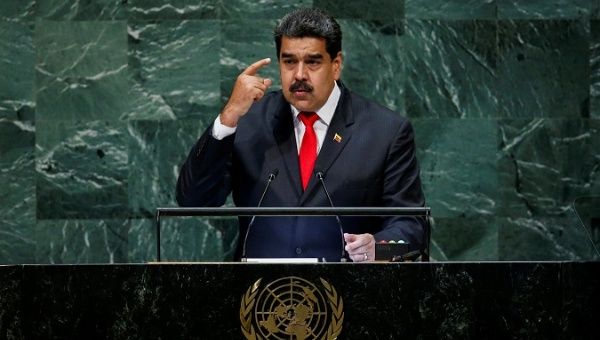
maduro-at-the-UNGA.jpg

17 September 2020

UN Report on Venezuela “Abuses” Written by Investigators Who Never Visited Venezuela


The Western media is touting the results of a so-called “Independent International Fact-Finding Mission on the Bolivarian Republic of Venezuela” conducted through the United Nations.

AFP in an article titled, “Venezuela president behind crimes against humanity: UN probe,” would claim:

In their first report, a team of investigators tasked with probing a slew of alleged violations in Venezuela said they had found evidence that state actors, including President Nicolas Maduro, were behind serious international crimes.

It is only until the ninth paragraph that AFP finally admits (emphasis added):

The three-person team was unable to visit Venezuela, but based their findings on 274 remote interviews with victims, witnesses, former state officials and others, and analysis of confidential documents, including legal case files.

Other articles announcing the “investigation” including CNN’s “Venezuela’s government accused of committing crimes against humanity in UN report,” make no mention at all of the fact investigators never set foot in Venezuela before drawing their conclusions.

Zero Credibility

It would be unimaginable for police to never bother visiting a crime scene before carrying out and concluding an investigation based on ” remote interviews” with people who claimed to be witnesses. Likewise, it is unimaginable that any legitimate investigation into Venezuela’s internal political affairs can be conducted by “investigators” who never bothered to even visit the country.

And of course, the UN investigation is not legitimate.


Interviews and accusations are where investigations begin, not where they end. The collection of actual evidence is required to substantiate such claims – a collection of evidence the politically-motivated interests behind this latest investigation and its public promotion have no interest in carrying out.

UN “Investigation” Enables, Not Exposes Abuse

As to why there are efforts to accuse Venezuela of “crimes against humanity” without carrying out a real investigation stem from ongoing efforts by Washington and its European allies to overthrow the government of Venezuelan President Nicolas Maduro and install their handpicked proxy Juan Guaido.

In addition to this blatant example of political interference in Venezuela’s internal political affairs – announcing an opposition figure “president” of a country outside of said nation’s own political processes – the US has spent millions of dollars annually funding opposition groups in an attempt to undermine Venezuela’s political independence.

The US National Endowment for Democracy’s (NED) admits to interfering in Venezuela’s internal political affairs.

Curiously there is no ongoing UN investigation into the United States’ violations of the UN’s own Charter, Chapter 1, Article 2 which states:

All Members shall refrain in their international relations from the threat or use of force against the territorial integrity or political independence of any state, or in any other manner inconsistent with the Purposes of the United Nations.

And there is no such investigation into Washington’s actions against Venezuela despite actual, documented evidence existing of America’s violations of international laws and norms. There is also a growing body of evidence of actual violence the US is sponsoring inside of Venezuela as well as open, admitted threats of violence made by Washington against Venezuela and its allies including the blockading and seizure of freight and tanker ships.

Such “investigations” based entirely on hearsay are a common feature of US-sponsored regime change around the world. Similar “investigations” were carried out in Syria only to be later revealed as politically-motivated and even deceptive by whistleblowers. This latest “investigation” is simply one of many in which the US, its allies, and the Western media are abusing international institutions, transforming them from checks and balances and into political weapons and vehicles for their own self-serving propaganda.

Link:
Land Destroyer: UN Report on Venezuela "Abuses" Written by Investigators Who Never Visited Venezuela
 
Top