President Maduro of Venezuela urges US diplomats to leave country within next 72hrs

loyola llothta

☭☭☭
Joined
Apr 17, 2014
Messages
35,064
Reputation
7,040
Daps
80,059
Reppin
BaBylon
Alex Saab v. The Empire: The US Tries to Extradite a Venezuelan Diplomat for Securing Food for the Hungry

Roger D. Harris
26 May 2021


Alex Saab v. The Empire: The US Tries to Extradite a Venezuelan Diplomat for Securing Food for the Hungry

“By controlling the international financial system, Washington can demand banks in foreign countries to accept US restrictions or face sanctions themselves.”


The case of Alex Saab raises dangerous precedents in terms of extraterritorial judicial abuse, violation of diplomatic status, and even the use of torture to extract false confessions. This is according to Montréal-based international human rights lawyer John Philpot. He spoke on May 19 at a webinar sponsored by the Alliance for Global Justice and other groups about this example of the long reach of the US empire enforcing its deadly sanctions on some one third of humanity.

US sanctions Venezuela for being sovereign

Stansfield Smith of Chicago ALBA Solidarity commented that the Saab case is part of a larger US effort to use “lawfare” to impose its illegal sanctions , which the United Nations condemns as “unilateral coercive measures .” The US employs sanctions to discipline countries that attempt to develop independent of its dominion.

The US is able to extend its imperial reach through its domination of the international financial system , which is US dollar denominated and meditated through the monetary exchange known as SWIFT. By controlling the international financial system, Smith explained, Washington can demand banks in foreign countries to accept US restrictions or face sanctions themselves.

Venezuela’s resistance to US interference, starting with Hugo Chávez’s Bolivarian Revolution two decades ago, has been punished by the US with mounting sanctions so extreme that they now amount to an asphyxiating blockade, causing severe shortages of food and medicine. William Camacaro of the Alberto Lovera Bolivarian Circle attested to the impact on the people of Venezuela. This US effort to achieve regime change is, in effect, collective punishment to coerce the Venezuelans to reject their elected government.

Even a report from the US government readily admits that “sanctions, particularly on the state oil company in 2019, likely contributed to the steeper decline of the Venezuelan economy.” This crippling blow to its oil industry has impacted Venezuela’s capability to generate electricity, conduct agriculture, and generate income from oil sales to fund social programs and import vital necessities, all of which have negatively impacted the lives of ordinary Venezuelans.

Once a leading oil exporter, Venezuela’s ability to import equipment components for its oil refineries and light oil to mix with its heavy crude has been cut off by the US, devastating its productive capacity. The US has even blocked international oil-for-food swaps by Venezuela.

US targets humanitarian mission

Special envoy and ambassador to the African Union for Venezuela, Alex Saab, was on a humanitarian mission flying from Caracas to Iran to procure food and gasoline for the Venezuelan CLAP food assistance program. Saab was detained on a refueling stop in the African nation of Cabo Verde and has been held in custody ever since June 12, 2020.

Saab’s “crime,” according to the US government, which ordered the imprisonment, was money laundering. That is, Saab conducted perfectly legal international trade, but his circumventing the US sanctions – which are designed to prevent relief to the Venezuelans – is considered by Washington to be money laundering.

The Swiss government, after a two-year investigation into Saab’s transactions with Swiss banks, concluded on March 25 that there was no money laundering . The real reason Saab is being persecuted is because he is serving his country’s interest rather than that of the US. Saab was born in Colombia but now holds Venezuelan citizenship.

The US mandate for the arrest and extradition of Saab would be like Saudi Arabia demanding the arrest and extradition of a British citizen visiting Italy for wearing short-shorts. In essence, the US does not have legal jurisdiction over a Venezuelan in Cabo Verde on his way to Iran.

As Indhriana Parada wrote in the webinar chat: “Greetings from Venezuela. We support the release of Alex Saab. It is a totally political case, and we want him back. Alex Saab did not launder money. Alex Saab bought food and medicine for Venezuela.”

The legal fig leaf for what amounts to a kidnapping was an INTERPOL “red notice,” which was not issued until a day after Saab’s arrest and was subsequently dropped. Saab has specified, “they tortured me and pressured me to sign voluntary extradition declarations and bear false witness against my government.”

Saab’s distinguished African defense team

Saab’s attorney in Cabo Verde, Geraldo da Cruz Almeida, explained to the webinar the absurdity of the politically motivated legal case against his client. Alex Saab has violated neither Cabo Verdean nor Venezuelan law. Moreover, Saab’s diplomatic status should have given him immunity from arrest.

The US does not recognize Saab’s diplomatic status. But then again, Biden maintains the fiction that the self-appointed and Trump-anointed Juan Guaidó is president of Venezuela.

Femi Falana, former President of the West African Bar Association, spoke to the webinar from Nigeria. Attorney Falana represented Saab before the regional Economic Community of West African States (ECOWAS) Court. On March 15, the court ordered Saab’s release and cancellation of the extradition.

Under US pressure, Cabo Verde continues to hold Saab. Attorney Falana has called on President Biden to respect the rule of law and human rights in Africa. Sara Flounders of the International Action Center pointed out that 15 of the 39 countries under the illegal US sanctions are African.

Ranking 175th and 185th among the countries of the world in terms of geographic area and economic size, respectively, resource poor, and dependent on tourism and remittances from abroad, the Republic of Cabo Verde is vulnerable to US strong-arm tactics. Shortly after Saab’s arrest, the US gifted $1.5 million to private sector entities in Cabo Verde on top of some $284 million total US aid in the last 20 years.

The US State Department describes Cabo Verde as “an important partner” where the “current administration has prioritized relations with the United States and Europe.” The US Bureau for International Narcotics Law Enforcement funds and supports activities in Cabo Verde, while the Boston Police Department works with Cabo Verde police.

Cabo Verde, it should be noted, is important in the history of African liberation. Marxist Amílcar Cabral led the liberation movement of Guinea-Bissau and Cabo Verde Islands and was assassinated in 1973, only months before independence was declared from Portugal.

Setting a precedent

Meng Wanzhou , a Chinese national doing business in Canada, is under arrest for “bank fraud” and is fighting extradition to the US. North Korean Mun Chol Myong has already been extradited to the US from Malaysia on similar charges to those used against Saab for doing business according to international law rather than abiding by the US’s illegal measures.

In short, Saab’s is not an isolated case of US misconduct around enforcing its illegal sanctions but an emerging pattern. Anyone of us working to get needed goods to a US-sanctioned country is at risk of the US pushing to get us arrested and jailed in some country we pass through, which is subservient to the US.

That the US can engineer the arrest of a diplomat – someone who has immunity by international law even in the time of war – is a dangerous precedent. That the arrest was extraterritorial is worse; and especially so because Saab is an ambassador to the African Union. This harkens back to the flagrantly illegal and inhumane US practice of extraordinary rendition , which was used to populate the Guantánamo torture chambers.

The award-winning movie The Mauritanian is about the true story of crusading lawyer Nancy Hollander, who successfully freed a tortured innocent man from the made-in-the-USA hell of Guantánamo. The Hollander character, played in the movie by Jodie Foster, says: “I am not just defending him, I am defending the rule of law.”

The real-life Nancy Hollander attended the webinar. A lawyer’s delegation to Cabo Verde in solidarity with Saab is being planned and a petition campaign on his behalf is underway. These efforts recognize that the defense of Alex Saab is a defense of the rule of international law against illegal US sanctions (#FREEAlexSaab).

link: Alex Saab v. The Empire: The US Tries to Extradite a Venezuelan Diplomat for Securing Food for the Hungry | Black Agenda Report
 

loyola llothta

☭☭☭
Joined
Apr 17, 2014
Messages
35,064
Reputation
7,040
Daps
80,059
Reppin
BaBylon
US-sponsored Venezuelan terrorist and coup-plotter Leopoldo López is meddling in Peru's internal politics, traveling there to campaign for far-right candidate Keiko Fujimori, days before the presidential election.

He also just met with Ecuador's new right-wing banker-president


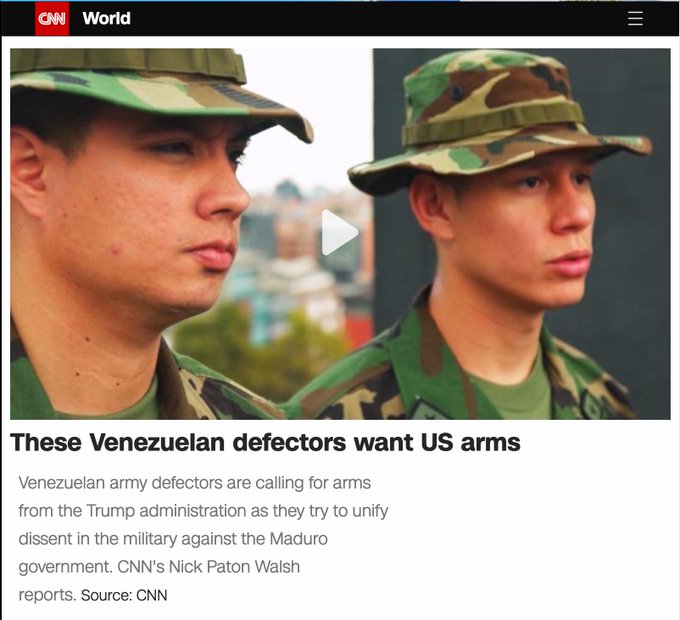
The people shown are not in the army, not defectors, and not even in Venezuela. But none of that matters to @CNN, who, even after more than 2 years, have not retracted this fake regime change propaganda.


12:34 PM · May 31, 2021

 
Last edited:

loyola llothta

☭☭☭
Joined
Apr 17, 2014
Messages
35,064
Reputation
7,040
Daps
80,059
Reppin
BaBylon
How Is US Pop Culture Used Against Venezuela?


Premiered 22 hours ago

The Bolivarian Revolution has faced permanent US regime change attempts, and this hostility has come alongside a constantly biased media coverage. Unsurprisingly, Washington's official line has also spilled to mainstream culture. In our latest joint production with Tatuy TV we look at how Venezuela has become an easy source of antagonists and villains in movies, TV shows and video games.


☑︎#VoteDemocrat

The Original
WOAT
Supporter
Joined
Dec 9, 2012
Messages
337,653
Reputation
-34,909
Daps
641,021
Reppin
The Deep State
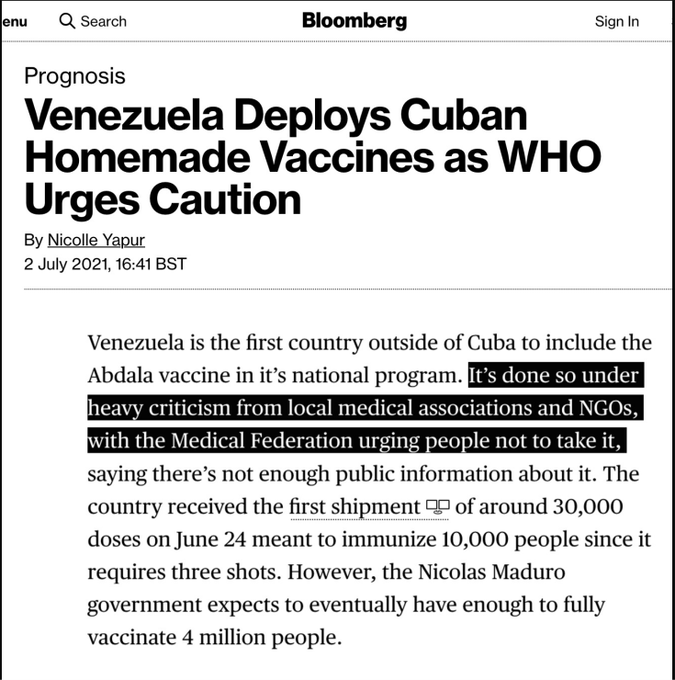
Complete L :picard:


Bloomberg - Are you a robot?

Venezuela’s Maduro Pleads for Foreign Capital, Biden Deal in Caracas Interview
He’s trying to persuade the U.S. president to ease sanctions.
Erik SchatzkerJune 18, 2021, 6:00 AM EDT
Versión en español

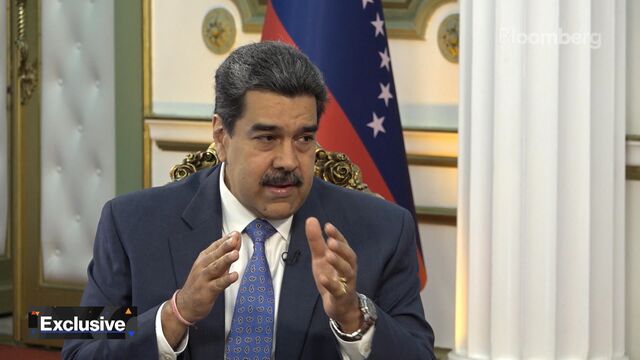
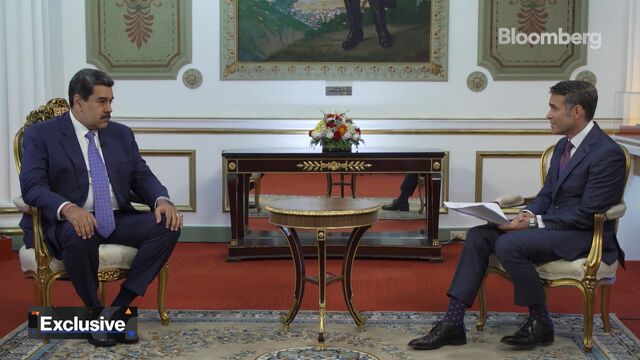
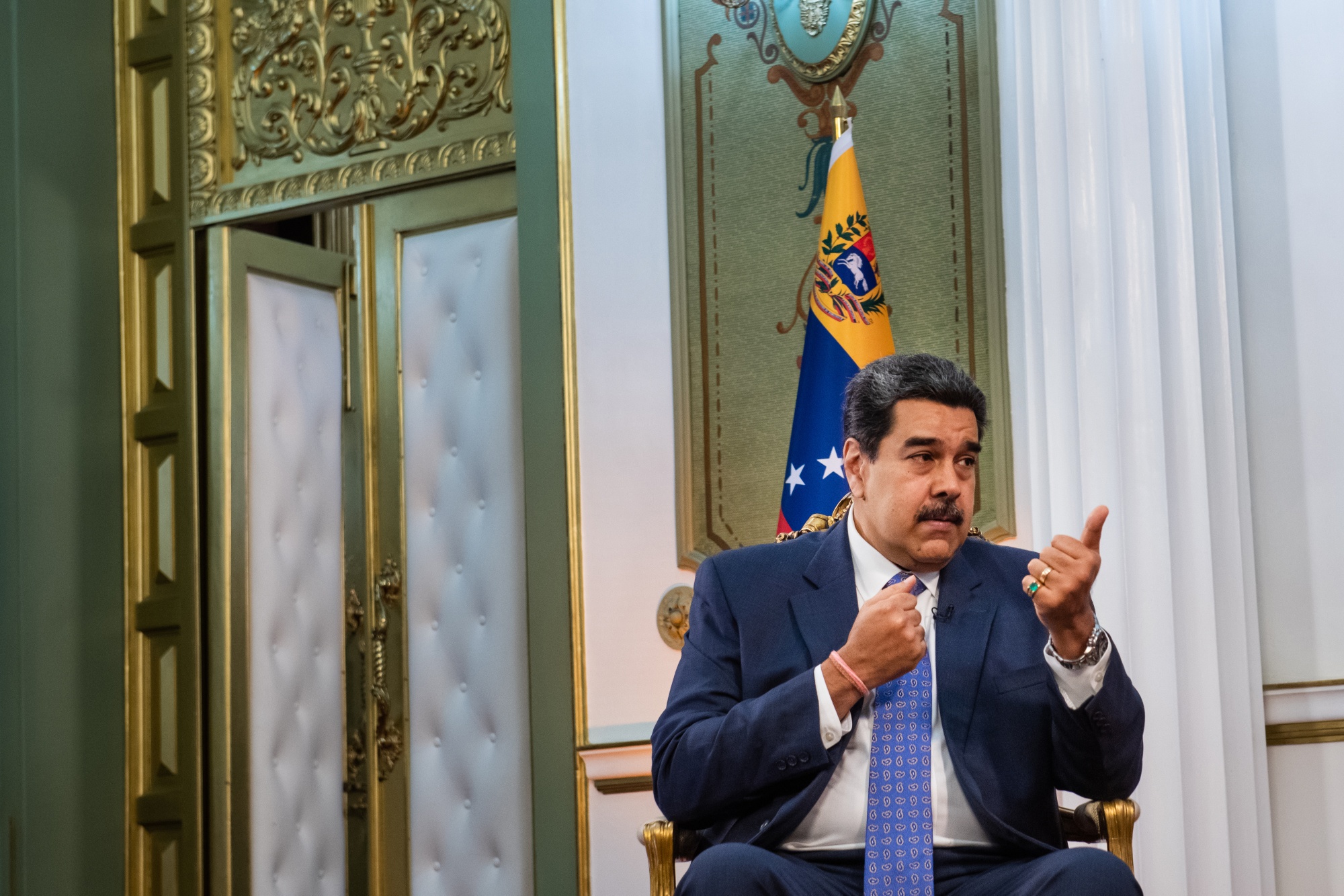
Seated on a gilded Louis XVI chair in his office at Miraflores, a sprawling, neo-Baroque palace in northwest Caracas, Venezuelan President Nicolas Maduro projects unflappable confidence.

The country, he says in an 85-minute interview with Bloomberg Television, has broken free of “irrational, extremist, cruel” U.S. oppression. Russia, China, Iran and Cuba are allies, his domestic opposition is impotent. If Venezuela suffers from a bad image, it’s because of a well-funded campaign to demonize him and his socialist government.

The bombast is predictable. But in between his denunciations of Yankee imperialism, Maduro, who’s been allowing dollars to circulate and private enterprise to flourish, is making a public plea and aiming it directly at Joe Biden. The message: It's time for a deal.

640x-1.jpg

Venezuela's Maduro Sees No 'Positive Sign' From Biden

Watch the full “Front Row” presentation: Maduro Speaks in Caracas

Venezuela, home to the world’s largest oil reserves, is starved for capital and desperate to regain access to global debt and commodity markets after two decades of anti-capitalist transformation and four years of crippling U.S. sanctions. The country is in default, its infrastructure crumbling and life for millions a struggle for survival.

“If Venezuela can’t produce oil and sell it, can’t produce and sell its gold, can’t produce and sell its bauxite, can’t produce iron, etcetera, and can’t earn revenue in the international market, how is it supposed to pay the holders of Venezuelan bonds?” Maduro, 58, says, his palms upturned in appeal. “This world has to change. This situation has to change.”

In fact, much has changed since Donald Trump put the sanctions on Caracas and recognized opposition leader Juan Guaido as president. His explicit goal, to drive Maduro from office, failed. Today, Guaido is marginalized, Venezuelans are suffering more than ever and Maduro remains firmly in power. “I’m here in this presidential palace!” he notes.

There has, however, been little of the one thing urgently needed to end the Western Hemisphere’s worst humanitarian disaster: compromise -- from Maduro, from his opposition, from Washington.

-1x-1.jpg

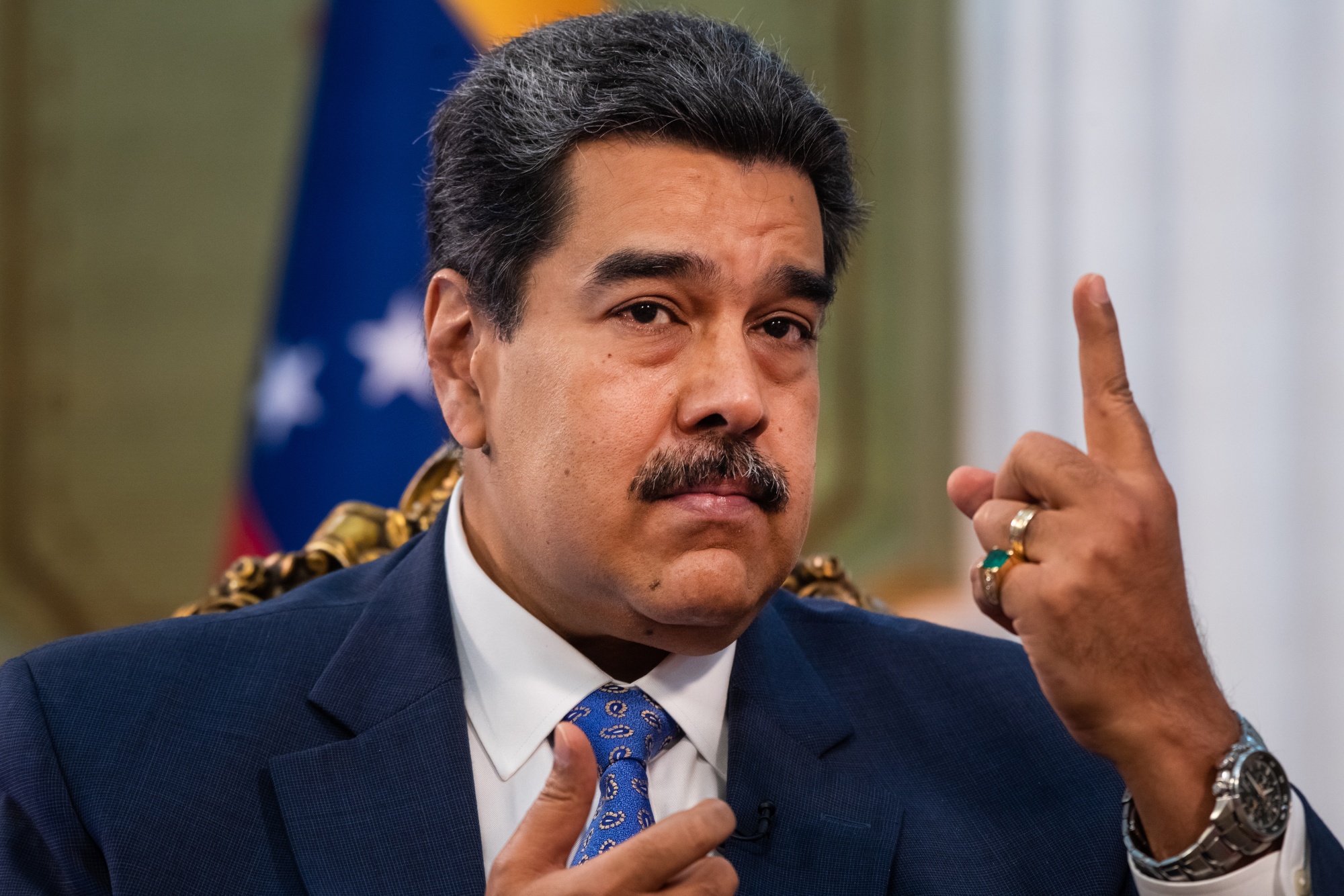
Although he has denounced U.S. intervention, Maduro says he wants sanctions to be lifted by the Biden administration and foreign investments to flow in.

Photographer: Gaby Oraa/Bloomberg

Maduro hopes a deal to relieve the sanctions will open the floodgates to foreign investment, create jobs and reduce misery. It might even assure his legacy as the torchbearer of Chavismo, Venezuela’s peculiar brand of left-wing nationalism.

“Venezuela is going to become the land of opportunities,” he says. “I’m inviting U.S. investors so they don’t get left behind.”

Over the past few months, Democrats including Gregory Meeks, the House Foreign Affairs Committee chairman, Representative Jim McGovern and Senator Chris Murphy, have argued that the U.S. should reconsider its policy. Maduro, who these days rarely leaves Miraflores or the military base where he sleeps, has been waiting for a sign that the Biden administration is ready to negotiate.

“There hasn’t been a single positive sign,” he says. “None.”

A sudden turnabout seems unlikely. With broad support from Congress, the Trump administration cited Venezuela for human-rights violations, rigged elections, drug-trafficking, corruption and currency manipulation. The sanctions it placed on Maduro, his wife, dozens of officials and state-owned companies remain in place. While Biden’s policy of restoring democracy with “free and fair elections” is notably different from Trump's, the U.S. still considers Guaido Venezuela’s rightful leader.

Maduro has been giving a bit of ground. In recent weeks, he moved six executives -- five of them U.S. citizens -- from prison to house arrest, gave the political opposition two of five seats on the council responsible for national elections and allowed the World Food Program to enter the country.

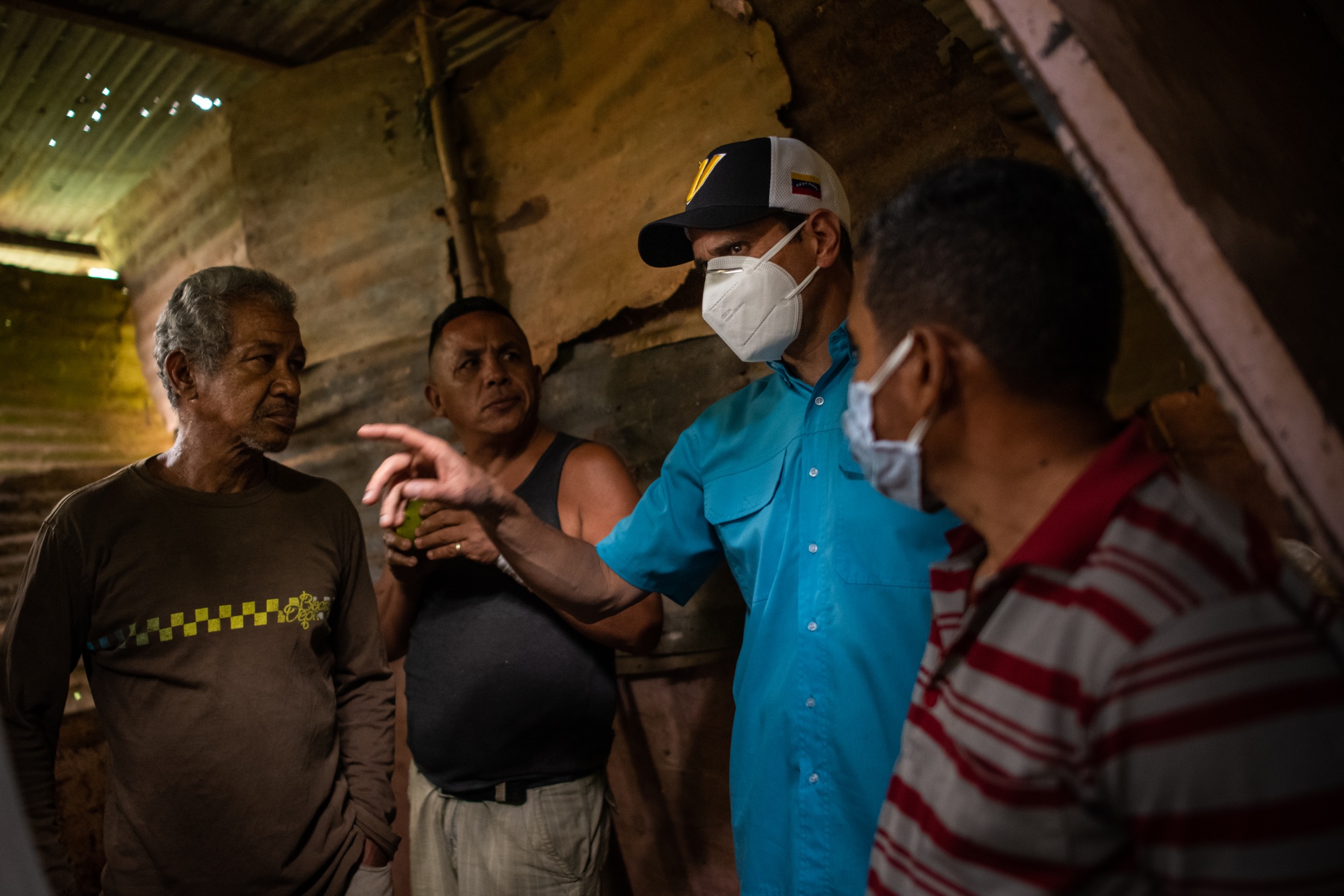
The opposition, while fragmented, is talking about participating in the next round of elections in November. Norway is trying to facilitate talks between the two sides. Henrique Capriles, a key leader who lost to Maduro in the 2013 presidential vote, says it’s time for winner-take-all politics to end.

“There are people on Maduro’s side who also have noticed that the existential conflict isn’t good for their positions, because there’s no way the country is going to recover economically,” he says, taking time out from a visit to the impoverished Valles del Tuy region outside Caracas. “I imagine the government is under heavy internal pressure.”

-1x-1.jpg

Henrique Capriles speaks to residents in the Valles del Tuy region of Venezuela on June 8.

Photographer: Gaby Oraa/Bloomberg

Venezuela’s economy was already a shambles by the time Maduro took office. His predecessor, Hugo Chavez, overspent wildly and created huge inefficiencies with a byzantine program of price controls, subsidies and the nationalization of hundreds of companies.

“When Chavez came into power, there were four steps you had to take to export a container of chocolate,” Jorge Redmond, chief executive officer of family-run Chocolates El Rey, explains at his sales office in the Caracas neighborhood of La Urbina. “Today there are 90 steps, and there are 19 ministries involved.”

Once the richest country in South America, Venezuela is now among the poorest. Inflation has been running at about 2,300% a year. By some estimates, the economy has shrunk by 80% in nine years -- the deepest depression in modern history.

Signs of decay are everywhere. At the foreign ministry in downtown Caracas, most of the lights are turned off and signs on the bathroom doors say, “No Water.” Employees at the central bank bring their own toilet paper.

Throughout the country, blackouts are daily occurrences. In Caracas, the subway barely works and gangs rule the barrios. Some 5.4 million Venezuelans, a fifth of the population, have fled abroad, causing strains across the continent. The border with Colombia is a lawless no-man’s land. Cuba, of all places, has provided humanitarian aid.

Sanctions on Venezuela date back to the presidency of George W. Bush. In 2017, the Trump administration barred access to U.S. financial markets, and it subsequently banned trading in Venezuelan debt and doing business with the state-owned oil company, Petroleos de Venezuela, or PDVSA.

640x-1.jpg

Venezuela's Maduro: U.S. Should Lift 'Immoral' Sanctions

The offensive was brutally effective, accelerating the economic collapse. Last year, Venezuelan oil production slid to 410,000 barrels a day, the lowest in more than a century. According to the government, 99% of the country’s export revenue has been wiped out.

All along, Maduro was working back channels, trying to start negotiations with the U.S. He sent his foreign minister to a meeting at Trump Tower in New York and her brother, then the communications minister, to one in Mexico City.

Maduro says he almost had a one-on-one with Trump himself at the United Nations General Assembly in September 2018. The White House, he recalls, had called to make arrangements, only to break off contact. Maduro blames it on the foreign-policy hawks in Trump’s orbit, many of them in thrall to Venezuelan expats in Florida.

“The pressures were unbearable for him,” he says. “Had we met, history might be different.”

A onetime bus driver and union leader, Maduro has proven the consummate survivor. He defeated rivals to cement control of the United Sociality Party after Chavez died in 2013, withstood attacks in 2018 and 2019, and outlasted Trump.

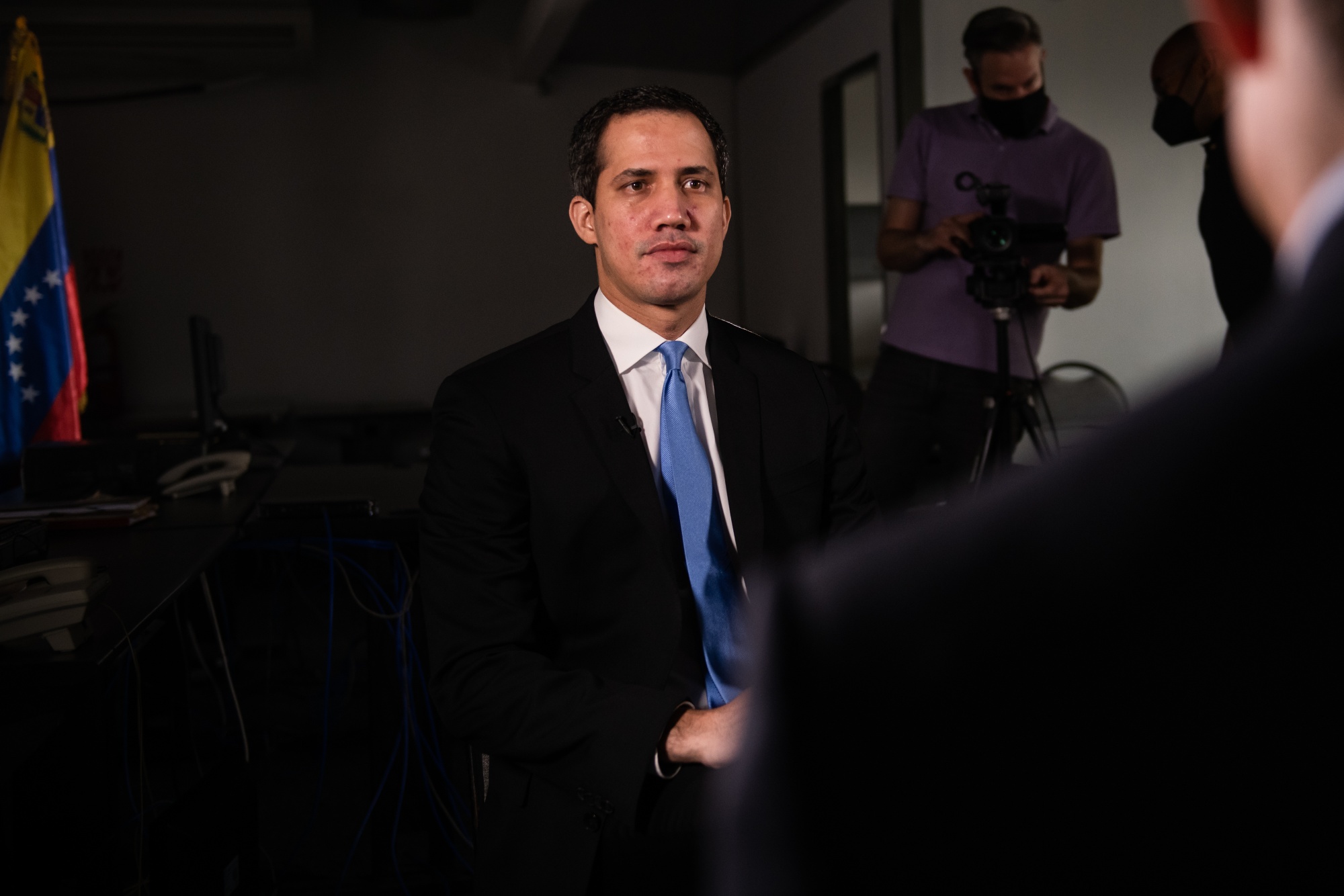
Guaido, who worked closely with the U.S. campaign to oust Maduro, has been forced to shift strategy from regime change to negotiations.

“I support any effort that delivers a free and fair election,” Guaido says in his makeshift offices in Eastern Caracas, surrounded by unofficial, state-by-state counts of Covid-19 cases. “Venezuela is worn out, not just the democratic alternative but the dictatorship, the whole country.”

-1x-1.jpg

Juan Guaido during a Bloomberg Television interview in Caracas on June 8. He expressed guarded willingness to negotiate with Maduro.

Photographer: Gaby Oraa/Bloomberg

If Maduro feels the heat, he doesn’t show it. Several times a week, often for as long as 90 minutes, he appears on state TV to blast the “economic blockade” and pledge his servitude to the people’s power. The populist theatrics drive home a carefully scripted narrative: Venezuela’s sovereignty, dignity and right to self-determination are being trampled by the immoral abuse of financial power.

During the interview, Maduro insists he won’t budge if the U.S. continues to hold a proverbial gun to his head. Any demands for changes in domestic policy are “game over.”

“We would turn into a colony, we would turn into a protectorate,” he says. “No country in the world -- no country, and even less Venezuela -- is willing to kneel down and betray its legacy.”

The reality, as every Venezuelan knows, is Maduro has already been forced to make major concessions. Guided by Vice President Delcy Rodriguez and her adviser, Patricio Rivera, a former Ecuadoran economy minister, he eliminated price controls, pared subsidies, dropped restrictions on imports, allowed the bolivar to float freely against the dollar and created incentives for private investment.

Rural areas continue to suffer, but in Caracas the impact has been dramatic. Customers no longer have to pay with stacks of banknotes and the supermarket aisles, far from being bare, are often piled high.

Maduro even passed a law full of guarantees for private investors.

The reforms are so orthodox, they could be mistaken for an International Monetary Fund stabilization program, hardly the stuff of Chavez’s Bolivarian Revolution. Maduro responds that they’re tools of a “war economy.” Sure, dollarization has been “a useful escape valve” for consumers and businesses, but it and the other reluctant nods to capitalism are temporary.

“Sooner rather than later, the bolivar will once again occupy a strong and preponderant role in the economic and commercial life of the country,” he says.

It wasn’t so long ago that the U.S. saw Venezuela as a strategic ally. Exxon Mobil Corp., ConocoPhillips and Chevron Corp. had major holdings in the country’s oil industry and refineries in Texas and Louisiana were retooled to process heavy crude from the Orinoco Belt. Wealthy Venezuelans traveled to Miami so frequently, they talked about it like a second home.

All that changed when Chavez was elected in 1998. He expropriated billions of dollars in U.S. oil assets and built alliances with socialists in Cuba, Bolivia and Ecuador.

-1x-1.jpg

Although Maduro is seeking better relations with Washington, he has built close ties with Russia, Iran and China.

Photographer: Gaby Oraa/Bloomberg

Maduro has gone further, embracing Washington’s most threatening enemies. He describes the relationship with Russia as “extraordinary” and sends a birthday card to Chinese President Xi Jinping. It’s a taunt to Biden: Keep mistreating Venezuela and you’ll be dealing with another Castro, not a leader who still holds out hope for a win-win deal.

Guests at the VIP Lounge at Simon Bolivar International Airport were reminded of Venezuela’s new friendships. Three clocks mounted in a vertical row showed the time in Caracas, Moscow and Beijing.

Asked in the interview what they signify, Maduro replies that the “world of the future is in Asia.” But an idea crosses his mind. Perhaps, he says, there should be clocks for New Delhi, Madrid and New York, too.

The following afternoon, there are indeed six clocks on the lounge wall. In this country, Maduro is still all-powerful.

Except for one thing: Like so much else in Venezuela, the clocks don’t work.

 
Last edited:

loyola llothta

☭☭☭
Joined
Apr 17, 2014
Messages
35,064
Reputation
7,040
Daps
80,059
Reppin
BaBylon
CIA_Director_Burns.jpg

30 June 2021

CIA Director Arrives in Colombia to Lead ‘Sensitive Security Mission’—Venezuela on Alert

By Orinoco Tribune


The highest official of the United States Central Intelligence Agency (CIA), William Burns, arrived in Colombia to participate in a “delicate” mission in terms of security, as part of the “cooperation” between the two countries.


The Colombian ambassador in Washington, Francisco Santos, reported on the arrival of the CIA director, however Santos did not want to provide additional details about Burns’ visit to Bogotá.

“I prefer not to tell you it is a delicate mission, an important mission in terms of intelligence, that we managed to coordinate,” Santos replied obliquely when asked about the mission.

This visit comes after US President Joe Biden’s first telephone conversation with his Colombian counterpart Iván Duque. The Colombian government, following the directions of the US regime, has been trying unsuccessfully for years to overthrow the legitimate government of President Nicolas Maduro in Venezuela, accusing it of human rights violations, when in reality it is in Colombia where human rights violations are sadly part of the everyday life of the civilian population.

The day before the visit marked two months since the beginning of Colombia’s bloody repression of the national strike and demonstrations rejecting the policies of Duque and demanding that measures be taken in the area of human rights particularly, due to the violence and repression perpetrated by his government.

Santos explained that the visit of the highest CIA official to Colombia was made by through a contact, after having already held three meetings with the organization.


Santos explained that in those meetings they had been told where they are going and what is happening, so they consider this visit as “very important.”

“That contact was made, you understand,” said Santos.


“We have been working with that agency. We have had three meetings.”

William Burns became director of the CIA on March 18 of this year, as part of the changes that Biden made after his inauguration.

What’s behind the CIA visit to Colombia?

Colombia is experiencing a delicate internal situation due to the demonstrations. The strike committee and demonstrators do not intend to cease until their requests are heard by the government.

These demonstrations revealed to the world the malicious structure of Colombia’s security organizations and the repressive manner that the government responds to peaceful protests.


In addition, the visit follows the alleged attack against the Colombian president last Friday, in which his helicopter was purportedly hit by six bullets. Hours later they attempted to hold the government of Venezuela responsible.

The accusations arose after the alleged discovery of weapons bearing identifying marks of the Bolivarian National Armed Force (FANB).

Added to this is the complaint made by the Venezuelan government recently that the government of Colombia and the United States sponsor criminal gangs to commit crimes on the border with Venezuela and even in some barrios of Caracas.

“It is imperative to remind the international community that these irregular groups have the sponsorship of the Colombian government and the Central Intelligence Agency (CIA), which is why their incursions into Venezuelan territory should be considered as an aggression sponsored by Iván Duque, since he provides them with logistical-financial support,” warned the Venezuelan Minister for Defense, Vladimir Padrino López. Violence promoted in Apure state by Colombian paramilitary narco-trafficking gangs has taken the lives of more than ten Venezuelan army officers this year and sowed panic among the Venezuelan population.
Link:
CIA Director Arrives in Colombia to Lead ‘Sensitive Security Mission’—Venezuela on Alert
 
Top