Psychology determines mental illness is a myth

Elle Driver

Veteran
Joined
Aug 9, 2013
Messages
27,451
Reputation
13,110
Daps
100,745
Reppin
At the beginning of mean streets
Mental illness is real FOH

:francis: there are researched biochemical imbalances associated with mental illnesses, from schizophrenia to bipolar disorder to depression.

some of y'all take it to the next level with this psuedo-science fukkery. all anti contemporary medicine until your ass laid up and in need of that western medicine :dame:

OP misquoted, the article talks about spiritual people having poorer mental health than religious folks.
 

Hope

God's Grace
Joined
Nov 26, 2014
Messages
3,865
Reputation
-1,809
Daps
3,501
Reppin
NYC
Not sure how much you read Psychology Today, but they would never write an article suggestion Mental Ilness isn't real. The article doesn't even understand true spirituality and is not good information.

The spirituality he's talking about is a a belief system I find many psychotic people use, which just does'nt work for me. It creates more illusions and delusions instead of suggesting doing work on self and relationships. those are the two ingredients to remaining stable and healthy.

spirituality >>> religion for dealing with mental illness. there are people who don't have a chemical imbalance and suffer through religion beliefs then find spirituality and have breakthroughs.

4162Xy23s2L._SX332_BO1,204,203,200_.jpg


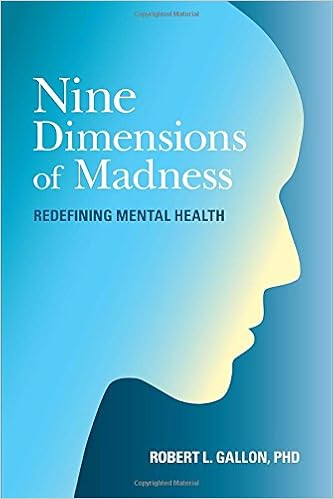
This book makes a better argument for thread topic. It basically states how a lot of symptoms of Mental IIlness doesn't need to be treated medically because it's not a medical condition, it's a nice perspective, but even he doesn't claim Mental Illness isn't real. He just says it's not a medical problem, and that treatment needs improvement with less emphasis on medication

Fora person whose been around, I see growth in how patients are treated by professionals, but unfortunately, there' still stigma and mis-understanding on what's the purpose of medication and how they work by those in treatment and outsiders not affected my disorder.

 

Hope

God's Grace
Joined
Nov 26, 2014
Messages
3,865
Reputation
-1,809
Daps
3,501
Reppin
NYC
Not letting bipolar define your life
Diagnosed with bipolar disorder, Cay readily found information about symptoms ‘but nothing that tells you how to be a human being’.

Tristan Jensen
Cay: “My condition doesn’t define me.”


Cay is sitting in my backyard. We have been talking about mental illness and bipolar and obsessive compulsive disorder and depression and growing up and being scared and being tough and changing, how it’s the only sure thing that will happen to any of us: that we’ll all eventually change. After two hours, I ask her my final question: why did you want to do this interview? She pauses, then says: “Because you look at me and you would never know I have bipolar.”

Cay is sitting in my backyard. We have been talking about mental illness and bipolar and obsessive compulsive disorder and depression and growing up and being scared and being tough and changing, how it’s the only sure thing that will happen to any of us: that we’ll all eventually change. After two hours, I ask her my final question: why did you want to do this interview? She pauses, then says: “Because you look at me and you would never know I have bipolar.”

When Cay was 14 she harmed herself for the first time. “I found joy in self-harm,” she tells me. “It wasn’t like I wanted someone to see it. I wasn’t crying for help. It was a moment where I could control this pain no one else seemed to be experiencing. I could turn the pain into something new. I knew I could get in trouble, but as long as nobody found out I’d be fine. And that’s how I began coping with mental illness – if nobody found out I’d be fine.”

When Cay was 15 she was diagnosed with depression. Was she misdiagnosed? “No,” she says. “Bipolar doesn’t really manifest until mid-teens or late-teens. When you’re young, you don’t really know how you’re feeling. You’re going through puberty. Anything could be mania or depression.”

Cay is a talented artist. She removes 16 journals from her bag, spanning the last seven years of her life. There are song lyrics and sketches and notes. There’s a page with two rectangles coloured in identically, except one is rotated upside down. Beneath the rectangles she has written:What’s wrong with you? I ask her about it and she laughs. “This is what bipolar looks like. It seems so obvious now, but at the time I was so confused. I had no idea.”

Cay tells me about the first time she was admitted to hospital. She was 19 and going through the worst break-up of her life. She tells me they met on Tinder and were instantly infatuated. He was a musician and a producer and she was an artist and singer. They saw each other every day for five months. He was going to make her a star. He got a tattoo of her artwork across the front of his chest. She worked for his dad’s company. She thought it was love. She disappeared from her friends. “I’m normally so independent,” she says, “but I was wrapped around his finger. It was emotionally abusive. We were trying to control each other. In hindsight, the whole thing was one big, manic episode. I felt like I was losing my mind.”

Cay’s boyfriend broke up with her over the phone and she saw colours: black, red, blue. She couldn’t breathe. She cried. She couldn’t stop crying. She scratched her arms until they bled. She couldn’t stop scratching. “It was this trick I learnt so I wouldn’t pick up anything sharp,” she says. Her housemate called her mum who picked her up. They got to the hospital and Cay was given Xanax. Then she was transferred to Manning, a mental health ward in Concord, in Sydney’s inner west. “I was in the ward for a week,” she says. “The doctors thought I was having a mental breakdown because of the break-up. But it was so much more than that. I remember some friends came to visit and they brought me Doritos except I wasn’t allowed them because they were too sharp. They told me the guy I was seeing had changed his Facebook status to single while I was admitted. I was on so much Valium it didn’t really faze me. I remember being weirded out by how I didn’t care.”

When Cay left the ward she moved back in with her parents. She stayed for three weeks. “I love my parents,” Cay says, “but I think it was especially hard for my mum to accept that I had bipolar. She’s a proud Mexican woman and I’m her world. I understand, now, how hard that would be. It’s such a scary term. It’s so stigmatised. You hear it all the time: ‘Oh, she’s crazy. She’s, like, bipolar or something.’ So now I say, ‘Dude, you know I’m bipolar.’ And they’re like, ‘Really? But you’re so normal. I had no idea.’ ”

Cay began taking medication. A mixture of drugs her doctor prescribed that, even now, is constantly changing. Because, she tells me, we as people are constantly changing. “I realised I had to start taking care of myself. I didn’t want to feel bad anymore. I couldn’t go out all night and party. I couldn’t be like my friends. I had to sleep. And it sucked. It still sucks. But I have to be in bed by midnight so I can take my medication so the next day won’t be a writeoff. It’s tough sometimes but life is tough and I’m making it work.”

The hardest thing, Cay says, is the isolation of it. “There’s so much information about symptoms but nothing that tells you how to be a human being. You feel so alone. I really didn’t feel like there was any hope. All I wanted was something that said, ‘You can live your life and have bipolar’. Then I found Marbles by Ellen Forney, a graphic novel about being diagnosed with and navigating bipolar and it became my bible. There was all this stuff: the mania, the depression, thinking her friends hated her, dressing crazy, being out all the time. It made me feel less alone. It gave me hope.”

Cay tells me about other things: her relationship with Luke, whom she has been with for a year, who makes her feel normal, loved, who she can’t believe puts up with her, who knows her triggers, who can differentiate between her mania and feeling happy, her depression and feeling sad.

“I’m so good at putting on a brave face,” she says. “A lot of people are. For a long time I kept it secret. I didn’t want to talk about it. But now I want people to know, for other people to know they are not alone. I want people to know that one in four people with bipolar will kill themselves. That those with bipolar often suffer from OCD. That I can only wear black. That I have to touch the door handle in multiples of two before leaving the house. That there can never be more than four people in my home. Every day is a struggle. I don’t know if you can tell but I feel wired right now. I just switched medications and my body isn’t used to it. But I’m making it work. And if you have bipolar, listen: you can live your life and make it work, too. I’m living proof that you can have a job and good friends and a relationship. I’m living proof you can succeed. I don’t want you to think I’m cured. Because I’m not. I’m still scared all the time. But my condition doesn’t define me. I’m not going to give up.”


b_low_brown

Daddyface
Joined
Dec 5, 2012
Messages
12,297
Reputation
-4,139
Daps
35,392
In a different time and place thats not mental illness, thats divinity. OP is correct.

Just like how masturbation, homosexuality and cross dressing can either be pathologies or normal.
That shyts only normal to the people doing it
 

b_low_brown

Daddyface
Joined
Dec 5, 2012
Messages
12,297
Reputation
-4,139
Daps
35,392
:francis: there are researched biochemical imbalances associated with mental illnesses, from schizophrenia to bipolar disorder to depression.

some of y'all take it to the next level with this psuedo-science fukkery. all anti contemporary medicine until your ass laid up and in need of that western medicine :dame:
Agreed. However, a lot of western medicine is simply big business. Have you seen what they're revealing are inside these damn vaccines?
 

Cabbage Patch

The Media scene in V is for Vendetta is the clue
Joined
Feb 11, 2014
Messages
14,329
Reputation
1,355
Daps
25,842
Reppin
The Last Frontier
That shyts only normal to the people doing it
Correct. It's not a mental illness if a society or culture recognizes it as normal.

Joan of Arc, John Brown, Alan Turing, Oscar Wilde and Nat Turner are all considered mentally ill. They are not currently considered mentally ill for the reasons their cultures deemed them mentally ill.

Toussaint was lucky he dealt with the French instead of Anglos (there's a thread here, do you see it?).

Anyway, Alexis Arquette saw Bruce Jenner turn into Caitlin and decided to become a man again. Which of his braim chemical states were 'normal'?
 
Top