Those skills is why they were brought here to begin with. Their skills at growing crops like rice and indigo is why they kept buying people from the rice coast area which is from modern day countries like Sierra Leone, Guinea, Senegal and Liberia.
Just weird because the slaves who came over were not robots with a blank slate. They already knew how to plant multiple crops, some were blacksmiths, hunters, cooks etc. I'm baffled why he wants to die on this hill beyond appealing to a vocal minority of voters who won't even decide the president next November lol.
Who built New Orleans?: The untold story of Black blacksmiths
French settlers made plans to turn the piece of land on the banks of the Mississippi River into a sprawling community, but they didn’t have the manpower or skills to do it themselves. So they turned to African slaves.
by
SIDNEY HOLMES | March 4, 2022
Get the Very Local App
Photos by Michael DeMocker
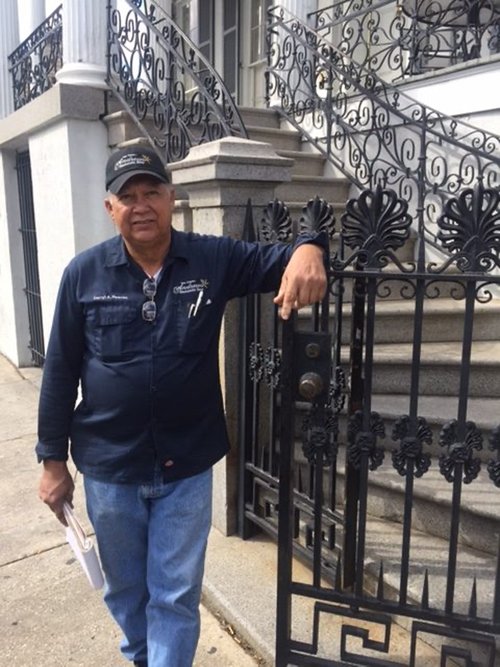
The legacy of Darryl Reeves’ African ancestors is in plain sight, sealed into the wrought iron of the French Quarter. From St. Louis Cathedral to the Cabildo, the New Orleans native has dedicated his career to restoring the iron artistry of the past while forging a future for the historic trade.
Few still know the trade, Reeves says, counting himself among the small handful of Americans who work as professional blacksmiths.
But in a centuries-old city, it’s an art that’s still alive, keeps Reeves busy, and above all, he says, earns him respect — just like generations of Black New Orleanians who came before him.
Blacksmith Darryl Reeves at Xiques House. Courtesy Jonn Hankins/New Orleans Master Crafts Guild.
“A trade like this, I do it for a living. I’m a professional, but this is not work to me,” Reeves said. “This is my playground. This is where I come to play.”
Reeves has spent the past 50 years as a restoration blacksmith, fixing some of the most iconic metal structures in the city. Most of those, he says, were made by west Africans and still bear the marks of their culture. And their resistance to oppression.
“Every nationality had their own way of doing something. I can tell you what nationality fabricated the piece by looking at it. That’s how long I’ve been around,” Reeves said.
HOW IT STARTED
The story of blacksmithing in New Orleans begins with the founding of the city over 300 years ago. French settlers made plans to turn the piece of land on the banks of the Mississippi River into a sprawling community,
but they didn’t have the manpower or skills to do it themselves.
So they turned to African slaves.
Europeans knew that Africans had a history with ironworking and a deep understanding of the skills. Dating back to the early fifteenth century, Portuguese explorers saw blacksmiths’ art at the mouth of the Congo River.
Because of their established knowledge of metal work, the French brought over slaves from west Africa and west-central Africa to support a rapidly growing need for metal work in their American colonies in the early 18th century.
The number of skilled craftspeople continued to grow in the latter half of the century when
tens of thousands of free people of color found refuge in New Orleans and cities on the East Coast of the United States following revolutions in Haiti and Cuba. This surge of craftspeople in New Orleans helped to restore the architecture after two fires nearly destroyed the city in 1788 and 1794.
The work of blacksmiths in New Orleans was an integral part of daily life, like in other emerging American cities.
Their services included everything from making doors and locks to forging tools to shoeing horses. Because of this, blacksmith shops were spread out every few blocks in the city.
“You couldn’t have a town without a blacksmith. You couldn’t have a town without a doctor, and a lot of times the doctor and the blacksmith were the same person,” Reeves joked.
Black communities in New Orleans heralded blacksmiths as leaders, both because of their physical strength and cultural capital. These blacksmiths were often at the forefront of rebellions in the 18th and 19th centuries.
Despite their perceived value, blacksmiths of color were forced to participate in the suppression of their own people by having to make handcuffs, shackles and jail bars for prisoners and the enslaved.
THE SPIRIT OF AFRICA
In the new world, Black blacksmiths in New Orleans found a way to secretly resist their oppressors by honoring their own histories and spiritual practices through their craft.
Iron pieces created by blacksmiths of color in the 18th and 19th centuries are covered with symbols from their home countries. Circular patterns that signify the regeneration of life, Ghanian adinkra symbols and Haitian vévés were forged into the craftsmen’s work as a way of covertly speaking to their people.
“People look at [wrought iron], and they see nice designs, but a lot of those designs mean something, and it’s a language that they brought from West Africa,” Reeves says.
To see it, look no farther than
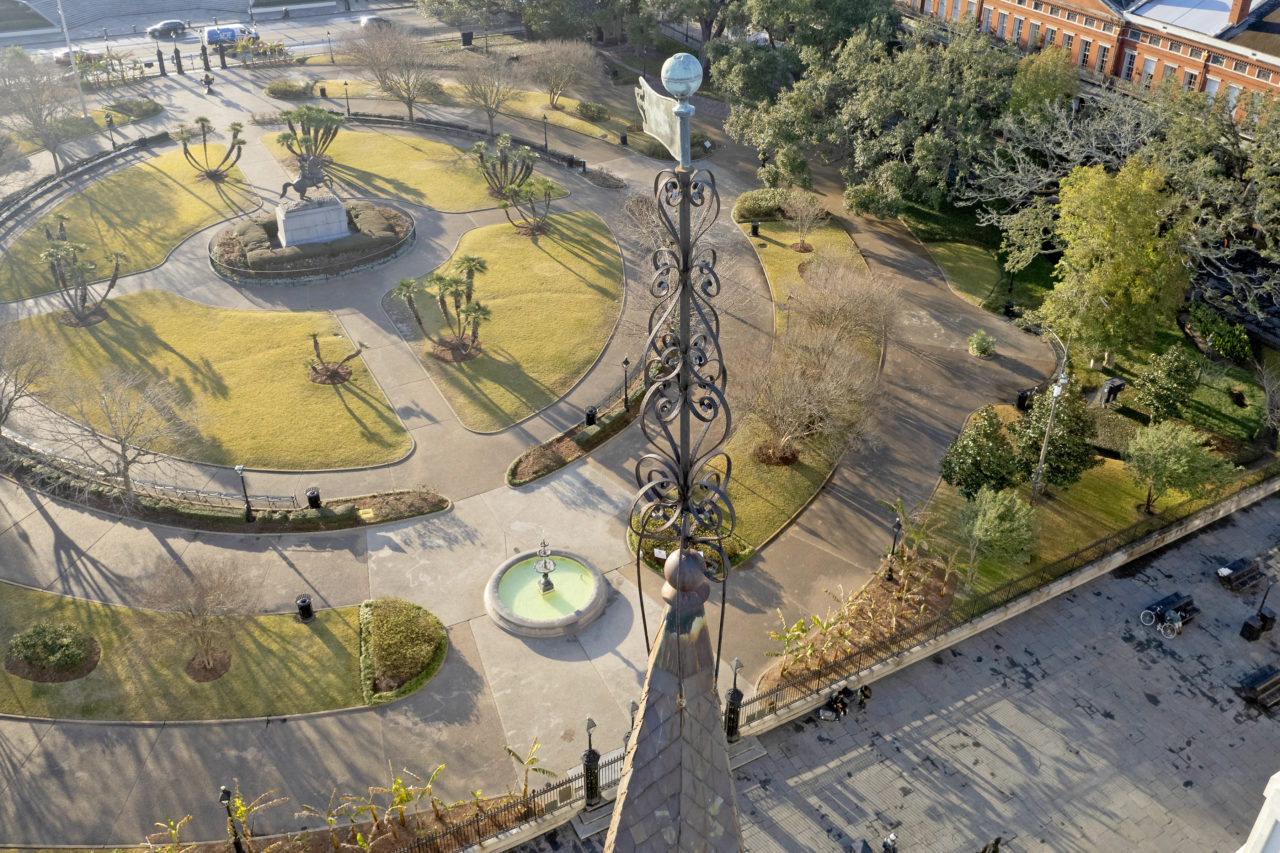
St. Louis Cathedral. Two of the three spires atop the church feature sankofa symbols from Ghana. The heart-shaped motif means “return and get it,” which encourages people to learn from the past.
Decorative iron pieces atop the two flanking spires on St. Louis Cathedral. (Photo by Michael DeMocker)
Symbols like the sankofa are so prominent in New Orleans architecture because free and enslaved people of color rebuilt most of the city after the great fires of 1788 and 1794. More than 70% of the single-story cottages that lined the streets were replaced by two-story townhouses.
The new style of buildings introduced the use of the wrought iron balconies and railings still visible across the city today. Blacksmiths blended African, French and Spanish elements to create the designs.
“I look at the symbolism in ironwork much as culinary historians look at the ingredients in gumbo,” Jonn Hankins, founder of the New Orleans Master Crafts Guild, said.
“The okra that is in gumbo doesn’t just appear accidentally. That’s what I’d like to bring to a wider recognition of the role that people of color have played in what we find so unique and pleasing about the built environment of New Orleans.”









 Ron DeSantis was getting crazy hype and getting called smart but in the end he is a bigger dumbass than most