https://www.cnn.com/2022/12/03/asia/south-korea-worlds-lowest-fertility-rate-intl-hnk-dst/index.html
Analysis by Paula Hancocks, CNN
Updated 6:20 AM EST, Sun December 4, 2022
Seoul, South KoreaCNN —
The season of baby fairs is here once again in South Korea. Busy, noisy affairs held in cavernous conference halls where hundreds of vendors try to sell expectant parents everything they could possibly desire for their new bundle of joy – and plenty of other things they never knew they needed.
But this is a shrinking business, and the customer base is dwindling.
South Korea recently broke its own record for the world’s lowest fertility rate. Figures released in November showed the average number of children a South Korean woman will have in her lifetime is down to just 0.79.
That is far below the 2.1 needed to maintain a stable population and low even compared to other developed countries where the rate is falling, such as the United States (1.6) and Japan – which at 1.3 reported its own lowest rate on record.
And it spells trouble for a country with an aging population that faces a looming shortage of workers to support its pension system.
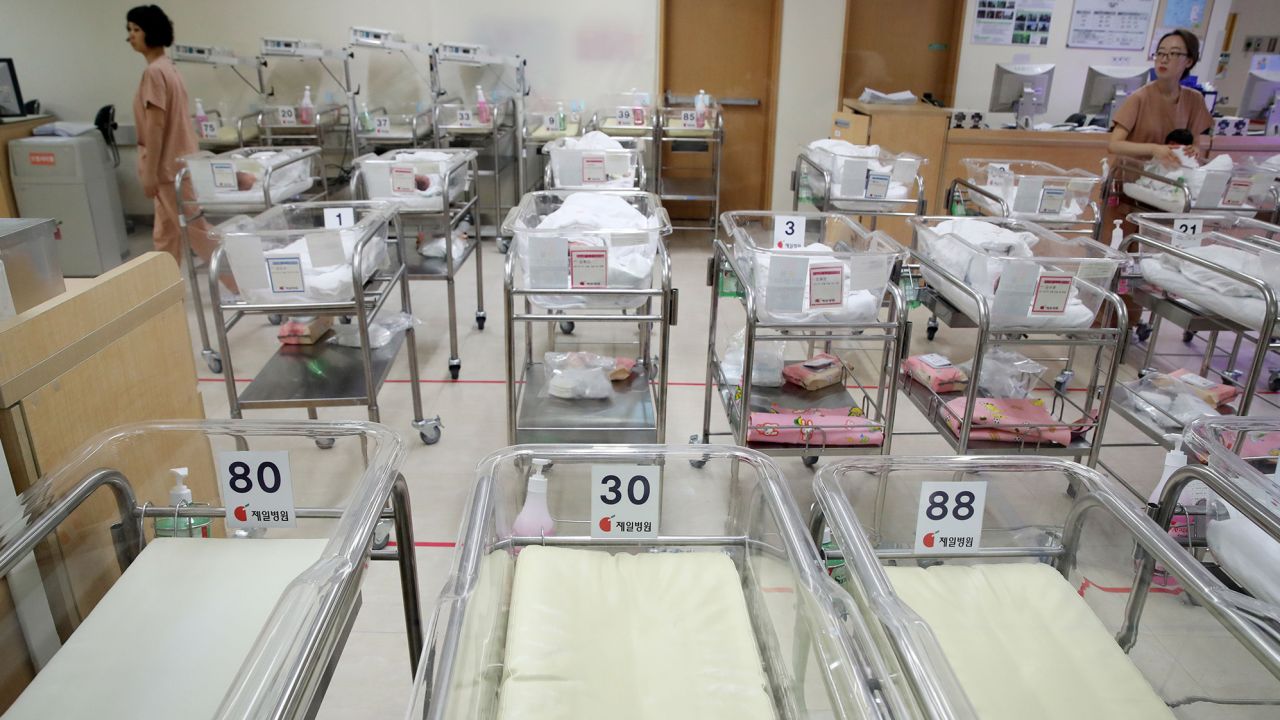
Nurses at a nearly empty infant unit of a hospital in Seoul, South Korea, in February 2017.
The problem is commonly blamed on economic factors that have put off the young from having families – high real estate prices, the cost of education and greater economic anxiety – yet it has proved beyond the ability of successive governments to fix, however much money is thrown at it.
Critics say that is a sign the problems go deeper than economics and that a change in approach is needed. Whether the government is listening is another matter.
Throwing money at the problem
During a visit to a nursery in September, South Korean President Yoon Suk Yeol admitted that more than $200 billion has been spent trying to boost the population over the past 16 years.Yet since assuming office in May, his administration has come up with few ideas for solving the problem other than continuing in a similar vein – setting up a committee to discuss the issue and promising yet more financial support for newborns. A monthly allowance for parents with babies up to 1-year-old will increase from the current 300,000 won to 700,000 won ($230 to $540) in 2023 and to 1 million Korean won ($770) by 2024, according to the Yoon administration.
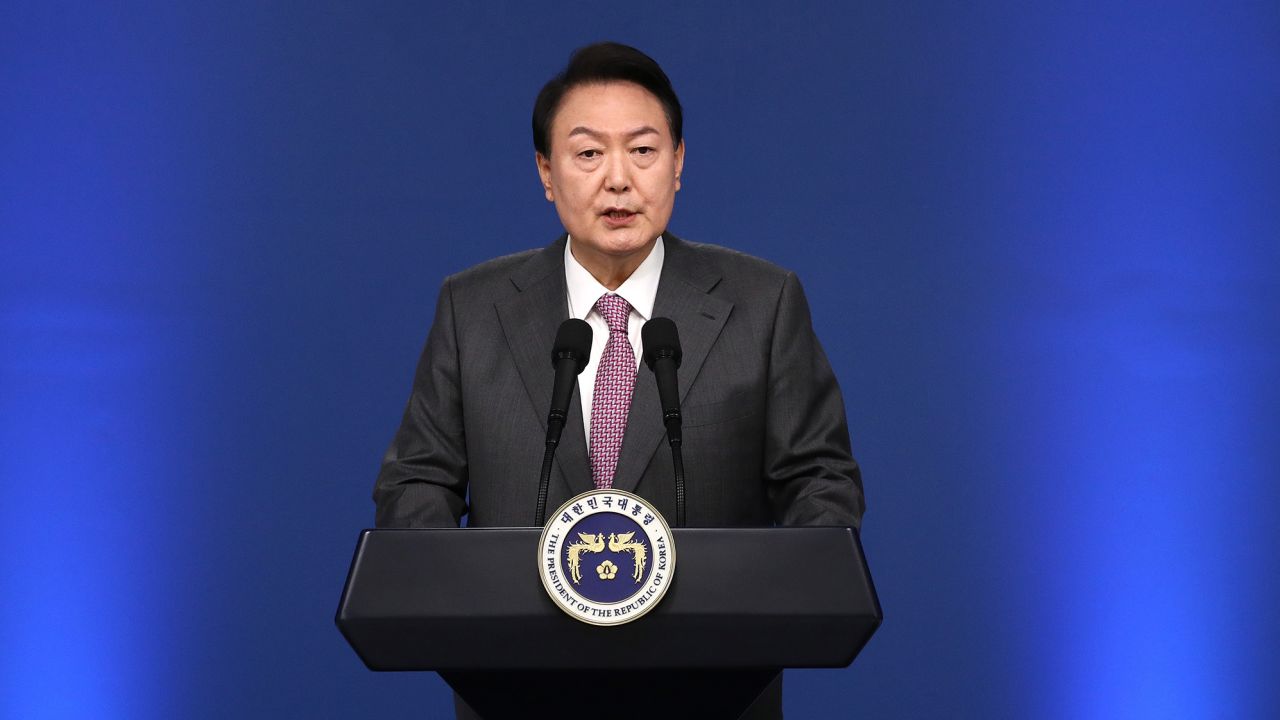
According to President Yoon Suk Yeol, South Korea has spent more than $200 billion in the past 16 years trying to solve its population problem.
The public’s skepticism that Yoon has any better grip on the problem than his predecessors has only been reinforced by the president’s at times clumsy messaging.
During his visit to the nursery, Yoon expressed surprise that babies and toddlers were not being looked after at home and appeared to suggest that it was common for 6-month-old babies to be able to walk, leading to criticism that he was out of touch (the average age for babies to walk is more like 12 months).
Many experts believe the current throw-money-at-it approach is too one-dimensional and that what is needed instead is continuing support throughout the child’s life.
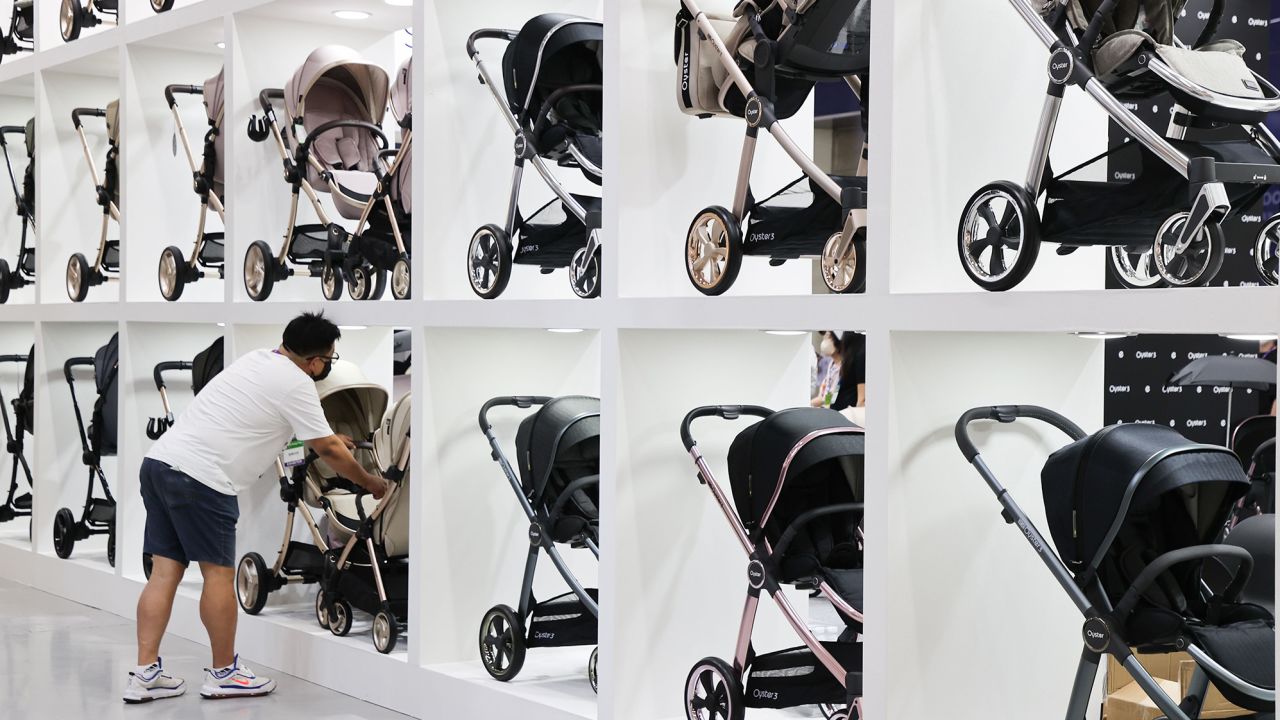
Prams at a baby fair in Seoul, South Korea, on Sept. 15.
Browsing the stalls at a recent baby fair was Kim Min-jeong, whose second child is due this month. She brushed aside the government’s pledge of more funds, saying: “They’ve changed the names and merged allowances but for parents like us, there are no more benefits.”
The problem she faces, she said, is that she hasn’t been able to work since her first child was born as she and her husband cannot afford private child care.
Government-funded nurseries are free but a handful of scandals in recent years involving caregivers striking infants has put many parents off. While the cases were minimal, they were well publicized and the CCTV footage emotive.