The First Gangsta Rap Group was in the 1930s

KENNY DA COOKER

HARD ON HOES is not a word it's a LIFESTYLE
Supporter
Joined
Jun 9, 2012
Messages
31,450
Reputation
13,231
Daps
168,617
Reppin
F
Shout out to the big homie coke LA rock who is credited as being the first mc in hip hop history with roots out that NC


:francis: sounds like your another new york cat who didn't master the art of critical thinking


coke la rock didn't get his start pon di mic till the early 70s.....

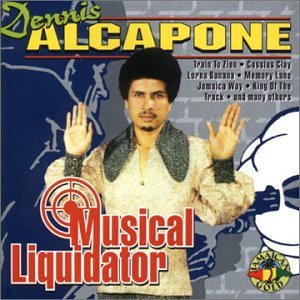
while Jamaican DENNIS AL CAPONE acknowleged as the first GANGSTA RAPPER was already rhyming over records in 1967 with his infamous EL PASO soundsystem which linked up with Downbeat soundsystem in the Bronx and toured NYC...TORONTO....and LONDON where he perfomed on BBC tv and won awards......

his first recordings took place in 1969 here is a collection of his 70's catalog:

2e51ceec658b799202d243179727073fb12f6bbd


hqdefault.jpg


51PFYNZ9JKL.jpg


Dennis Al Capone and his special GUEST...mr. BOB MARLEY

www-pinterest-com.png


King-of-track.jpg


Dennis Al Capone live in Flatbush BROOOOOOKLYN hosting a three way CLASH (BATTLE) between DOWNBEAT (BRONX)...ADDIES (BROOKLYN) and AFRIQUE (brooklyn)

1993........... "down in the east new york section of brooklyn..i fell in love with a champion sound ..night time you find me along with addies hi power..downbeat and afrique and all the massive "


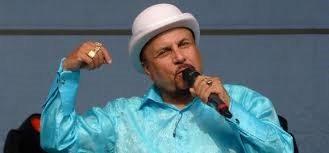
Here is footage of DENNIS AL CAPONE live in the UK in 1973 where he was very popular at ...his records influnced the ska and dub movements of england


AND STILL IS RESPECTED AND REQUESTED TO PERFORM AT SOUNDSYSTEMS WITH YOUNG FOLKS ...


DJ-Dennis-Alcapone.jpg


UNLIKE COKE A LA ROC........WHO IS IGNORED BY MOST AFRICAN AMERICANS OR NOT EVEN KNOWN OF :manny:
 
Last edited:

KENNY DA COOKER

HARD ON HOES is not a word it's a LIFESTYLE
Supporter
Joined
Jun 9, 2012
Messages
31,450
Reputation
13,231
Daps
168,617
Reppin
F
Soundsystem has nothing to do or have any relations with hip-hop :mjlol:.


That's mainly just reggae, ska or rocksteady etc music with an MC but is not in the same form of hip-hop which means there is no connection.


@KENNY DA COOKER

Thanks for the rep, :lolbron:.


i repped you to THANK YOU for keeping the dialogue open on the historic orgins of hip hop ..regardless if we disagree or not....i thank you for the convo we need it
:salute:

its just sad MOST OF YOUR AFRICAN AMERICAN PEERS DON'T GIVE A FLYING FUKK..this thread wont do platinum numbers

and the typical ADOS don't care or dont give a fukk about COKE A LA ROC ...it's not like he getting spins on HOT 97 or invited to SUMMER JAM :mjlol:

so my point is WHAT GOOD IS CLAIMING A LEGACY IF YALL DON'T RESPECT IT :manny:

this is why NYC HIP HOP REALLY DIED...yall really don't care for your elders or og's...you just see guys like coke a la roc as cracked out OLD HEADS

its different in dancehall....old school artists are known as FOUNDATION AND HIGHLY RESPECTED you cant win a battle (clash) without a foundation artist or tune...

we gots to do better..i can say that cause i was born in the states and got carribean heritage ..my mother is from the islands...

so you cant deny me or the carribean influence.......regardless how much self hate you got ....and i say that in Jesus name :lolbron:
 

Black Haven

We will find another road to glory!!!
Joined
Nov 18, 2016
Messages
3,180
Reputation
954
Daps
13,408

How much were you aware of Jamaican sound system culture?

Oh, all the time. I’m one of the first. In fact I am the one in hip-hop who started playing all the Jamaican music in the hip-hop parties. More than Kool Herc and Grandmaster Flash.
Even though Herc is from the Islands he was focused more on America, on funky stuff.
:lolbron:
 

KENNY DA COOKER

HARD ON HOES is not a word it's a LIFESTYLE
Supporter
Joined
Jun 9, 2012
Messages
31,450
Reputation
13,231
Daps
168,617
Reppin
F
extended version ......of the legendary COUNT C. and his influence on turntable culture and it's "descendants" (jungle...dub..hip hop...house)


KENNY DA COOKER

HARD ON HOES is not a word it's a LIFESTYLE
Supporter
Joined
Jun 9, 2012
Messages
31,450
Reputation
13,231
Daps
168,617
Reppin
F

all the soundsystems played american songs from the jump...especially the historic soundsystems of the 50's...such as Tom the Sebastian..Prince Buster and Coxsone

if you paid attention to that video Count C. says his breakout signature song was a Fats Domino swing cut ....

its always been that way ...good music was good music....sounsystems didn't do the willie lynch tribal thing ....

KING ADDIES the Killing Machine was known for playing EXCLUSIVE cuts from everybody from Supercat to Wu tang clan

hell....in 1995 they almost won a major clash with a custom TONI BRAXTON cut which she recorded for them....

Biggie matter of fact first cut his teeth (no pun intended) on the soundsystem circuit ..when recorded a dubplate for LP INTERNATION outta Brownsville in Brooklyn

somebody uploaded on youtube when they first played it live in BK during the heat of the clash (battle) with David Rodigan soundsystem...this was before he even signed with BAD BOY


IllmaticDelta

Veteran
Joined
Jun 22, 2014
Messages
29,288
Reputation
9,715
Daps
82,578
No it's roots are in JAMAICA in the late 40s early 50s where the turntables were first utilized for Dub mixing and toasters (rappers) and selectors (dj) clashed (battles)


Tom Wong a black Jamaican born of a black.other and chinese father held the first SOUNDCLASH (battle) held in the streets of Kingston vs Count Nick soundsystems in which Tom became Victorous with am original selection of records and a great mc by the name of Duke Vin toasting over the records
Tom-the-Great-Sebastian-R.055.jpg


images


Tom was heavily influenced by another soundman named Count C. who never rose to the heights of fame as his peers such as Tom Wong...Duke Reid and Coxsone Dodd and Prince Buster


fake info.....all these dudes were influenced by jive talking AFRAM dj's they heard on the radio and stations that beamed into jamaica from the south(ern) USA


.
.


34QA801.png


.
.


Jive Talking and Toasting


“The Jives of Dr. Hepcat” by KVET-AM DJ Albert Lavada Durst, published in 1953.

I was reading Beth Lesser’s amazing Rub-a-Dub Style: The Roots of Modern Dancehall, which is available for free download here, and I found a quotation from Clive Chin that set me off on a wild goose chase through the roots of toasting. I have long had a fascination with the connection between toasting and hip hop and have written about that in this blog before, and presented on it at conference after I had the pleasure of interviewing DJ Kool Herc last year, but I hadn’t thoroughly ventured back to jive–until Beth Lesser.

Clive Chin, writes Lesser, remembers toaster Count Matchuki carrying around a book. “There was one he said he bought out of Beverly’s [record shop] back in the ‘60s. The book was called Jives and it had sort of slangs, slurs in it and he was reading it, looking it over, and he found that it would be something that he could explore and study, so he took that book and it helped him.” Lesser writes that this book of jive may have been a boo, written in 1953, The Jives of Dr. Hepcat, which was published by Albert Lavada Durst, a DJ on KVET-AM in Austin, Texas. This version (read the entire copy here) featured definitions for words and phrases commonly used by jive talking DJs like “threads,” which are clothes; “pad,” for house or apartment; “flip your lid,” for losing one’s balance mentally; and “chill,” to hold up or stop. Durst wrote in the introduction to his book, which sold for 50 cents, “In spinning a platter of some very popular band leader, I would come on something like this: ‘Jackson, here’s that man again, cool, calm, and a solid wig, he is laying a frantic scream that will strictly pad your skull, fall in and dig the happenings.’ Which is to say, the orchestra leader is a real classy singer and has a voice that most people would like. For instance, there was a jam session of topnotch musicians and everything was jumping and you would like to explain it to a hepster. These are the terms to use. ‘Gator take a knock down to those blow tops, who are upping some real crazy riffs and dropping them on a mellow kick and chappie the way they pull their lay hips our ship that they are from the land of razz ma tazz.’


Cab Calloway’s “Hepsters Dictionary: Language of Jive,” 1944 version.

I decided to search further and found there was another popular book of jive written before Dr. Hepcat, although it is likely that Matchuki obtained Durst’s version given the era and the content. But Cab Calloway had his own publication of jive called “Cab Calloway’s Hepster Dictionary: Language of Jive” which was first published in 1939 and then revised to add more words in a 1944 printing. Calloway was the original emcee, the master of ceremonies, the hepcat, who understood jive and brought it to those who wanted to become part of this culture. As frequent band leader at the Cotton Club in front of Duke Ellington’s band during performances that were broadcast all over the continent, and as star in a number of feature films, Calloway brought the language of Harlem, jive, to audiences uneducated in the dialect of the black musicians. He established jive as a form of discourse.


Interior of Cab Calloway’s “Hepsters Dictionary”

Some of the words in these dictionaries, and certainly the word “jive” itself, appear in the toasts of Count Matchuki, Lord Comic, and King Stitt. The style is similar as well, scatting over the music, punctuating the rhythm with verbal percussion, and boasting. Next week I will blog about the jive-talking American DJs like Vernon Winslow, Tommy Smalls, and Douglas Henderson, who influenced the Jamaican toasters since these similarities are fascinating as well.

Jive Talking and Toasting - Foundation SKA

Here is some additional information from Beth Lesser:

Hi Heather,

To continue the conversation from Facebook, this is what Steve Barrow wrote to me about the Hepcat book:
Count Machuki actually told me that he bought the magazine in Beverley’s ice-cream parlour, and that it was called ‘Jive’. Dan Burley did a ‘Jive Dictionary’ too. I used the quote in the ‘Rough Guide’ and in subsequent sleeve notes for Randy’s. Maybe Clive got the info from there ! I asked Count Machuki – where did you get your lyrics from ? and he told me from imitating various styles – even ‘British cockney’ as he called it… Then he said about the magazine called ‘Jive’, from ‘Harlem’, exact words !! Dan Burley turned out to be quite a character, an early ‘nationalist’ type of ideology, played piano, invented ‘skiffle’ [word] and claims to have invented the word ‘bebop’ [perhaps] But quite a few of Chuki’s genartioon looked to ‘harlem’ as the black ‘capital. Junior Tuckers dada was another, the one who wrote the Jamaican national anthem, and of course all the soundmen who could travel to the States in late 40s early 50s – Dodd, and Edwards in particular. They dug all that slang and imagery.


.
.
.
Jive Talking and Toasting part two

Last week I wrote about the connection between toasting and jive talking from Cab Calloway and Albert Lavada Hurst, which writer and historian Beth Lesser brought my attention to through her work. This week I continue this connection between the jive talking DJs in America and toasters like Count Matchuki, Sir Lord Comic, and King Stitt and I focus on a few of the key DJs during the 1950s.


Dr. Daddy O

One of these jive-talking DJs was Vernon Winslow who broadcast his show, “Jam, Jive, ‘n’ Gumbo,” from New Orleans with his character, “Dr. Daddy O,” and partner DJ Duke Thiele who portrayed the character of “Poppa Stoppa.” Winslow explains, “Poppa Stoppa was the name I came up with. It came from the rhyme and rap that folks in the street were using in New Orleans. Poppa Stoppa’s language was for insiders.”


Vernon Winslow, also known as Dr. Daddy O, was the first African-American disc jockey.


Tommy Smalls was a DJ in New York known as “Dr. Jive,” though he got his start in Savannah, Georgia. His catch phrase was, “Sit back and relax and enjoy the wax. From three-oh-five to five-three-oh, it’s the Dr. Jive show.” He was known as the “Mayor of Harlem” and unfortunately, in 1960 he was one of the DJs arrested, along with Alan Freed, in the payola scandal.


Tommy Smalls plants a kiss on Dinah Washington.


Dr. Jive


And Douglas Henderson, known as “Jocko” broadcast from a number of cities with his show, “Rocket Ship.” Henderson was also known as the “Ace from Outta Space.”Author Bill Brewster writes of Henderson: “Using a rocket ship blast-off to open proceedings, and introducing records with more rocket engines and ‘Higher, higher, higher…’ Jocko conducted his whole show as if he was a good-rocking rhythmonaut. ‘Great gugga mugga shooga booga’ he’d exclaim, along with plenty of ‘Daddios.’ ‘From way up here in the stratosphere, we gonna holler mighty loud and clear ee-tiddy-o and a bo, and I’m back on the scene with the record machine, saying oo-pappa-do and how do you do?”


The Ace from Outta Space, Douglas Henderson


Notice any similarity between the jive talking of these DJs and the toasts of Lord Comic and Count Matchuki? Some of Matchuki’s toasts have the same language as the jive of these DJs. Matchuki’s toast include “When I dig, I dig for mommy, I dig for daddy, I dig for everybody,” and “It’s you I love and not another, you may change but I will never,” as well as, “If you dig my jive / you’re cool and very much alive / Everybody all round town / Matchuki’s the reason why I shake it down / When it comes to jive / You can’t whip him with no stick.”

Count Matchuki, born Winston Cooper in 1934, is widely considered the first toaster. He was raised in a family that had more money than others so he grew up with two gramophones in the home and was exposed to swing, jazz, bebop, and rhythm & blues. He says that he got the idea to begin toasting over records after hearing American radio. He told this to Mark Gorney and Michael Turner as they recount in a 1996 issue of Beat Magazine. “I was walking late one night about a quarter to three. Somewhere in Denham Town. And I hear this guy on the radio, some American guy advertising Royal Crown Hair Dressing. ‘You see you’re drying up with this one, Johnny, try Royal Crown. When you’re downtown you’re the smartest guy in town, when you use Royal Crown and Royal Crown make you the smartest guy in town.’ That deliverance! This guy sound like a machine! A tongue-twister! I heard that in 1949. On one of them States stations that was really strong. I hear this guy sing out ‘pon the radio and I just like the sound. And I say, I think I can do better. I’d like to play some recordings and just jive talk like this guy.”


Count Matchuki

Sir Lord Comic, whose real name was Percival Wauchope, began as a dancer, a “legs man.” He began toasting for Admiral Deans’ sound system on Maxwell Avenue in 1959 and his first song was a Len Hope tune called “Hop, Skip, and Jump.” In Howard Johnson and Jim Pines’ book, Reggae: Deep Roots Music, Sir Lord Comic recalls, “When the tune started into about the fourth groove I says, ‘Breaks!’ and when I say ‘Breaks’ I have all eyes at the amplifier, y’know. And I says, ‘You love the life you live, you live the life you love. This is Lord Comic.’ The night was exciting, very exciting” (Johnson Pines 72). Lord Comic’s first toast, he says, was, “Now we’ll give you the scene, you got to be real keen. And me no jelly bean. Sir Lord Comic answer his spinning wheel appeal, from his record machine. Stick around, be no clown. See what the boss is puttin’ down.”


Sir Lord Comic

One article in the Daily Gleaner on May 1, 1964 advertised Sir Lord Comic’s performance at the Glass Bucket Club, an upscale establishment. “Sir Lord Comic will be at the controls with his authentic sound system calls,” it stated. Some of his recorded songs include “Ska-ing West,” “The Great Wuga Wuga,” “Rhythm Rebellion,” “Jack of My Trade,” and “Four Seasons of the Year,” among a few others. Sir Lord Comic’s “The Great Wuga Wuga” was likely inspired by the jive talk of Douglas “Jocko” Henderson who spoke of the “great gugga mugga.” Additionally, Henderson’s show, “Rocket Ship,” became a song recorded by the Skatalites with Sir Lord Comic toasting over the instrumentals, calling out the title of the song to begin the instrumentals and continuing with his percussive techniques.

Jive Talking and Toasting part two - Foundation SKA
 

Cadillac

Veteran
Joined
Oct 17, 2015
Messages
42,431
Reputation
6,336
Daps
140,293
No it's roots are in JAMAICA in the late 40s early 50s where the turntables were first utilized for Dub mixing and toasters (rappers) and selectors (dj) clashed (battles)


Tom Wong a black Jamaican born of a black.other and chinese father held the first SOUNDCLASH (battle) held in the streets of Kingston vs Count Nick soundsystems in which Tom became Victorous with am original selection of records and a great mc by the name of Duke Vin toasting over the records
Tom-the-Great-Sebastian-R.055.jpg


images


Tom was heavily influenced by another soundman named Count C. who never rose to the heights of fame as his peers such as Tom Wong...Duke Reid and Coxsone Dodd and Prince Buster


you nikkas still pushing this "it started in jamaica" ?

How many times has @IllmaticDelta debunked this shyt :snoop:
 
Top