The "Middle Class" is an illusion created by Capitalism

UpAndComing

Veteran
Joined
Aug 18, 2013
Messages
75,482
Reputation
18,820
Daps
317,394
I don't understand the incongruity between the OP's first post and his apparent hostility towards socialism and worker organization :dahell:


Cause there isn't a connection between criticizing capitalism and loving socialism/communism. Another illusion that if you dislike one, you like the other. They are two sides of the same coin
 

DirtyD

Last Time That I Checc'd......
Joined
May 1, 2012
Messages
3,396
Reputation
759
Daps
7,943
Reppin
Queens
Politics, Middle Class, Voting are all an illusion. Unions were mainly created by big corporations to protect the workers filing lawsuits against them under the cloak of "brotherhood". If people really want the best working conditions/wages then they should work for themselves

You're the dumbass who believes in Communism, shut the fukk up :mjlol:


BoshFace.gif


So Eugene Debs and Philip Randolph were tools of big corporations? Please explain this to me, why would big corporations literally support the persecution, and in some instances murder, of members of unions if they were in favor of unions?:jbhmm:

Here's just one of the myriad of examples that showcase the relationship between organized labor and the owners of corporations:
After getting evicted from their company-owned homes, the workers based their operations in makeshift tent cities surrounding the mines, the largest of which was the Ludlow camp. The Rockefellers responded by hiring a detective agency—comprised of “Texas desperadoes and thugs,” according to “Legacy of the Ludlow Massacre,” a sharply researched 1988 book by Howard M. Gitelman—who would periodically raid the camps, firing rifles and shotguns. In November, the state governor called in the Colorado National Guard at the company’s behest; the Guard’s wages were supplied by the Rockefeller family, and they helped to form militias whose members carried out sporadic raids and shootings in the tent cities.

The strike stretched on for months, and in April, 1914, John D. Rockefeller, Jr., appeared before Congress, where he framed the standoff as “a national issue, whether workers shall be allowed to work under such conditions as they may choose.” He balked at the possibility of allowing “outside people”—meaning union organizers—“to come in and interfere with employees who are thoroughly satisfied with their labor conditions.” The committee chairman asked Rockefeller whether he would stand by his anti-union principles even “if it costs all your property and kills all your employees.” Rockefeller replied, “It is a great principle.”

On April 20th, a day after Orthodox Easter, four militiamen brandished a machine gun at some of the striking miners. At some point, shots were fired—the accounts are predictably inconsistent as to who fired first—and a day-long gunfight ensued.

That evening, the National Guardsmen set fire to the Ludlow colony. Thirteen residents who tried to flee were shot and killed as the camp burned to the ground, and many more burned to death. Discovered among the ruins the following morning was a women’s infirmary, where four women and eleven children had sought to escape the fighting by hiding in a cellar-like pit. All the children and two of the women died. One survivor, Mary Petrucci, lost three of her own children in the infirmary. Years later, she recalled, “I came out of the hole. There was light and lots of smoke. I wandered among the ashes until a priest found me. I couldn’t feel anything. I was cold.”
 

Rekkapryde

GT, LWO, 49ERS, BRAVES, HAWKS, N4O...yeah UMAD!
Supporter
Joined
May 1, 2012
Messages
161,931
Reputation
33,073
Daps
549,841
Reppin
TYRONE GA!
BoshFace.gif


So Eugene Debs and Philip Randolph were tools of big corporations? Please explain this to me, why would big corporations literally support the persecution, and in some instances murder, of members of unions if they were in favor of unions?:jbhmm:

Here's just one of the myriad of examples that showcase the relationship between organized labor and the owners of corporations:

Unions were created by corporations is one of the dumbest ghatdamn things I've heard in my life
 

UpAndComing

Veteran
Joined
Aug 18, 2013
Messages
75,482
Reputation
18,820
Daps
317,394
BoshFace.gif


So Eugene Debs and Philip Randolph were tools of big corporations? Please explain this to me, why would big corporations literally support the persecution, and in some instances murder, of members of unions if they were in favor of unions?:jbhmm:

Here's just one of the myriad of examples that showcase the relationship between organized labor and the owners of corporations:


Articles: The Decline of the African-American family


• Every census from 1890 to 1950 showed that black labor force participation rates were higher than those of whites.

• Prior to the 1960’s the unemployment rate for black 16 and 17-year olds was under 10 percent.


Seems like after Slavery in the reconstruction era, Black people had higher employment rates than whites. Who exactly were CACs forming Unions to battle against?


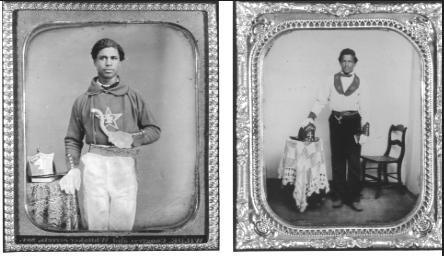
Or the Black firefighters of the 1800s

History of Black Firefighters

image028.jpg


image025.jpg


image007.jpg


And just like that, the CACs started creating their own firefighter unions, financed by large companies to grow large and influenctial, and exclude Black men out of their own jobs.

Ain't that something :ohhh:


Ya'll nikkas really think any government/legal action was ever for the benefit for black people. Kinda sad really :mjlol::mjcry:
 

Liu Kang

KING KILLAYAN MBRRRAPPÉ
Supporter
Joined
May 3, 2012
Messages
14,117
Reputation
5,604
Daps
31,196
Politics, Middle Class, Voting are all an illusion. Unions were mainly created by big corporations to protect the workers filing lawsuits against them under the cloak of "brotherhood". If people really want the best working conditions/wages then they should work for themselves

You're the dumbass who believes in Communism, shut the fukk up :mjlol:

LreaD8N.jpg


You have any evidence that supports your claim ?
 

UpAndComing

Veteran
Joined
Aug 18, 2013
Messages
75,482
Reputation
18,820
Daps
317,394
LreaD8N.jpg


You have any evidence that supports your claim ?


Company union - Wikipedia

The Democratic Party and Company Unions

Company unions were common in the United States during the early twentieth century, but were outlawed under the 1935 National Labor Relations Act §8(a)(2) so that trade unions could remain independent of management. All labor organizations would have to be freely elected by the workforce, without interference.

In 1914, 16 miners and family members (and one national guardsman) were killed when the Colorado National Guard attacked a tent colony of striking coal miners in Ludlow, Colorado. This event, known as the Ludlow massacre, was a major public relations debacle for mine owners, and one of them—John D. Rockefeller, Jr.—hired labor-relations expert and former Canadian Minister of Labour William Lyon Mackenzie King to suggest ways to improve the tarnished image of his company, Colorado Fuel and Iron. One of the elements of the Rockefeller Plan was to form a union, known as the Employee Representation Plan (ERP), based inside the company itself. The ERP allowed workers to elect representatives, who would then meet with company officials to discuss grievances.


Would you look at that :ohhh:
 

Liu Kang

KING KILLAYAN MBRRRAPPÉ
Supporter
Joined
May 3, 2012
Messages
14,117
Reputation
5,604
Daps
31,196
Do you even read what you post ?

Monumental labor battles in the 1930s—led by autoworkers, steelworkers, miners, truck drivers, longshore workers and others—resulted in the building of the Congress of Industrial Organizations (CIO). The birth of industrial unionism was a watershed in U.S. history that led to significant gains for working people. The right to organize, , the right to strike, the eight-hour day, the minimum wage, social security, unemployment insurance, Medicare and all of the gains associated with Roosevelt’s New Deal were a direct result of this militant labor upsurge.

When working people organize and fight for their rights, that’s good for labor, but it’s a major threat to corporate profits. Since one of the most effective tools for advancing workers’ rights is a strong, independent labor union, corporations have always done everything they could to impede and derail union organization. One of their most insidious schemes was the “company union”.

Also called “yellow unions” and “employee representation plans”, the idea behind the company union was simple. The bosses would create an organization that looked like a union but was totally controlled by the company. A few small concessions might be offered—a token wage increase or a discount at the company store—as an incentive to join the fake union. These minor inducements were referred to by more conscious workers as “sucker bait”. The goal was to trick workers into thinking that they already had a union and so be less favorably disposed when genuine, independent union organizers came calling. Far better, the bosses reasoned, to offer their employees a nickel if it would undercut the workers’ ability to organize and be in a position to demand ten times more. Known union militants were blacklisted from both the companies and from the company unions.

One of the earliest company unions was set up by John D Rockefeller, Jr. in 1915 at the Colorado Fuel and Iron Company. The move followed the infamous Ludlow Massacre, where striking miners and their families were attacked by the National Guard and private thugs at the company’s behest. Nineteen were killed, including four women and eleven children.

As public outrage flared and federal intervention was threatened, Rockefeller launched a company union, calling it his Employee Representation Plan. The battered mine workers reluctantly accepted the plan. From there, the scheme spread to the Pueblo Steelworks and then to a number of industries throughout the U.S. and Canada. By 1928, some 1.6 million workers were corralled into company unions. Meanwhile, recruitment to real unions stalled.

The company union movement reached its zenith in 1934, covering close to three million workers—more than the total represented by real labor unions. Then things changed dramatically. Historic labor battles in Minneapolis, San Francisco and Toledo took on the corporate colossus and won! The militancy spread and the industrial union movement grew. The dramatic unfolding of these heroic battles should be studied by every schoolchild. By 1935, the National Labor Relations (Wagner) Act was passed. Among other things, the Act outlawed company unions, saying employers could no longer “dominate or interfere with the formation or administration of any labor organization or contribute financial or other support to it”.

Think about that. The momentum and power of the 1930s labor movement was such that they managed not only to win battles and build independent unions in the face of everything the corporations threw at them, they also succeeded in forcing a recalcitrant government to outlaw company unions altogether. The power of the labor movement forced the government to recognize these duplicitous entities for what they were.

What about today? Company unions are still illegal, but their cousin, the company party, lives on.

Unions, it is said, are economic organizations, while political parties are, well, political. This false dichotomy has been used by labor misleaders to argue that working people ought not look to their own organizations to fight for political power, but should instead rely on “friendly” parties that specialize in politics. This leaves working people without a horse in the race, completely reliant on one or another party that’s owned and controlled by big business, Wall Street and the one percent.

 

DirtyD

Last Time That I Checc'd......
Joined
May 1, 2012
Messages
3,396
Reputation
759
Daps
7,943
Reppin
Queens
Articles: The Decline of the African-American family


Seems like after Slavery in the reconstruction era, Black people had higher employment rates than whites. Who exactly were CACs forming Unions to battle against?


Or the Black firefighters of the 1800s

History of Black Firefighters

image028.jpg


image025.jpg


image007.jpg


And just like that, the CACs started creating their own firefighter unions, financed by large companies to grow large and influenctial, and exclude Black men out of their own jobs.

Ain't that something :ohhh:


Ya'll nikkas really think any government/legal action was ever for the benefit for black people. Kinda sad really :mjlol::mjcry:
This literally had nothing to do with what you said, you were talking about how labor unions were created by corporations. The United States has what has been described as,

...the bloodiest labor history of any industrial nation. The first strike fatalities were two New York tailors, killed in 1850 by police dispersing a crowd of strikers. Since then, according to one estimate, well over seven hundred people - mostly strikers - have died in strike-related violence, and the total may be much higher. Some died in famous incidents, such as the 1913 Ludlow Massacre, when National Guardsmen attacked a tent colony of striking Colorado miners, or the 1937 Memorial Day Massacre, when ten supporters of a steel strike were killed by Chicago police. Most, however, died in little-noted confrontations with company guards, private detectives, scabs, or police.


However, since you want to bring up African Americans and unions, the below should be noted that:

FROM the 1940s to the 1970s, organized labor helped build a middle-class democracy in the United States. The postwar period was as successful as it was becaFROM the 1940s to the 1970s, organized labor helped build a middle-class democracy in the United States. The postwar period was as successful as it was because of unions, which helped enact progressive social legislation from the Civil Rights Act to Medicare.use of unions, which helped enact progressive social legislation from the Civil Rights Act to Medicare.
Opinion | A Civil Right to Unionize

Also:

The Great Depression and the industrial mobilization of World War II galvanized the labor movement, and the alliance between civil rights and labor rights groups deepened in the 1940s. They came together to push for fair employment laws, eventually realized with the 1964 Civil Rights Act, and labor organizations to varying degrees supported the African-American struggle for full citizenship. The two movements have often walked the same path. Following are some of the seminal moments in their journey:

This doesn't mean the unions weren't infected with racism, they obviously were, as was and is true of all Americans institutions, but unions played a large role in the advancement of black people in the United States. This can be seen by simply looking at things like this:

This report finds that unionized black workers earn more than their non-union peers. In addition, the data show that black workers in unions are more likely to have health-insurance benefits and a pension plan than their non-union counterparts.

Unions and Upward Mobility for African-American Workers

Today 14.2 percent of black workers are represented by a union, down from 31.7 percent in 1983. But that’s still higher than the share of all workers who are unionized; that number is just 12.3 percent, down from 23.3 percent in 1983.

Unionization has raised the pay of black workers, Bucknor finds. Black union workers earned $24.24 an hour, compared to $17.78 for their non-union counterparts. Black women earned 37 percent more than non-union workers and males earned 35 percent more than black males not in a union. Black union workers were also more likely to have health insurance and employer-sponsored retirement plans, Bucknor found. “When talking about growing wage inequality, you can’t exclude unions and the role they play in that discussion,” Bucknor said.

Fewer Unions, Lower Pay for Everybody

This would change remarkably quickly. Less than 40 years later, no group would be more overrepresented in labor unions than African-Americans, at least in the private sector. African-American unionization rates would peak just as private-sector unionization rates began to plummet, suggesting that deunionization has contributed to racial inequality in recent decades.

Organized Labor and Racial Wage Inequality in the United States
 
Last edited:

Shogun

Veteran
Joined
May 3, 2012
Messages
25,584
Reputation
6,087
Daps
63,269
Reppin
Knicks
In the classical sense of the term all Americans, rich or poor, are middle class. Once the middle class changed from a minority to the majority in the Western world the concept needed an update. Enter: Marx.
 
Top