

You are using an out of date browser. It may not display this or other websites correctly.
You should upgrade or use an alternative browser.
You should upgrade or use an alternative browser.
The Official 2025-2026 College Football Random Thoughts Thread
- Thread starter Silkk
- Start date
More options
Who Replied?


Whips-n-Chains
Chi

Whips-n-Chains
Chi
@NW can be toughit may look trash, but looking at the state of their program, I see at least four losses. dont sleep on @Northwestern and @Maryland who will be improved. that could be 5
Maryland just lost to Michigan State, so...
it may look trash, but looking at the state of their program, I see at least four losses. dont sleep on @Northwestern and @Maryland who will be improved. that could be 5
Lol ask @Trips if Maryland finna do anything
And I'm talking more so if Brian Kelly came along than anything. I can't see him losing to most of those teams/coaches even if he is a POS lol
Only ones I could see em having a true hard time wit is sc but at the same time, who knows


scUM staying with chip lindseythey're going to run back to chip kelly lol


stick it out to see if you win the job next year or hit the portal
says Michael Hawkins Jr. dad and hiis son not happy
says Michael Hawkins Jr. dad and hiis son not happy


These 4 recruits that stuck with psu so far better be getting million dollar nil deals 
Whips-n-Chains
Chi
These 4 recruits that stuck with psu so far better be getting million dollar nil deals
That Oregon loss really destroyed their program

JasoRockStar
Superstar
Just wanna put out there that one of the first names people were throwing out there to replace James Franklin was Matt Rhule. Matt. fukking. Rhule
This head coach search was doomed from the start
This head coach search was doomed from the start
skyrunner1
Superstar
Crazy how signing day has no buzz anymore. Oh well hope all yall best recruits flip last minute to OSU.
These NIL deals get these kids locked in early.. Some of them getting advanced payments ahead of the salary cap settlement earlier this year.. Most kids werent going anywhere they been locked in.. Look at #1 class USC
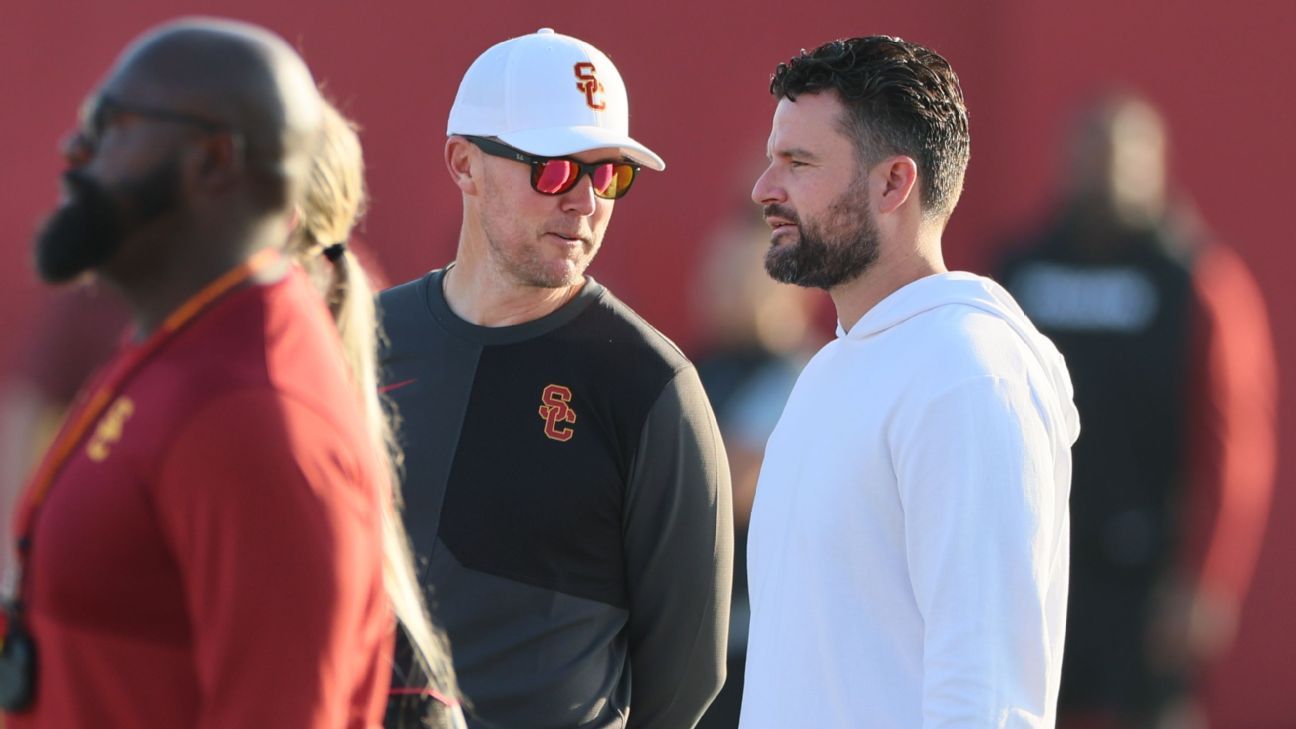
How the USC Trojans landed the top 2026 football recruiting class
The Trojans' personnel operation had fallen off. A new GM and L.A. pipelines have changed things.
Crucially, under Bowden's leadership, the Trojans were among a collection of Power 4 programs to take advantage of the pre-revenue sharing market this spring, investing heavily in front-loaded deals for players before the spending cap kicked in with the House Settlement on July 1.
"Just like everyone across the country," Bowden said.
Many programs offered front-loaded contracts to retain existing players on their rosters and new additions in the transfer portal windows. According to ESPN sources, few programs, if any, have been more aggressive with such deals in the 2026 high school class than USC, which secured 30 of its 33 commitments in the 2026 cycle prior to July 1.
Industry sources told ESPN that USC began doling out payments to committed recruits through collective deals earlier this year, paying out a portion of a given contract early in order to minimize the cap hit when they land on campus. Per ESPN sources, Bowman, the Trojans' fourth-ranked pledge, has already secured the first half of a three-year deal worth seven figures annually.
Across the personnel space, USC's financial strategy and overall approach to roster management in the 2026 cycle class draws a range of responses, from admiration to envy to broad skepticism.
"They did a good job of being ahead of the curve," one Big Ten personnel director told ESPN.
"Their administration is being aggressive, and I think they have the cash flow to do it," an SEC GM said. "They're betting the rules are not going to be enforced, which is really smart."
By rule, student-athletes are required to disclose all pre-college NIL earnings to the College Sports Commission upon enrollment. However, questions have swirled over the enforcement arm and its oversight ability in the NIL space since its inception earlier this year. Sources within Power 4 programs cast doubt over whether the CSC can fully regulate deals and early payments like the ones USC and other schools have given out this recruiting cycle.
A signing class that could ultimately cost more than double the average Power 4 signing class has plenty of detractors, too. "Their high school class has to be close to our entire roster [in terms of cost]," an ACC GM said. Some sources question the value of a potential eight-figure high school class under a revenue share model and in an era of unlimited transfers. Others share doubts over the actual underlying talent of a group that includes as many ESPN 300 commits as any nationally.
Whips-n-Chains
Chi
Not sure talent is the issue at USC...These NIL deals get these kids locked in early.. Some of them getting advanced payments ahead of the salary cap settlement earlier this year.. Most kids werent going anywhere they been locked in.. Look at #1 class USC
How the USC Trojans landed the top 2026 football recruiting class
The Trojans' personnel operation had fallen off. A new GM and L.A. pipelines have changed things.www.espn.com
Whips-n-Chains
Chi
Nebraska hurried up and extended him tooJust wanna put out there that one of the first names people were throwing out there to replace James Franklin was Matt Rhule. Matt. fukking. Rhule
This head coach search was doomed from the start
These 4 recruits that stuck with psu so far better be getting million dollar nil deals
Them niccas broke lol
JasoRockStar
Superstar
All because he had a good year at Baylor 6 years agoNebraska hurried up and extended him too

