

R.O. Double
Holdin My Balls Since 83
Explains what it is.
Explains how to do it and how it feels.

The McCollough effect is a phenomenon of humanvisual perception in which colorless gratings appear colored contingent on the orientation of the gratings. It is an aftereffect requiring a period of induction to produce it. For example, if someone alternately looks at a red horizontal grating and a green vertical grating for a few minutes, a black-and-white horizontal grating will then look greenish and a black-and-white vertical grating will then look pinkish. The effect is remarkable for often lasting an hour or more, and in some cases after prolonged exposure to the grids, the effect can last up to three and a half months.[1]
The effect was discovered by American psychologistCeleste McCollough in 1965.[2]
Producing the effectEdit
To experience the effect, first look at a test image similar to that at top right. It contains oppositely oriented gratings of lines, horizontal and vertical. Next, stare alternately at two induction images similar to the ones directly beneath the top image. One image should show one orientation of grating (here horizontal) with a colored background (red) and the other should show the other orientation of grating (here vertical) with a different, preferably oppositely colored background (green). Each image should be gazed at for several seconds at a time, and the two images should be gazed at for a total of several minutes for the effect to become visible. Stare approximately at the center of each image, allowing the eyes to move around a little. After several minutes, look back to the test image; the gratings should appear tinted by the opposite color to that of the induction gratings (i.e., horizontal should appear greenish and vertical pinkish).
Properties of the effectEdit
The McCollough effect is remarkable because it is long-lasting. McCollough originally reported that these aftereffects may last for an hour or more.[2]They can last much longer than that, however. Jones and Holding (1975) found that 15 minutes of induction can lead to an effect lasting 3.5 months.[1]
The effect is different from colored afterimages, which appear superimposed on whatever is seen and which are quite brief. It depends on retinal orientation (tilting the head to the side by 45 degrees makes the colors in the above example disappear; tilting the head by 90 degrees makes the colors reappear such that the gravitationally vertical grating now looks green), and inducing the effect with one eye leads to no effect being seen with the other eye. However, there is some evidence of binocular interactions.[3]
Any aftereffect requires a period of induction (oradaptation) with an induction stimulus (or, in the case of the McCollough effect, induction stimuli). It then requires a test stimulus on which the aftereffect can be seen. In the McCollough effect as described above, the induction stimuli are the red horizontal grating and the green vertical grating. A typical test stimulus might show adjacent patches of black-and-white vertical and horizontal gratings (as above). The McCollough-effect colors are less saturated than the induction colors.
The induction stimuli can have any different colors. The effect is strongest, however, when the colors arecomplementary, such as red and green, and blue and orange. A related version of the McCollough effect also occurs with a single color and orientation. For example, induction with only a red horizontal grating makes a black-and-white horizontal test grating appear greenish whereas a black-and-white vertical test grating appears colorless (although there is some argument about that). Stromeyer (1978) called these non-redundant effects. According to him, the classic effect with induction from two different orientations and colors simply makes the illusory colors more noticeable via contrast.
The effect is specific to the region of the retina that is exposed to the induction stimuli. This has been shown by inducing opposite effects in adjacent regions of the retina (i.e., from one region of the retina verticals appear pink and horizontals appear greenish; from an adjacent region of the retina, verticals appear greenish and horizontals appear pink). Nevertheless, if a small region of the retina is exposed to the induction stimuli, and the test contours run through this region, the effect spreads along those test contours. Of course, if the induced area is in the fovea (central vision) and the eyes are allowed to move, then the effect will appear everywhere in the visual scene visited by the fovea.
The effect is also optimal when the thickness of the bars in the induction stimulus matches that of those in the test stimulus (i.e., the effect is tuned, albeit broadly, to spatial frequency). This property led to non-redundant effects being reported by people who had used computer monitors with uniformly coloredphosphors to do word processing. These monitors were popular in the 1980s, and commonly showed text as green on black. People noticed later when reading text of the same spatial frequency, in a book say, that it looked pink. Also a horizontal grating of the same spatial frequency as the horizontal lines of the induction text (such as the horizontal stripes on the letters "IBM" on the envelope for early floppy disks) looked pink.
A variety of similar aftereffects have been discovered not only between pattern and color contingencies, but between movement/color, spatial frequency/color and other relationships. All such effects may be referred to as McCollough Effects or MEs.[4]
Wiki Link:McCollough effect - Wikipedia, the free encyclopedia
Explains how to do it and how it feels.
A test image for the McCollough effect. On first looking at this image, the vertical and horizontal lines should look black and white, colorless. After induction (see images below), the space between vertical lines should look reddish and the space between horizontal lines should look greenish.
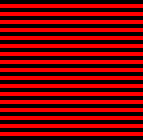
One induction image for the McCollough effect. Stare at the center of this image for a few seconds, then at the center of the second image below for a few seconds. Then return to this image. Keep looking between the two colored images for at least three minutes.

A second induction image for the McCollough effect. Stare at the center of this image for a few seconds, then at the center of the image above for a few seconds. Then return to this image. Keep looking between the two colored images for at least three minutes.
HERE THEY ARE TOGETHER TO AVOID SCROLLING ON YOUR PHONE.

One induction image for the McCollough effect. Stare at the center of this image for a few seconds, then at the center of the second image below for a few seconds. Then return to this image. Keep looking between the two colored images for at least three minutes.
A second induction image for the McCollough effect. Stare at the center of this image for a few seconds, then at the center of the image above for a few seconds. Then return to this image. Keep looking between the two colored images for at least three minutes.
HERE THEY ARE TOGETHER TO AVOID SCROLLING ON YOUR PHONE.
The McCollough effect is a phenomenon of humanvisual perception in which colorless gratings appear colored contingent on the orientation of the gratings. It is an aftereffect requiring a period of induction to produce it. For example, if someone alternately looks at a red horizontal grating and a green vertical grating for a few minutes, a black-and-white horizontal grating will then look greenish and a black-and-white vertical grating will then look pinkish. The effect is remarkable for often lasting an hour or more, and in some cases after prolonged exposure to the grids, the effect can last up to three and a half months.[1]
The effect was discovered by American psychologistCeleste McCollough in 1965.[2]
Producing the effectEdit
To experience the effect, first look at a test image similar to that at top right. It contains oppositely oriented gratings of lines, horizontal and vertical. Next, stare alternately at two induction images similar to the ones directly beneath the top image. One image should show one orientation of grating (here horizontal) with a colored background (red) and the other should show the other orientation of grating (here vertical) with a different, preferably oppositely colored background (green). Each image should be gazed at for several seconds at a time, and the two images should be gazed at for a total of several minutes for the effect to become visible. Stare approximately at the center of each image, allowing the eyes to move around a little. After several minutes, look back to the test image; the gratings should appear tinted by the opposite color to that of the induction gratings (i.e., horizontal should appear greenish and vertical pinkish).
Properties of the effectEdit
The McCollough effect is remarkable because it is long-lasting. McCollough originally reported that these aftereffects may last for an hour or more.[2]They can last much longer than that, however. Jones and Holding (1975) found that 15 minutes of induction can lead to an effect lasting 3.5 months.[1]
The effect is different from colored afterimages, which appear superimposed on whatever is seen and which are quite brief. It depends on retinal orientation (tilting the head to the side by 45 degrees makes the colors in the above example disappear; tilting the head by 90 degrees makes the colors reappear such that the gravitationally vertical grating now looks green), and inducing the effect with one eye leads to no effect being seen with the other eye. However, there is some evidence of binocular interactions.[3]
Any aftereffect requires a period of induction (oradaptation) with an induction stimulus (or, in the case of the McCollough effect, induction stimuli). It then requires a test stimulus on which the aftereffect can be seen. In the McCollough effect as described above, the induction stimuli are the red horizontal grating and the green vertical grating. A typical test stimulus might show adjacent patches of black-and-white vertical and horizontal gratings (as above). The McCollough-effect colors are less saturated than the induction colors.
The induction stimuli can have any different colors. The effect is strongest, however, when the colors arecomplementary, such as red and green, and blue and orange. A related version of the McCollough effect also occurs with a single color and orientation. For example, induction with only a red horizontal grating makes a black-and-white horizontal test grating appear greenish whereas a black-and-white vertical test grating appears colorless (although there is some argument about that). Stromeyer (1978) called these non-redundant effects. According to him, the classic effect with induction from two different orientations and colors simply makes the illusory colors more noticeable via contrast.
The effect is specific to the region of the retina that is exposed to the induction stimuli. This has been shown by inducing opposite effects in adjacent regions of the retina (i.e., from one region of the retina verticals appear pink and horizontals appear greenish; from an adjacent region of the retina, verticals appear greenish and horizontals appear pink). Nevertheless, if a small region of the retina is exposed to the induction stimuli, and the test contours run through this region, the effect spreads along those test contours. Of course, if the induced area is in the fovea (central vision) and the eyes are allowed to move, then the effect will appear everywhere in the visual scene visited by the fovea.
The effect is also optimal when the thickness of the bars in the induction stimulus matches that of those in the test stimulus (i.e., the effect is tuned, albeit broadly, to spatial frequency). This property led to non-redundant effects being reported by people who had used computer monitors with uniformly coloredphosphors to do word processing. These monitors were popular in the 1980s, and commonly showed text as green on black. People noticed later when reading text of the same spatial frequency, in a book say, that it looked pink. Also a horizontal grating of the same spatial frequency as the horizontal lines of the induction text (such as the horizontal stripes on the letters "IBM" on the envelope for early floppy disks) looked pink.
A variety of similar aftereffects have been discovered not only between pattern and color contingencies, but between movement/color, spatial frequency/color and other relationships. All such effects may be referred to as McCollough Effects or MEs.[4]
Wiki Link:McCollough effect - Wikipedia, the free encyclopedia